
Contents
- 1 Definitive Pilgrimage Guide: Vaikom Mahadeva Temple, Kottayam
Definitive Pilgrimage Guide: Vaikom Mahadeva Temple, Kottayam
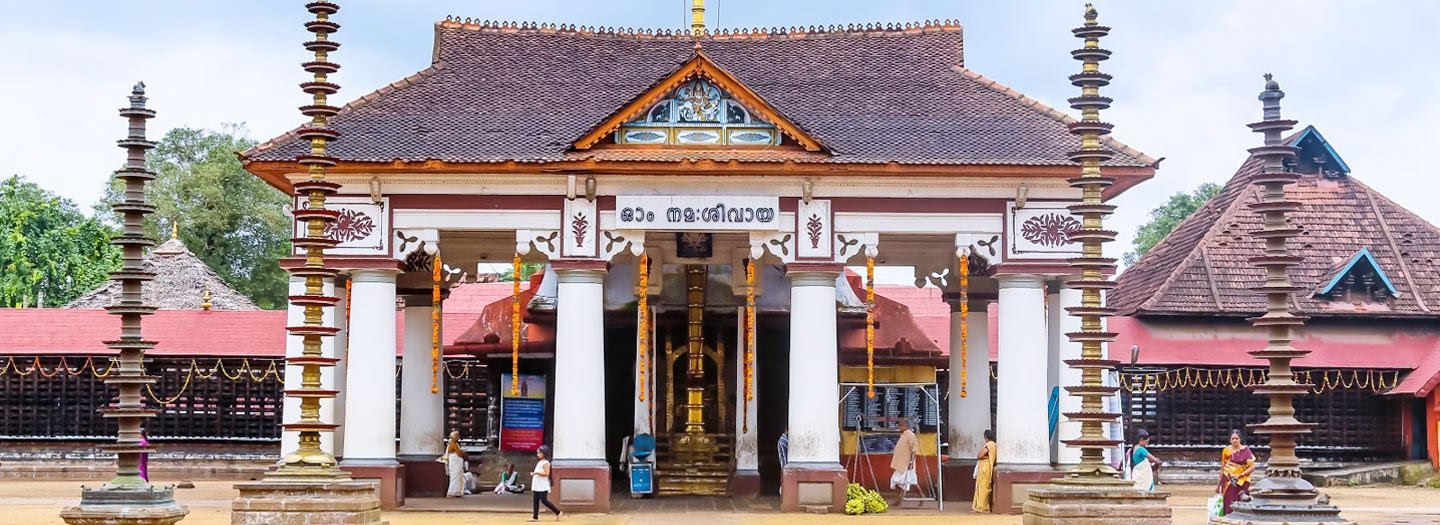
Nestled in the serene landscape of Kottayam district, Kerala, the Vaikom Mahadeva Temple stands as an eternal testament to devotion and architectural grandeur. Renowned as the “Vaikkathappan,” the presiding deity here is Lord Shiva in his Swayambhu (self-manifested) form. This sacred site is not merely a structure of stone and wood but a living spiritual energy center revered by both Shaivaites and Vaishnavaites.
1. Introduction & Spiritual Essence
The primary deity of this temple is Lord Shiva, worshipped as a Swayambhu Linga. This form is highly significant in Hindu mythology, signifying that the deity was not carved by human hands but emerged from the earth.
Phalaśruti: The Spiritual Benefits
Why do devotees undertake this pilgrimage? The Vaikom Mahadeva Temple is unique in its ability to satisfy both Shaivite and Vaishnavite devotees. According to ancient beliefs and the Phalaśruti (spiritual benefits of worship):
- Granting of Wishes: It is believed that if a devotee worships at the “Trisome”—comprising Vaikom Mahadeva Temple, Ettumanoor Siva Temple, and Kaduthuruthy Thaliyil Mahadeva Temple—before the Ucha Pooja (noon ritual), all their wishes are fulfilled.
- Ancestral Karma: Performing Shraddha and offering prayers here is believed to cleanse ancestral karma and bring peace to departed souls.
- Moksha: As per the Sthala Purana, this is a place where great sages attained Moksha (liberation), making it a powerful site for spiritual liberation.
2. Historical Origins & Scriptural Legend
The history of the Vaikom Mahadeva Temple is steeped in legend, dating back to the Treta Yuga (an age in Hindu cosmology).
The Legend of Khara and Swayambhu Linga
Tradition holds that the demon (Asura) Kharasura, after intense penance at Chidambaram, received three Swayambhu Lingas directly from Lord Shiva. While returning to the south, Kharasura grew tired and rested in Vaikom. When he attempted to leave, the Lingas—representing the past, present, and future—merged into the ground, refusing to move.
Divine voices proclaimed that Lord Shiva would remain there forever to grant Moksha. Kharasura, having attained liberation, entrusted the Lingas to the sage Vyaghrapada, who became the first custodian and worshipper of the temple. Consequently, the sanctum sanctorum (Garbha Griha) is believed to house the original Swayambhu Linga worshipped by this great sage.
Dynastic History & Renovations
While the spiritual origins are ancient, the physical structure reflects the patronage of Kerala’s rulers. The temple was later expanded and fortified by the Cochin Royal Family and the Maharaja of Travancore. Historians trace significant renovations to the 16th-18th centuries, overlaying the mythological history with tangible structural legacy. Unlike many temples, the puja rituals (Seva) here have never been broken since inception, preserving an unbroken lineage of Vedic traditions.
3. Architectural Marvels
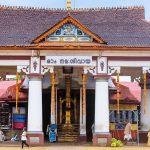
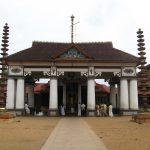
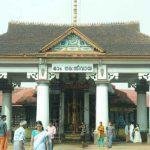
The temple is a masterpiece of Traditional Kerala Style architecture, spread across eight acres of land.
Structural Layout
- The Sanctum (Sreekovil): The Garbha Griha is uniquely constructed with a square base and a stone roof. The exterior is circular, roofed with copper sheets.
- Gopurams: The temple is fortified by compound walls with four Gopuras (monumental gateways) on all four sides, a feature typical of Dravidian temple architecture adapted to Kerala styles.
- The Six Steps: A peculiar architectural feature is the requirement to ascend six steps to view the deity. This is symbolically linked to the Shad Vikaras (the six human emotions: Kama, Krodha, Lobha, Moha, Madha, Matsarya). Crossing these steps represents rising above human limitations to attain divine vision.
- Mandapas: The Mukha Mandapa is built with shaped stones and single-piece timber logs, showcasing ancient woodworking precision.
Archaeological Significance
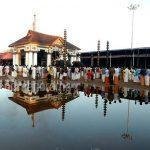
The temple is recognized by the Archaeological Survey of India (ASI) for its historical importance. The temple premises levelled with river sand offer a unique acoustic property, enhancing the resonance of temple bells and chanting.
4. Darshan & Ritual Logistics
Planning your visit requires attention to the strict ritual timings. The temple follows the Tantric traditions strictly.
Daily Darshan Timings
Note: Timings are subject to change during festivals. Last updated for 2026 calendar year.
| Session | Timing | Activity |
|---|---|---|
| Morning | 04:00 AM – 12:00 PM | Opening, Nirmalyam, Abhishekam, Ucha Pooja |
| Evening | 05:00 PM – 09:00 PM | Deeparadhana, Athazha Pooja, Harivarasanam |
Key Sevas & Online Booking
The temple administration facilitates online booking for major rituals. As of 2026, the Travancore Devaswom Board manages the digital portal.
- Abhishekam: Ritual bathing of the deity with milk, honey, and sandalwood. Best performed during morning hours.
- Archana: Chanting of names. Vaikkathappan Archana is the primary offering.
- Maha Ganapathi Homam: Performed for removing obstacles.
- Prasadam (Annadanam): The temple is famous for serving Kadum Payasam (a sweet porridge).
How to Book: Visit the official Travancore Devaswom Board website. Select “Vaikom Mahadeva Temple,” choose the seva, and pay via UPI/Credit Card. Print the receipt for entry.
2026 Major Festival Dates
- Vaikom Ashtami: March 12, 2026 (Thursday). This is the most significant festival, celebrating the temple’s consecration anniversary.
- Maha Shivaratri: February 26, 2026 (Thursday). Special night-long vigil and rituals.
- Kartika Deepam: November 4, 2026. Lighting of the sacred lamp.
- Navaratri: October 3–12, 2026. Special Vidyarambham ceremonies on Vijayadashami.
5. Practical Visitor Guidance
To ensure a peaceful and respectful visit, adhere to the following guidelines.
Code of Conduct & Dress Code
- Attire: Traditional clothing is mandatory. Men must wear Mundu (dhoti) without shirts (upper cloth is allowed). Women must wear saree, long skirt with blouse, or Salwar Kameez with dupatta. Western attire (pants, shorts, t-shirts) is strictly prohibited.
- Photography: Strictly prohibited inside the sanctum sanctorum and inner courtyard. Mobile phones must be switched to silent mode.
- Lockers: Free mobile lockers are available at the Padippura (entrance gate). Large bags and cameras are not allowed inside.
Crowd Management & Best Hours
- Early Morning (4:00 AM – 6:00 AM): The calmest time for Darshan. Ideal for elderly pilgrims.
- Mid-Day: Generally crowded due to Ucha Pooja and local visitors.
- Evening (5:00 PM – 7:00 PM): Moderate crowd.
- Seasonal Advice: Kerala summers (April–May) are hot and humid. Carry a water bottle and an umbrella. During the monsoon (June–September), the temple grounds can be slippery; wear rubber slippers with grip.
Accessibility
The temple has ramps for wheelchairs at the outer courtyard, but access to the inner sanctum involves stairs. Volunteers are usually available during festivals to assist pilgrims.
6. Pilgrimage Connectivity
How to Reach Vaikom
Vaikom is well-connected by road and lies on the historic Ernakulam – Kottayam route.
- By Air: The nearest airport is Cochin International Airport (COK), located approximately 65 km away. Taxis and airport buses are available directly to Vaikom.
- By Rail: The closest railway junction is Kottayam (KTYM) (approx. 28 km). Auto-rickshaws and buses connect Kottayam to Vaikom frequently.
- By Road: Located on NH 66 (formerly NH 47). Regular KSRTC and private buses operate from Ernakulam, Kottayam, and Pathanamthitta.
Nearby Sacred Sites
Extend your pilgrimage to the divine circle of the Trisome:
- Ettumanoor Mahadevar Temple: Located 15 km from Vaikom. Famous for its Ezharaponnana (golden elephant) and vibrant frescoes.
- Kaduthuruthy Thaliyil Mahadeva Temple: Located 12 km away. This is the third power center of the trisome. Note: Rituals here end by 12:00 PM; plan accordingly.
- Thirunakkara Sree Mahadevar Temple: Located in Kottayam (25 km), featuring Kerala-style mural paintings and a temple tank.
7. Frequently Asked Questions (FAQ)
1. Is there a VIP Darshan entry at Vaikom Temple?
Yes, the temple offers a Sheeveli (special entry) pass for a faster darshan. This can be purchased at the ticket counter near the entrance. However, during peak festivals like Vaikom Ashtami, even VIP entry is subject to crowd control measures.
2. What is the significance of the “Trisome” ritual?
The Trisome ritual involves visiting Vaikom, Ettumanoor, and Kaduthuruthy temples before the Ucha Pooja (noon). It is believed that completing this circuit fulfills material desires and leads to spiritual liberation.
3. Can I carry outside food inside the temple?
No, outside food and water bottles are not allowed inside the sanctum. However, the temple provides Prasadam (free meals) inside the complex. Plastic bottles are strictly banned within the temple premises.
4. When is the best time to visit Vaikom Temple?
The months from October to February offer the most pleasant weather. However, if you wish to witness the grandeur of rituals, plan your visit during November (Kartika Deepam) or March (Vaikom Ashtami), though expect heavy crowds.
5. Is there accommodation available near the temple?
Yes, the Devaswom Guest House is available for pilgrims near the temple. Additionally, private lodges and homestays are abundant in Vaikom town, ranging from budget to mid-range categories.
| Date built: | – |
|---|---|
| Deity: | – |
| Architectural style: | Traditional Kerala style |
| Major festivals | Vaikom Ashtami |
| Locale: | Vaikom |
| District:: | Kottayam |
| Address: | Vazhamana Rd, Vaikom, Kerala 686141 |
| Phone | 04829215812 |
Recent Posts

Shri Kaamkoteeshwar Mandir, Varanasi – History & Significance
In the heart of Kashi, the eternal city of Lord Shiva, where the Ganges flows with celestial grace, stands the Shri Kaamkoteeshwar Mandir. This sacred Sannidhi is not merely a temple but a profound spiritual bridge between the Northern…

ओ सांवरे तूने ही मुझको संभाला – Lyrics & Meaning
ओ सांवरे तूने ही मुझको संभाला – A Prayer to Shyam Origin & Spiritual Essence Why This Bhajan Resonates Devotees chant this when overwhelmed by life’s storms—the refrain ‘तूने ही मुझको संभाला’ is the soul’s sigh of relief: “You…

कथा ये है महाराज मेरे की – Lyrics & Meaning
कथा ये है महाराज मेरे की छत्रपति संभाजी महाराज – A Prayer to Chhatrapati Sambhaji Maharaj Origin & Spiritual Essence Why This Bhajan Resonates Devotees chant this when their spirit feels tested—its powerful refrain “महाराज मेरे” is a soul’s…

Rigveda Samhita Yathartha Anuvada (ऋग्वेद संहिता यथार्थ अनुवाद) – Complete Set with Anvayartha & Hindi/English Translation
The Rigveda is the oldest surviving scripture of humanity and the foundational text of Sanātana Dharma. For serious students, scholars, UPSC aspirants studying ancient Indian history, Sanskrit learners, and spiritual seekers, a precise and grammatically structured translation is indispensable.…

आना भी अकेला है जाना भी अकेला है – Lyrics & Meaning | BharatTemples
आना भी अकेला है जाना भी अकेला है – A Prayer to the Divine Witness Origin & Spiritual Essence Why This Bhajan Resonates Devotees turn to this bhajan in moments of deep reflection—when life’s attachments begin to ache. The…

माता शेरावाली के द्वार जो भी जाता है – Lyrics & Meaning
माता शेरावाली के द्वार जो भी जाता है – A Prayer to Maa Sherawali Origin & Spiritual Essence Why This Bhajan Resonates Devotees turn to this bhajan in times of fear or uncertainty—its promise that no one leaves Maa’s…

मार लेना सपणी उबार लेणा भवरा – Lyrics & Meaning
मार लेना सपणी उबार लेणा भवरा – A Prayer to the Divine Beloved Origin & Spiritual Essence Why This Bhajan Resonates Devotees chant this in moments of deep vulnerability—its cry of “मार लेना सपणी, उबार लेणा भवरा” is the…

हमें श्याम सुंदर भरोसा तुम्हारा – Lyrics & Meaning
हमें श्याम सुंदर भरोसा तुम्हारा – A Prayer to Shyam Sundar Origin & Spiritual Essence Why This Bhajan Resonates Devotees chant this when feeling alone—its refrain ‘de do sahara’ is the soul’s cry for divine support. Lyrics in Hindi…

Mere Satguru Ne Di Thi Davai Lyrics in Hindi & Meaning
Mere Satguru Ne Di Thi Davai: Invoking the Guru’s Liberating Wisdom This soul-stirring bhajan venerates the Satguru (True Spiritual Master) as the divine physician who dispenses the only remedy for life’s deepest sufferings. Composed by Sant Karmaveer Tufani, it…

Janm Diyo Thari Maa Dukh Dekhiyo Lyrics in Hindi & Meaning
जन्म दियो थारी माँ दुख देखियो (Maa’s Grief Upon Birthing You) This soul-stirring Chetavani Bhajan (admonitory hymn) is addressed to the Divine Mother (Maa) – a call for repentance when children forget their filial duties in the dark age…