
Contents
- 1 Dada Darbar Khandwa: Definitive Pilgrimage Guide to the Abode of Avadhoot Saints
| Date built: | – |
|---|---|
| Deity: | – |
| Architectural style: | – |
| Major festivals | – |
| Locale: | Khandwa |
| District:: | Nimar |
| Address: | – |
| Phone | – |
Dada Darbar Khandwa: Definitive Pilgrimage Guide to the Abode of Avadhoot Saints
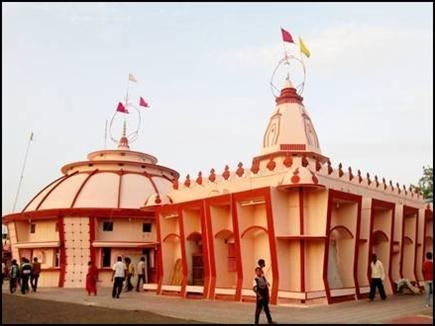
In the spiritually charged landscape of Nimar, Madhya Pradesh, lies a sanctuary where the atmosphere vibrates with ascetic energy. The Dada Darbar Khandwa is not merely a temple; it is a Samadhi Sthal of profound spiritual potency, revered by devotees seeking the blessings of Bare Dadaji (Swami Keshwanandaji Maharaj) and Chhote Dadaji (Swami Hariharanandji Maharaj). This guide offers a comprehensive spiritual and logistical roadmap for pilgrims visiting this sacred destination.
1. Introduction & Spiritual Essence
The Dada Darbar is located in the southwestern part of Khandwa. This place is considered holy and worthy of worship. The primary deities here are the Avadhoot Saints, revered as spiritual ancestors.
The Divine Forms
- Bare Dadaji (Swami Keshwanandaji Maharaj): Known as Dada Dhuniwala due to his profound meditation before the holy fire (Dhuni).
- Chhote Dadaji (Swami Hariharanandji Maharaj): A co-vibrant soul whose Samadhi rests adjacent to his elder peer.
Phalaśruti: The Benefits of Pilgrimage
Devotees visit the Dada Darbar to experience the transformational energy left by the saints. According to local tradition, cleansing ancestral karma and gaining mental clarity are the primary benefits. The Samadhi Sthal acts as a spiritual battery charger, where the presence of the Dhuni (sacred fire) continues to radiate the saints’ tapasya (penance) even decades after their Mahasamadhi.
2. Historical Origins & Scriptural Legend
While the architectural history of the structure is relatively modern, the spiritual history dates back to the early 20th century.
The Timeline of Ascension
- 1930 (December 13th): Swami Keshwanandaji Maharaj (Bare Dadaji) attained Mahasamadhi.
- 1930 (December 3rd): The foundational tombstones were laid.
- 1942 (February 5th): Swami Hariharanandji Maharaj (Chhote Dadaji) attained Mahasamadhi (dates referenced as Phalgun Sudi Panchami).
Scriptural Legend
Tradition holds that these saints were Avadhoots—wandering ascetics who had renounced all material desires. The site is intrinsically linked to the practice of Agni Upasana (fire worship). The holy fire, or Dhuni, was the focal point of Bare Dadaji’s meditation, earning him the title Dhuniwala.
Devotional Verse:
Dhayyanayatyam Kripadindhu, Sachchidanandam Padayakam.
Yogeshwaram, Videhdam Pragrajalial Agni Piyakram ||
Meaning: “Always meditate on the blessings of Shri Dadaji, who provides the ocean of good pleasure. You are Yogeshwar and Vidyahi, you are very fond of fuming. Big grandfather has won the senses. You live in Digambara state. I salute to Harihar Bhole Lord’s Gurudev Shri Keshavananda ji.”
The official institution is the Shri Dhuniyivala Ashram Public Trust Khandwa. The trust clarifies that there is no other organization related to the original establishment by Mr. Shree Dadaji Maharaj.
3. Architectural Marvels
While the original dhuni (fire pit) and the ancient roots of the site are the main draws, the physical structure houses the Samadhi Sthal within a grand temple.
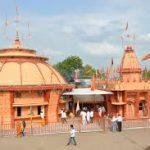
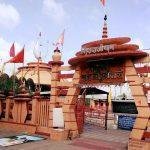
A grand temple has been constructed at both Samadhi sites. The architecture is designed to facilitate a serene environment for meditation rather than depicting classical Dravida or Nagara styles. The sanctum sanctorum houses the tombstones, and the temple remains open for devotees 24 hours apart from brief service intervals.
4. Darshan & Ritual Logistics
Unlike many temples in Madhya Pradesh that close at night, Dada Darbar offers unique flexibility for devotees. The presence of the 24-hour open sanctum allows for early morning and late-night prayers.
Daily Timings (2026 Schedule)
The temple is generally accessible 24/7, but specific rituals have set times.
| Session | Activity | Timing |
|---|---|---|
| Morning | Temple Opening & Cleaning | 05:00 AM |
| Morning | Bhog Aarti / Abhishekam | 07:00 AM – 09:00 AM |
| Evening | Evening Aarti | 07:00 PM |
| Night | Shayan Aarti / Closing | 10:30 PM |
Key Sevas & Online Booking
Currently, the Darbar operates primarily on traditional lines. However, for larger donations or specific requests, the Shri Dhuniyivala Ashram Public Trust manages the proceedings.
- Abhishekam: Performed with milk, honey, and ghee over the Samadhi.
- Archana: Recitation of the saints’ names and mantras.
- Online Booking: While the temple is 24 hours, specific sevas are managed physically or via the Trust office. Devotees are advised to contact the trust directly for advanced online arrangements.
Major Festivals 2026
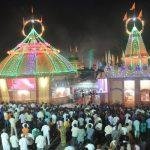
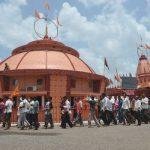
- Guru Purnima: The most significant event at Dada Darbar. In 2026, Guru Purnima falls on July 10th. A grand annual fair is held on this day, attracting thousands of devotees across India.
5. Practical Visitor Guidance
To ensure a respectful and smooth visit to this holy site, please adhere to the following guidelines:
- Dress Code: Traditional Indian attire (Kurta-Pajama, Saree, Salwar Kameez) is recommended. Modest clothing is essential as this is an active spiritual space.
- Photography: Photography inside the sanctum sanctorum (near the Samadhi) is generally prohibited to maintain the sanctity of the area. Check with the trust members for external photography.
- Mobile & Lockers: The temple is open 24 hours, but electronic devices should be kept on silent. While mobile lockers are not explicitly available on-site, it is advisable to travel light.
- Crowd Management:
- Best Hours: 5:00 AM – 7:00 AM or after 9:00 PM for a quiet darshan.
- Seasonal Advice: Khandwa can be extremely hot in May and June. Carry water and cover your head. Monsoons bring lush greenery but also humidity; an umbrella is advisable.
6. Pilgrimage Connectivity
Khandwa is a well-connected district headquarters in the Malwa region of Madhya Pradesh.
How to Reach
- By Train: Khandwa Junction (KNW) is the nearest railway station (approx. 1-2 km from the city center/67 km from the Dada Darbar complex depending on exact location logic, though the station serves the city).
- By Air: The nearest airports are Indore (IDR) (approx. 130 km) and Bhopal (BHO) (approx. 150 km).
- By Road: Khandwa is on the North-South Corridor (NH-3) (old NH3, now part of NH44/AH47). It connects easily to Indore, Burhanpur, and Kalyani.
Nearby Sacred Sites
Enhance your pilgrimage circuit by visiting these nearby spiritual hubs:
- Omkareshwar Temple (Mandhata): One of the 12 Jyotirlingas, located approx. 70 km from Khandwa.
- Indore (Annapurna Temple & Khajrana Ganesh): Major religious center approx. 120 km away.
- Khandwa (District) Temples: Explore the Khandwa district for other historic sites like the Ekvira Devi Temple and ancient Jain temples.
7. Frequently Asked Questions (FAQs)
1. Is there a VIP darshan entry available at Dada Darbar?
No, the Dada Darbar follows a traditional approach. There is no specific VIP darshan entry. All devotees are treated equally in the eyes of the saints. However, if you have specific requirements or need assistance due to physical disability, you can speak to the trust officials managing the queue.
2. What is the exact address of the Darbar?
The Dada Darbar is located in the southwestern part of Khandwa. The official address is managed by the Shri Dhuniyivala Ashram Public Trust, Khandwa. It is best to navigate to the city center and ask locals for “Dada Dhuniwala Darbar,” as it is a well-known landmark.
3. Are there accommodation facilities near the temple?
Since the temple is open 24 hours, many devotees prefer to stay in the city of Khandwa. There are various Dharamshalas, lodges, and hotels in Khandwa (approx. 67 km from the station, though this refers to the city radius). For Ashram stay, one must seek permission from the Trust office.
4. What is the significance of the Dhuni (Fire)?
The Dhuni represents the unbroken spiritual energy of the saints. Devotees believe that sitting near the fire (if accessible) or the Samadhi area cleanses mental impurities and grants the blessings of Guru Kripa.
5. Can I perform the last rites or Shraddha here?
While the primary focus is on the saints’ Samadhi, the atmosphere is conducive to ancestor offerings. However, for specific rituals, it is advised to consult with the local priests at the Trust office.
Disclaimer: All logistical information is based on 2026 projections. Please verify specific contact numbers and temple closure times during public holidays or unforeseen circumstances via the Shri Dhuniyivala Ashram Public Trust.
Recent Posts

Shri Kaamkoteeshwar Mandir, Varanasi – History & Significance
In the heart of Kashi, the eternal city of Lord Shiva, where the Ganges flows with celestial grace, stands the Shri Kaamkoteeshwar Mandir. This sacred Sannidhi is not merely a temple but a profound spiritual bridge between the Northern…

ओ सांवरे तूने ही मुझको संभाला – Lyrics & Meaning
ओ सांवरे तूने ही मुझको संभाला – A Prayer to Shyam Origin & Spiritual Essence Why This Bhajan Resonates Devotees chant this when overwhelmed by life’s storms—the refrain ‘तूने ही मुझको संभाला’ is the soul’s sigh of relief: “You…

कथा ये है महाराज मेरे की – Lyrics & Meaning
कथा ये है महाराज मेरे की छत्रपति संभाजी महाराज – A Prayer to Chhatrapati Sambhaji Maharaj Origin & Spiritual Essence Why This Bhajan Resonates Devotees chant this when their spirit feels tested—its powerful refrain “महाराज मेरे” is a soul’s…

Rigveda Samhita Yathartha Anuvada (ऋग्वेद संहिता यथार्थ अनुवाद) – Complete Set with Anvayartha & Hindi/English Translation
The Rigveda is the oldest surviving scripture of humanity and the foundational text of Sanātana Dharma. For serious students, scholars, UPSC aspirants studying ancient Indian history, Sanskrit learners, and spiritual seekers, a precise and grammatically structured translation is indispensable.…

आना भी अकेला है जाना भी अकेला है – Lyrics & Meaning | BharatTemples
आना भी अकेला है जाना भी अकेला है – A Prayer to the Divine Witness Origin & Spiritual Essence Why This Bhajan Resonates Devotees turn to this bhajan in moments of deep reflection—when life’s attachments begin to ache. The…

माता शेरावाली के द्वार जो भी जाता है – Lyrics & Meaning
माता शेरावाली के द्वार जो भी जाता है – A Prayer to Maa Sherawali Origin & Spiritual Essence Why This Bhajan Resonates Devotees turn to this bhajan in times of fear or uncertainty—its promise that no one leaves Maa’s…

मार लेना सपणी उबार लेणा भवरा – Lyrics & Meaning
मार लेना सपणी उबार लेणा भवरा – A Prayer to the Divine Beloved Origin & Spiritual Essence Why This Bhajan Resonates Devotees chant this in moments of deep vulnerability—its cry of “मार लेना सपणी, उबार लेणा भवरा” is the…

हमें श्याम सुंदर भरोसा तुम्हारा – Lyrics & Meaning
हमें श्याम सुंदर भरोसा तुम्हारा – A Prayer to Shyam Sundar Origin & Spiritual Essence Why This Bhajan Resonates Devotees chant this when feeling alone—its refrain ‘de do sahara’ is the soul’s cry for divine support. Lyrics in Hindi…

Mere Satguru Ne Di Thi Davai Lyrics in Hindi & Meaning
Mere Satguru Ne Di Thi Davai: Invoking the Guru’s Liberating Wisdom This soul-stirring bhajan venerates the Satguru (True Spiritual Master) as the divine physician who dispenses the only remedy for life’s deepest sufferings. Composed by Sant Karmaveer Tufani, it…

Janm Diyo Thari Maa Dukh Dekhiyo Lyrics in Hindi & Meaning
जन्म दियो थारी माँ दुख देखियो (Maa’s Grief Upon Birthing You) This soul-stirring Chetavani Bhajan (admonitory hymn) is addressed to the Divine Mother (Maa) – a call for repentance when children forget their filial duties in the dark age…