

Contents
Introduction & Spiritual Essence
Manikeshwari Temple, located in the heart of Bhawanipatna, Kalahandi district, Odisha, is a significant center of Shakti worship. The presiding deity, Manikeshwari (also spelled Manikeswari), is revered as a manifestation of the Divine Mother. The name derives from “Manik,” meaning jewel or precious gem, signifying the Goddess as the jewel of the universe.
Phalaśruti (Spiritual Benefits): Devotees visit Manikeshwari Temple primarily seeking relief from Vaastu Dosha (architectural defects) and Pitru Dosha (ancestral karma imbalances). It is widely believed that offering prayers here resolves financial hurdles and brings prosperity to the household. Unlike fierce forms of Shakti, Manikeshwari is worshipped as a benevolent bestower of wealth and spiritual calm.
Historical Origins & Scriptural Legend
The history of Manikeshwari is deeply intertwined with the royal lineage of Kalahandi and Gajapati. According to temple records and historical accounts, the deity’s roots trace back to the ancient Chakrakotamandala region (encompassing modern-day Kalahandi, Koraput, and Bastar) as early as the 10th century A.D.
The Legend of Return: Tradition holds that the Goddess was originally located in Gadapur (Phulbani). Following the demise of King Harichandra Deo of Kalahandi, the Queen relocated to her maternal home. However, upon public request, she returned to Kalahandi around 1200 A.D. with the idol of Manikya Devi.
Modern Temple Construction: The current magnificent structure was initiated by Maharaja Uditnarayan Deo. The construction spanned decades and was finally completed in 1947 by Maharaja Brajamohan Deo during the capital’s shift from Junagarh to Bhawanipatna. While legends link Manikeshwari to the Stambeswari temple of Asurgarh-Narla, the Bhawanipatna temple remains the administrative and spiritual hub of the region.
Architectural Marvels
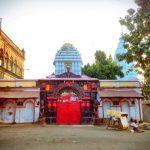
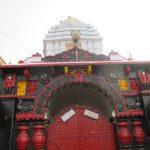
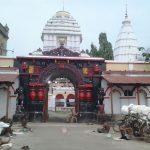
The temple showcases a distinctive blend of traditional Kalinga style architecture, often associated with the Jagannath school of temple design, featuring a towering spire (Shikhara) and intricate stone carvings. The sanctum sanctorum houses the deity in a unique posture that reflects the local tribal and royal synthesis of faith.
The complex includes spacious Mandapas (halls) used for ritual gatherings and the annual Chhatar Jatra. The outer walls are adorned with sculptures depicting various avatars of the Goddess and scenes from Hindu mythology. The temple complex is a protected heritage site under the supervision of the Odisha government’s endowments department.
Darshan & Ritual Logistics
Visitors can partake in various rituals dedicated to the Goddess. The temple administration has streamlined the process for both physical and online devotees.
Daily Darshan Timings (2026)
| Session | Timings |
|---|---|
| Morning Darshan | 6:00 AM – 1:00 PM |
| Afternoon Break | 1:00 PM – 3:00 PM |
| Evening Darshan | 3:00 PM – 9:00 PM |
Note: Timings may vary slightly during festival days.
Key Sevas & Online Booking
Major rituals include:
- Abhishekam: Ritual bathing of the deity (performed on Ekadashi and special days).
- Archana: Chanting of the Goddess’s 108 names.
- Chhatar Jatra: The annual festival held during Durga Puja (October).
Online Seva Booking: Devotees can book specific sevas through the official Odisha Temple Management Portal (or the specific Bhawanipatna municipal website as per the latest directives in 2026).
Practical Visitor Guidance
To ensure a smooth darshan experience, please adhere to the following guidelines:
- Dress Code: Traditional Indian attire is recommended (Dhoti/Kurta for men, Saree/Salwar for women).
- Photography: Strictly prohibited inside the inner sanctum (Garbhagriha). Photography is allowed in the outer complex, provided it does not disturb the ritual proceedings.
- Mobile Lockers: Free lockers are available near the entrance for electronic devices and leather items.
- Crowd Management: The temple is highly crowded during the Chhatar Jatra (October) and Shivaratri. Visiting between 9:00 AM and 11:00 AM on weekdays is advised for a peaceful darshan.
- Seasonal Advice: Summers (April–June) in Kalahandi are hot; carry water bottles and wear head coverings.
Pilgrimage Connectivity
How to Reach
BY FLIGHT:
While Bhawanipatna has an operational domestic airport (Bhawanipatna Airport), connectivity varies. Major travelers prefer:
- Raipur Airport (RPR), Chhattisgarh: Approx. 218 km away.
- Visakhapatnam Airport (VTZ), Andhra Pradesh: Approx. 249 km away.
BY TRAIN:
The nearest railhead is Bhawanipatna Railway Station (BWIP), located just 3 km from the temple. It connects to major cities like Raipur and Visakhapatnam.
BY BUS:
Bhawanipatna is well-connected to Bhubaneswar, Cuttack, and Raipur via National Highway 26 and State Highways. The Bhawanipatna Bus Stand is the central hub for state transport and private buses.
Nearby Sacred Sites
- Pataleswara Temple (Bhawanipatna): An ancient Shiva temple located nearby, known for its unique architecture.
- Gandhamardhan Hills (Bargarh District): A major pilgrimage circuit featuring the Harishankar and Nrusinghanath temples (approx. 3-4 hours drive).
- Phurlijharan Waterfall: A scenic spot and minor religious site located 25 km from Bhawanipatna.
Frequently Asked Questions (FAQ)
1. Is there a VIP Darshan entry at Manikeshwari Temple?
Currently, the Manikeshwari Temple administration does not offer a formal VIP entry system. Darshan is general and based on queue management. However, special passes are available for differently-abled devotees and senior citizens.
2. When is the Chhatar Jatra celebrated in 2026?
The Chhatar Jatra coincides with the last four days of the Durga Puja festivities. In 2026, this falls between October 1st and October 5th. The concluding ceremony (Sasthi and Saptami) sees the most elaborate processions.
3. What is the significance of Manik in Manikeshwari?
“Manik” refers to a gemstone. In the context of the temple, it symbolizes the Goddess as the jewel of Kalahandi, representing royalty, wealth, and the astrological benefits of the Ruby (Manikya) gemstone.
4. Are there guesthouses near the temple?
Yes, Bhawanipatna offers several hotels and government lodges (OTDC Panthanivas) within a 5 km radius of the temple.
5. Can we offer food to the deity?
General offerings (Naivedya) are managed by the temple kitchen (Mahaprasad). Devotees are requested not to bring outside food inside the sanctum. However, you can donate items to the temple trust for distribution to the needy.
Photo Gallery


Recent Posts

Shri Kaamkoteeshwar Mandir, Varanasi – History & Significance
In the heart of Kashi, the eternal city of Lord Shiva, where the Ganges flows with celestial grace, stands the Shri Kaamkoteeshwar Mandir. This sacred Sannidhi is not merely a temple but a profound spiritual bridge between the Northern…

ओ सांवरे तूने ही मुझको संभाला – Lyrics & Meaning
ओ सांवरे तूने ही मुझको संभाला – A Prayer to Shyam Origin & Spiritual Essence Why This Bhajan Resonates Devotees chant this when overwhelmed by life’s storms—the refrain ‘तूने ही मुझको संभाला’ is the soul’s sigh of relief: “You…

कथा ये है महाराज मेरे की – Lyrics & Meaning
कथा ये है महाराज मेरे की छत्रपति संभाजी महाराज – A Prayer to Chhatrapati Sambhaji Maharaj Origin & Spiritual Essence Why This Bhajan Resonates Devotees chant this when their spirit feels tested—its powerful refrain “महाराज मेरे” is a soul’s…

Rigveda Samhita Yathartha Anuvada (ऋग्वेद संहिता यथार्थ अनुवाद) – Complete Set with Anvayartha & Hindi/English Translation
The Rigveda is the oldest surviving scripture of humanity and the foundational text of Sanātana Dharma. For serious students, scholars, UPSC aspirants studying ancient Indian history, Sanskrit learners, and spiritual seekers, a precise and grammatically structured translation is indispensable.…

आना भी अकेला है जाना भी अकेला है – Lyrics & Meaning | BharatTemples
आना भी अकेला है जाना भी अकेला है – A Prayer to the Divine Witness Origin & Spiritual Essence Why This Bhajan Resonates Devotees turn to this bhajan in moments of deep reflection—when life’s attachments begin to ache. The…

माता शेरावाली के द्वार जो भी जाता है – Lyrics & Meaning
माता शेरावाली के द्वार जो भी जाता है – A Prayer to Maa Sherawali Origin & Spiritual Essence Why This Bhajan Resonates Devotees turn to this bhajan in times of fear or uncertainty—its promise that no one leaves Maa’s…

मार लेना सपणी उबार लेणा भवरा – Lyrics & Meaning
मार लेना सपणी उबार लेणा भवरा – A Prayer to the Divine Beloved Origin & Spiritual Essence Why This Bhajan Resonates Devotees chant this in moments of deep vulnerability—its cry of “मार लेना सपणी, उबार लेणा भवरा” is the…

हमें श्याम सुंदर भरोसा तुम्हारा – Lyrics & Meaning
हमें श्याम सुंदर भरोसा तुम्हारा – A Prayer to Shyam Sundar Origin & Spiritual Essence Why This Bhajan Resonates Devotees chant this when feeling alone—its refrain ‘de do sahara’ is the soul’s cry for divine support. Lyrics in Hindi…

Mere Satguru Ne Di Thi Davai Lyrics in Hindi & Meaning
Mere Satguru Ne Di Thi Davai: Invoking the Guru’s Liberating Wisdom This soul-stirring bhajan venerates the Satguru (True Spiritual Master) as the divine physician who dispenses the only remedy for life’s deepest sufferings. Composed by Sant Karmaveer Tufani, it…

Janm Diyo Thari Maa Dukh Dekhiyo Lyrics in Hindi & Meaning
जन्म दियो थारी माँ दुख देखियो (Maa’s Grief Upon Birthing You) This soul-stirring Chetavani Bhajan (admonitory hymn) is addressed to the Divine Mother (Maa) – a call for repentance when children forget their filial duties in the dark age…