
Contents
- 1 Definitive Pilgrimage Guide: Maa Ugra Tara Temple, Khordha
Definitive Pilgrimage Guide: Maa Ugra Tara Temple, Khordha
1. Introduction & Spiritual Essence
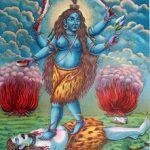
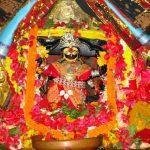
Nestled in the heart of coastal Odisha, the Maa Ugra Tara Temple in Khordha stands as a testament to the fierce yet benevolent protective power of the Divine Mother. Known locally as the presiding deity of the historic Mulajhargarh fort, Maa Ugra Tara is revered as Chaturbhuja (four-armed), holding potent weapons that symbolize her power to destroy ignorance and evil.
While the presiding deity is fierce (Ugra), she is eternally benevolent to her devotees. The temple is located approximately 65 kilometers from Bhubaneswar, offering a spiritual sanctuary away from the urban clamor.
Phalaśruti: Why Devotees Visit
According to local tradition and Tantric scriptures, worshipping Maa Ugra Tara yields specific spiritual and material benefits:
- Cleansing Ancestral Karma: Devotees believe that offerings made here, particularly on Amavasya (new moon), help resolve ancestral issues and cleanse past karma.
- Protection from Malefic Forces: As the guardian of the ancient Mulajhargarh fort, she is sought after for protection against negative energies and accidents.
- Success in endeavors: The Tantric Mantra associated with Tara is linked to the four Purusarthas (goals of human life): Dharma, Artha, Kama, and Moksha.
2. Historical Origins & Scriptural Legend
The history of this temple is intertwined with the glory of the Eastern Ganga Dynasty, the great rulers of Odisha who built the Jagannath Temple in Puri and the Sun Temple in Konark.
The Dynasty and the Fort
Tradition holds that Maa Ugra Tara was the tutelary deity of the Gajapati Kings of the Eastern Ganga dynasty. She was worshipped as the protector of Mulajhargarh, a strategic fort located on the border of the Chilika Lake. Though the fort has been lost to time and nature, the Goddess remains.
Scriptural & Tantric Significance
The theological basis for the worship here is deeply rooted in Tantric traditions:
- The Essence of Omkar: Scriptures suggest that Tara is synonymous with Omkar (the primordial sound). The five components of Omkar (A, U, M, Nada, and Bindu) are reflected in the five Bijas (seed syllables) of the Tara Mantra.
- The Mantra: The visionary of the mantra is Aksobhya Rishi. The presiding deity is Sri Tara Devata, with the Bija being Hum and Phat.
- Companion Deities: Her companion is Aksobhya, identified with Sri Sadasiva.
According to temple records, the ritualistic worship involves both cooked vegetarian offerings and, in specific Tantric traditions, non-vegetarian items, reflecting the all-encompassing nature of the Goddess who accepts the devotee’s true self.
3. Architectural Marvels
While the specific dates of the original construction remain elusive in official records (often common for ancient shrines maintained by local trust), the architecture reflects the transition of Odishan styles.
Style and Vastu
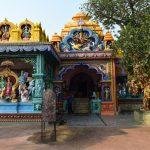
The temple structure is built in the Kalinga style (a regional variation of the Nagara style), characterized by its curvilinear tower (Rekha Deul). The sanctum sanctorum is designed according to Vastu Shastra principles, ensuring the flow of energy aligns with the fierce yet protective nature of the deity.
Sculptural Details
The main idol depicts Maa Ugra Tara as Chaturbhuja (four-armed). Her hands hold:
- Trishul (Trident): Symbolizing the destruction of the three impurities (Anava, Karma, and Maya).
- Weapons (Sword/Shastra): Signifying the cutting of ignorance.
- Varada (Boon) and Abhaya (Fearlessness): Indicating her benevolent nature to devotees.
The surrounding walls and Mandapas (pillared halls) feature intricate carvings of mythological scenes and floral motifs, typical of the region’s craftsmanship.
4. Darshan & Ritual Logistics
To ensure a seamless spiritual experience, devotees should adhere to the following schedule. Note: Timings may vary slightly during festivals; always verify with the temple trust.
Daily Timings
| Session | Time Slot | Rituals |
|---|---|---|
| Morning | 06:00 AM – 12:00 PM | Mangala Alati, Abhishekam, Madhyahna Puja |
| Afternoon Break | 12:00 PM – 02:00 PM | Temple Cleaning & Deity Rest |
| Evening | 02:00 PM – 08:30 PM | Darshan, Sandhya Alati, Pahuda (Closing) |
Key Sevas & Online Booking
Popular Sevas include Abhishekam (ritual bathing of the deity) and Archana (chanting of names). While the temple is traditionally managed, for major festivals, a dedicated online portal may be active.
Assuming the current year is 2026, the following major festivals are approaching:
- Chaitra Parba (Navaratri): April 2026 (Dates TBD by Almanac)
- Kartik Purnima: November 14, 2026
- Maa Ugra Tara Birthday (Tara Ashtami): Specific dates based on Odia calendar (Likely March/April).
Booking: For standard daily Sevas, one can approach the temple office. For specialized Tantric rituals, prior permission and consultation with the head priest (Panda) are recommended.
5. Practical Visitor Guidance
- Dress Code: Traditional attire is mandatory. Men should wear dhotis or trousers with shirts; women should wear sarees or salwar kameez. Avoid shorts or sleeveless tops.
- Photography: Strictly prohibited inside the sanctum sanctorum (Garbha Griha). Photography may be allowed in the outer mandapas, but please seek permission from the caretaker.
- Mobile & Lockers: Electronic devices are to be kept on silent mode. While small locker facilities are occasionally available, it is advisable to carry minimal valuables.
- Crowd Management: The temple sees a surge on Tuesdays and Saturdays. Best hours to visit: 7:00 AM to 8:30 AM or 4:00 PM to 5:30 PM to avoid peak crowds.
- Seasonal Advice: Odisha summers (May-June) are scorching. Carry a water bottle and head cover. The monsoon (July-September) brings humidity; an umbrella is essential.
6. Pilgrimage Connectivity
How to Reach
The temple is strategically located on National Highway 5 (NH 5), between Rameswar Chowk and Chandpur.
- Nearest Airport: Biju Patnaik International Airport, Bhubaneswar (approx. 60-65 km).
- Nearest Railway Station: Bhushandapur Railway Station is the closest stop. Alternatively, Bhubaneswar Railway Junction is well-connected to all major cities.
- By Road: Regular buses and taxis ply from Bhubaneswar and Balugaon. The drive offers scenic views of the Odisha countryside.
Nearby Sacred Sites (Circuit)
Expand your pilgrimage with these nearby spiritual destinations:
- Chilika Lake (Nalabana Island): A unique ecological site and spiritual wetland, just minutes away. Boat rides offer a chance to see dolphins and migratory birds.
- Balugaon (Gadagai): Known for its scenic beauty and small shrines along the lake.
- Khordha Town: The district headquarters, known for its historical fort and vibrant marketplaces.
7. Frequently Asked Questions (FAQs)
Is there a VIP darshan entry?
Currently, the temple does not have a formal online VIP ticket system. However, devotees wishing to perform specific Sevas (like Abhishekam) get priority access to the inner sanctum during the ritual time. Elderly and differently-abled visitors are given assistance by the temple staff.
Are there accommodation facilities available at the temple?
There are no major hotels directly inside the temple complex. However, there are small guest houses in the nearby village of Bhusandpur and limited accommodation options in the Tangi area. For better amenities, staying in Bhubaneswar (65 km away) is recommended.
Can non-Hindus visit the temple?
As with most Shakti Peethas in Odisha, entry is traditionally restricted to devotees of Hindu, Jain, Sikh, and Buddhist faiths. Non-Hindu visitors should respect local customs and consult the temple administration regarding entry policies.
What is the significance of the name “Ugra”?
“Ugra” translates to fierce or intense. It refers to the Goddess’s aspect as the destroyer of evil forces. However, her nature is dual: fierce towards demons but extremely compassionate (Saumya) towards her worshippers.
Is photography allowed in the temple complex?
Photography is generally allowed in the outer courtyards and mandapas but is strictly forbidden inside the sanctum sanctorum. Drones are prohibited without prior government clearance.
Photo Gallery
Official Address
Mulijhara Garda, Mulijhar
District: Khordha, Odisha
Pin: 752021
Contact: 09937231453
Recent Posts

Shri Kaamkoteeshwar Mandir, Varanasi – History & Significance
In the heart of Kashi, the eternal city of Lord Shiva, where the Ganges flows with celestial grace, stands the Shri Kaamkoteeshwar Mandir. This sacred Sannidhi is not merely a temple but a profound spiritual bridge between the Northern…

ओ सांवरे तूने ही मुझको संभाला – Lyrics & Meaning
ओ सांवरे तूने ही मुझको संभाला – A Prayer to Shyam Origin & Spiritual Essence Why This Bhajan Resonates Devotees chant this when overwhelmed by life’s storms—the refrain ‘तूने ही मुझको संभाला’ is the soul’s sigh of relief: “You…

कथा ये है महाराज मेरे की – Lyrics & Meaning
कथा ये है महाराज मेरे की छत्रपति संभाजी महाराज – A Prayer to Chhatrapati Sambhaji Maharaj Origin & Spiritual Essence Why This Bhajan Resonates Devotees chant this when their spirit feels tested—its powerful refrain “महाराज मेरे” is a soul’s…

Rigveda Samhita Yathartha Anuvada (ऋग्वेद संहिता यथार्थ अनुवाद) – Complete Set with Anvayartha & Hindi/English Translation
The Rigveda is the oldest surviving scripture of humanity and the foundational text of Sanātana Dharma. For serious students, scholars, UPSC aspirants studying ancient Indian history, Sanskrit learners, and spiritual seekers, a precise and grammatically structured translation is indispensable.…

आना भी अकेला है जाना भी अकेला है – Lyrics & Meaning | BharatTemples
आना भी अकेला है जाना भी अकेला है – A Prayer to the Divine Witness Origin & Spiritual Essence Why This Bhajan Resonates Devotees turn to this bhajan in moments of deep reflection—when life’s attachments begin to ache. The…

माता शेरावाली के द्वार जो भी जाता है – Lyrics & Meaning
माता शेरावाली के द्वार जो भी जाता है – A Prayer to Maa Sherawali Origin & Spiritual Essence Why This Bhajan Resonates Devotees turn to this bhajan in times of fear or uncertainty—its promise that no one leaves Maa’s…

मार लेना सपणी उबार लेणा भवरा – Lyrics & Meaning
मार लेना सपणी उबार लेणा भवरा – A Prayer to the Divine Beloved Origin & Spiritual Essence Why This Bhajan Resonates Devotees chant this in moments of deep vulnerability—its cry of “मार लेना सपणी, उबार लेणा भवरा” is the…

हमें श्याम सुंदर भरोसा तुम्हारा – Lyrics & Meaning
हमें श्याम सुंदर भरोसा तुम्हारा – A Prayer to Shyam Sundar Origin & Spiritual Essence Why This Bhajan Resonates Devotees chant this when feeling alone—its refrain ‘de do sahara’ is the soul’s cry for divine support. Lyrics in Hindi…

Mere Satguru Ne Di Thi Davai Lyrics in Hindi & Meaning
Mere Satguru Ne Di Thi Davai: Invoking the Guru’s Liberating Wisdom This soul-stirring bhajan venerates the Satguru (True Spiritual Master) as the divine physician who dispenses the only remedy for life’s deepest sufferings. Composed by Sant Karmaveer Tufani, it…

Janm Diyo Thari Maa Dukh Dekhiyo Lyrics in Hindi & Meaning
जन्म दियो थारी माँ दुख देखियो (Maa’s Grief Upon Birthing You) This soul-stirring Chetavani Bhajan (admonitory hymn) is addressed to the Divine Mother (Maa) – a call for repentance when children forget their filial duties in the dark age…