
Contents
- 1 Introduction & Spiritual Essence
- 2 Historical Origins & Scriptural Legend
- 3 Architectural Marvels
- 4 Darshan & Ritual Logistics
- 5 Practical Visitor Guidance
- 6 Pilgrimage Connectivity
- 7 Frequently Asked Questions (FAQ)
- 8 Architecture
- 9 Legend / Local stories
- 10 Photo Gallery
- 11 How to Reach:
- 12 Contact Details
Introduction & Spiritual Essence
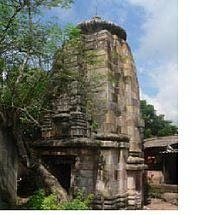
Nestled within the sacred precincts of Ekamra Kshetra (Old Town Bhubaneswar), the Pabaneswara Temple stands as a testament to the enduring spiritual legacy of Odisha. Dedicated to Lord Shiva, this ancient shrine is often overlooked by the larger crowds visiting the Lingaraj Temple, yet it holds profound significance for the devout seeker. The presiding deity is a Swayambhu (self-manifested) Shiva Lingam housed within a circular Yonipitha (base).
Phalaśruti (Spiritual Benefits): According to local tradition, worshiping here alleviates the malefic effects of planetary alignments, particularly related to Saturn (Shani). The temple is believed to be a potent site for cleansing ancestral karma and bestowing mental peace upon devotees who perform sincere Abhishekam with water from the nearbyBindu Sarovara.
Historical Origins & Scriptural Legend
The Legend of Lord Pabaneswara
Tradition holds that the name “Pabaneswara” is derived from Pabana, an ancient local dialect referring to a “sword,” or possibly associated with the Puranas. Folklore suggests that the sage Parasurama, an ardent devotee of Shiva, installed this Lingam to absolve himself of the sin of kshatriya annihilation. While the exact date of the original construction is difficult to pinpoint due to limited inscriptions, the structure reflects the architectural vocabulary of the early post-Gupta period.
Renovations: According to temple records and the Archaeological Survey of India (ASI), the current superstructure (Deul) was significantly renovated in the later periods, likely the 9th-10th century CE, obscuring some of the earlier features. However, the sanctum sanctorum retains its ancient character, preserving the sanctity of the original Yonipitha.
Architectural Marvels
The Pabaneswara Temple is a classic example of the Dravida style of temple architecture, characteristic of the transitional phase of Odishan temple building. Unlike the towering Rekha Deul of the Lingaraj, this shrine features a Pidha Deul (pyramidal roof) over the sanctum.
- The Sanctum (Garbhagriha): The inner sanctum houses the Swayambhu Shiva Lingam, which is bathed in a perennial water seepage, maintaining the Abhisheka state naturally.
- The Porch (Jagamohana): The temple features a renovated porch that provides an open space for circumambulation (Pradakshina). The pillars of the porch display intricate carvings of Apsaras (celestial nymphs) and floral motifs.
- Structural Context: The temple is positioned 100 meters east of the Parasuramesvara Temple, making it part of a dense archaeological grid. The Pabhaga (moulded basement) shows distinct later additions, while the core masonry remains ancient.
Darshan & Ritual Logistics
As a “living temple,” daily rituals are performed with strict adherence to Agamic traditions. The atmosphere is generally quieter than the main Lingaraj complex, allowing for a meditative experience.
Daily Darshan Timings (2026 Schedule)
| Session | Timing | Ritual Activity |
|---|---|---|
| Morning Darshan | 6:00 AM – 12:00 PM | Mangala Alati, Abhishekam |
| Afternoon Break | 12:00 PM – 3:00 PM | Sanctum Cleaning & Rest |
| Evening Darshan | 3:00 PM – 9:00 PM | Sandhya Alati, Dhupa |
Seva & Online Booking
Devotees can participate in various Sevas. While the temple management is often handled locally, the broader Ekamra Kshetra administration is increasingly digitized.
- Abhishekam: Performed with water, milk, and honey.
- Archana: Recitation of Shiva Sahasranama.
- Online Booking: For major festivals, visitors can check the Shrine Board Website for entry passes.
Major Festivals in 2026
- Maha Shivaratri: March 1, 2026 – The temple is decorated with lights, and night-long Jagaran is performed.
- Nabanna: Mid-January 2026 – A local harvest festival celebrated with special Maha Naivedya.
- Bhola Ratha: July 2026 (Ashadha month) – A procession of Lord Shiva.
Practical Visitor Guidance
Preserving the sanctity of the temple is paramount. Please adhere to the following guidelines:
- Dress Code: Traditional attire is recommended. Men should wear Dhoti or formal trousers with a shirt; women should wear Saree or Salwar Kameez. Avoid shorts and sleeveless tops.
- Photography: Photography is strictly prohibited inside the sanctum and the Jagamohana. Photography in the outer courtyard may be permitted, but please check with the temple guards.
- Mobile Phones: Electronic devices should be kept on silent. Lockers are generally available at the entrance of the Ekamra Kshetra complex, but it is advisable to carry minimal belongings.
- Accessibility: The temple has a raised threshold. While the courtyard is paved, accessibility for wheelchairs might be challenging due to the ancient steps. Assistance is available from temple staff.
- Crowd Management: The temple is usually crowded on Mondays and during festivals. The best time for a peaceful Darshan is early morning (6:30 AM – 8:00 AM) or late evening (7:00 PM – 8:30 PM). During summer (April-May), carry a water bottle and a head covering, as the stone floors can get hot.
Pilgrimage Connectivity
How to Reach Pabaneswara Temple
The temple is located in the heart of Bhubaneswar (Old Town), making it accessible via various modes of transport.
- By Air: The nearest airport is Biju Patnaik International Airport (BBI), approximately 10 km away (30 minutes by taxi).
- By Rail: The nearest railway station is Bhubaneswar New Station (BBS), about 5 km away. Autorickshaws and cabs are readily available.
- By Road: The temple is situated off the main road leading to Kedara-Gouri. It lies near the Ravenshaw University and Mukteswar Temple precincts. NH 16 (formerly NH 5) connects Bhubaneswar to major cities.
Nearby Sacred Sites (Pilgrimage Circuit)
Since you are in Ekamra Kshetra, it is recommended to visit these nearby shrines to complete your spiritual circuit:
- Parasuramesvara Temple: Located just 100 meters west, this is one of the oldest surviving temples in Odisha, dedicated to Lord Shiva.
- Mukteswar Temple: Known as the “Gem of Odisha architecture,” located about 500 meters away, featuring a beautiful torana (archway).
- Lingaraj Temple: The largest temple in Bhubaneswar, located 1 km away. (Note: Non-Hindus are not permitted inside the inner sanctum).
- Kedara-Gouri Temple: Located adjacent to Pabaneswara, famous for the annual Balijatra festival.
Frequently Asked Questions (FAQ)
1. Is there a VIP Darshan entry at Pabaneswara Temple?
Unlike larger temples, Pabaneswara Temple does not typically have a separate VIP entry gate. Darshan is usually first-come-first-serve. However, during festivals, special passes may be issued by the temple administration for senior citizens and differently-abled visitors.
2. What is the significance of the circular Yonipitha?
The circular base represents the feminine creative energy (Shakti), complementing the vertical male Lingam (Shiva). This form signifies the cosmic union of creation and is considered highly auspicious for fertility and prosperity.
3. Are there food facilities nearby?
While the temple does not have a large community kitchen, there are several small eateries and traditional Odia food stalls in the Old Town area serving Pakhal Bhata (fermented rice) and Dalma. The Ananda Bazaar near Lingaraj Temple also offers Mahaprasad.
4. Is non-vegetarian food allowed inside the temple complex?
No. The entire Ekamra Kshetra is a strictly vegetarian zone. Alcohol and non-vegetarian food are strictly prohibited. Please respect the sanctity of the area.
5. What is the best season to visit Bhubaneswar?
The ideal time is between October and February when the weather is pleasant and cool. Avoid the peak summer months (April-June) as temperatures can exceed 40°C. Monsoons (July-September) are lush but may bring heavy rainfall.
Architecture
| Date built: | – |
|---|---|
| Deity: | – |
| Architectural style: | – |
| Major festivals | – |
| Locale: | – |
| District:: | Bhubaneswar |
| Address: | – |
| Phone | – |
Legend / Local stories
Photo Gallery
How to Reach:
Contact Details
Official Address
Recent Posts

Shri Kaamkoteeshwar Mandir, Varanasi – History & Significance
In the heart of Kashi, the eternal city of Lord Shiva, where the Ganges flows with celestial grace, stands the Shri Kaamkoteeshwar Mandir. This sacred Sannidhi is not merely a temple but a profound spiritual bridge between the Northern…

ओ सांवरे तूने ही मुझको संभाला – Lyrics & Meaning
ओ सांवरे तूने ही मुझको संभाला – A Prayer to Shyam Origin & Spiritual Essence Why This Bhajan Resonates Devotees chant this when overwhelmed by life’s storms—the refrain ‘तूने ही मुझको संभाला’ is the soul’s sigh of relief: “You…

कथा ये है महाराज मेरे की – Lyrics & Meaning
कथा ये है महाराज मेरे की छत्रपति संभाजी महाराज – A Prayer to Chhatrapati Sambhaji Maharaj Origin & Spiritual Essence Why This Bhajan Resonates Devotees chant this when their spirit feels tested—its powerful refrain “महाराज मेरे” is a soul’s…

Rigveda Samhita Yathartha Anuvada (ऋग्वेद संहिता यथार्थ अनुवाद) – Complete Set with Anvayartha & Hindi/English Translation
The Rigveda is the oldest surviving scripture of humanity and the foundational text of Sanātana Dharma. For serious students, scholars, UPSC aspirants studying ancient Indian history, Sanskrit learners, and spiritual seekers, a precise and grammatically structured translation is indispensable.…

आना भी अकेला है जाना भी अकेला है – Lyrics & Meaning | BharatTemples
आना भी अकेला है जाना भी अकेला है – A Prayer to the Divine Witness Origin & Spiritual Essence Why This Bhajan Resonates Devotees turn to this bhajan in moments of deep reflection—when life’s attachments begin to ache. The…

माता शेरावाली के द्वार जो भी जाता है – Lyrics & Meaning
माता शेरावाली के द्वार जो भी जाता है – A Prayer to Maa Sherawali Origin & Spiritual Essence Why This Bhajan Resonates Devotees turn to this bhajan in times of fear or uncertainty—its promise that no one leaves Maa’s…

मार लेना सपणी उबार लेणा भवरा – Lyrics & Meaning
मार लेना सपणी उबार लेणा भवरा – A Prayer to the Divine Beloved Origin & Spiritual Essence Why This Bhajan Resonates Devotees chant this in moments of deep vulnerability—its cry of “मार लेना सपणी, उबार लेणा भवरा” is the…

हमें श्याम सुंदर भरोसा तुम्हारा – Lyrics & Meaning
हमें श्याम सुंदर भरोसा तुम्हारा – A Prayer to Shyam Sundar Origin & Spiritual Essence Why This Bhajan Resonates Devotees chant this when feeling alone—its refrain ‘de do sahara’ is the soul’s cry for divine support. Lyrics in Hindi…

Mere Satguru Ne Di Thi Davai Lyrics in Hindi & Meaning
Mere Satguru Ne Di Thi Davai: Invoking the Guru’s Liberating Wisdom This soul-stirring bhajan venerates the Satguru (True Spiritual Master) as the divine physician who dispenses the only remedy for life’s deepest sufferings. Composed by Sant Karmaveer Tufani, it…

Janm Diyo Thari Maa Dukh Dekhiyo Lyrics in Hindi & Meaning
जन्म दियो थारी माँ दुख देखियो (Maa’s Grief Upon Birthing You) This soul-stirring Chetavani Bhajan (admonitory hymn) is addressed to the Divine Mother (Maa) – a call for repentance when children forget their filial duties in the dark age…