
Contents
- 1 Introduction & Spiritual Essence
- 2 Historical Origins & Scriptural Legend
- 3 Architectural Marvels
- 4 Darshan & Ritual Logistics
- 5 Practical Visitor Guidance
- 6 Pilgrimage Connectivity
- 7 Photo Gallery
- 8 Official Address & Contact
Introduction & Spiritual Essence
Nestled on the serene banks of the mighty Mahanadi River in Sambalpur, Odisha, stands the sacred Samaleswari Temple. This ancient shrine is the spiritual heart of Western Odisha and holds immense religious significance for devotees across the region and neighboring Chhattisgarh. The presiding deity, Maa Samaleswari (also revered as Samalei Maa), is worshipped as the embodiment of Jagatjanani (Mother of the Universe) and Adishakti. She is believed to be a collective form of Goddesses Mahalaxmi and Mahasaraswati, bestowing prosperity and wisdom upon her followers.
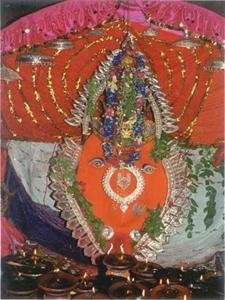
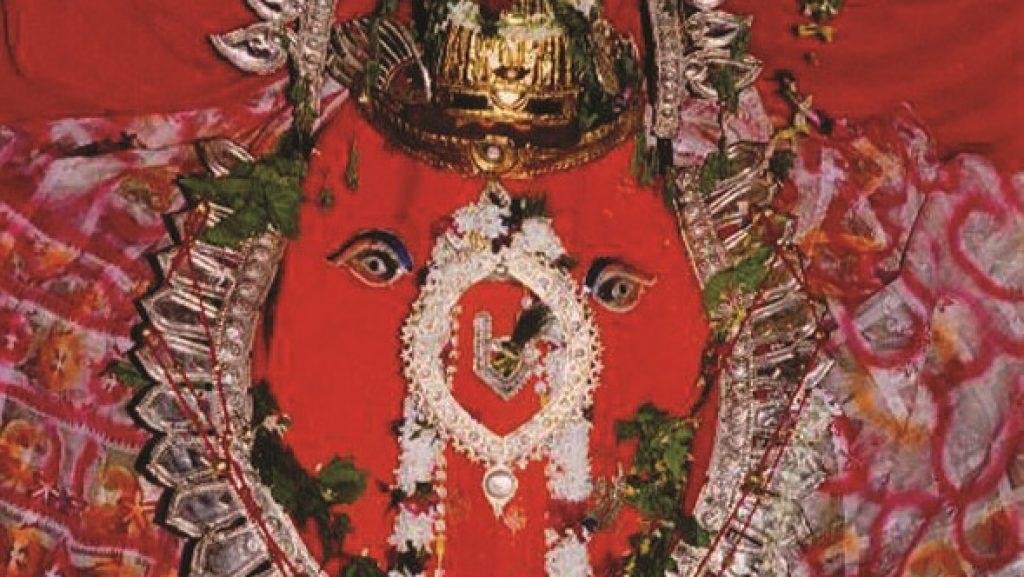
Unlike many deities represented by abstract forms, the idol of Maa Samaleswari is a Swayambhu (self-manifested) granite rock. The icon features a natural, trunk-like projection at the base, with shallow depressions symbolizing her mouth and eyes, adorned with traditional Sambalpuri gold ornaments. For devotees, a Darshan of Maa Samaleswari is believed to cleanse ancestral karma, remove obstacles in childbirth and education, and grant protection against calamities. She is the Moolasthana (original seat) of the region, acting as the supreme protector of Sambalpur and its people.
Historical Origins & Scriptural Legend
The history of Samaleswari Temple is deeply intertwined with the cultural evolution of the Sambalpur region, historically known as Hirakhanda. While the exact date of the temple’s foundation remains shrouded in ancient mystery, historical records and local traditions suggest its existence since at least the 15th century, likely established by the rulers of the Chauhan Dynasty who governed the region.
According to the Sthala Purana (local oral legends), the region was once a dense forest where the deity manifested herself to protect the local tribes and settlers. The temple finds indirect references in ancient texts due to the region’s prominence in trade. Ptolemy, the ancient geographer, referred to Sambalpur as Sambalak, noting its significance. Furthermore, historical accounts by the French traveler Tavernier and English historian Edward Gibbon describe Sambalpur as a major diamond trading center, with diamonds exported to Rome. It is believed that the local rulers built the temple to secure the divine blessings of the Mother Goddess for the prosperity of this trade route.
Records held by the temple administration and local historians indicate that the structure has undergone several renovations over the centuries to preserve its sanctity and structural integrity, particularly after natural wear from its proximity to the river. Today, it stands as a testament to the region’s unwavering faith.
Architectural Marvels
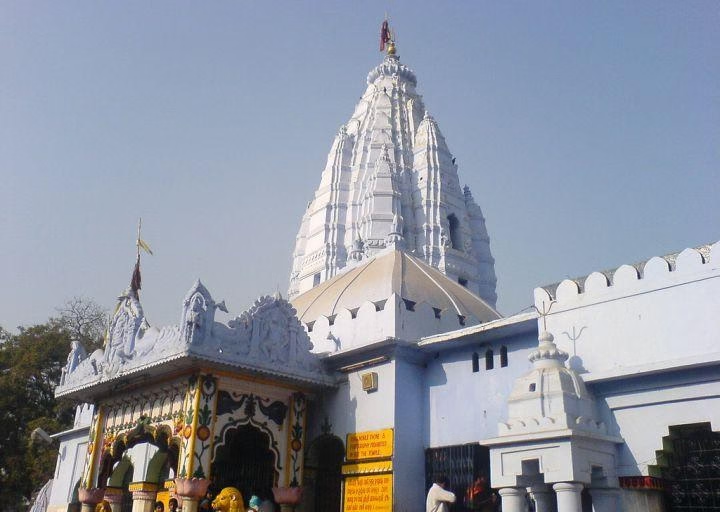
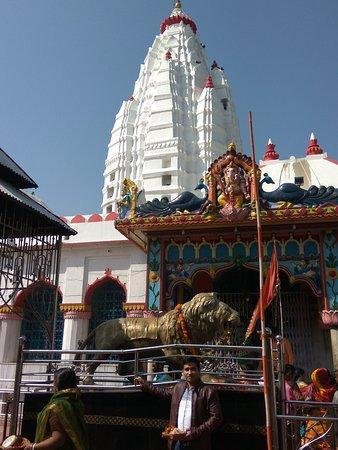
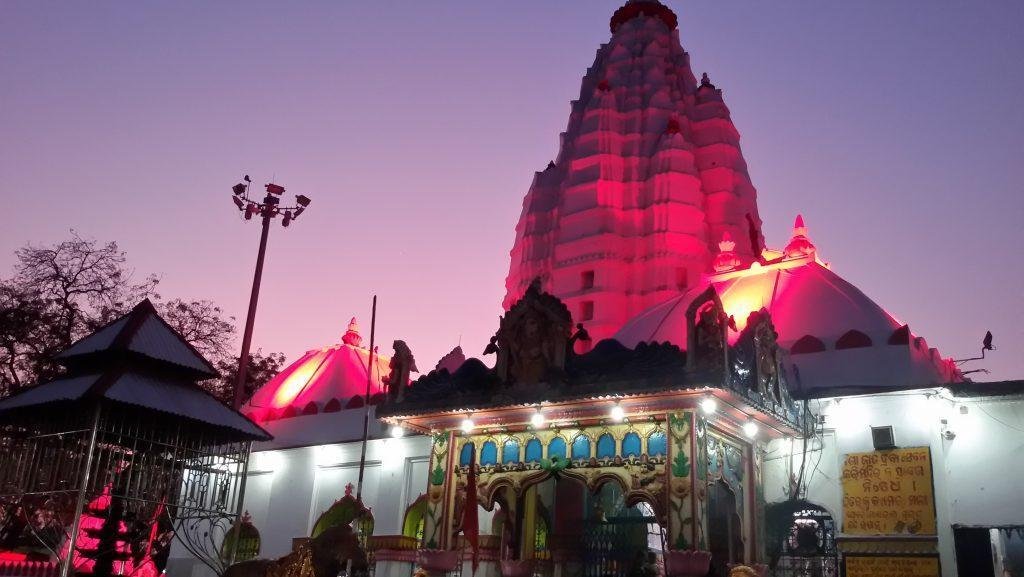
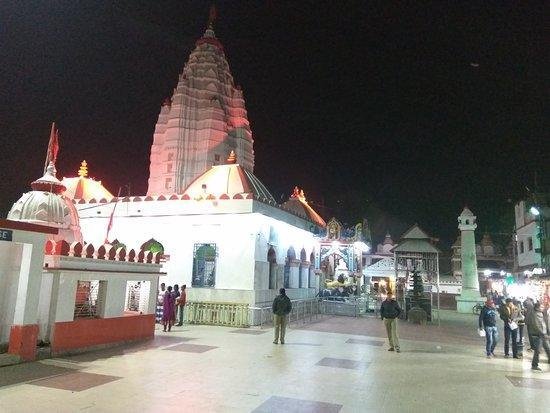
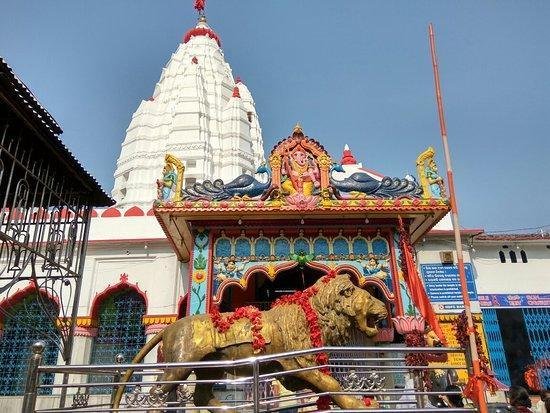
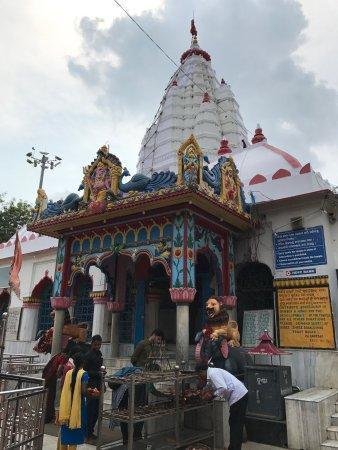
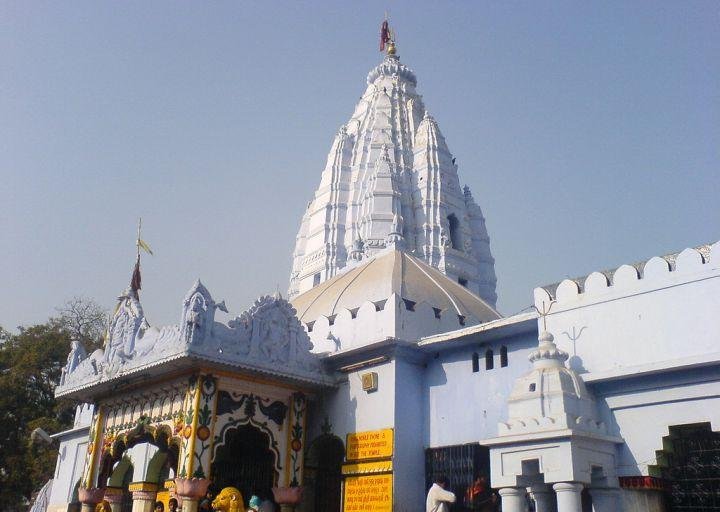
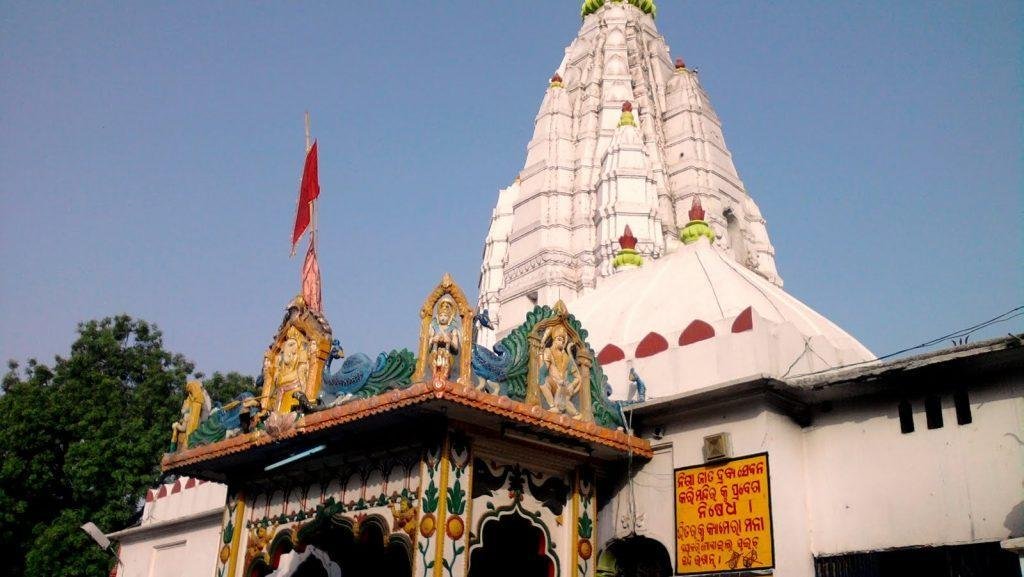
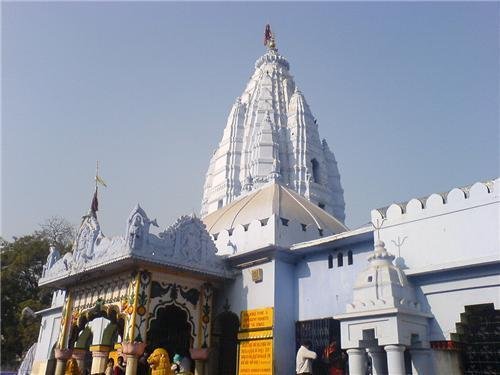
The Samaleswari Temple is a stunning example of Kalinga Architecture, specifically adhering to the Sandhara order. This style is characterized by a square sanctum (Garbhagriha) enclosed by a covered circumambulation path (Pradakshina) supported by pillars.
- The Sanctum & Shikhara: The main temple structure comprises a square sanctum sanctorum housing the deity. The Shikhara (tower) rises above the sanctum, reflecting the classic tiered style of Odishan temple architecture, though the external surface is plastered, giving it a distinct smooth appearance.
- Pillared Circumambulation: The sanctum is located four steps below the Pradakshina path, which is 10 feet wide and supported by 12 stone pillars. This allows devotees to perform Parikrama (circumambulation) comfortably.
- Parswa Devis: A unique feature of the temple is the presence of eleven Parswa Devis (side goddesses) embedded on the outer wall of the sanctum. Devotees can worship these deities while moving through the vaulted circumambulation path.
- Material: The temple is built using a durable variety of stone similar to granite, cemented with lime mortar. While plastered, the structure retains its ancient grandeur. Though not officially listed as a UNESCO site, it holds significant heritage value and is protected by local authorities.
Darshan & Ritual Logistics
The rituals at Samaleswari Temple follow ancient Agamic traditions. The priests (Pandas) perform daily Alankaram (dressing of the deity) and offerings.
Daily Darshan Timings
| Session | Timings |
|---|---|
| Morning Darshan | 05:00 AM – 12:30 PM |
| Evening Darshan | 04:00 PM – 09:00 PM |
| Maha Mangala Aarti | 06:30 AM & 06:30 PM |
*Note: Timings may vary slightly during festivals or special occasions.
Key Sevas & Offerings
- Mangala Aarti: The early morning ritual to wake the deity.
- Abhishekam: Ritual bathing of the deity with water, milk, and honey.
- Archana: Recitation of the 108 names of the Goddess.
- Chandan Yatra: Offering sandalwood paste during summer months.
- Nuakhai Prasad: During the harvest festival, offering the first grains to the Goddess.
Online Seva Booking (2026)
While the temple traditionally manages devotees in person, the administration is expected to launch an online portal for online seva booking for major festivals in 2026. Devotees are advised to check the official Odisha Temple Administration portal or contact the temple trust for the latest updates on booking procedures for Abhishekam and special Vratas.
Major Festival Dates for 2026
- Nuakhai: September 5, 2026 (Harvest Festival).
- Navaratra Puja (Sharad): October 3 – October 11, 2026.
- Diwali/Deepavali: October 18, 2026 (Special Deepa lighting).
Practical Visitor Guidance
To ensure a spiritually fulfilling and hassle-free visit to the Samaleswari Temple, please adhere to the following guidelines:
- Dress Code: Traditional attire is highly recommended. Men should wear Dhoti and Angavastram (upper cloth), or trousers/shirts (avoid shorts/t-shirts). Women should wear Saree or Salwar Kameez. Modesty is key.
- Photography: Photography is prohibited inside the sanctum sanctorum. Visitors can take pictures of the temple exterior and the courtyard.
- Mobile & Lockers: Electronic devices, leather items, and large bags are not allowed inside the sanctum. Free mobile lockers are usually available near the temple entrance or the priest’s chamber.
- Crowd Management:
• Best Hours: Early morning (5:00 AM – 7:00 AM) or late evening (after 8:00 PM) to avoid rush.
• Peak Seasons: During Nuakhai and Navaratra, crowds swell significantly. Plan accommodation in advance.
• Seasonal Advice: Sambalpur can be humid. Carry a water bottle, especially during the summer months (May-June). - Accessibility: The temple complex has steps, but ramps are available for entry. Elderly devotees can request assistance from temple volunteers.
Pilgrimage Connectivity
Sambalpur is well-connected by rail, road, and air, making it accessible for pilgrims from across India.
How to Reach
- By Air: The nearest airport is Swami Vivekananda Airport, Raipur (Chhattisgarh), approximately 270 km away. The second closest is Biju Patnaik International Airport, Bhubaneswar, roughly 320 km away.
- By Rail: Sambalpur Railway Junction is a major rail hub on the East Coast Railway line. Direct trains are available from Delhi, Kolkata, Mumbai, Chennai, and Ahmedabad.
- By Road: Sambalpur is connected via National Highway NH 53 (part of the Golden Quadrilateral) and NH 715. Regular bus services operate from Bhubaneswar, Cuttack, Raipur, and Rourkela.
Nearby Sacred Sites (Pilgrimage Circuit)
- Hirakud Dam: One of the longest dams in the world, located 15 km from the temple. It houses temples dedicated to Lord Shiva and Goddess Gandhi Minar.
- Budha Raja Temple: Located on the banks of the Mahanadi, this temple is often visited in conjunction with Samaleswari Temple.
- Debrigarh Wildlife Sanctuary: For those seeking nature alongside spirituality, this sanctuary is located near Hirakud and offers a serene retreat.
Frequently Asked Questions (FAQ)
1. Is there a VIP darshan entry?
Yes, the temple administration offers a dedicated queue for senior citizens and differently-abled devotees. While there is no commercial “VIP ticket” system, donations to the temple trust can sometimes facilitate a quicker darshan during non-peak hours. It is best to inquire at the temple office upon arrival.
2. What is the significance of the granite idol?
The idol is considered Swayambhu (self-manifested), meaning it was not carved by human hands but discovered naturally. The granite rock’s natural shape is interpreted as the face of the Goddess, symbolizing her eternal and formless nature.
3. Are non-Hindus allowed inside?
Traditionally, entry to the sanctum sanctorum is restricted to Hindus. However, visitors of other faiths are allowed in the temple courtyard and can view the architecture from the exterior.
4. Is accommodation available near the temple?
Yes, Sambalpur has numerous hotels, guest houses, and budget lodges within a 2-5 km radius of the temple. The temple trust may also have limited guest rooms for devotees, subject to availability.
5. What is the best time to visit Sambalpur?
The ideal time to visit is between October and March when the weather is pleasant. However, visiting during Nuakhai (September) offers a unique cultural experience, though the city will be very crowded.
Photo Gallery
Official Address & Contact
Address: Ray Pada, Khetrajpur, Sambalpur, Odisha 768003
Phone: 06632 401369
For the most current updates, pilgrims should consult the official temple management committee or the Odisha government’s tourism portal.
Recent Posts

Shri Kaamkoteeshwar Mandir, Varanasi – History & Significance
In the heart of Kashi, the eternal city of Lord Shiva, where the Ganges flows with celestial grace, stands the Shri Kaamkoteeshwar Mandir. This sacred Sannidhi is not merely a temple but a profound spiritual bridge between the Northern…

ओ सांवरे तूने ही मुझको संभाला – Lyrics & Meaning
ओ सांवरे तूने ही मुझको संभाला – A Prayer to Shyam Origin & Spiritual Essence Why This Bhajan Resonates Devotees chant this when overwhelmed by life’s storms—the refrain ‘तूने ही मुझको संभाला’ is the soul’s sigh of relief: “You…

कथा ये है महाराज मेरे की – Lyrics & Meaning
कथा ये है महाराज मेरे की छत्रपति संभाजी महाराज – A Prayer to Chhatrapati Sambhaji Maharaj Origin & Spiritual Essence Why This Bhajan Resonates Devotees chant this when their spirit feels tested—its powerful refrain “महाराज मेरे” is a soul’s…

Rigveda Samhita Yathartha Anuvada (ऋग्वेद संहिता यथार्थ अनुवाद) – Complete Set with Anvayartha & Hindi/English Translation
The Rigveda is the oldest surviving scripture of humanity and the foundational text of Sanātana Dharma. For serious students, scholars, UPSC aspirants studying ancient Indian history, Sanskrit learners, and spiritual seekers, a precise and grammatically structured translation is indispensable.…

आना भी अकेला है जाना भी अकेला है – Lyrics & Meaning | BharatTemples
आना भी अकेला है जाना भी अकेला है – A Prayer to the Divine Witness Origin & Spiritual Essence Why This Bhajan Resonates Devotees turn to this bhajan in moments of deep reflection—when life’s attachments begin to ache. The…

माता शेरावाली के द्वार जो भी जाता है – Lyrics & Meaning
माता शेरावाली के द्वार जो भी जाता है – A Prayer to Maa Sherawali Origin & Spiritual Essence Why This Bhajan Resonates Devotees turn to this bhajan in times of fear or uncertainty—its promise that no one leaves Maa’s…

मार लेना सपणी उबार लेणा भवरा – Lyrics & Meaning
मार लेना सपणी उबार लेणा भवरा – A Prayer to the Divine Beloved Origin & Spiritual Essence Why This Bhajan Resonates Devotees chant this in moments of deep vulnerability—its cry of “मार लेना सपणी, उबार लेणा भवरा” is the…

हमें श्याम सुंदर भरोसा तुम्हारा – Lyrics & Meaning
हमें श्याम सुंदर भरोसा तुम्हारा – A Prayer to Shyam Sundar Origin & Spiritual Essence Why This Bhajan Resonates Devotees chant this when feeling alone—its refrain ‘de do sahara’ is the soul’s cry for divine support. Lyrics in Hindi…

Mere Satguru Ne Di Thi Davai Lyrics in Hindi & Meaning
Mere Satguru Ne Di Thi Davai: Invoking the Guru’s Liberating Wisdom This soul-stirring bhajan venerates the Satguru (True Spiritual Master) as the divine physician who dispenses the only remedy for life’s deepest sufferings. Composed by Sant Karmaveer Tufani, it…

Janm Diyo Thari Maa Dukh Dekhiyo Lyrics in Hindi & Meaning
जन्म दियो थारी माँ दुख देखियो (Maa’s Grief Upon Birthing You) This soul-stirring Chetavani Bhajan (admonitory hymn) is addressed to the Divine Mother (Maa) – a call for repentance when children forget their filial duties in the dark age…