
Contents
- 1 Introduction & Spiritual Essence
- 2 Historical Origins & Scriptural Legend
- 3 Architectural Marvels
- 4 Darshan & Ritual Logistics
- 5 Practical Visitor Guidance
- 6 Pilgrimage Connectivity
- 7 Frequently Asked Questions (FAQ)
- 7.1 1. What is the significance of the name “Hari Muktheeswarar”?
- 7.2 2. Is there VIP or special entry darshan available?
- 7.3 3. What is the connection between this temple and Lord Vishnu?
- 7.4 4. Are there accommodation facilities available at the temple?
- 7.5 5. When is the best time to visit for the Saptha Sthanam festival?
Introduction & Spiritual Essence
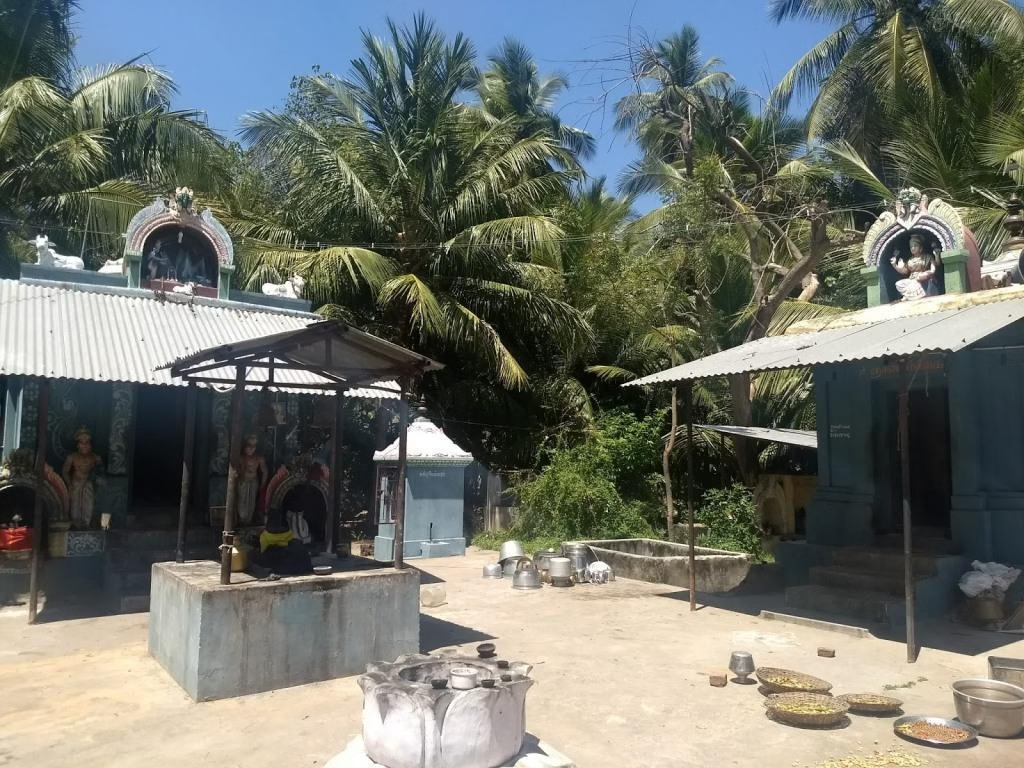
The Hari Muktheeswarar Temple, situated in the tranquil village of Ariyamangai near Papanasam (Thanjavur district), is a profound center of Shaivite worship, deeply interwoven with Vaishnavite traditions. The presiding deity is Lord Shiva, revered here as Hari Muktheeswarar (The Lord who grants liberation to Vishnu/Hari). The mother goddess is known as Gnanambika.
Phalaśruti: Why Devotees Visit
According to temple traditions, a pilgrimage here aids in cleansing ancestral karma. The temple is particularly significant for those seeking the blessings of the Saptha Matrikas (The Seven Divine Mothers), as it is one of the seven shrines around Ayyampettai associated with this specific group. Devotees believe that worshiping here helps resolve obstacles in marriage and family life, as the temple lore is linked to Lord Vishnu acquiring blessings for prosperity.
Historical Origins & Scriptural Legend
The Legend of Ariya Mangai
Tradition holds that the name Ariyamangai has roots in the divine past. Legend states that Goddess Mahalakshmi (Hari Mangai) came to this place to perform severe penance for Lord Shiva. She subsisted solely on Arunellikai (a type of fruit) to gain a boon ensuring she would always remain by Lord Vishnu’s side. Pleased by her devotion, Shiva granted the boon. Over time, the village became known as Harimangai, later evolving into Ariyamangai.
The Ganga Darshan
Scriptural references suggest that Mother Parvathi, accompanied by Maheswari (a form of the Mother holding a trident), worshipped Shiva here to witness the celestial Ganga Darshan. This vision is re-enacted spiritually every year on the second day of Navarathri (Dwithiyai).
Architectural Marvels
The temple showcases traditional Tamil Temple Architecture, characterized by its rustic, ancient stone structures that have withstood centuries. While it lacks the monumental gopurams of later Chola or Nayaka eras, the sanctity of the structure is defined by its Vastu Shastra alignment, ensuring energy flow from the sanctum sanctorum.
Key features include:
- The Sanctum: Houses the Swayambhu (self-manifested) lingam of Hari Muktheeswarar.
- The Mother’s Shrine: Dedicated to Gnanambika, facing South.
- The Theertham: The Hari Theertham (originally Sathya Ganga Theertham) is a significant water body within the complex used for rituals.
Darshan & Ritual Logistics
Timing your visit is crucial for a peaceful darshan. Below are the standard operating hours. (Note: Timings may vary slightly during festival seasons).
| Session | Timings | Activity |
|---|---|---|
| Morning | 06:00 AM – 12:00 PM | Abhishekam, Archana |
| Evening | 04:00 PM – 08:00 PM | Deeparadhana, Temple Closure |
Key Sevas and Booking
Devotees can book specific Sevas. For 2026, the following major festivals are observed:
- Maha Shivaratri: February 26, 2026
- Aipasi Annabishekam: November 13, 2026
- Navarathri (Ganga Darshan): October 4-5, 2026 (Dwithiyai)
To book online seva, devotees should check the Tamil Nadu HR&CE official portal for the Hari Muktheeswarar temple listing.
Practical Visitor Guidance
Dress Code & Etiquette
Traditional attire is mandatory for darshan. Men should wear dhotis or formal trousers with shirts; women should wear sarees, salwar kameez, or long skirts.
Photography & Lockers
Photography is generally restricted inside the sanctum sanctorum. Mobile phones and cameras should be kept in silent mode. While there are no high-tech lockers, it is advisable to carry minimal valuables.
Crowd Management
Unlike major temples in Kumbakonam, this temple sees moderate crowds. However, during the Saptha Sthanam festival (Panguni month), the temple becomes crowded. The best time to visit is early morning (6:00 AM) or weekday evenings. Carry water and an umbrella, especially during the hot months of April–June.
Pilgrimage Connectivity
How to Reach
The temple is centrally located in the Thanjavur district:
- By Air: Trichy (Tiruchirappalli) International Airport (Approx. 70 km).
- By Rail: Ayyampet Railway Station is the nearest stop (1 km). Thanjavur Junction is 18 km away.
- By Road: The temple is situated on the Thanjavur – Kumbakonam Road (NH / State Highway). It is 400 meters from Manakkadu Bus Stop.
Nearby Sacred Sites
- Pasupathi Koil (Pasupatheeswarar Temple): Located nearby, this is the central point for the Saptha Sthanam festival circuit.
- Thirupazhanam: (11 km) Known for the Suyambu Aadhi Kesava Perumal Temple, a rare Vishnu shrine featuring a Suyambu idol.
- Kumbakonam Temples: (24 km) The region is dense with ancient shrines including the Sarangapani and Kumbeshwarar temples.
Frequently Asked Questions (FAQ)
1. What is the significance of the name “Hari Muktheeswarar”?
The name signifies Lord Shiva granting “Mukti” (liberation) to “Hari” (Lord Vishnu). Legend states that Lord Vishnu worshiped Shiva here to acquire the power to defeat demons and obtain prosperity (Lakshmi).
2. Is there VIP or special entry darshan available?
As a village temple managed by the Tamil Nadu HR&CE department, VIP darshan protocols are less formalized than in massive shrines. However, contacting the temple executive officer (O.S.) in advance allows for easier access during crowded periods.
3. What is the connection between this temple and Lord Vishnu?
The temple is unique because the location (Ariyamangai) is associated with Goddess Mahalakshmi’s penance for Vishnu. Consequently, the temple acts as a spiritual bridge between Shaivism and Vaishnavism.
4. Are there accommodation facilities available at the temple?
There are no dedicated guest houses within the temple complex. Pilgrims usually stay in Papanasam (10 km) or Thanjavur (18 km), where numerous lodges and guest houses are available.
5. When is the best time to visit for the Saptha Sthanam festival?
The Saptha Sthanam festival occurs in the Tamil month of Panguni (March–April). It involves a grand procession carrying a heavy kannadippallakkoo over 40 km. If you wish to witness this specific ritual, plan your visit for late March 2026 (exact dates to be confirmed by the temple committee).
Recent Posts

Shri Kaamkoteeshwar Mandir, Varanasi – History & Significance
In the heart of Kashi, the eternal city of Lord Shiva, where the Ganges flows with celestial grace, stands the Shri Kaamkoteeshwar Mandir. This sacred Sannidhi is not merely a temple but a profound spiritual bridge between the Northern…

ओ सांवरे तूने ही मुझको संभाला – Lyrics & Meaning
ओ सांवरे तूने ही मुझको संभाला – A Prayer to Shyam Origin & Spiritual Essence Why This Bhajan Resonates Devotees chant this when overwhelmed by life’s storms—the refrain ‘तूने ही मुझको संभाला’ is the soul’s sigh of relief: “You…

कथा ये है महाराज मेरे की – Lyrics & Meaning
कथा ये है महाराज मेरे की छत्रपति संभाजी महाराज – A Prayer to Chhatrapati Sambhaji Maharaj Origin & Spiritual Essence Why This Bhajan Resonates Devotees chant this when their spirit feels tested—its powerful refrain “महाराज मेरे” is a soul’s…

Rigveda Samhita Yathartha Anuvada (ऋग्वेद संहिता यथार्थ अनुवाद) – Complete Set with Anvayartha & Hindi/English Translation
The Rigveda is the oldest surviving scripture of humanity and the foundational text of Sanātana Dharma. For serious students, scholars, UPSC aspirants studying ancient Indian history, Sanskrit learners, and spiritual seekers, a precise and grammatically structured translation is indispensable.…

आना भी अकेला है जाना भी अकेला है – Lyrics & Meaning | BharatTemples
आना भी अकेला है जाना भी अकेला है – A Prayer to the Divine Witness Origin & Spiritual Essence Why This Bhajan Resonates Devotees turn to this bhajan in moments of deep reflection—when life’s attachments begin to ache. The…

माता शेरावाली के द्वार जो भी जाता है – Lyrics & Meaning
माता शेरावाली के द्वार जो भी जाता है – A Prayer to Maa Sherawali Origin & Spiritual Essence Why This Bhajan Resonates Devotees turn to this bhajan in times of fear or uncertainty—its promise that no one leaves Maa’s…

मार लेना सपणी उबार लेणा भवरा – Lyrics & Meaning
मार लेना सपणी उबार लेणा भवरा – A Prayer to the Divine Beloved Origin & Spiritual Essence Why This Bhajan Resonates Devotees chant this in moments of deep vulnerability—its cry of “मार लेना सपणी, उबार लेणा भवरा” is the…

हमें श्याम सुंदर भरोसा तुम्हारा – Lyrics & Meaning
हमें श्याम सुंदर भरोसा तुम्हारा – A Prayer to Shyam Sundar Origin & Spiritual Essence Why This Bhajan Resonates Devotees chant this when feeling alone—its refrain ‘de do sahara’ is the soul’s cry for divine support. Lyrics in Hindi…

Mere Satguru Ne Di Thi Davai Lyrics in Hindi & Meaning
Mere Satguru Ne Di Thi Davai: Invoking the Guru’s Liberating Wisdom This soul-stirring bhajan venerates the Satguru (True Spiritual Master) as the divine physician who dispenses the only remedy for life’s deepest sufferings. Composed by Sant Karmaveer Tufani, it…

Janm Diyo Thari Maa Dukh Dekhiyo Lyrics in Hindi & Meaning
जन्म दियो थारी माँ दुख देखियो (Maa’s Grief Upon Birthing You) This soul-stirring Chetavani Bhajan (admonitory hymn) is addressed to the Divine Mother (Maa) – a call for repentance when children forget their filial duties in the dark age…