
Contents
- 1 Introduction & Spiritual Essence
- 2 Historical Origins & Scriptural Legend
- 3 Architectural Marvels
- 4 Darshan & Ritual Logistics
- 5 Practical Visitor Guidance
- 6 Pilgrimage Connectivity
- 7 Frequently Asked Questions (FAQ)
- 7.1 1. Is there a VIP or special entry for darshan at Vaishnodevi Temple Rourkela?
- 7.2 2. What is the best time of year to visit this temple?
- 7.3 3. Is there an entry fee for the temple?
- 7.4 4. Are there food and accommodation facilities available nearby?
- 7.5 5. What is the significance of Bhairavnath Temple in this complex?
Introduction & Spiritual Essence
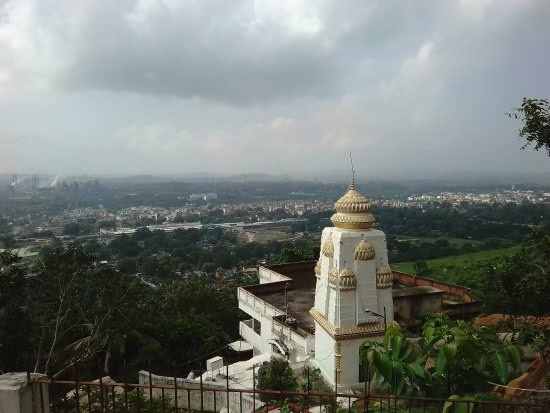
Nestled atop the scenic Durgapur Hill, overlooking the bustling industrial city of Rourkela in Odisha, the Vaishnodevi Temple serves as a spiritual beacon for devotees and tourists alike. A replica of the renowned Shri Mata Vaishno Devi Shrine in Jammu (Trikuta Hills), this temple establishes a profound connection between the Himalayan spiritual epicenter and the Eastern heartland of India. The primary deity here is Goddess Durga, worshipped in her Vaishno form. The temple also houses idols of Maa Kali, Maa Lakshmi, and Maa Saraswati, representing the trinity of divine energies—Power, Wealth, and Knowledge.
Phalaśruti (Spiritual Significance): Devotees undertake the pilgrimage to Rourkela’s Vaishnodevi Temple to seek blessings for prosperity and protection. As a shrine dedicated to the Tridevi, it is believed that a visit here cleanses ancestral karma and resolves financial obstacles. The temple is particularly potent during Navaratri, when the divine feminine energy is said to be at its peak. According to local devotees, the climb up the 600 steps to the sanctum mimics the arduous journey to Jammu, symbolizing the perseverance required for spiritual liberation (Moksha).
Historical Origins & Scriptural Legend
Tradition holds that the spiritual energy of Goddess Vaishno Devi transcends geographical boundaries, making this Rourkela site a chosen abode for her devotees in Odisha. While the original Sthala Purana is rooted in the lore of the Trikuta Hills in Jammu, the Rourkela manifestation has a distinct modern history. According to temple records, the main temple structure was established in the year 2000 (though some local accounts suggest 2003), providing a dedicated space for worship on Durgapur Hill.
In 2007, a larger temple complex dedicated to Goddess Durga was inaugurated at the summit of the hill, expanding the spiritual footprint of the site. The construction was driven by a collective community effort under the guidance of the Vaishno Devi Temple Trust. Although not a classical ancient monument, the temple follows the strict religious protocols established by the presiding deity of the original Jammu shrine. The temple complex also includes the Bhairavnath Temple, situated in close proximity, mirroring the tradition found in Jammu where the shrine of Baba Bhaironath is visited after the main darshan.
Architectural Marvels
The architecture of the Vaishnodevi Temple in Rourkela is a blend of traditional North Indian (Nagara) styles and modern construction techniques designed to harmonize with the natural hilltop environment. Perched at an elevation that offers a panoramic view of the Rourkela Steel Plant and the city below, the structure stands as a testament to devotion.
- The Sanctum (Garbhagriha): Unlike traditional stone temples, the inner sanctum is designed to resemble the cave atmosphere of the original shrine. The idols of the Goddesses are placed within a natural rock formation, emphasizing the Swayambhu (self-manifested) nature of the deity.
- The Mandapas: The temple features spacious Mandapas (pillared halls) allowing devotees to gather for collective prayers. The flooring is durable, chosen to withstand the heavy footfall during festival seasons.
- The Shikhara: The temple features a multi-tiered Shikhara (spire) typical of Nagar-style architecture, adorned with intricate carvings and gold plating on the top Amalaka.
- Surroundings: The temple is surrounded by the verdant forests of the Durgapur Hill, preserving the natural topography. A nearby cave attraction adds to the mystical ambiance of the location.
Darshan & Ritual Logistics
Visitors planning their pilgrimage should be aware of the timings and the specific rituals observed here. The atmosphere is particularly electric during Navaratri (Chaitra and Shardiya) and Durga Puja, when hundreds of devotees flock to the hill.
Daily Darshan Timings (2026 Schedule)
Note: Timings are subject to change during festivals.
| Session | Timings |
|---|---|
| Morning Darshan | 06:00 AM – 01:00 PM |
| Evening Darshan | 04:00 PM – 09:00 PM |
Key Sevas & Booking
The temple trust facilitates various Sevas (ritual offerings). While the primary temple is an imitation, the devotion is authentic.
- Abhishekam: Ritual bathing of the deity with milk, honey, and ghee. Best performed during morning hours.
- Archana: Recitation of the holy names of the Goddess. Can be performed for personal intentions.
- Bhairav Darshan: A mandatory visit to the Bhairavnath Temple after the main darshan.
Online Seva Booking: For the convenience of devotees, the Vaishno Devi Temple Trust likely utilizes a digital portal for pre-booking specific Sevas or Prasad offerings. Visitors should check the official trust website or the temple notice board for the 2026 online booking portal link.
Practical Visitor Guidance
Visiting a hilltop temple requires preparation to ensure a smooth and respectful experience.
- Dress Code: Traditional attire is recommended. Men should wear Dhoti or trousers with a shirt; women should wear Saree or Salwar Kameez. Avoid shorts or sleeveless tops.
- Photography & Mobiles: Photography is strictly prohibited inside the sanctum sanctorum. Mobile phones and electronic devices must be kept in silent mode or deposited in lockers provided at the base of the hill.
- The Climb: The temple is accessible via a 600-step staircase. While there are rest points, the climb requires moderate physical fitness. For senior citizens and differently-abled devotees, assistance is often available from the temple volunteers.
- Crowd Management: The best time for a peaceful darshan is early morning (6:00 AM – 8:00 AM) on weekdays. During Navaratri 2026 (Dates: March 30 – April 7 for Chaitra Navaratri; Sept 22 – Oct 1 for Shardiya Navaratri), the temple will experience high traffic. Arrive at least an hour before opening time.
- Seasonal Advice: Rourkela can be humid in May and June. Carry a water bottle. In monsoon (July-August), slippery steps require extra caution.
Pilgrimage Connectivity
The Vaishnodevi Temple in Rourkela is well-connected by road and is a major landmark in the Steel City.
How to Reach
- By Air: The nearest airport is Birsa Munda Airport, Ranchi (approximately 120 km away), which is well-connected to major cities like Delhi, Mumbai, and Kolkata. The drive to Rourkela takes about 3 hours.
- By Rail: Rourkela Railway Station is a major junction on the South Eastern Railway network, connected to cities like Kolkata, Ranchi, and Bhubaneswar.
- By Road: The temple is located approximately 3 km from the Rourkela city center. Local auto-rickshaws and cabs are readily available from the Railway Station and Indira Gandhi Stop. The Durgapur Hill road is motorable up to a certain point, followed by the staircase ascent.
Nearby Sacred Sites (Pilgrimage Circuit)
Expand your spiritual journey by visiting these nearby locations:
- Bhairavnath Temple: Located right next to the Vaishnodevi shrine on Durgapur Hill. It is traditionally advised to visit this temple after the main darshan to complete the pilgrimage.
- Durga Mandir (Steel City): The 2007 temple structure mentioned in the history is also part of the hilltop complex.
- Vaishnodevi Cave: A natural cave near the temple that attracts explorers and pilgrims alike, adding a mystical element to the visit.
Frequently Asked Questions (FAQ)
1. Is there a VIP or special entry for darshan at Vaishnodevi Temple Rourkela?
Generally, the temple trust encourages a queue system for all devotees to maintain order. However, priority access is often granted to senior citizens, differently-abled visitors, and those carrying special permits for Sevas like Abhishekam.
2. What is the best time of year to visit this temple?
The most auspicious time is during the Navaratri festivals (March/April and September/October) when the temple is beautifully decorated and cultural programs are held. For a quieter experience, visit between October and February when the weather is pleasant.
3. Is there an entry fee for the temple?
No, general entry to the Vaishnodevi Temple is free for all devotees. However, specific Sevas or Pujas like Abhishekam may have a nominal donation fee to cover materials.
4. Are there food and accommodation facilities available nearby?
Yes, the temple trust and local volunteers often serve Prasad (holy food) to devotees. For accommodation, Rourkela city offers a range of hotels and guest houses, including the STeel Authority of India Limited (SAIL) guest houses, which are popular for their hospitality.
5. What is the significance of Bhairavnath Temple in this complex?
Following the tradition of the original Vaishno Devi shrine in Jammu, it is believed that the pilgrimage is incomplete without paying respects to Bhairavnath (a manifestation of Lord Shiva). He is the guardian of the pilgrimage path, and his shrine is situated nearby.
Recent Posts

Shri Kaamkoteeshwar Mandir, Varanasi – History & Significance
In the heart of Kashi, the eternal city of Lord Shiva, where the Ganges flows with celestial grace, stands the Shri Kaamkoteeshwar Mandir. This sacred Sannidhi is not merely a temple but a profound spiritual bridge between the Northern…

ओ सांवरे तूने ही मुझको संभाला – Lyrics & Meaning
ओ सांवरे तूने ही मुझको संभाला – A Prayer to Shyam Origin & Spiritual Essence Why This Bhajan Resonates Devotees chant this when overwhelmed by life’s storms—the refrain ‘तूने ही मुझको संभाला’ is the soul’s sigh of relief: “You…

कथा ये है महाराज मेरे की – Lyrics & Meaning
कथा ये है महाराज मेरे की छत्रपति संभाजी महाराज – A Prayer to Chhatrapati Sambhaji Maharaj Origin & Spiritual Essence Why This Bhajan Resonates Devotees chant this when their spirit feels tested—its powerful refrain “महाराज मेरे” is a soul’s…

Rigveda Samhita Yathartha Anuvada (ऋग्वेद संहिता यथार्थ अनुवाद) – Complete Set with Anvayartha & Hindi/English Translation
The Rigveda is the oldest surviving scripture of humanity and the foundational text of Sanātana Dharma. For serious students, scholars, UPSC aspirants studying ancient Indian history, Sanskrit learners, and spiritual seekers, a precise and grammatically structured translation is indispensable.…

आना भी अकेला है जाना भी अकेला है – Lyrics & Meaning | BharatTemples
आना भी अकेला है जाना भी अकेला है – A Prayer to the Divine Witness Origin & Spiritual Essence Why This Bhajan Resonates Devotees turn to this bhajan in moments of deep reflection—when life’s attachments begin to ache. The…

माता शेरावाली के द्वार जो भी जाता है – Lyrics & Meaning
माता शेरावाली के द्वार जो भी जाता है – A Prayer to Maa Sherawali Origin & Spiritual Essence Why This Bhajan Resonates Devotees turn to this bhajan in times of fear or uncertainty—its promise that no one leaves Maa’s…

मार लेना सपणी उबार लेणा भवरा – Lyrics & Meaning
मार लेना सपणी उबार लेणा भवरा – A Prayer to the Divine Beloved Origin & Spiritual Essence Why This Bhajan Resonates Devotees chant this in moments of deep vulnerability—its cry of “मार लेना सपणी, उबार लेणा भवरा” is the…

हमें श्याम सुंदर भरोसा तुम्हारा – Lyrics & Meaning
हमें श्याम सुंदर भरोसा तुम्हारा – A Prayer to Shyam Sundar Origin & Spiritual Essence Why This Bhajan Resonates Devotees chant this when feeling alone—its refrain ‘de do sahara’ is the soul’s cry for divine support. Lyrics in Hindi…

Mere Satguru Ne Di Thi Davai Lyrics in Hindi & Meaning
Mere Satguru Ne Di Thi Davai: Invoking the Guru’s Liberating Wisdom This soul-stirring bhajan venerates the Satguru (True Spiritual Master) as the divine physician who dispenses the only remedy for life’s deepest sufferings. Composed by Sant Karmaveer Tufani, it…

Janm Diyo Thari Maa Dukh Dekhiyo Lyrics in Hindi & Meaning
जन्म दियो थारी माँ दुख देखियो (Maa’s Grief Upon Birthing You) This soul-stirring Chetavani Bhajan (admonitory hymn) is addressed to the Divine Mother (Maa) – a call for repentance when children forget their filial duties in the dark age…