
Contents
Introduction & Spiritual Essence: The Rudra of Yama
In the sacred Old Town of Bhubaneswar, known as the “Temple City of India,” stands a unique sanctuary dedicated to the synthesis of cosmic justice and divine mercy. The Yameshwar Temple, often reverently referred to as Jameshwar by locals, is a 13th-century marvel dedicated to Lord Shiva.
Unlike typical Shiva temples, the presiding deity here holds a profound narrative significance. Yameshwar translates to “The Lord of Yama,” the deity of death and righteousness. According to local tradition and the Sthala Purana, this Shiva Linga was worshipped by Yama, the Dwapara Yuga king and lord of the underworld, to cleanse himself of the Brahmahatya (the sin of killing a Brahmin). By establishing this Linga, Yama transformed into a compassionate protector rather than a fearsome judge.
Phalaśruti: Why Devotees Visit
Devotees flock to Yameshwar Temple to:
- Cleansing Ancestral Karma: Performing rituals here is believed to alleviate Pitru Dosha (ancestral flaws) and secure peace for departed souls.
- Removal of Fears: As Yama is the conqueror of fear, worshipping here removes the fear of death and unforeseen calamities.
- Justice and Truth: Petitioners seek divine intervention for legal matters and the triumph of truth.
Historical Origins & Scriptural Legend
The Eastern Ganga Legacy
According to temple records and archaeological evidence, the Yameshwar Temple was constructed between the 13th and 14th centuries during the reign of the illustrious Eastern Ganga Dynasty. This era is renowned for its patronage of art and religion, culminating in the structural grandeur of Odisha’s temples.
The Legend of Yama’s Penance
Tradition holds that after inadvertently killing a Brahmin sage, Yama, the lord of death, wandered in search of redemption. He arrived at the banks of the Bindu Saras tank in Bhubaneswar and installed a Shiva Linga. Pleased with his severe penance (Tapasya), Lord Shiva appeared and granted him the boon of being worshipped alongside him. Thus, the deity became known as Yameshwar (Isha/Yeshwar of Yama).
Historically, the temple complex was once part of a larger group of monuments, though many have succumbed to time. The site remains a testament to the enduring spiritual legacy of the Kalinga region.
Architectural Marvels: A Fusion of Styles
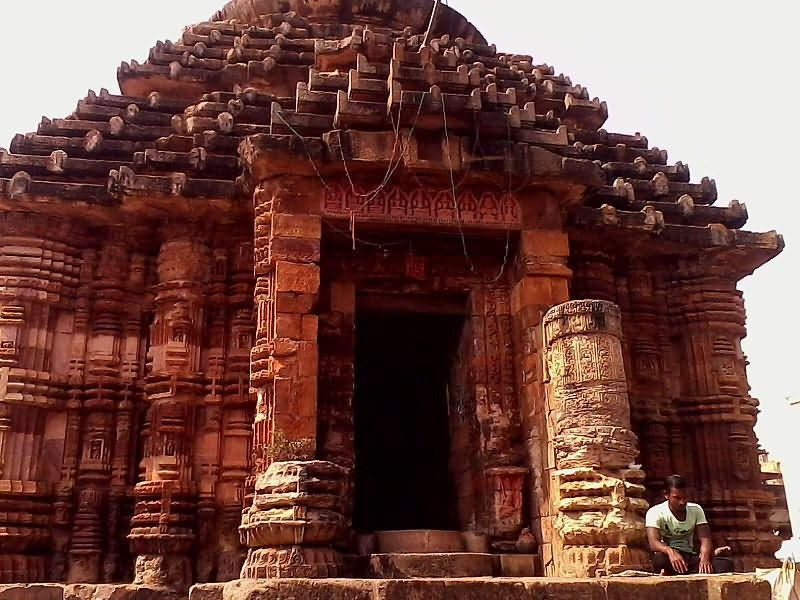
The Yameshwar Temple is a masterpiece of Kalinga Architecture, specifically blending the Rekha Deula and Pidha Deula styles. It is constructed primarily using sandstone, with an outer enclosure (Prakara) made of durable laterite.
Structural Components
- The Vimana (Rekha Deula): The central sanctuary housing the Shiva Linga is built in the soaring Rekha Deula style, characterized by a curvilinear spire that reaches toward the sky.
- The Jaga Mohan (Pidha Deula): The hall of offering is constructed in the Pidha Deula style, featuring a pyramidal roof with stepped tiers.
- The Detached Mandapa: Unlike many temples where the mandapa is attached, Yameshwar features a separate assembly hall, allowing for panoramic views of the intricate carvings.
Sculptural Details
The temple walls are adorned with elaborate friezes depicting:
- Dikpalas: The guardians of the eight directions.
- Nayikas and Erotics: Similar to the Konark Sun Temple, these sculptures represent the tantric traditions and the celebration of life.
- Vidalas and Amorous Couples: Mythical creatures and scenes of human affection carved with microscopic precision.
Though portions of the temple have been damaged by natural calamities over centuries, the sanctity and structural integrity of the Garbhagriha remain intact.
The intricate details of these carvings are best viewed in our exclusive collection:


Darshan & Ritual Logistics
Visiting Yameshwar Temple requires an early start to experience the morning rituals in peace. Below are the standard timings for 2026.
Daily Timings
| Time Period | Activity | Details |
|---|---|---|
| Morning | Mangala Alati | 6:00 AM |
| Morning | Abhishekam | 7:00 AM – 8:30 AM |
| General Darshan | 9:00 AM – 12:00 PM | |
| Afternoon | Closure | 12:00 PM – 3:00 PM |
| Evening | Evening Arati | 3:00 PM – 5:00 PM |
| General Darshan | 5:00 PM – 8:00 PM |
Key Sevas & Booking
Abhishekam: The ritual bathing of the Shiva Linga with water, milk, and honey. Best performed on Mondays and Fridays.
Archana (Namakaranam): Reciting the 108 names of Shiva. Available for individual devotees.
Online Seva Booking: While Yameshwar is an older monument managed by the Odisha State Archaeology (ASI), ritual bookings for the priest can often be coordinated through the local temple committee or dedicated Odisha tourism portals for major festivals.
2026 Festival Calendar
- Shivaratri: February 26, 2026 (Major celebration, expect crowds).
- Ma Hindu Jiuntia (Puajiutia): October 31, 2026 (Specific to Odisha calendar; involves fasting for sons).
- Kartik Purnima: November 15, 2026 (Deep lighting rituals).
- Dwitvahana Osha: Observed during the month of Ashwin.
Practical Visitor Guidance
Rules & Regulations
- Dress Code: Traditional attire is highly recommended. Men should wear dhotis or long trousers with shirts; women should wear sarees or full-length dresses.
- Photography: Photography is permitted in the outer complex but strictly prohibited inside the Garbhagriha (Sanctum Sanctorum).
- Mobile Phones: Carry a small lockable bag for your phone; phones should be on silent mode within the temple premises.
Crowd Management & Best Times
- Best Season: October to March offers pleasant weather.
- Best Hours: Visit between 6:30 AM and 8:00 AM to avoid crowds and witness the morning rituals. Evenings around 5:00 PM are serene.
- Summer Advice: April to June is hot; carry a water bottle and an umbrella.
- Accessibility: The temple has stone steps. A wooden ramp is occasionally available for elderly visitors, but it is advisable to have assistance.
Pilgrimage Connectivity
How to Reach
Yameshwar Temple is located in the heart of the Old Town (Puri Canal Road).
- Nearest Airport: Biju Patnaik International Airport, Bhubaneswar (approx. 12 km / 30 mins drive).
- Nearest Railway: Bhubaneswar Railway Station (approx. 6 km).
- By Road: Located on the Chandaka Road. It is well-connected to NH-16 (formerly NH-5). Local buses and auto-rickshaws are easily available from Master Canteen Square.
Nearby Sacred Sites (The Bhubaneswar Circuit)
Yameshwar is a vital node in the spiritual network of Bhubaneswar. While visiting, consider exploring these nearby temples:
- Lingaraj Temple: Just 1 km away. The largest temple in Bhubaneswar, dedicated to Harihara.
- Mukteswar Temple: 1.5 km away. Famous for its ornate torana (archway) and 64 Yogini sculptures.
- Rajarani Temple: 2 km away. Known for its intricate carvings of celestial musicians and dancers.
Frequently Asked Questions (FAQ)
1. Is there a VIP darshan entry at Yameshwar Temple?
Yameshwar Temple is managed by the state archaeology department. There is no formal VIP entry system like in Tirupati. Darshan is based on first-come, first-served. However, devotees carrying offerings for special rituals (Abhishekam) are often prioritized during ritual times.
2. What is the significance of the Jiuntia festival here?
The Jiuntia or Puajiutia festival is unique to Odisha. It is held in the month of Ashwin. Here, mothers observe a strict fast (eating only one meal without salt) for the longevity and well-being of their sons. It is dedicated to Goddess Shailaputri, but Yameshwar sees significant footfall during this period.
3. Are there accommodation facilities nearby?
While there are no hotels inside the Old Town complex, plenty of budget and mid-range hotels are available near Vani Vihar and Master Canteen (2-3 km away). For a spiritual stay, the OTDC Panthanivas at Khandagiri is a good option.
4. Is the temple open all year round?
Yes, the temple remains open year-round. However, heavy monsoons (July-August) in Odisha can cause occasional closures due to lightning or heavy rainfall warnings.
5. Can foreign tourists visit?
Absolutely. Yameshwar Temple welcomes visitors of all faiths. However, as it is an active place of worship, respectful dressing and adherence to temple rules are mandatory.
Recent Posts

Shri Kaamkoteeshwar Mandir, Varanasi – History & Significance
In the heart of Kashi, the eternal city of Lord Shiva, where the Ganges flows with celestial grace, stands the Shri Kaamkoteeshwar Mandir. This sacred Sannidhi is not merely a temple but a profound spiritual bridge between the Northern…

ओ सांवरे तूने ही मुझको संभाला – Lyrics & Meaning
ओ सांवरे तूने ही मुझको संभाला – A Prayer to Shyam Origin & Spiritual Essence Why This Bhajan Resonates Devotees chant this when overwhelmed by life’s storms—the refrain ‘तूने ही मुझको संभाला’ is the soul’s sigh of relief: “You…

कथा ये है महाराज मेरे की – Lyrics & Meaning
कथा ये है महाराज मेरे की छत्रपति संभाजी महाराज – A Prayer to Chhatrapati Sambhaji Maharaj Origin & Spiritual Essence Why This Bhajan Resonates Devotees chant this when their spirit feels tested—its powerful refrain “महाराज मेरे” is a soul’s…

Rigveda Samhita Yathartha Anuvada (ऋग्वेद संहिता यथार्थ अनुवाद) – Complete Set with Anvayartha & Hindi/English Translation
The Rigveda is the oldest surviving scripture of humanity and the foundational text of Sanātana Dharma. For serious students, scholars, UPSC aspirants studying ancient Indian history, Sanskrit learners, and spiritual seekers, a precise and grammatically structured translation is indispensable.…

आना भी अकेला है जाना भी अकेला है – Lyrics & Meaning | BharatTemples
आना भी अकेला है जाना भी अकेला है – A Prayer to the Divine Witness Origin & Spiritual Essence Why This Bhajan Resonates Devotees turn to this bhajan in moments of deep reflection—when life’s attachments begin to ache. The…

माता शेरावाली के द्वार जो भी जाता है – Lyrics & Meaning
माता शेरावाली के द्वार जो भी जाता है – A Prayer to Maa Sherawali Origin & Spiritual Essence Why This Bhajan Resonates Devotees turn to this bhajan in times of fear or uncertainty—its promise that no one leaves Maa’s…

मार लेना सपणी उबार लेणा भवरा – Lyrics & Meaning
मार लेना सपणी उबार लेणा भवरा – A Prayer to the Divine Beloved Origin & Spiritual Essence Why This Bhajan Resonates Devotees chant this in moments of deep vulnerability—its cry of “मार लेना सपणी, उबार लेणा भवरा” is the…

हमें श्याम सुंदर भरोसा तुम्हारा – Lyrics & Meaning
हमें श्याम सुंदर भरोसा तुम्हारा – A Prayer to Shyam Sundar Origin & Spiritual Essence Why This Bhajan Resonates Devotees chant this when feeling alone—its refrain ‘de do sahara’ is the soul’s cry for divine support. Lyrics in Hindi…

Mere Satguru Ne Di Thi Davai Lyrics in Hindi & Meaning
Mere Satguru Ne Di Thi Davai: Invoking the Guru’s Liberating Wisdom This soul-stirring bhajan venerates the Satguru (True Spiritual Master) as the divine physician who dispenses the only remedy for life’s deepest sufferings. Composed by Sant Karmaveer Tufani, it…

Janm Diyo Thari Maa Dukh Dekhiyo Lyrics in Hindi & Meaning
जन्म दियो थारी माँ दुख देखियो (Maa’s Grief Upon Birthing You) This soul-stirring Chetavani Bhajan (admonitory hymn) is addressed to the Divine Mother (Maa) – a call for repentance when children forget their filial duties in the dark age…