
Contents
- 1 The Definitive Pilgrimage Guide: Birla Mandir, Jaipur
The Definitive Pilgrimage Guide: Birla Mandir, Jaipur
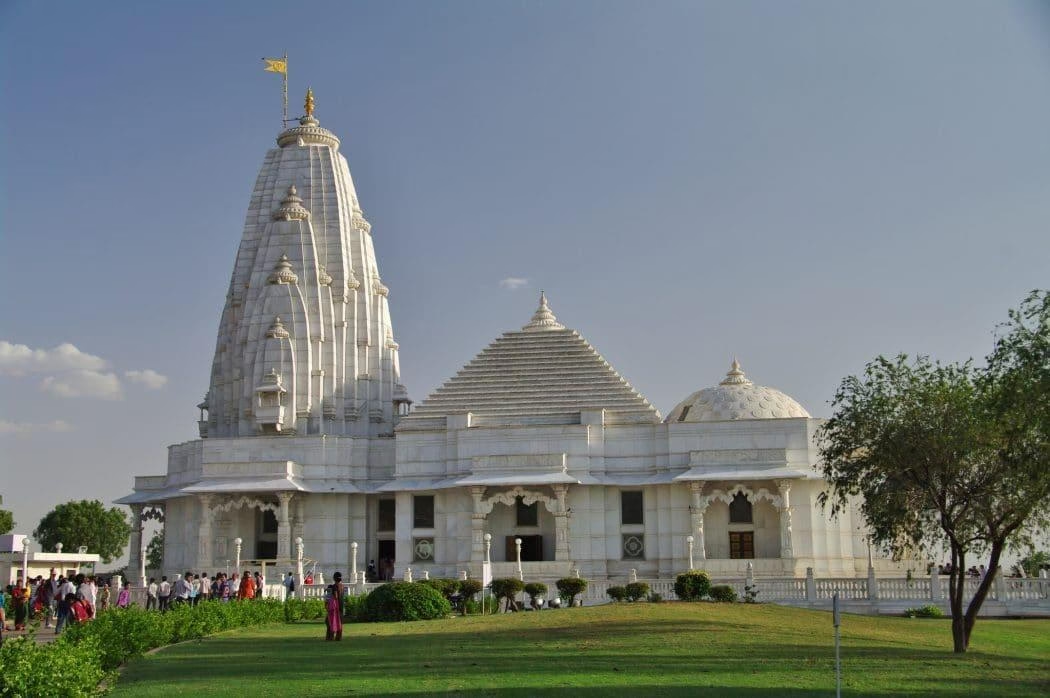
Welcome to the serene abode of the Laxmi Narayan Temple, popularly known as Birla Mandir, Jaipur. Situated against the backdrop of the historic Moti Dungari Hill, this architectural masterpiece is a beacon of modern spirituality and ancient devotion. As the Lead Heritage Architect for bharattemples.com, I invite you to explore the spiritual, architectural, and logistical nuances of this sacred site.
1. Introduction & Spiritual Essence
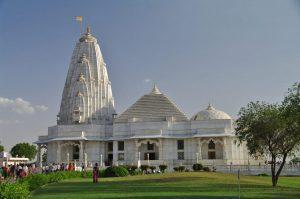
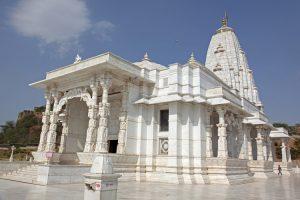
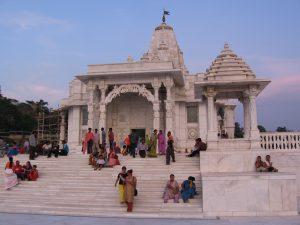
Birla Mandir Jaipur is a Panchayatana style temple, dedicated primarily to Lord Vishnu (Narayan) and his consort, Goddess Lakshmi. The temple is constructed entirely of pristine white marble (Makrana and others), symbolizing purity and peace.
Phalaśruti: The Spiritual Benefits
Devotees flock to this temple seeking spiritual upliftment and material prosperity. According to Hindu scriptures, worshipping Lord Vishnu and Goddess Lakshmi together bestows:
- Dharma & Wealth: Balancing ethical living with material abundance.
- Removal of Ancestral Karma: Performing rituals here is believed to pacify ancestors and clear obstacles in the lineage (Pitru Dosh).
- Inner Peace: The tranquil atmosphere, aided by the marble acoustics, aids in meditation and mental clarity.
2. Historical Origins & Scriptural Legend
Unlike ancient cave or forest temples, Birla Mandir represents the philanthropic spiritual renaissance of the 20th century.
The Builders & Timeline
According to temple records, construction began in 1977 and was completed in 1985. The temple was built by the Birla Family (Birla Group of Industries), renowned industrialists and patrons of Indian heritage. The temple was inaugurated on February 22, 1985.
Sthala Purana & Scriptural References
While the structure is modern, the idol’s consecration follows strict Agamic traditions. The Shila Vedhas (stone scriptures) embedded within the temple structure depict stories from the Puranas, Upanishads, and the Garuda Purana.
Tradition holds that the site at the foot of Moti Dungari was chosen for its natural Vastu alignment—facing the east to welcome the rising sun, symbolizing the dawn of consciousness.
3. Architectural Marvels
The temple is a stunning fusion of Nagara and Dravida architectural styles, yet strictly adheres to the Shilpa Shastra and Vastu Shastra.
Design Elements
- The Marble: The entire structure is built from white marble sourced from Rajasthan. The marble gains a translucent glow under moonlight.
- The Shikhara (Spire): Though defined by three distinct domes (representing the three main religions of India: Hinduism, Islam, and Christianity), the central spire mimics the classic Nagara style.
- The Sanctum (Garbhagriha): The idols of Laxmi and Narayan are carved from a single piece of marble, facing east.
- Frescoes & Murals: Stained glass windows (depicting scenes from Hindu epics) and marble panels adorn the interior.
- Universal Harmony: The outer walls feature sculptures of national heroes and spiritual figures from across the world, including Socrates, Buddha, and Christ, emphasizing the temple’s message of universal brotherhood.
4. Darshan & Ritual Logistics
Planning your visit requires attention to specific timings and festival schedules. Please note the following for the year 2026.
Daily Darshan Timings
The temple remains open for most of the day, allowing ample time for devotees.
| Session | Timings | Notes |
|---|---|---|
| Morning Darshan | 6:00 AM – 12:00 PM | Best time for peaceful darshan. |
| Afternoon Break | 12:00 PM – 4:00 PM | Closed for temple maintenance and priest rest. |
| Evening Darshan | 4:00 PM – 9:00 PM | Includes the grand Aarti. |
Key Sevas & Online Booking
While general darshan is free, specific Sevas can be booked in advance.
- Abhishekam: Ritual bathing of the deity. Usually performed in the morning (7:00 AM – 8:00 AM).
- Archana: Recitation of names. Can be performed individually or for the family.
- Annadanam: Free community meal service (usually offered during festivals).
How to Book: While the temple primarily operates on a first-come basis, the Birla group manages official trusts. It is recommended to check the official Birla Mandir Jaipur Trust website or the Rajasthan Tourism portal for the 2026 online booking portal integration.
Major Festivals 2026
- Janmashtami: August 14-15, 2026. (Grand decorations and night-long vigils).
- Diwali: October 21, 2026. (The temple is illuminated with thousands of earthen lamps).
- Guru Purnima: July 3, 2026.
- Holi: March 14, 2026 (Celebrated with flowers and colors).
5. Practical Visitor Guidance
To ensure a respectful and smooth visit, adhere to the following guidelines.
Code of Conduct
- Dress Code: Modest attire is mandatory. Traditional Indian wear (Saree, Kurta-Pajama) is preferred, but Western clothes are allowed if they cover shoulders and knees. Avoid torn jeans or sleeveless tops.
- Photography: Photography is allowed in the outer complex and gardens but is strictly prohibited inside the sanctum sanctorum.
- Electronics: Mobile phones are permitted but must be on silent mode. Photography must be respectful.
- Lockers: Free mobile lockers are available at the entrance for luggage and shoes.
- Accessibility: The temple complex has ramps and is wheelchair accessible.
Crowd Management Strategy
- Best Hours: Visit between 8:00 AM and 10:00 AM on weekdays for the least crowd. Sundays and public holidays see significant footfall.
- Seasonal Advice:
– Summer (April–June): Temperatures can exceed 40°C. Carry a water bottle and wear a hat. The marble floors reflect heat intensely.
– Monsoon (July–September): The gardens are lush, but carry an umbrella.
– Winter (November–February): The ideal time to visit. Evenings can be cold (approx 8-10°C).
6. Pilgrimage Connectivity
Birla Mandir is centrally located in Jaipur, making it easily accessible via all modes of transport.
How to Reach
- Nearest Airport: Jaipur International Airport (JAI) – Approximately 12 km (30-40 minutes by taxi).
- Nearest Railway Station: Jaipur Junction – Approximately 5 km (15-20 minutes by auto/taxi).
- Road Access: Located on Jawahar Lal Nehru Marg (NH 12). Well connected to the Agra-Jaipur Highway for those coming from Delhi.
Nearby Sacred Sites (Pilgrimage Circuit)
Enhance your spiritual journey by visiting these nearby landmarks:
- Shri Kalyan Ji Ka Mandir: Located just below the Moti Dungari Fort (approx. 1 km). An ancient temple dedicated to Lord Vishnu.
- Shri Govind Dev Ji Temple: Located in the City Palace complex (approx. 5 km). One of the most revered Krishna temples in India.
- Radha Krishna Temple (Murlipura): A short drive away, known for its intricate idol work.
Photo Gallery
7. Frequently Asked Questions (FAQs)
Is there a VIP darshan entry available?
No, Birla Mandir Jaipur follows a democratic approach to darshan. There are no VIP entry fees or special queues. Everyone waits in the same line, ensuring an egalitarian spiritual experience. However, elderly citizens and differently-abled visitors are given priority assistance.
What is the entry fee for the temple?
Entry is completely free for all visitors. Donation boxes are available for those who wish to contribute to the temple’s maintenance.
Are there accommodation facilities near the temple?
While the temple itself does not have a guesthouse, the area (Tilak Nagar and Bani Park) is filled with premium hotels, heritage havelis, and budget lodges.
Can I perform a child naming ceremony (Naamkaran) here?
Yes, the temple trust allows various Vedic rituals. It is advised to contact the temple administration office at least 48 hours in advance to book the priest and the hall.
What are the lighting timings?
The temple is illuminated with floodlights every evening from sunset until 9:00 PM. The reflection of the white marble in the artificial lights is a visual treat and a photographer’s delight.
Recent Posts

Shri Kaamkoteeshwar Mandir, Varanasi – History & Significance
In the heart of Kashi, the eternal city of Lord Shiva, where the Ganges flows with celestial grace, stands the Shri Kaamkoteeshwar Mandir. This sacred Sannidhi is not merely a temple but a profound spiritual bridge between the Northern…

ओ सांवरे तूने ही मुझको संभाला – Lyrics & Meaning
ओ सांवरे तूने ही मुझको संभाला – A Prayer to Shyam Origin & Spiritual Essence Why This Bhajan Resonates Devotees chant this when overwhelmed by life’s storms—the refrain ‘तूने ही मुझको संभाला’ is the soul’s sigh of relief: “You…

कथा ये है महाराज मेरे की – Lyrics & Meaning
कथा ये है महाराज मेरे की छत्रपति संभाजी महाराज – A Prayer to Chhatrapati Sambhaji Maharaj Origin & Spiritual Essence Why This Bhajan Resonates Devotees chant this when their spirit feels tested—its powerful refrain “महाराज मेरे” is a soul’s…

Rigveda Samhita Yathartha Anuvada (ऋग्वेद संहिता यथार्थ अनुवाद) – Complete Set with Anvayartha & Hindi/English Translation
The Rigveda is the oldest surviving scripture of humanity and the foundational text of Sanātana Dharma. For serious students, scholars, UPSC aspirants studying ancient Indian history, Sanskrit learners, and spiritual seekers, a precise and grammatically structured translation is indispensable.…

आना भी अकेला है जाना भी अकेला है – Lyrics & Meaning | BharatTemples
आना भी अकेला है जाना भी अकेला है – A Prayer to the Divine Witness Origin & Spiritual Essence Why This Bhajan Resonates Devotees turn to this bhajan in moments of deep reflection—when life’s attachments begin to ache. The…

माता शेरावाली के द्वार जो भी जाता है – Lyrics & Meaning
माता शेरावाली के द्वार जो भी जाता है – A Prayer to Maa Sherawali Origin & Spiritual Essence Why This Bhajan Resonates Devotees turn to this bhajan in times of fear or uncertainty—its promise that no one leaves Maa’s…

मार लेना सपणी उबार लेणा भवरा – Lyrics & Meaning
मार लेना सपणी उबार लेणा भवरा – A Prayer to the Divine Beloved Origin & Spiritual Essence Why This Bhajan Resonates Devotees chant this in moments of deep vulnerability—its cry of “मार लेना सपणी, उबार लेणा भवरा” is the…

हमें श्याम सुंदर भरोसा तुम्हारा – Lyrics & Meaning
हमें श्याम सुंदर भरोसा तुम्हारा – A Prayer to Shyam Sundar Origin & Spiritual Essence Why This Bhajan Resonates Devotees chant this when feeling alone—its refrain ‘de do sahara’ is the soul’s cry for divine support. Lyrics in Hindi…

Mere Satguru Ne Di Thi Davai Lyrics in Hindi & Meaning
Mere Satguru Ne Di Thi Davai: Invoking the Guru’s Liberating Wisdom This soul-stirring bhajan venerates the Satguru (True Spiritual Master) as the divine physician who dispenses the only remedy for life’s deepest sufferings. Composed by Sant Karmaveer Tufani, it…

Janm Diyo Thari Maa Dukh Dekhiyo Lyrics in Hindi & Meaning
जन्म दियो थारी माँ दुख देखियो (Maa’s Grief Upon Birthing You) This soul-stirring Chetavani Bhajan (admonitory hymn) is addressed to the Divine Mother (Maa) – a call for repentance when children forget their filial duties in the dark age…