
Contents
- 1 Introduction & Spiritual Essence
- 2 Historical Origins & Scriptural Legend
- 3 Architectural Marvels
- 4 Darshan & Ritual Logistics
- 5 Practical Visitor Guidance
- 6 Pilgrimage Connectivity
- 7 Photo Gallery
- 8 Frequently Asked Questions (FAQ)
- 8.1 1. Is there a VIP darshan entry at Kalika Mata Temple?
- 8.2 2. Is the temple accessible for those with mobility issues?
- 8.3 3. What is the significance of the “Surya Kund” near the temple?
- 8.4 4. Are there accommodation facilities inside the fort?
- 8.5 5. Is non-vegetarian food allowed near the temple?
- 9 Contact Details
Introduction & Spiritual Essence
Nestled within the formidable walls of the Chittorgarh Fort—India’s largest hill fort—stands the sacred Kalika Mata Temple. Dating back to the 8th century, this shrine is a beacon of Shakti worship in Rajasthan. While the fort is a testament to Rajput valor, the temple serves as its spiritual heart, drawing devotees seeking protection, strength, and the blessings of the Divine Mother.
The Primary Deity and Form
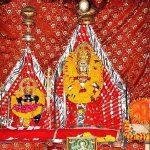
The temple enshrines Maa Kalika, a fierce and benevolent form of Goddess Bhadrakali. Unlike traditional temples where the idol is static, the murti here is said to be a Swayambhu (self-manifested) form, later consecrated by Maharana Hamir Singh in the 14th century. The Goddess is revered as the Kuldevi (clan goddess) of the Mori Panwar clan, descendants of Chitrangad Mori, who originally founded Chittor.
Phalaśruti: Why Devotees Visit
According to ancient traditions and devotee testimonials, visiting Kalika Mata Temple offers specific spiritual benefits:
- Cleansing Ancestral Karma: As the Kuldevi of the Mori clan, worshipping here is believed to resolve ancestral disputes and bring peace to the Pitra Dosha.
- Removal of Obstacles: The Goddess is known as Chamunda (slayer of demons) here. Devotees visit to overcome fear, litigation, and financial hurdles.
- Protection: Being situated within a fortress, the temple is spiritually charged with energy (Shakti) to guard against negative influences.
Historical Origins & Scriptural Legend
The history of Kalika Mata Temple is a layered narrative of destruction and resurrection, mirroring the history of Chittorgarh itself.
Builder and Renovations
According to temple records and local historians, the original structure was built in the 8th century by Bappa Rawal, the founder of the Sisodia dynasty and the city of Chittor. Initially, the shrine was dedicated to the Sun God (Surya). Evidence of this remains in the nearby Surya Kund, a tank located near Fatta Haveli.
Scriptural Legend and the Khilji Invasion
The Sthala Purana (local oral tradition) narrates a dramatic turning point during the reign of Alauddin Khilji in 1303 AD. During the siege of Chittor, the original Sun idol was destroyed. Tradition holds that after the conflict, the great Maharana Hamir Singh (reign 1425-1468 AD) discovered the shattered remnants of the Sun idol. However, while restoring the sanctum, a miraculous event occurred: a divine radiance manifested, and the image of Goddess Kalika appeared within the sanctum. The temple was subsequently reconsecrated to the Goddess, transforming it into a Shakti Peeth for the region.
Architectural Marvels
The temple is a unique blend of historical eras, showcasing the evolution of Indian temple architecture.
Style and Layout
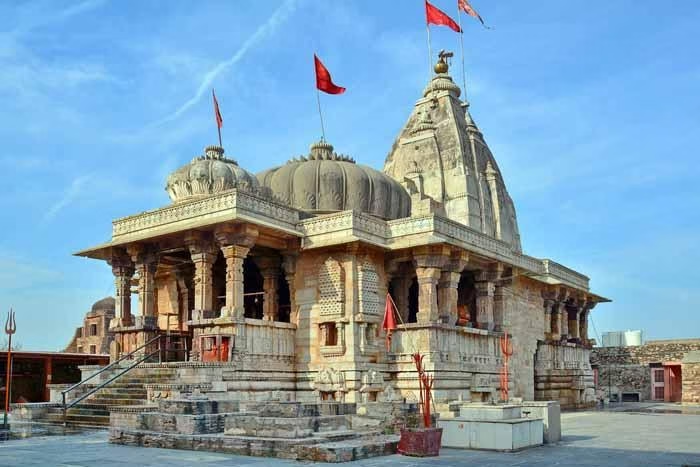
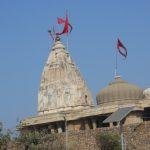
The temple exhibits a hybrid architectural style. The base and sanctum (garbhagriha) retain the Nagara style influence, characterized by a beehive-like shikhara (tower), while the mandapas (halls) display regional Rajasthani modifications. The temple is strategically built on a raised rock platform facing east, allowing the first rays of the sun to illuminate the sanctum.
Notable Sculptures and Elements
- The Lion (Vahana): A striking statue of a lion, the vehicle of Goddess Durga/Kali, stands guard just behind the Jogeshwar Mahadev temple (a subsidiary shrine dedicated to Lord Shiva) within the complex.
- Inner Sanctum: The walls of the inner sanctum feature intricate carvings of various gods and goddesses. The central murti of Kalika Mata is adorned daily with fresh garments and jewelry, reflecting the living nature of the worship.
- Proximity to Heritage Sites: From the temple precincts, one can view other monuments of the fort, including the Vijay Stambh (Victory Tower) and Kirti Stambh, integrating the temple into the broader UNESCO World Heritage Site landscape.
Darshan & Ritual Logistics
Visiting Chittorgarh requires planning, as the fort is vast and the temple has specific timings for rituals.
Daily Darshan Timings
Please note that timings may vary slightly during festivals or seasonal changes.
| Session | Timing | Details |
|---|---|---|
| Morning | 6:00 AM – 9:00 AM | Mangala Aarti (approx.) and general darshan. |
| Mid-Day | 9:00 AM – 12:00 PM | Temple remains open; quiet period for prayer. |
| Afternoon | 12:00 PM – 4:00 PM | Closed for temple cleaning and deity rest. |
| Evening | 4:00 PM – 8:30 PM | Evening Aarti and darshan; includes the popular Ratri Jagran hours. |
Key Sevas and Online Booking
- Abhishekam: Ritual bathing of the deity, usually performed in the morning before 8:00 AM.
- Archana: Offering of flowers and prayers (specific mantras for Kuldevi).
- Ratri Jagran: A unique practice where devotees stay awake through the night singing hymns. This is popular during Navratri.
- Online Booking: As of 2026, bookings for specific Sevas at Chittorgarh Fort monuments are managed via the Rajasthan Tourism portal. However, standard darshan is free and open to all. For special Abhishekam, contacting the temple priest office at 09898245260 is recommended.
The temple is most vibrant during the two Navratris:
- Chaitra Navratri: March 30, 2026 – April 7, 2026
- Shardiya Navratri: September 22, 2026 – October 1, 2026
During these periods, special night-long lighting and cultural performances take place.
Practical Visitor Guidance
To ensure a smooth pilgrimage to this heritage site, please adhere to the following guidelines.
Dress Code and Etiquette
As this is a significant religious site within a historical fort, visitors should dress modestly. Traditional Indian attire (saree, kurta-pajama) is preferred, though western clothing is permitted if modest. Shoes must be removed at the designated stands outside the main temple entrance.
Crowd Management
- Best Hours: The early morning (6:00 AM – 7:30 AM) or late evening (post-7:00 PM) offer the most serene experience.
- Seasonal Advice:
- Summer (April-June): Rajasthan temperatures can exceed 40°C. Carry a water bottle, umbrella, and wear sunglasses. The temple rock can become very hot.
- Monsoon (July-September): The fort looks lush, but slippery stones require careful walking.
- Photography: Allowed in the temple complex and courtyards. However, photography is strictly prohibited inside the inner sanctum (garbhagriha) where the deity is enshrined.
Pilgrimage Connectivity
How to Reach Kalika Mata Temple
The temple is located inside the Chittorgarh Fort, approximately 5 km from the city center.
- Nearest Airport: Maharana Pratap Airport, Udaipur (approx. 110 km / 2 hours by taxi).
- Nearest Railway Station: Chittorgarh Junction Railway Station (connected to Delhi, Mumbai, and Ahmedabad lines).
- By Road: Chittorgarh lies on the NH 12 (connecting Jaipur and Ahmedabad). The drive up to the fort entrance is a steep incline; taxis and auto-rickshaws are available from the city.
Nearby Sacred Sites
- Shree Eklingji Temple: Located about 30 km away, this is the family deity of the Mewar dynasty.
- Shree Sanwariyaji Temple: A famous Lord Krishna temple situated on the Chittorgarh-Bhilwara road.
- Neelkanth Mahadev Temple: Located within Chittorgarh Fort, near the Padmini Palace, dedicated to Lord Shiva.
Photo Gallery
Frequently Asked Questions (FAQ)
1. Is there a VIP darshan entry at Kalika Mata Temple?
No, there is no formal VIP ticketing system inside Chittorgarh Fort like there is at Tirupati. However, visiting during off-peak hours (early morning) allows for a faster, uninterrupted darshan. For special access during Navratri, pilgrims often request assistance from the temple priests.
2. Is the temple accessible for those with mobility issues?
Since the temple is built on a rock and involves staircases to reach the main sanctum, it can be challenging for senior citizens or those with disabilities. However, the lower courtyard and the view of the main gate are accessible. Wheelchairs are not available inside the fort, so private assistance is advised.
3. What is the significance of the “Surya Kund” near the temple?
The Surya Kund is the historic stepwell built by Bappa Rawal alongside the original Sun Temple. It serves as a water reservoir for the fort and holds historical significance, though it is now primarily a visual heritage structure.
4. Are there accommodation facilities inside the fort?
There are no hotels or guesthouses inside the fort walls. It is a protected archaeological site. However, plenty of hotels, homestays, and government-run resorts are available in Chittorgarh city (just below the fort). The nearest luxury accommodation is in Udaipur.
5. Is non-vegetarian food allowed near the temple?
Chittorgarh Fort is a strictly vegetarian zone. Alcohol and non-vegetarian food are prohibited inside the fort premises. Visitors can find hygienic vegetarian food (thalis) and refreshments at stalls near the fort entrance and the Vijay Stambh area.
Contact Details
Address: Chittorgarh Fort, Chittorgarh, Rajasthan 312001, India.
Phone: 09898245260 (Note: This is the contact provided in temple records; however, line connectivity inside the fort can be intermittent).
Recent Posts

Shri Kaamkoteeshwar Mandir, Varanasi – History & Significance
In the heart of Kashi, the eternal city of Lord Shiva, where the Ganges flows with celestial grace, stands the Shri Kaamkoteeshwar Mandir. This sacred Sannidhi is not merely a temple but a profound spiritual bridge between the Northern…

ओ सांवरे तूने ही मुझको संभाला – Lyrics & Meaning
ओ सांवरे तूने ही मुझको संभाला – A Prayer to Shyam Origin & Spiritual Essence Why This Bhajan Resonates Devotees chant this when overwhelmed by life’s storms—the refrain ‘तूने ही मुझको संभाला’ is the soul’s sigh of relief: “You…

कथा ये है महाराज मेरे की – Lyrics & Meaning
कथा ये है महाराज मेरे की छत्रपति संभाजी महाराज – A Prayer to Chhatrapati Sambhaji Maharaj Origin & Spiritual Essence Why This Bhajan Resonates Devotees chant this when their spirit feels tested—its powerful refrain “महाराज मेरे” is a soul’s…

Rigveda Samhita Yathartha Anuvada (ऋग्वेद संहिता यथार्थ अनुवाद) – Complete Set with Anvayartha & Hindi/English Translation
The Rigveda is the oldest surviving scripture of humanity and the foundational text of Sanātana Dharma. For serious students, scholars, UPSC aspirants studying ancient Indian history, Sanskrit learners, and spiritual seekers, a precise and grammatically structured translation is indispensable.…

आना भी अकेला है जाना भी अकेला है – Lyrics & Meaning | BharatTemples
आना भी अकेला है जाना भी अकेला है – A Prayer to the Divine Witness Origin & Spiritual Essence Why This Bhajan Resonates Devotees turn to this bhajan in moments of deep reflection—when life’s attachments begin to ache. The…

माता शेरावाली के द्वार जो भी जाता है – Lyrics & Meaning
माता शेरावाली के द्वार जो भी जाता है – A Prayer to Maa Sherawali Origin & Spiritual Essence Why This Bhajan Resonates Devotees turn to this bhajan in times of fear or uncertainty—its promise that no one leaves Maa’s…

मार लेना सपणी उबार लेणा भवरा – Lyrics & Meaning
मार लेना सपणी उबार लेणा भवरा – A Prayer to the Divine Beloved Origin & Spiritual Essence Why This Bhajan Resonates Devotees chant this in moments of deep vulnerability—its cry of “मार लेना सपणी, उबार लेणा भवरा” is the…

हमें श्याम सुंदर भरोसा तुम्हारा – Lyrics & Meaning
हमें श्याम सुंदर भरोसा तुम्हारा – A Prayer to Shyam Sundar Origin & Spiritual Essence Why This Bhajan Resonates Devotees chant this when feeling alone—its refrain ‘de do sahara’ is the soul’s cry for divine support. Lyrics in Hindi…

Mere Satguru Ne Di Thi Davai Lyrics in Hindi & Meaning
Mere Satguru Ne Di Thi Davai: Invoking the Guru’s Liberating Wisdom This soul-stirring bhajan venerates the Satguru (True Spiritual Master) as the divine physician who dispenses the only remedy for life’s deepest sufferings. Composed by Sant Karmaveer Tufani, it…

Janm Diyo Thari Maa Dukh Dekhiyo Lyrics in Hindi & Meaning
जन्म दियो थारी माँ दुख देखियो (Maa’s Grief Upon Birthing You) This soul-stirring Chetavani Bhajan (admonitory hymn) is addressed to the Divine Mother (Maa) – a call for repentance when children forget their filial duties in the dark age…