
Contents
- 1 Introduction & Spiritual Essence of Kaila Devi Temple
- 2 Historical Origins & Scriptural Legend
- 3 Architectural Marvels
- 4 Darshan & Ritual Logistics (2026 Season)
- 5 Practical Visitor Guidance
- 6 Pilgrimage Connectivity
- 7 Frequently Asked Questions (FAQs)
- 7.1 1. Is there a VIP darshan entry available at Kaila Devi Temple?
- 7.2 2. Can I book online seva from outside India?
- 7.3 3. Are there accommodation facilities available near the temple?
- 7.4 4. What is the significance of the red flags in the temple?
- 7.5 5. Is the temple accessible for senior citizens and differently-abled visitors?
Introduction & Spiritual Essence of Kaila Devi Temple
Nestled on the banks of the Kalisil River in the Aravalli hills of Karauli District, Kaila Devi Temple stands as a timeless sentinel of faith in Rajasthan. Dedicated to Goddess Kaila Devi, an incarnation of Maha Kali, this sacred site is a prominent Shakti Peeth revered by millions. The temple is specifically the tutelary deity (Kuladevi) of the erstwhile Yaduvanshi rulers of Karauli, embodying the fierce yet compassionate protection of the Mother Goddess.
Phalaśruti (Spiritual Benefits): Devotees believe that worshipping Kaila Devi brings relief from worldly afflictions and alleviates malefic planetary influences. A specific legend associated with the temple highlights its power to grant spiritual merit equivalent to visiting all holy shrines (Tirthas). Pilgrims often visit to offer prayers for cleansing ancestral karma, seeking blessings for prosperity, and fulfilling vows (Mannat) during the annual fair.
Historical Origins & Scriptural Legend
The Royal Patronage
According to temple records and historical accounts, the current structure of the Kaila Devi Temple was built around 1600 AD. It was constructed under the patronage of the Yaduvanshi Maharajas of Karauli, who claimed lineage from Lord Krishna. The temple underwent significant renovations in the 18th century to enhance its marble structure and grand courtyard.
The Sthala Purana (Local Legend)
Tradition holds that Kaila Devi appeared in the dream of Maharaja Gopal Das of Karauli in 1743 AD. He discovered a sacred black stone idol of the Goddess in the Kalisil River and constructed the temple at that very spot. Mythologically, Kaila Devi is often equated with Mahishasura Mardini (the slayer of the buffalo demon), symbolizing the victory of righteousness over evil. The temple is also revered as a semi-Shakti Peeth, closely linked to the mythological geography of the region.
Architectural Marvels
Indo-Rajputana Style
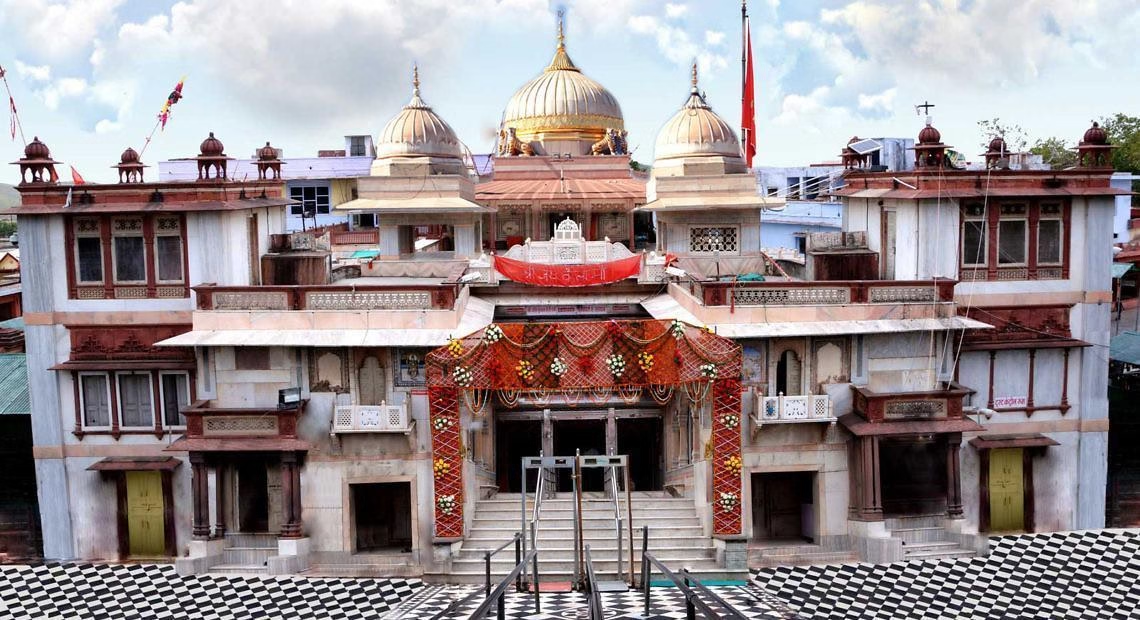
The temple showcases a distinct blend of Rajputana and Mughal architectural styles, characterized by intricate marble work and spacious courtyards. The sanctum sanctorum (Garbhagriha) houses the deity in a unique form—depicted with a Trishul (Trident) in one hand and a Sudarshana Chakra (Discus) in the other, which is distinct from the conventional depictions of Goddess Kali.
Notable Features
- The Chequered Floor: The large courtyard features a distinctive checkered marble floor, typical of ancient temple complexes in this region.
- Red Flags (Jhandas): A mesmerizing sight within the temple complex is the dense collection of red flags planted by devotees. These flags symbolize the fulfillment of vows and act as a visual testament to the unwavering faith of the pilgrims.
- Vegetable Dye Art: The walls and arches often feature traditional murals painted with natural pigments, depicting scenes from Hindu mythology.
Darshan & Ritual Logistics (2026 Season)
The temple administration maintains a strict schedule to facilitate the influx of devotees, especially during the Chaitra month. Below are the standard daily timings (subject to change during festivals).
| Session | Timings | Activity |
|---|---|---|
| Morning | 6:00 AM – 12:00 PM | Mangala Aarti, Abhishekam, General Darshan |
| Afternoon | 12:00 PM – 4:00 PM | Temple remains closed for rituals/rest |
| Evening | 4:00 PM – 9:30 PM | Shayan Aarti, General Darshan |
| Night | 9:00 PM – 10:00 PM | Jagran (All-Night Vigil) |
Key Sevas & Online Booking
Devotees can book several services online via the official temple trust website or Rajasthan Tourism portals.
- Abhishekam: Ritual bathing of the deity with milk, honey, and ghee. Best performed in the morning.
- Archana (Chalisa Path): Recitation of hymns. Can be performed by the temple priest on behalf of the devotee.
- Sahasranama Archana: Offering of 1008 names of the Goddess.
- Jagran Participation: Special passes are required to sit inside the sanctum during the nightly Jagran.
2026 Festival Calendar (Major Dates)
- Chaitra Navratri & Kaila Devi Fair: March 30 – April 7, 2026. This is the peak season where pilgrims walk barefoot from distant villages.
- Sharad Navratri: October 2 – October 11, 2026.
- Diwali: November 13, 2026. Special lamps are lit in the temple courtyard.
Practical Visitor Guidance
Code of Conduct
- Dress Code: Traditional attire is recommended. Men should wear dhoti/kurta or pants with a shirt; women should wear sarees or salwar kameez.
- Photography: Strictly prohibited inside the inner sanctum and the sanctum premises. Photography is allowed in the outer courtyard with discretion.
- Mobile Lockers: Free lockers are available near the entrance for electronic devices and leather items, as these are not permitted inside the temple.
Crowd Management & Seasonal Tips
Best Hours to Visit: For a peaceful darshan, visit between 6:00 AM and 8:00 AM, or post 7:00 PM (after the evening Aarti).
Seasonal Advice: Summers (April–June) in Karauli are extremely hot; temperatures often exceed 45°C. Carry ample water, a hat, and sunglasses. The winter months (October–February) offer the most pleasant weather for pilgrimage.
Pilgrimage Connectivity
How to Reach
- By Air: The nearest airport is Jaipur International Airport (JAI), approximately 170 km away. Taxis and buses are readily available.
- By Rail: The nearest major railway junction is Gangapur City (GGC), about 34 km from the temple. It is well-connected to Delhi, Mumbai, and Jaipur. Alternatively, Karauli Railway Station (23 km) serves local routes.
- By Road: The temple is well-connected via National Highway 148B. RSRTC buses run frequently from Jaipur, Delhi, and Hindaun City. Private taxis are available from Karauli and Gangapur City.
Nearby Sacred Sites
Extend your pilgrimage to these nearby spiritual centers:
- Madan Mohan Temple (Karauli): 23 km away. An ancient temple dedicated to Lord Krishna, serving as the royal deity of Karauli.
- Bhanwar Vilas Palace (Karauli): While a palace, it houses a revered temple within its premises and offers heritage stays.
- Surat Singh Temple (Hindaun City): 58 km away, known for its historical significance and grand architecture.
Frequently Asked Questions (FAQs)
1. Is there a VIP darshan entry available at Kaila Devi Temple?
Yes, the temple trust offers a special entry pass during peak festival seasons (Navratri). However, for regular days, general darshan is usually quick due to the large courtyard area.
2. Can I book online seva from outside India?
Currently, the official online portal supports Indian mobile numbers and domestic payment methods. NRIs can book through authorized travel agents or ask a local relative to assist with bookings.
3. Are there accommodation facilities available near the temple?
Yes, the temple trust runs a Dharamshala for pilgrims. Additionally, there are private hotels and guest houses in Kaila Devi village and the nearby city of Karauli (23 km).
4. What is the significance of the red flags in the temple?
The red flags, known as Jhandas, are offerings made by devotees to the Goddess after their wishes are fulfilled. They represent a vow and are a symbol of gratitude and faith.
5. Is the temple accessible for senior citizens and differently-abled visitors?
The outer courtyard is flat and accessible. However, the sanctum sanctorum involves a few steps. Wheelchairs are available at the entrance assistance desk upon request.
Recent Posts

Shri Kaamkoteeshwar Mandir, Varanasi – History & Significance
In the heart of Kashi, the eternal city of Lord Shiva, where the Ganges flows with celestial grace, stands the Shri Kaamkoteeshwar Mandir. This sacred Sannidhi is not merely a temple but a profound spiritual bridge between the Northern…

ओ सांवरे तूने ही मुझको संभाला – Lyrics & Meaning
ओ सांवरे तूने ही मुझको संभाला – A Prayer to Shyam Origin & Spiritual Essence Why This Bhajan Resonates Devotees chant this when overwhelmed by life’s storms—the refrain ‘तूने ही मुझको संभाला’ is the soul’s sigh of relief: “You…

कथा ये है महाराज मेरे की – Lyrics & Meaning
कथा ये है महाराज मेरे की छत्रपति संभाजी महाराज – A Prayer to Chhatrapati Sambhaji Maharaj Origin & Spiritual Essence Why This Bhajan Resonates Devotees chant this when their spirit feels tested—its powerful refrain “महाराज मेरे” is a soul’s…

Rigveda Samhita Yathartha Anuvada (ऋग्वेद संहिता यथार्थ अनुवाद) – Complete Set with Anvayartha & Hindi/English Translation
The Rigveda is the oldest surviving scripture of humanity and the foundational text of Sanātana Dharma. For serious students, scholars, UPSC aspirants studying ancient Indian history, Sanskrit learners, and spiritual seekers, a precise and grammatically structured translation is indispensable.…

आना भी अकेला है जाना भी अकेला है – Lyrics & Meaning | BharatTemples
आना भी अकेला है जाना भी अकेला है – A Prayer to the Divine Witness Origin & Spiritual Essence Why This Bhajan Resonates Devotees turn to this bhajan in moments of deep reflection—when life’s attachments begin to ache. The…

माता शेरावाली के द्वार जो भी जाता है – Lyrics & Meaning
माता शेरावाली के द्वार जो भी जाता है – A Prayer to Maa Sherawali Origin & Spiritual Essence Why This Bhajan Resonates Devotees turn to this bhajan in times of fear or uncertainty—its promise that no one leaves Maa’s…

मार लेना सपणी उबार लेणा भवरा – Lyrics & Meaning
मार लेना सपणी उबार लेणा भवरा – A Prayer to the Divine Beloved Origin & Spiritual Essence Why This Bhajan Resonates Devotees chant this in moments of deep vulnerability—its cry of “मार लेना सपणी, उबार लेणा भवरा” is the…

हमें श्याम सुंदर भरोसा तुम्हारा – Lyrics & Meaning
हमें श्याम सुंदर भरोसा तुम्हारा – A Prayer to Shyam Sundar Origin & Spiritual Essence Why This Bhajan Resonates Devotees chant this when feeling alone—its refrain ‘de do sahara’ is the soul’s cry for divine support. Lyrics in Hindi…

Mere Satguru Ne Di Thi Davai Lyrics in Hindi & Meaning
Mere Satguru Ne Di Thi Davai: Invoking the Guru’s Liberating Wisdom This soul-stirring bhajan venerates the Satguru (True Spiritual Master) as the divine physician who dispenses the only remedy for life’s deepest sufferings. Composed by Sant Karmaveer Tufani, it…

Janm Diyo Thari Maa Dukh Dekhiyo Lyrics in Hindi & Meaning
जन्म दियो थारी माँ दुख देखियो (Maa’s Grief Upon Birthing You) This soul-stirring Chetavani Bhajan (admonitory hymn) is addressed to the Divine Mother (Maa) – a call for repentance when children forget their filial duties in the dark age…