
Contents
- 1 Introduction & Spiritual Essence
- 2 Historical Origins & Scriptural Legend
- 3 Architectural Marvels
- 4 Darshan & Ritual Logistics
- 5 Practical Visitor Guidance
- 6 Pilgrimage Connectivity
- 7 Frequently Asked Questions (FAQs)
- 7.1 1. Is there a VIP Darshan entry available?
- 7.2 2. What is the significance of the ‘Valampuri’ (Right-sided) trunk?
- 7.3 3. Are there hotels and lodges nearby?
- 7.4 4. Is there an entry fee?
- 7.5 5. When was the last major renovation done?
- 7.6 6. What makes this temple different from other Ganesha temples?
- 8 Contact Details
Introduction & Spiritual Essence
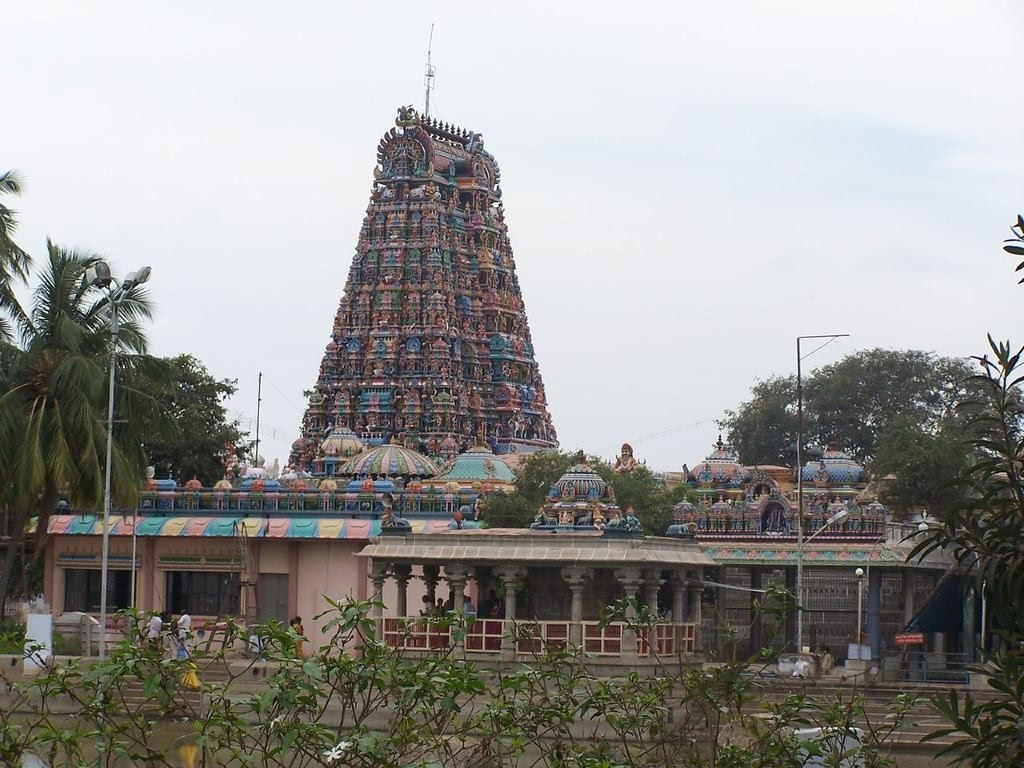
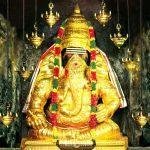
Nestled in the rugged hillocks of Pillaiyarpatti in the Sivaganga district of Tamil Nadu, the Karpaka Vinayakar Temple stands as a testament to unwavering faith and ancient craftsmanship. Also revered as the Pillaiyarpatti Pillaiyar Temple, this sacred site is dedicated to Lord Ganesha in the form of Karpaga Vinayakar. Unlike the standard four-armed depiction seen elsewhere, here the Lord is carved with just two hands in the Artha Padma asana, exuding a serene, commanding presence that has drawn devotees for millennia.
Phalaśruti (Spiritual Benefits): Devotees flock to this temple primarily for two reasons: to bless their children with wisdom and to overcome Rahu-Ketu Dosham. It is believed that worshipping the Valampuri Vinayagar (the trunk turned to the right) bestows material wealth and ancestral blessings. Furthermore, as this is a rock-cut temple dedicated to the Karpagam (wish-fulfilling tree), any wish uttered sincerely here is said to manifest under the benevolent gaze of the Lord.
Historical Origins & Scriptural Legend
The history of the Karpaka Vinayakar Temple is etched not just in texts, but into the very stone of the region. Historical records suggest the temple’s origins trace back to the 4th century AD, with the rock-cut style indicating the influence of the early Pandya dynasty. The temple complex was carved out of a massive hillock, a feat achieved by skilled artisans of the past.
The Sthala Purana: According to temple records and stone inscriptions found within the sanctum, the presiding deity was sculpted by a master sculptor named Ekkattur Koon Peruparanan. His signature is still visible on a stone inscription written in Tamil script dating back to the 2nd–5th century. Tradition holds that the name “Pillaiyarpatti” evolved from the ancient village name “Pillaiyar Patty.” Inscriptions also reveal that the temple was originally known by names such as Ekkattoor, Thiruveenkaikkudi, and Rajanarayanapuram. The presence of the rock-cut Siva Lingam (Thiruveesar) alongside the Ganesha idol makes this a unique Kudavarai Palli (rock-cut cave temple) complex.
Architectural Marvels
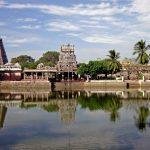
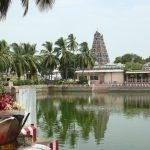
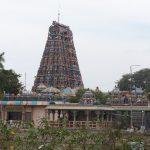
The temple is a masterpiece of Rock-Cut Architecture, distinct from the later Dravida structures prevalent in Tamil Nadu. The primary sanctum (Garbhagriha) is a natural cave within the hillock, oriented to face the North.
Notable Features:
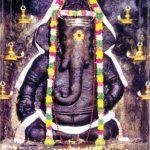
- The Sanctum: The main deity, Karpaga Vinayakar, is a 6-foot tall sculpture carved directly from the rock, facing North.
- Valampuri Vinayagar: The Lord’s trunk curves towards the right (Valampuri), a rare and auspicious form symbolizing wealth and prosperity.
- Unique Posture: Depicted with only two hands (Ashta Bhujam is not used here), seated in Artha Padmasana without the Angusha (modak) in his hand.
- Sub-Shrines: The cave houses shrines for Pasupatheeswarar (Shiva), Kubera (God of Wealth), and Karthiyayini (the wish-fulfiller).
Though the rock-cut style predates the structural temples of the Nayak period, the complex has been maintained over centuries. While not a UNESCO site, it holds immense archaeological significance protected by local heritage bodies.
Darshan & Ritual Logistics
Visitors are encouraged to check the timings before visiting, as the temple follows traditional Agama schedules.
Daily Timings (2026 Schedule)
| Session | Timings | Notes |
|---|---|---|
| Morning Darshan | 6:00 AM – 12:30 PM | Closed between 12:30 PM – 4:00 PM |
| Evening Darshan | 4:00 PM – 9:00 PM | Varies slightly during festivals |
| Pooja/Archana | 8:00 AM – 11:00 AM | Requires prior booking for specific slots |
Key Sevas & Online Booking
Devotees can perform Abhishekam (sacred bathing) and Archana (recitation of names) for the well-being of their families.
- Valampuri Abhishekam: Performed on Tuesdays for removing financial hurdles.
- Sahasranama Archana: For overall health and longevity.
- Online Booking: While specific centralized booking platforms may vary, devotees can usually book sevas via the official temple administration office on-site or through the Tamil Nadu Tourism portal. Contact: 04577264240 for the latest 2026 booking procedures.
Major Festivals in 2026
- Vinayagar Chaturthi: September 2026 (Dates vary by lunar calendar). This is the grandest celebration here, drawing thousands for the special Maha Abhishekam.
- Thiruvathirai: Celebrated for Lord Shiva (Thiruveesar) during December/January.
- Brahmotsavam: June 2026 (Tentative). A week-long festival featuring processions of the deities.
Practical Visitor Guidance
To ensure a serene darshan experience, please adhere to the following guidelines:
- Dress Code: Traditional attire is mandatory. Men should wear Veshti or formal trousers with a shirt; women should wear Saree, Salwar Kameez, or traditional Pavadai. Western wear (shorts, t-shirts) is not permitted.
- Photography & Mobiles: Photography is strictly prohibited inside the cave sanctum. Mobile phones should be kept on silent mode. It is advisable to deposit large bags in the lockers provided at the entrance before climbing the hillock.
- Crowd Management:
- Best Time to Visit: Tuesday is considered highly auspicious. However, for a quieter darshan, visit on weekday mornings between 7:00 AM and 8:30 AM.
- Seasonal Advice: During the summer months (April–June), the marble flooring of the temple premises becomes extremely hot. It is recommended to carry a bottle of water and wear comfortable footwear that is easy to remove (as footwear is not allowed inside).
- Accessibility: The main sanctum requires climbing a flight of rock-hewn steps. While the path is manageable, those with severe mobility issues may find it challenging. The temple office can assist with basic aid upon request.
Pilgrimage Connectivity
The Karpaka Vinayakar Temple is well-connected to major cities in Tamil Nadu but retains a tranquil atmosphere due to its location in the Sivaganga district.
How to Reach Pillaiyarpatti
- By Air: The nearest airport is Madurai International Airport (IXM), located approximately 75 km away. From the airport, you can hire a taxi via NH 87.
- By Rail: The nearest railway junction is Tiruppathur (3 km) and Sivaganga (25 km). However, Madurai Junction (MDU) offers better connectivity from major cities like Chennai and Coimbatore.
- By Road: The temple is located 12 km east of Tiruppathur. Regular bus services are available from Tiruppathur and Karaikudi. If driving from Chennai, take the NH 32 (Trichy – Madurai Highway) and divert via Tiruppathur or Karaikudi.
Nearby Sacred Sites (Pilgrimage Circuit)
Extend your spiritual journey by visiting these nearby temples:
- Kundrakudi Murugan Temple: Located just 3 km west of Pillaiyarpatti. This hilltop temple is dedicated to Lord Murugan and is famous for the golden chariot.
- Karaikudi Athangudi Sri Kasi Viswanathar Temple: Located 16 km away. Known for its intricate Chettinad architecture and association with the wealthy Chettiar community.
- Gandhi Gramam (Harimanas) Mariamman Temple: 15 km away, famous for its unique rituals and the annual festival.
Frequently Asked Questions (FAQs)
1. Is there a VIP Darshan entry available?
While the temple administration maintains a general queue for all devotees, special passes for quick entry are sometimes available on festival days or for senior citizens. It is recommended to contact the temple office (04577264240) a day before your visit to inquire about current VIP ticket availability.
2. What is the significance of the ‘Valampuri’ (Right-sided) trunk?
The trunk of Lord Ganesha facing the left (Vamam) is the most common form. However, the Valampuri form (trunk turning right) is rarer and is believed to be highly powerful. Devotees believe that the right-turned trunk absorbs positive energy and brings material wealth and success to the worshiper.
3. Are there hotels and lodges nearby?
Basic guest houses are available in Tiruppathur (3 km) and Karaikudi (16 km). For more comfortable 4-star hotels and resorts, Madurai (75 km) is the recommended option. However, for a spiritual immersion, many devotees prefer staying in the budget lodges near the Sivaganga bus stand.
4. Is there an entry fee?
No, general darshan is free for all devotees. However, special sevas like Abhishekam or Archana require a nominal fee, which must be booked in advance.
5. When was the last major renovation done?
According to local history and temple records, the cave structure is thousands of years old. The most recent renovations have focused on preserving the ancient rock carvings while improving the infrastructure for pilgrims (such as the entrance complex and restrooms).
6. What makes this temple different from other Ganesha temples?
Three factors make it unique: 1) The rock-cut nature of the cave shrines for both Ganesha and Shiva. 2) The Valampuri aspect of the idol. 3) The two-armed representation of Ganesha (usually four-armed) seated in the Artha Padmasana posture.
Contact Details
Official Address:
Karpaka Vinayakar Temple,
Vanmathi Nagar, Koothadipatti,
Kandhan Kollai Village,
Tiruppathur Taluk, Sivaganga District,
Tamil Nadu – 602025
Phone: 04577264240
Recent Posts

Shri Kaamkoteeshwar Mandir, Varanasi – History & Significance
In the heart of Kashi, the eternal city of Lord Shiva, where the Ganges flows with celestial grace, stands the Shri Kaamkoteeshwar Mandir. This sacred Sannidhi is not merely a temple but a profound spiritual bridge between the Northern…

ओ सांवरे तूने ही मुझको संभाला – Lyrics & Meaning
ओ सांवरे तूने ही मुझको संभाला – A Prayer to Shyam Origin & Spiritual Essence Why This Bhajan Resonates Devotees chant this when overwhelmed by life’s storms—the refrain ‘तूने ही मुझको संभाला’ is the soul’s sigh of relief: “You…

कथा ये है महाराज मेरे की – Lyrics & Meaning
कथा ये है महाराज मेरे की छत्रपति संभाजी महाराज – A Prayer to Chhatrapati Sambhaji Maharaj Origin & Spiritual Essence Why This Bhajan Resonates Devotees chant this when their spirit feels tested—its powerful refrain “महाराज मेरे” is a soul’s…

Rigveda Samhita Yathartha Anuvada (ऋग्वेद संहिता यथार्थ अनुवाद) – Complete Set with Anvayartha & Hindi/English Translation
The Rigveda is the oldest surviving scripture of humanity and the foundational text of Sanātana Dharma. For serious students, scholars, UPSC aspirants studying ancient Indian history, Sanskrit learners, and spiritual seekers, a precise and grammatically structured translation is indispensable.…

आना भी अकेला है जाना भी अकेला है – Lyrics & Meaning | BharatTemples
आना भी अकेला है जाना भी अकेला है – A Prayer to the Divine Witness Origin & Spiritual Essence Why This Bhajan Resonates Devotees turn to this bhajan in moments of deep reflection—when life’s attachments begin to ache. The…

माता शेरावाली के द्वार जो भी जाता है – Lyrics & Meaning
माता शेरावाली के द्वार जो भी जाता है – A Prayer to Maa Sherawali Origin & Spiritual Essence Why This Bhajan Resonates Devotees turn to this bhajan in times of fear or uncertainty—its promise that no one leaves Maa’s…

मार लेना सपणी उबार लेणा भवरा – Lyrics & Meaning
मार लेना सपणी उबार लेणा भवरा – A Prayer to the Divine Beloved Origin & Spiritual Essence Why This Bhajan Resonates Devotees chant this in moments of deep vulnerability—its cry of “मार लेना सपणी, उबार लेणा भवरा” is the…

हमें श्याम सुंदर भरोसा तुम्हारा – Lyrics & Meaning
हमें श्याम सुंदर भरोसा तुम्हारा – A Prayer to Shyam Sundar Origin & Spiritual Essence Why This Bhajan Resonates Devotees chant this when feeling alone—its refrain ‘de do sahara’ is the soul’s cry for divine support. Lyrics in Hindi…

Mere Satguru Ne Di Thi Davai Lyrics in Hindi & Meaning
Mere Satguru Ne Di Thi Davai: Invoking the Guru’s Liberating Wisdom This soul-stirring bhajan venerates the Satguru (True Spiritual Master) as the divine physician who dispenses the only remedy for life’s deepest sufferings. Composed by Sant Karmaveer Tufani, it…

Janm Diyo Thari Maa Dukh Dekhiyo Lyrics in Hindi & Meaning
जन्म दियो थारी माँ दुख देखियो (Maa’s Grief Upon Birthing You) This soul-stirring Chetavani Bhajan (admonitory hymn) is addressed to the Divine Mother (Maa) – a call for repentance when children forget their filial duties in the dark age…