
Contents
- 1 Introduction & Spiritual Essence: The Wisdom of Arulmigu Dhandayuthapani
- 2 Historical Origins & Scriptural Legend
- 3 Architectural Marvels: Dravidian Grandeur
- 4 Darshan & Ritual Logistics (2026 Schedule)
- 5 Practical Visitor Guidance
- 6 Pilgrimage Connectivity
- 6.1 How to Reach Palani
- 6.2 Nearby Sacred Sites
- 6.3 Frequently Asked Questions (FAQ)
- 6.4 1. Is there a VIP Darshan entry available?
- 6.5 2. What is the significance of carrying milk in twin pots?
- 6.6 3. Are mobile phones allowed inside?
- 6.7 4. Is there an entry fee?
- 6.8 5. How does the Panchamritam of Palani differ?
Introduction & Spiritual Essence: The Wisdom of Arulmigu Dhandayuthapani
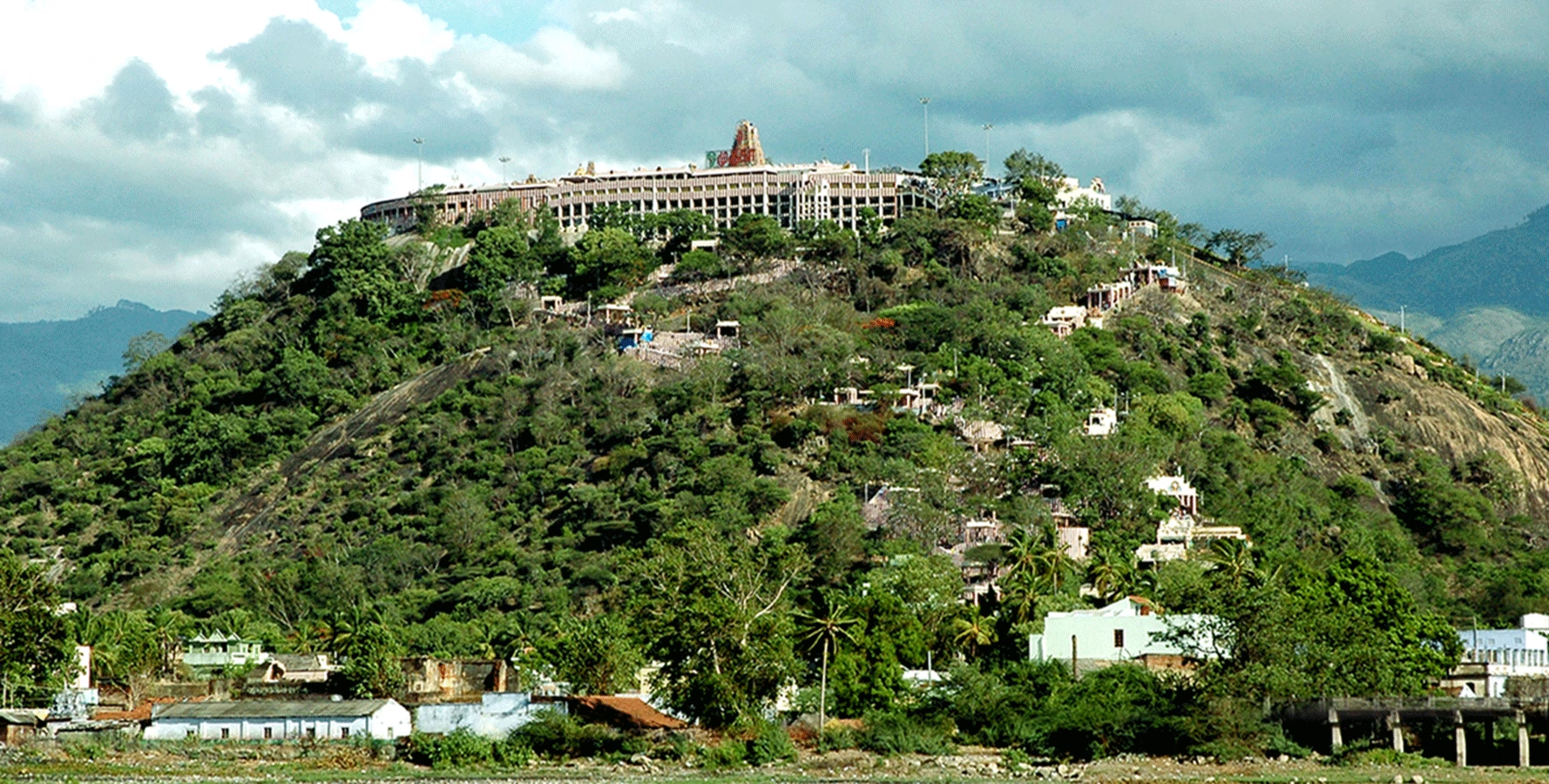
Perched atop the serene Sivagiri hill in Dindigul district, the Arulmigu Shri Dhandayuthapani Temple stands as one of the most revered sites in Hinduism. As the third of the Six Abodes (Arupadaiveedu) of Murugan, this temple is not merely a structure of stone but a powerful spiritual energy center. The presiding deity, Lord Dhandayuthapani, is depicted as a young ascetic—shorn of his hair, wearing a loincloth, and holding a staff (dandam). Unlike the warrior aspect found elsewhere, here Murugan represents the Guha Nityananda—the eternal bliss of the inner self.
Phalaśruti: Why Devotees Visit
The spiritual potency of this temple is rooted in the concept of Navapashanam. The idol is said to be an amalgam of nine poisons, energized by the Siddha Bhogar to form a potent medicine for spiritual liberation. Devotees undertake this pilgrimage to:
- Cleansing Ancestral Karma: Performing milk abhishekam is believed to wash away sins accumulated from past lives.
- Removal of Planetary Obstacles: Worshiping Lord Murugan here is specifically effective for those suffering from the negative influences of Rahu and Ketu (the shadow planets).
- Attainment of Wisdom: As the deity represents Gnana (Jnana) Sakthi, students and seekers visit to gain clarity and knowledge.
Historical Origins & Scriptural Legend
The history of Palani is a tapestry woven from epic mythology and royal patronage.
The Legend of the Fruit of Wisdom (Jnana Pandam)
According to the Skanda Purana, Sage Narada visited Mount Kailash with a divine fruit of knowledge (Gnana Pazham). Lord Shiva decided to award it to the son who circled the world first. While Lord Murugan mounted his peacock to encircle the globe, Lord Ganesha circumambulated his parents, Shiva and Parvati, reasoning that they represented the entire universe. When Murugan returned to find Ganesha had won the fruit, he felt a sense of detachment and chose to leave Kailash. He arrived at Palani to attain maturity and seek the ultimate truth as a hermit.
Rediscovery and Reconstruction
Tradition holds that the idol was originally consecrated by the great Siddha, Bhogar. However, after centuries of worship, the temple was swallowed by the forest. During the 2nd to 5th century AD, a Chera Dynasty king, Perumal, was separated from his hunting party and took refuge at the foot of the hill. In a dream, the Lord instructed him to restore the idol. The king rediscovered the murti and constructed the temple complex that stands today, re-instituting the rituals.
Architectural Marvels: Dravidian Grandeur
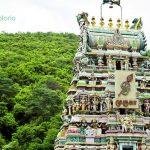
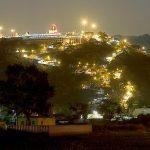
The temple architecture is a magnificent example of the Dravidian style, meticulously designed according to Vastu Shastra. The structure is a three-tiered complex ascending the Sivagiri hill.
The Sanctum and Shikhara
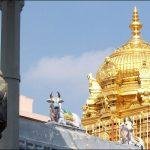
The Garbhagriham (sanctum sanctorum) features early Chera architectural elements, while the ambulatory reflects the fish insignia of the Pandya dynasty. The Shikhara (tower) above the sanctum is plated in gold, shimmering against the backdrop of the Palani hills. Inside, the idol of Dhandayuthapani is placed on a stone pedestal framed by an archway.
Notable Features
The Sculptures: The temple walls are etched with extensive inscriptions in old Tamil script. The inner Praharam (circumambulatory path) houses shrines dedicated to Shiva, Parvati, and Sage Bhogar. The second precinct contains a celebrated shrine for Lord Ganesha and the carriage house for the Golden Chariot.
Darshan & Ritual Logistics (2026 Schedule)
Devotees can avail themselves of various Sevas (services) to offer prayers to Lord Dhandayuthapani. It is recommended to book these services in advance via the official temple portal.
Daily Temple Timings
The temple remains open throughout the day, though timings vary slightly on festival days. Below is the standard schedule for 2026.
| Pooja / Darshan | Timing |
|---|---|
| Thiruvanthikalam (Morning) | 6:00 AM – 12:00 PM |
| Uchikalam (Midday) | 12:00 PM – 5:00 PM |
| Arthajama Pooja (Night) | 5:00 PM – 8:00 PM |
Key Sevas & Booking
- Milk Abhishekam: The most popular offering. Devotees carry milk pots in twin vessels on their shoulders, imitating the legend of the demon Idumban.
- Special Archana: Chanting of 108 names dedicated to Lord Dhandayuthapani.
- Golden Chariot (Pallakku) Darshan: Conducted on specific days and festivals.
- Online Booking: Devotees should visit the official temple website to book accommodation and special darshan tickets.
2026 Festival Dates
- Thaipusam: January 13, 2026
- Vaikasi Visakam: May 25, 2026
- Aadi Kiruthigai: July 24, 2026
- Skanda Shashti: October 26 – November 1, 2026

Practical Visitor Guidance
Visiting Palani requires preparation due to the hilltop location and high spiritual significance.
Dress Code and Etiquette
Traditional attire is strictly enforced. Men must wear Dhoti or trousers (shirts are optional but recommended for outer areas) and remove shirts before entering the sanctum. Women should wear sarees, half-sarees, or salwar kameez. Photography is strictly prohibited inside the sanctum and the inner praharam.
Transportation to the Hilltop
To reach the sanctum, devotees can utilize three primary methods:
- Steps (Padithurai): A traditional climb suitable for those seeking penance.
- Rope Car: The most time-efficient option. Operates from 7:00 AM to 12:30 PM and 1:30 PM to 5:00 PM.
- Winch: Operates from 6:00 AM on regular days and 4:00 AM during festivals.
Crowd Management & Seasonal Advice
Best Time to Visit: The Brahma Muhurta (early morning, 5:00 AM – 7:00 AM) offers the least crowded darshan.
Seasonal Tip: During the summer months (April–June), the Tamil Nadu heat can be intense. Devotees climbing the steps are advised to carry water and use the shaded rest areas provided along the path. The Winch is often crowded on weekends and festival days.
Pilgrimage Connectivity
How to Reach Palani
Palani is well-connected by road and rail. It is located approximately 100 km southeast of Coimbatore and 60 km northwest of Dindigul.
- By Air: The nearest airport is Coimbatore International Airport (CJB), approximately 2 hours by road.
- By Rail: Palani Railway Station (Code: PLNI) is located at the foothills, just 2 km from the temple base. It is a terminal station for several passenger trains.
- By Road: Palani is situated on the NH 85 (formerly NH 209). Regular buses operate from Chennai, Madurai, and Coimbatore.
Nearby Sacred Sites
To complete your pilgrimage circuit, consider visiting:
- Periyanayaki Amman Temple: Located in the foothills, this is a significant Shakti shrine dedicated to Parvati.
- Swamimalai: The fourth of the Six Abodes of Murugan, located approximately 40 km away.
- Namakkal: Home to the Narasimha Swamy Temple and another Murugan cave temple, roughly 50 km away.
Frequently Asked Questions (FAQ)
1. Is there a VIP Darshan entry available?
Yes, the temple offers a Special Darshan ticket, which allows devotees to bypass the general queue. These tickets can be purchased at the counter near the foothills or booked online. VIP entry is typically reserved for donors and dignitaries.
2. What is the significance of carrying milk in twin pots?
This ritual commemorates the story of Idumban, the demon who carried the Palani and Swamimalai hills. Devotees carry milk in two pots balanced on their shoulders as an act of austerity and offering to the Lord. The milk is used to bathe the idol (Abhishekam).
3. Are mobile phones allowed inside?
Mobile phones are allowed in the temple complex but are prohibited inside the sanctum sanctorum. There are locker facilities available at the foothills and near the entrance for secure storage.
4. Is there an entry fee?
General entry to the temple is free. However, charges apply for the Darshan tickets, ropeway, and winch services.
5. How does the Panchamritam of Palani differ?
The Panchamritam (sweet offering) served here is unique to Palani. It is a mixture of five nectars that is believed to possess medicinal properties and is distinct from the standard temple prasadam found elsewhere.
Recent Posts

Shri Kaamkoteeshwar Mandir, Varanasi – History & Significance
In the heart of Kashi, the eternal city of Lord Shiva, where the Ganges flows with celestial grace, stands the Shri Kaamkoteeshwar Mandir. This sacred Sannidhi is not merely a temple but a profound spiritual bridge between the Northern…

ओ सांवरे तूने ही मुझको संभाला – Lyrics & Meaning
ओ सांवरे तूने ही मुझको संभाला – A Prayer to Shyam Origin & Spiritual Essence Why This Bhajan Resonates Devotees chant this when overwhelmed by life’s storms—the refrain ‘तूने ही मुझको संभाला’ is the soul’s sigh of relief: “You…

कथा ये है महाराज मेरे की – Lyrics & Meaning
कथा ये है महाराज मेरे की छत्रपति संभाजी महाराज – A Prayer to Chhatrapati Sambhaji Maharaj Origin & Spiritual Essence Why This Bhajan Resonates Devotees chant this when their spirit feels tested—its powerful refrain “महाराज मेरे” is a soul’s…

Rigveda Samhita Yathartha Anuvada (ऋग्वेद संहिता यथार्थ अनुवाद) – Complete Set with Anvayartha & Hindi/English Translation
The Rigveda is the oldest surviving scripture of humanity and the foundational text of Sanātana Dharma. For serious students, scholars, UPSC aspirants studying ancient Indian history, Sanskrit learners, and spiritual seekers, a precise and grammatically structured translation is indispensable.…

आना भी अकेला है जाना भी अकेला है – Lyrics & Meaning | BharatTemples
आना भी अकेला है जाना भी अकेला है – A Prayer to the Divine Witness Origin & Spiritual Essence Why This Bhajan Resonates Devotees turn to this bhajan in moments of deep reflection—when life’s attachments begin to ache. The…

माता शेरावाली के द्वार जो भी जाता है – Lyrics & Meaning
माता शेरावाली के द्वार जो भी जाता है – A Prayer to Maa Sherawali Origin & Spiritual Essence Why This Bhajan Resonates Devotees turn to this bhajan in times of fear or uncertainty—its promise that no one leaves Maa’s…

मार लेना सपणी उबार लेणा भवरा – Lyrics & Meaning
मार लेना सपणी उबार लेणा भवरा – A Prayer to the Divine Beloved Origin & Spiritual Essence Why This Bhajan Resonates Devotees chant this in moments of deep vulnerability—its cry of “मार लेना सपणी, उबार लेणा भवरा” is the…

हमें श्याम सुंदर भरोसा तुम्हारा – Lyrics & Meaning
हमें श्याम सुंदर भरोसा तुम्हारा – A Prayer to Shyam Sundar Origin & Spiritual Essence Why This Bhajan Resonates Devotees chant this when feeling alone—its refrain ‘de do sahara’ is the soul’s cry for divine support. Lyrics in Hindi…

Mere Satguru Ne Di Thi Davai Lyrics in Hindi & Meaning
Mere Satguru Ne Di Thi Davai: Invoking the Guru’s Liberating Wisdom This soul-stirring bhajan venerates the Satguru (True Spiritual Master) as the divine physician who dispenses the only remedy for life’s deepest sufferings. Composed by Sant Karmaveer Tufani, it…

Janm Diyo Thari Maa Dukh Dekhiyo Lyrics in Hindi & Meaning
जन्म दियो थारी माँ दुख देखियो (Maa’s Grief Upon Birthing You) This soul-stirring Chetavani Bhajan (admonitory hymn) is addressed to the Divine Mother (Maa) – a call for repentance when children forget their filial duties in the dark age…