
Contents
Introduction & Spiritual Essence
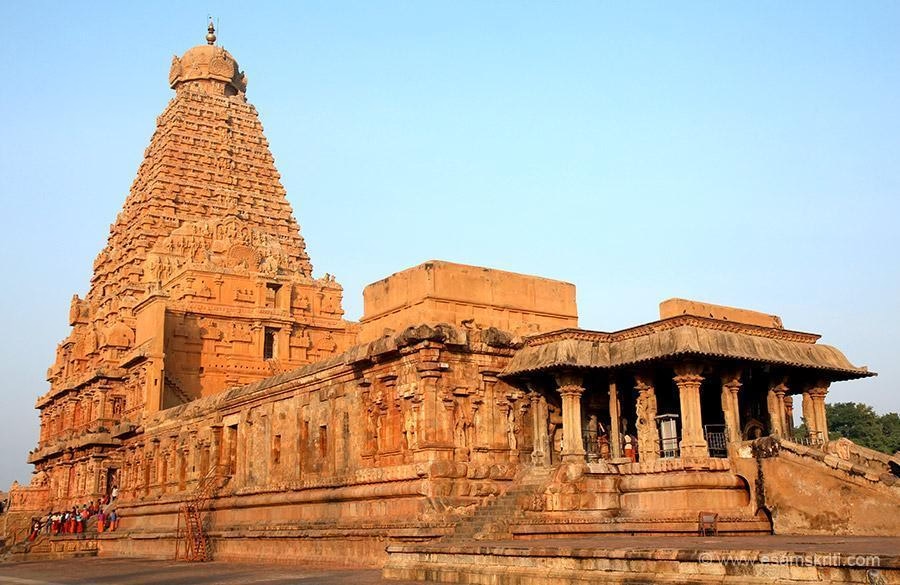
The Brihadisvara Temple, officially known as the Peruvudaiyar Kovil in Thanjavur, stands as a monumental testament to the spiritual and architectural zenith of the Chola dynasty. Dedicated to Lord Shiva, this temple is not merely a structure but a living embodiment of Dravidian art and deep-seated devotion.
The Deity and Form
At the heart of the sanctum lies a massive Shiva Lingam, known as the Peruvudaiyar. Unlike many temples where the deity is a later addition, the Lingam here is believed to be Swayambhu (self-manifested) or carved from a single gigantic rock. The primary deity is revered as Rajarajeshwara (The Lord of Kings), a direct reflection of the builder’s (Raja Raja Chola I) dedication to the divine.
Phalaśruti: The Spiritual Benefits
According to temple tradition and Puranic scriptures, visiting the Brihadisvara Temple and offering prayers carries specific benefits:
- Ancestral Cleansing: It is believed that performing rituals here helps in cleansing Pitru Dosha (ancestral karma), granting peace to departed souls.
- Moksha (Liberation): As a Mokshapuri (liberating city), devotees believe that sincere worship here aids in breaking the cycle of rebirth.
- Removal of Afflictions: The temple’s unique architectural alignment and the potent energy of the Lingam are said to dispel negative energies and mental afflictions.
Historical Origins & Scriptural Legend
The Chola Legacy
Built by the visionary emperor Raja Raja Chola I in the year 1010 CE, the temple served as the royal temple for the Chola capital. The construction was a declaration of the dynasty’s power and their unwavering devotion to Shiva. Inscriptions on the temple walls detail the king’s endowments of gold, land, and precious jewels to sustain the temple’s daily rituals.
Scriptural References & Legends
While the temple is a historical marvel, it is deeply rooted in mythology. The Karikala Cholan, an ancestor of Raja Raja, is often linked to the region’s history. However, the temple’s specific Sthala Purana (local legend) revolves around a divine dream of the king. Legend holds that Lord Shiva appeared in the king’s dream and indicated the exact spot where the Swayambhu Lingam should be consecrated. The Kediliyam, a sacred pond within the complex, is believed to be the spot where the king performed his final rites before the temple’s completion.
Architectural Marvels
The Brihadisvara Temple is the finest example of Dravidian Architecture and is classified under the Nagara style influence, though predominantly Dravidian. It is a masterpiece of Vastu Shastra.
Structure and Design
The temple complex is laid out symmetrically. The central tower, or Vimana, rises to a staggering height of 216 feet (66 meters), making it one of the tallest of its kind in the world. The base of the temple is constructed with granite, while the upper stories are made of lighter materials to maintain structural integrity.
The Kumbam and Shadow Phenomenon
The Kumbam (the pot-like structure at the top of the tower) is a monolithic cupola weighing approximately 80 tons. It is carved from a single block of granite. Interestingly, the shadow of the temple never falls on the ground at noon, a testament to the precision of Chola engineering.
Notable Sculptures
The walls of the temple are adorned with intricate carvings depicting various forms of Shiva and scenes from mythology. The niches house sculptures of Nataraja (dancing Shiva) in 108 distinct poses, showcasing the zenith of Chola bronze artistry.
Darshan & Ritual Logistics
The temple remains an active place of worship managed by the Archaeological Survey of India (ASI). Below are the standard timings and rituals for 2026.
Daily Timings
| Session | Time Slot | Activity |
|---|---|---|
| Morning | 06:00 AM – 08:30 AM | Abhishekam & General Darshan |
| Mid-Day | 12:30 PM – 01:30 PM | Mid-day Puja (Temple may close temporarily) |
| Evening | 04:00 PM – 08:00 PM | Deeparadhana & General Darshan |
Key Sevas & Online Booking
While the ASI manages the structure, the rituals are performed by traditional Archakas (priests). Major Sevas include:
- Abhishekam: Performed daily with milk, honey, and sandalwood paste.
- Archana: Recitation of 108 names of Shiva.
- Rudra Homam: A specialized fire ritual for peace and prosperity.
Booking: As of 2026, online booking for special rituals can be done via the official Tamil Nadu Tourism and ASI portals. Look for the “Brihadisvara Temple Special Entry” sections.
2026 Festival Dates
Plan your visit around these major events:
- Maha Shivaratri: February 26, 2026
- Aipassi Pournami: November 5, 2026
- Pradosham: Occurs every 13th day of the lunar cycle (Bi-monthly).
Practical Visitor Guidance
Code of Conduct
- Dress Code: Traditional attire is preferred. Men should wear dhotis or trousers with shirts; women should wear sarees or salwar kameez. Avoid shorts and sleeveless tops.
- Photography: Strictly prohibited inside the inner sanctum (Garbhagriha). Photography is allowed in the outer corridors and courtyard, but flash is discouraged to preserve the frescoes.
- Footwear: There is a paid shoe-keeping facility at the entrance.
Crowd Management & Seasons
- Best Time to Visit: Arrive early morning (around 6:00 AM) to avoid long queues for Darshan.
- Seasonal Advice: Thanjavur experiences intense heat in April and May. Carry a water bottle, a hat, and wear light clothing. Monsoon (October-November) brings the temple complex to life with lush greenery.
Pilgrimage Connectivity
How to Reach
The Brihadisvara Temple is centrally located in Thanjavur city.
- By Air: The nearest airport is Tiruchirappalli International Airport (TRZ), approximately 60 km away.
- By Rail: Thanjavur Junction is well-connected to Chennai, Madurai, and other major cities.
- By Road: Located on Membalam Road, it is accessible via National Highway (NH) 36 and 81.
Connecting Sacred Sites (The Chola Circuit)
To complete your pilgrimage, consider visiting these nearby UNESCO World Heritage Sites:
- Gangaikonda Cholapuram Temple: 70 km away. Built by Rajendra Chola I, it features a unique curvilinear tower.
- Airavatesvara Temple (Darasuram): 40 km away. Known for its miniature chariot structure and intricate musical steps.
- Thiruvaiyaru Panchanadeeswarar Temple: 15 km away. Famous for the Thyagaraja Aradhana music festival.
Frequently Asked Questions (FAQ)
1. Is there a VIP Darshan entry available?
Yes, the temple management provides a special entry darshan (Seva Darshan) for a nominal fee. This allows pilgrims to bypass the general queue during peak hours.
2. Are there accommodation facilities near the temple?
Thanjavur offers a range of accommodations, from budget lodges to star hotels. The Tamil Nadu Tourism Development Corporation (TTDC) runs a hotel very close to the temple. It is advisable to book in advance during festivals.
3. Can non-Hindus enter the temple?
Unlike some temples in Tamil Nadu that restrict non-Hindus from entering the inner sanctum, the Brihadisvara Temple, being under the ASI, is a monument that is generally accessible. However, respecting local customs and rituals is expected.
4. What is the unique feature of the temple’s acoustic?
The corridors of the temple are designed such that a whisper spoken at one end of the corridor can be heard clearly at the other end, demonstrating advanced acoustic engineering principles used by the Cholas.
5. Is mobile internet connectivity available inside?
Signal strength can be weak within the thick stone walls of the inner sanctum. Network lockers are available near the entrance for depositing electronic devices, as photography is strictly prohibited in specific zones.
Recent Posts

Shri Kaamkoteeshwar Mandir, Varanasi – History & Significance
In the heart of Kashi, the eternal city of Lord Shiva, where the Ganges flows with celestial grace, stands the Shri Kaamkoteeshwar Mandir. This sacred Sannidhi is not merely a temple but a profound spiritual bridge between the Northern…

ओ सांवरे तूने ही मुझको संभाला – Lyrics & Meaning
ओ सांवरे तूने ही मुझको संभाला – A Prayer to Shyam Origin & Spiritual Essence Why This Bhajan Resonates Devotees chant this when overwhelmed by life’s storms—the refrain ‘तूने ही मुझको संभाला’ is the soul’s sigh of relief: “You…

कथा ये है महाराज मेरे की – Lyrics & Meaning
कथा ये है महाराज मेरे की छत्रपति संभाजी महाराज – A Prayer to Chhatrapati Sambhaji Maharaj Origin & Spiritual Essence Why This Bhajan Resonates Devotees chant this when their spirit feels tested—its powerful refrain “महाराज मेरे” is a soul’s…

Rigveda Samhita Yathartha Anuvada (ऋग्वेद संहिता यथार्थ अनुवाद) – Complete Set with Anvayartha & Hindi/English Translation
The Rigveda is the oldest surviving scripture of humanity and the foundational text of Sanātana Dharma. For serious students, scholars, UPSC aspirants studying ancient Indian history, Sanskrit learners, and spiritual seekers, a precise and grammatically structured translation is indispensable.…

आना भी अकेला है जाना भी अकेला है – Lyrics & Meaning | BharatTemples
आना भी अकेला है जाना भी अकेला है – A Prayer to the Divine Witness Origin & Spiritual Essence Why This Bhajan Resonates Devotees turn to this bhajan in moments of deep reflection—when life’s attachments begin to ache. The…

माता शेरावाली के द्वार जो भी जाता है – Lyrics & Meaning
माता शेरावाली के द्वार जो भी जाता है – A Prayer to Maa Sherawali Origin & Spiritual Essence Why This Bhajan Resonates Devotees turn to this bhajan in times of fear or uncertainty—its promise that no one leaves Maa’s…

मार लेना सपणी उबार लेणा भवरा – Lyrics & Meaning
मार लेना सपणी उबार लेणा भवरा – A Prayer to the Divine Beloved Origin & Spiritual Essence Why This Bhajan Resonates Devotees chant this in moments of deep vulnerability—its cry of “मार लेना सपणी, उबार लेणा भवरा” is the…

हमें श्याम सुंदर भरोसा तुम्हारा – Lyrics & Meaning
हमें श्याम सुंदर भरोसा तुम्हारा – A Prayer to Shyam Sundar Origin & Spiritual Essence Why This Bhajan Resonates Devotees chant this when feeling alone—its refrain ‘de do sahara’ is the soul’s cry for divine support. Lyrics in Hindi…

Mere Satguru Ne Di Thi Davai Lyrics in Hindi & Meaning
Mere Satguru Ne Di Thi Davai: Invoking the Guru’s Liberating Wisdom This soul-stirring bhajan venerates the Satguru (True Spiritual Master) as the divine physician who dispenses the only remedy for life’s deepest sufferings. Composed by Sant Karmaveer Tufani, it…

Janm Diyo Thari Maa Dukh Dekhiyo Lyrics in Hindi & Meaning
जन्म दियो थारी माँ दुख देखियो (Maa’s Grief Upon Birthing You) This soul-stirring Chetavani Bhajan (admonitory hymn) is addressed to the Divine Mother (Maa) – a call for repentance when children forget their filial duties in the dark age…