
Contents
Introduction & Spiritual Essence of Vaitheeswaran Koil
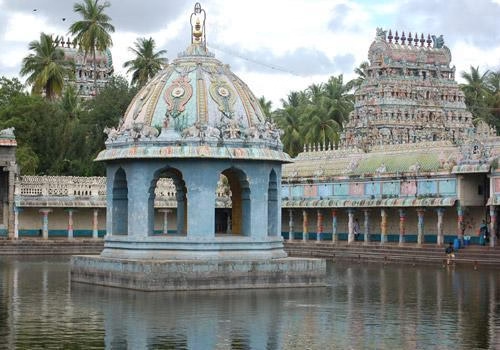
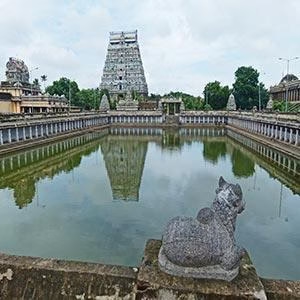
Vaitheeswaran Koil, located in the heart of Nagapattinam district, Tamil Nadu, stands as a monumental beacon of faith and healing. Known traditionally as Pullirukkuvelur, this temple is dedicated to Lord Shiva, worshipped here as Vaitheeswaran (The Divine Physician) and his consort Goddess Thaiyalnayaki (The Mother of Medicine). The presiding deity is revered as Sri Vaidyanathaswamy, a form of Shiva embodying the power to cure diseases and alleviate suffering.
As one of the nine sacred Navagraha Temples, this shrine is specifically associated with the planet Mars (Angaraka). According to spiritual beliefs, prayers offered here dissolve the malefic effects of Mars in one’s astrological chart.
Phalaśruti: The Spiritual Benefits
Devotees visit Vaitheeswaran Koil primarily to seek relief from ailments and to cleanse ancestral karma. The temple is a Paadal Petra Sthalam, glorified in the Tevaram hymns of the 7th-century Nayanar saints. The primary spiritual benefits include:
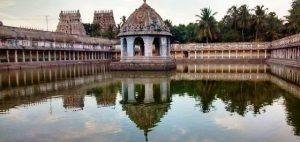
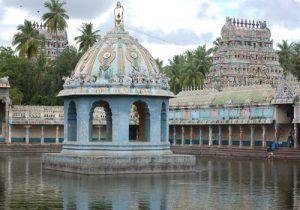
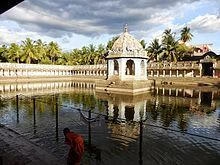
- Curing Diseases: It is believed that the holy waters of the Siddhamirtham Tank contain nectar (Amritam). A dip in this tank is believed to cure chronic illnesses.
- Remedial for Angaraka: Those with a weak or afflicted Mars in their horoscope visit to offer prayers to Angaraka, seeking courage and vitality.
- Healing Wounds: Legend holds that Lord Rama and Lakshmana worshipped here to cure the wounds inflicted by the demon king Ravana during the Ramayana war.
Historical Origins & Scriptural Legend
The Legend of Healing
According to the Sthala Purana, this temple is the divine ground where Shiva appeared as the Supreme Healer. One legend narrates that Angaraka (Mars) suffered from leprosy due to a curse. He bathed in the Siddhamirtham tank and prayed to Shiva, who cured him and blessed him with a celestial form.
Another legend suggests that during the Ramayana era, Jatayu (the divine vulture), was severely wounded by Ravana. Lord Rama performed last rites for Jatayu here, and the site is marked by the Jatayu Kundam (the pot used for holding sacred ashes/Vibhuti). Furthermore, the warrior god Subramanya (Murugan) received the Vel (divine spear) here to slay the asura Surapadman.
Architectural History & Builders
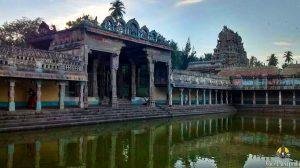
The temple has undergone significant expansion over centuries. The core structure reflects the grandeur of the Dravidian style. Historical inscriptions on the temple walls indicate contributions from:
- Chola Dynasty: Rulers like Kulothunga Chola I (1070–1120 CE) are recorded in inscriptions for funding the tank and shrines.
- Pandya and Nayak Rulers: Kings such as Vikrama Chola, Vira Rajendra, and Achuthappa Nayak (1560–1614 AD) added significant mandapas and gopurams.
- Maratha Rulers: Princes like Thulaja contributed to the renovation of the precincts.
Currently, the temple is maintained by the Dharmapuram Adheenam, a historic Saivite monastic institution based in Mayiladuthurai.
Architectural Marvels
The architecture of Vaitheeswaran Koil is a masterclass in Dravidian Vastu Shastra. The temple is designed to represent the human body, with the sanctum symbolizing the head and the temple tank representing the life force.
Key Structural Elements
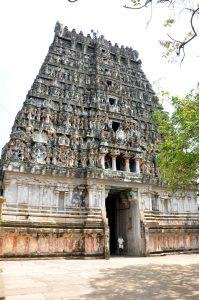
The temple features a striking five-tiered Rajagopuram (main entrance tower) facing east. Inside, there are two smaller inner gopurams.
- The Sanctum (Garbhagriha): The main deity, Vaitheeswaran, is enshrined as a Swayambhu Lingam (self-manifested).
- The Shrines: The first precinct houses the metal image of Muthukumara Swamy (Subramanya). The second precinct contains the shrine of Thaiyalnayaki, holding a pot of medicinal oil.
- Navagraha Shrine: A separate shrine for the nine planets is located near the eastern gateway. The shrine of Angaraka (Mars) is particularly prominent, facing south.
- Sculptures: The temple complex features exquisite stone sculptures of Nataraja, Durga, Dakshinamoorthy, Surya (Sun God), and Jatayu. There is also a unique metal image of Gangavisarjanar.
The Sthala Vriksha (sacred tree) is the Neem tree (Margosa), renowned for its medicinal properties, located near the eastern gateway.
Darshan & Ritual Logistics (2026 Guide)
Visitors are encouraged to plan their visit around the daily rituals and annual festivals. The temple follows a rigorous schedule of Poojas.
Daily Darshan Timings
| Session | Timings |
|---|---|
| Morning Opening | 5:30 AM |
| Ushatkalam (Early Morning Pooja) | 5:30 AM – 6:00 AM |
| Afternoon Opening | 11:00 AM – 12:00 PM |
| Evening Opening | 4:00 PM – 8:30 PM |
| Arthajama Pooja (Closing Ritual) | 8:30 PM |
Key Sevas and Online Booking
Devotees can book specific rituals, particularly Abhishekam (anointing the deity) and Archana (chanting of names). For 2026, the temple administration has enhanced digital services:
- Rudra Abhishekam: Performed for general well-being.
- Angaraka Pooja: Specifically dedicated to the planet Mars.
- Thilatharpanam: A ritual performed to appease ancestors.
- Online Booking: Visit the official website of the temple or the Dharmapuram Adheenam portal to reserve Seva slots in advance.
2026 Major Festivals
- January 14, 2026 (Maattu Pongal): Special cattle procession and Abhishekam.
- March 29, 2026 (Panguni Uthiram): A grand car festival (Ther) involving the processions of Lord Vaitheeswaran and Goddess Thaiyalnayaki.
- November 3, 2026 (Deepavali): Special oil bath rituals reflecting the healing nature of the temple.
Practical Visitor Guidance
Temple Etiquette & Rules
- Dress Code: Traditional attire is mandatory. Men should wear dhotis or formal trousers with shirts; women should wear sarees, salwar kameez, or long skirts.
- Photography: Strictly prohibited inside the sanctum sanctorum and the inner prakaram. Photography is permitted in the outer corridors but requires silence.
- Mobile Phones: Lockers are available near the entrance to deposit electronic devices before entering the inner shrines.
- Accessibility: The temple has ramps for wheelchairs, but the inner sanctum involves narrow passages and steps which may require assistance.
Crowd Management & Seasonal Advice
- Best Hours: Early morning (6:00 AM – 8:00 AM) offers the most peaceful Darshan.
- Weekends: Avoid Sundays and public holidays if possible, as crowds are high due to devotees from Cuddalore and Mayiladuthurai.
- Seasonal Tips:
- Summer (May-June): The temperature in Nagapattinam can soar above 38°C. Carry water bottles and use the free water stations.
- Monsoon (Oct-Dec): This region experiences heavy rainfall; carry an umbrella.
Pilgrimage Connectivity
The temple is strategically located on the Sirkazhi – Mayiladuthurai State Highway. It is a central hub for a spiritual circuit.
How to Reach Vaitheeswaran Koil
- By Air: The nearest airport is Tiruchirappalli International Airport (TRZ), approximately 150 km away. Alternatively, Chennai International Airport (MAA) is 235 km away.
- By Rail: Vaitheeswaran Koil Railway Station is located right next to the temple on the Mayiladuthurai–Chennai line. Major trains like the Mayiladuthurai–Chennai Egmore Express stop here. Sirkazhi (10 km) is the nearest major railway junction.
- By Road: Located on SH 64 (Connecting Karaikal to Sirkazhi). Frequent buses are operated by TNSTC from Chidambaram (30 km) and Mayiladuthurai (16 km).
Nearby Sacred Sites (Pilgrimage Circuit)
Vaitheeswaran Koil is part of the larger spiritual landscape of the Chola Nadu region:
- Thirukkadaiyur (15 km): Famous for the Thirukkadaiyur Amritaghateswarar-Abhirami Temple, dedicated to the union of Shiva and Parvati. It is a prime destination for those celebrating longevity (60th/80th birthdays).
- Thirunallar (25 km): Home to the Dharbaranyeswarar Temple, the most prominent Navagraha temple dedicated to Sani (Saturn). Often combined with the Vaitheeswaran visit for a complete planetary remedy.
- Thiruvaduthurai (25 km): An ancient Shiva temple dedicated to Nataraja, surrounded by a vast tank. It is one of the 51 Shakthi Peethams, ideal for Tantric worship.
Frequently Asked Questions (FAQs)
1. Is there a VIP Darshan entry available?
Yes, the temple administration offers a ‘Special Darshan’ ticket which allows devotees to bypass the general queue during specific hours. Tickets can be purchased at the temple counter or online.
2. What is the cost of performing Thilatharpanam?
The cost for Thilatharpanam (ancestral rites) generally varies between INR 300 and INR 1,000 depending on the number of priests and materials required. It is advisable to book at the temple office upon arrival.
3. How far is the temple from the railway station?
The Vaitheeswaran Koil railway station is located exactly 1 km from the temple entrance. An auto-rickshaw or a short walk (10-15 minutes) is sufficient to reach the temple.
4. Is non-vegetarian food allowed near the temple?
Vaitheeswaran Koil is a holy site for Saivites. Non-vegetarian food is strictly prohibited within the temple premises and surrounding streets. Devotees are advised to stick to vegetarian meals served at local hotels.
Yes, Abhishekam can be performed for the Angaraka (Mars) idol located in the Navagraha shrine. However, timings for this ritual are fixed; check with the temple archakas (priests) upon arrival.
Contact Details
Official Address:
No: 25, Taluk Vaitheeswaran Koil, South Madavilagam, Sirkazhi, Nagapattinam District, Tamil Nadu 609117.
Contact Number:
08940819149 (Temple Administrative Office)
Recent Posts

Shri Kaamkoteeshwar Mandir, Varanasi – History & Significance
In the heart of Kashi, the eternal city of Lord Shiva, where the Ganges flows with celestial grace, stands the Shri Kaamkoteeshwar Mandir. This sacred Sannidhi is not merely a temple but a profound spiritual bridge between the Northern…

ओ सांवरे तूने ही मुझको संभाला – Lyrics & Meaning
ओ सांवरे तूने ही मुझको संभाला – A Prayer to Shyam Origin & Spiritual Essence Why This Bhajan Resonates Devotees chant this when overwhelmed by life’s storms—the refrain ‘तूने ही मुझको संभाला’ is the soul’s sigh of relief: “You…

कथा ये है महाराज मेरे की – Lyrics & Meaning
कथा ये है महाराज मेरे की छत्रपति संभाजी महाराज – A Prayer to Chhatrapati Sambhaji Maharaj Origin & Spiritual Essence Why This Bhajan Resonates Devotees chant this when their spirit feels tested—its powerful refrain “महाराज मेरे” is a soul’s…

Rigveda Samhita Yathartha Anuvada (ऋग्वेद संहिता यथार्थ अनुवाद) – Complete Set with Anvayartha & Hindi/English Translation
The Rigveda is the oldest surviving scripture of humanity and the foundational text of Sanātana Dharma. For serious students, scholars, UPSC aspirants studying ancient Indian history, Sanskrit learners, and spiritual seekers, a precise and grammatically structured translation is indispensable.…

आना भी अकेला है जाना भी अकेला है – Lyrics & Meaning | BharatTemples
आना भी अकेला है जाना भी अकेला है – A Prayer to the Divine Witness Origin & Spiritual Essence Why This Bhajan Resonates Devotees turn to this bhajan in moments of deep reflection—when life’s attachments begin to ache. The…

माता शेरावाली के द्वार जो भी जाता है – Lyrics & Meaning
माता शेरावाली के द्वार जो भी जाता है – A Prayer to Maa Sherawali Origin & Spiritual Essence Why This Bhajan Resonates Devotees turn to this bhajan in times of fear or uncertainty—its promise that no one leaves Maa’s…

मार लेना सपणी उबार लेणा भवरा – Lyrics & Meaning
मार लेना सपणी उबार लेणा भवरा – A Prayer to the Divine Beloved Origin & Spiritual Essence Why This Bhajan Resonates Devotees chant this in moments of deep vulnerability—its cry of “मार लेना सपणी, उबार लेणा भवरा” is the…

हमें श्याम सुंदर भरोसा तुम्हारा – Lyrics & Meaning
हमें श्याम सुंदर भरोसा तुम्हारा – A Prayer to Shyam Sundar Origin & Spiritual Essence Why This Bhajan Resonates Devotees chant this when feeling alone—its refrain ‘de do sahara’ is the soul’s cry for divine support. Lyrics in Hindi…

Mere Satguru Ne Di Thi Davai Lyrics in Hindi & Meaning
Mere Satguru Ne Di Thi Davai: Invoking the Guru’s Liberating Wisdom This soul-stirring bhajan venerates the Satguru (True Spiritual Master) as the divine physician who dispenses the only remedy for life’s deepest sufferings. Composed by Sant Karmaveer Tufani, it…

Janm Diyo Thari Maa Dukh Dekhiyo Lyrics in Hindi & Meaning
जन्म दियो थारी माँ दुख देखियो (Maa’s Grief Upon Birthing You) This soul-stirring Chetavani Bhajan (admonitory hymn) is addressed to the Divine Mother (Maa) – a call for repentance when children forget their filial duties in the dark age…