
Contents
- 1 Jyotirmath (Joshimath): The Northern Seat of Spiritual Wisdom
- 1.1 Introduction & Spiritual Essence
- 1.2 Historical Origins & Scriptural Legend
- 1.3 Architectural Marvels
- 1.4 Darshan & Ritual Logistics
- 1.5 Practical Visitor Guidance
- 1.6 Pilgrimage Connectivity
- 1.7 Photo Gallery
- 1.8 Frequently Asked Questions (FAQ)
- 1.8.1 1. Is there a VIP darshan entry at Jyotirmath?
- 1.8.2 2. Can I visit Jyotirmath during winter (December–January)?
- 1.8.3 3. What is the significance of the “Right Hand” in Narasimha Temple?
- 1.8.4 4. Are there accommodation facilities near the temple?
- 1.8.5 5. How is Joshimath different from Jyotirmath?
- 1.9 Contact Details
Jyotirmath (Joshimath): The Northern Seat of Spiritual Wisdom
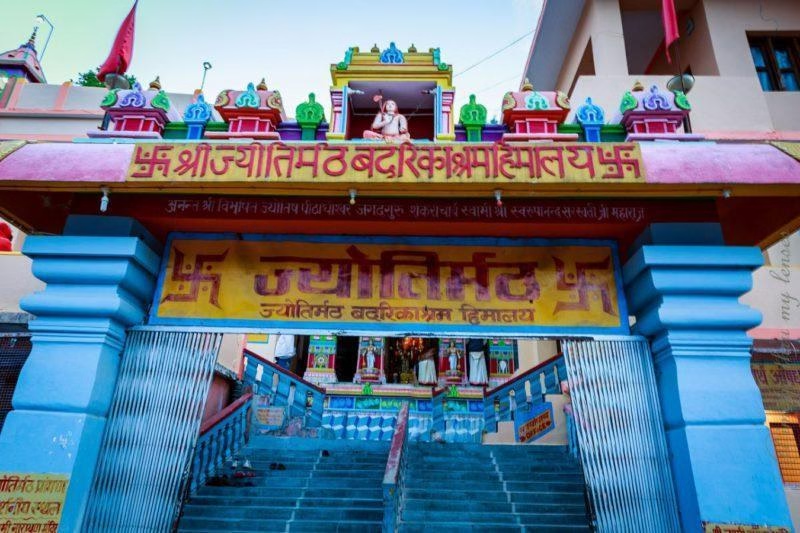
In the serene folds of the Chamoli district in Uttarakhand, where the Alaknanda and Dhauliganga rivers converge, lies Jyotirmath, also revered as Joshimath. Perched at an altitude of 6,150 feet, this sacred town is not merely a transit point to Badrinath but a profound spiritual destination in its own right. It serves as the winter seat of Lord Badrinath and the northern cardinal matha (Uttaramnaya Pitha) established by the 8th-century saint-philosopher Adi Shankaracharya.
Introduction & Spiritual Essence
The Deity and the Form
The spiritual heart of Jyotirmath is the Narasimha Temple, housing the idol of Lord Narasimha (an avatar of Lord Vishnu). Unlike the fierce form typically associated with Narasimha, the idol here is Swayambhu (self-manifested) and exudes a compassionate aura. It is believed to have been established by Adi Shankaracharya himself. The temple also enshrines Badrinarayan, making it the winter home for the presiding deity of Badrinath when the main temple closes due to heavy snowfall.
Phalaśruti: Why Devotees Visit
Visiting Jyotirmath is considered essential for the preservation of spiritual knowledge. As the guardian of the Atharva Veda, this matha ensures the continuity of Vedic traditions. Devotees believe that a pilgrimage here aids in:
- Cleansing Ancestral Karma: Offering prayers at the Narasimha temple is believed to pacify planetary afflictions and grant peace to ancestors.
- Attaining Jnana (Wisdom): Being the seat of Advaita Vedanta, devotees seek clarity and liberation from the cycle of birth and death.
- Opening the Gateways to Salvation: Tradition holds that a visit to Jyotirmath precedes the journey to Badrinath, signifying the need to stabilize the mind (Jyotir) before seeking the ultimate truth.
Historical Origins & Scriptural Legend
Establishment by Adi Shankara
According to historical records and Vedic lore, Jyotirmath was established by Adi Shankaracharya around the 8th century CE. It is one of the four primary mathas (monastic institutions) he founded to revive Sanatana Dharma. While the matha saw periods of decline—remaining extinct for 165 years after the 18th-century Swami Ramakrishna Tirtha—it was revived in 1941 by Swami Brahmananda Saraswati, the predecessor to the current Shankaracharya, Swami Swaroopanand Saraswati.
The Katyuri Dynasty & Local Legends
Tradition holds that the region was ruled by the Katyuri Kings from the 7th to the 11th centuries. The famous Basdeo Temple (also called the Vasudeva Temple) in Joshimath is attributed to Vashudev Katyuri, marking the architectural synthesis of Buddhist origins and Brahminical practices during that era. The Chand Kings eventually displaced the Katyuris, but the spiritual legacy remained unbroken.
The Legend of Jay-Vijay: The Narasimha Temple holds a unique prophecy. The right hand of the Narasimha idol has gradually thinned over centuries. Local belief suggests that when this hand breaks, the mountains Jay and Vijay (mythological gatekeepers of Vishnu) will unite. Consequently, Lord Badrinath will vanish from Badrinath and reappear as a black stone (Shaligram) at Bhavishya Badri (Future Badri), located 10 km away.
Architectural Marvels
Nagara Style & Vastu Integration
Jyotirmath’s architecture is a testament to the Himalayan Nagara style. The structures are designed to withstand seismic activity while aligning with Vastu Shastra principles, ensuring the temple faces the rising sun. The use of local granite and wood provides thermal insulation against the freezing temperatures of the upper Himalayas.
Notable Structures
- Shankaracharya Math: The central complex features a serene cave where Adi Shankaracharya is believed to have performed Tapasya (penance). The Matha also houses a temple dedicated to Rajrajeshwari Devi.
- Narasimha Temple: This ancient structure is a Divya Desam, one of the 108 Vishnu temples revered by the Alvar saints. The sanctum is compact but radiates immense spiritual energy.
- Bhavishya Kedar: A smaller shrine dedicated to Lord Shiva, foretelling the future convergence of Kedarnath’s energy here if the mountains shift.
The town also serves as a gateway to UNESCO World Heritage sites like the Valley of Flowers and Nanda Devi National Park, adding ecological significance to its architectural footprint.
Darshan & Ritual Logistics
Note: While specific timings can fluctuate based on seasons and local festivals, the following represents the standard schedule for 2026.
Daily Darshan Timings
| Narasimha Temple Schedule | |
|---|---|
| Morning Darshan | 06:00 AM – 12:00 PM |
| Afternoon Break | 12:00 PM – 02:00 PM |
| Evening Darshan | 02:00 PM – 08:00 PM |
| Shayan Aarti | 08:00 PM |
Key Sevas & Online Booking
Devotees can book various Sevas (ritual services) through the official Badrinath-Kedarnath Temple Committee portal.
- Abhishekam: Performed early morning (requires prior booking).
- Archana: Can be done during darshan hours.
- Utsav Murti Darshan: Special viewing of the portable idols used in processions.
Note: Due to the high influx of pilgrims during the opening season (May–June), online booking is highly recommended.
Major Festivals 2026
Jyotirmath comes alive during these specific dates in 2026:
- May 4, 2026: Opening of Badrinath Temple (Winter seat active in Jyotirmath until this date).
- July 11, 2026: Harela Festival (Celebration of greenery and agriculture).
- November 1, 2026: Closing of Badrinath Temple (The deity returns to Jyotirmath).
- November 14, 2026: Deepotsav (Diwali celebration in the Matha).
Practical Visitor Guidance
Etiquette and Rules
- Dress Code: Traditional Indian attire (Dhoti/Kurta for men, Saree/Salwar Kameez for women) is encouraged. Western attire is discouraged within the inner sanctum.
- Photography: Strictly prohibited inside the Narasimha Temple and the Matha cave. Mobile phones should be on silent mode.
- Lockers: Free mobile lockers are available near the temple entrance. Bags and cameras must be deposited there.
- Accessibility: The temple has steep stone steps. While not wheelchair accessible, porters are available for assistance.
Crowd Management & Seasonal Advice
Best Hours: Visit between 7:00 AM and 9:00 AM to avoid long queues. Evening darshan post-5:00 PM is also relatively peaceful.
Seasonal Tips:
- Summer (May-June): Weather is pleasant (15°C–25°C), but pilgrim traffic is high. Carry light woolens.
- Monsoon (July-August): Risk of landslides. Carry rain gear and waterproof footwear.
- Winter (Nov-Feb): Temperatures drop below freezing. Heavy woolens and thermal wear are mandatory.
Pilgrimage Connectivity
How to Reach
Jyotirmath is well-connected by road, rail, and air.
- By Air: The nearest airport is Jolly Grant Airport (Dehradun), approximately 315 km away. Taxis are available from the airport to Joshimath (approx. 10-11 hours drive).
- By Rail: The nearest railway station is Rishikesh (285 km) or Haridwar (310 km). From there, you can take a bus or taxi via NH 7 and NH 109.
- By Road: Joshimath is directly accessible via the Rishikesh-Badrinath National Highway. Shared taxis and state-run buses ply regularly from Haridwar and Rishikesh.
Nearby Sacred Sites (Pilgrimage Circuit)
Extend your spiritual journey to these nearby tirthas:
- Badrinath (16 km): One of the Char Dhams. Visit during the open season (May–November).
- Tapovan (10 km): Famous for its natural sulfur hot springs, believed to have medicinal properties.
- Gurso Bugyal (4 km trek): A scenic meadow offering panoramic views of Nanda Devi and Trishul peaks, also a short trekking destination.
Photo Gallery
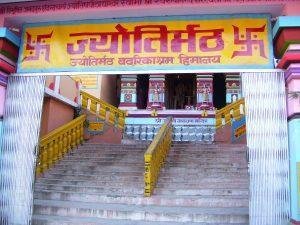
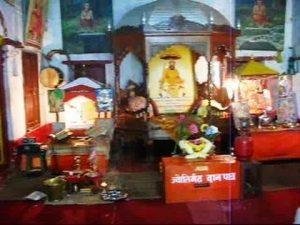
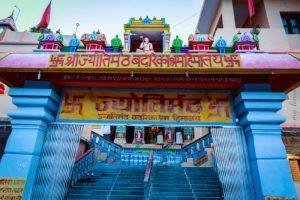
Frequently Asked Questions (FAQ)
1. Is there a VIP darshan entry at Jyotirmath?
Yes, the temple committee facilitates a limited number of VIP darshans for dignitaries or those with special permits. However, for general devotees, early morning general darshan is the most efficient way to enter.
2. Can I visit Jyotirmath during winter (December–January)?
Yes, the town remains inhabited year-round. However, the route to Badrinath closes after November. Jyotirmath itself receives snowfall, offering a stunning but cold experience. Proper snow gear is required.
3. What is the significance of the “Right Hand” in Narasimha Temple?
The idol’s right arm is believed to be disintegrating naturally. It is prophesied that when the arm falls, Lord Badrinath will move from his current shrine to the Bhavishya Badri temple.
4. Are there accommodation facilities near the temple?
Yes, Joshimath has a wide range of hotels, GMVN guest houses, and Dharamshalas. It is advisable to book in advance during peak pilgrimage months (May–June and October).
5. How is Joshimath different from Jyotirmath?
They are the same geographical location. “Joshimath” is the colloquial name derived from the Sanskrit “Jyotirmath,” which is the formal name of the Shankaracharya matha established by Adi Shankara.
Contact Details
Official Address:
Shankaracharya Math, Jyotirmath,
Joshimath, Chamoli District,
Uttarakhand, India – 246443
Temple Committee Office (Badrinath-Kedarnath):
Phone: +91-1384-220220 (General Inquiries)
Recent Posts

Shri Kaamkoteeshwar Mandir, Varanasi – History & Significance
In the heart of Kashi, the eternal city of Lord Shiva, where the Ganges flows with celestial grace, stands the Shri Kaamkoteeshwar Mandir. This sacred Sannidhi is not merely a temple but a profound spiritual bridge between the Northern…

ओ सांवरे तूने ही मुझको संभाला – Lyrics & Meaning
ओ सांवरे तूने ही मुझको संभाला – A Prayer to Shyam Origin & Spiritual Essence Why This Bhajan Resonates Devotees chant this when overwhelmed by life’s storms—the refrain ‘तूने ही मुझको संभाला’ is the soul’s sigh of relief: “You…

कथा ये है महाराज मेरे की – Lyrics & Meaning
कथा ये है महाराज मेरे की छत्रपति संभाजी महाराज – A Prayer to Chhatrapati Sambhaji Maharaj Origin & Spiritual Essence Why This Bhajan Resonates Devotees chant this when their spirit feels tested—its powerful refrain “महाराज मेरे” is a soul’s…

Rigveda Samhita Yathartha Anuvada (ऋग्वेद संहिता यथार्थ अनुवाद) – Complete Set with Anvayartha & Hindi/English Translation
The Rigveda is the oldest surviving scripture of humanity and the foundational text of Sanātana Dharma. For serious students, scholars, UPSC aspirants studying ancient Indian history, Sanskrit learners, and spiritual seekers, a precise and grammatically structured translation is indispensable.…

आना भी अकेला है जाना भी अकेला है – Lyrics & Meaning | BharatTemples
आना भी अकेला है जाना भी अकेला है – A Prayer to the Divine Witness Origin & Spiritual Essence Why This Bhajan Resonates Devotees turn to this bhajan in moments of deep reflection—when life’s attachments begin to ache. The…

माता शेरावाली के द्वार जो भी जाता है – Lyrics & Meaning
माता शेरावाली के द्वार जो भी जाता है – A Prayer to Maa Sherawali Origin & Spiritual Essence Why This Bhajan Resonates Devotees turn to this bhajan in times of fear or uncertainty—its promise that no one leaves Maa’s…

मार लेना सपणी उबार लेणा भवरा – Lyrics & Meaning
मार लेना सपणी उबार लेणा भवरा – A Prayer to the Divine Beloved Origin & Spiritual Essence Why This Bhajan Resonates Devotees chant this in moments of deep vulnerability—its cry of “मार लेना सपणी, उबार लेणा भवरा” is the…

हमें श्याम सुंदर भरोसा तुम्हारा – Lyrics & Meaning
हमें श्याम सुंदर भरोसा तुम्हारा – A Prayer to Shyam Sundar Origin & Spiritual Essence Why This Bhajan Resonates Devotees chant this when feeling alone—its refrain ‘de do sahara’ is the soul’s cry for divine support. Lyrics in Hindi…

Mere Satguru Ne Di Thi Davai Lyrics in Hindi & Meaning
Mere Satguru Ne Di Thi Davai: Invoking the Guru’s Liberating Wisdom This soul-stirring bhajan venerates the Satguru (True Spiritual Master) as the divine physician who dispenses the only remedy for life’s deepest sufferings. Composed by Sant Karmaveer Tufani, it…

Janm Diyo Thari Maa Dukh Dekhiyo Lyrics in Hindi & Meaning
जन्म दियो थारी माँ दुख देखियो (Maa’s Grief Upon Birthing You) This soul-stirring Chetavani Bhajan (admonitory hymn) is addressed to the Divine Mother (Maa) – a call for repentance when children forget their filial duties in the dark age…