
Contents
- 1 Garjiya Devi Temple: A Definitive Pilgrimage Guide
- 1.1 1. Introduction & Spiritual Essence
- 1.2 2. Historical Origins & Scriptural Legend
- 1.3 3. Architectural Marvels
- 1.4 4. Darshan & Ritual Logistics (2026 Season)
- 1.5 5. Practical Visitor Guidance
- 1.6 6. Pilgrimage Connectivity
- 1.7 7. Frequently Asked Questions (FAQs)
- 1.8 Photo Gallery
- 1.9 Contact Details & Official Information
Garjiya Devi Temple: A Definitive Pilgrimage Guide
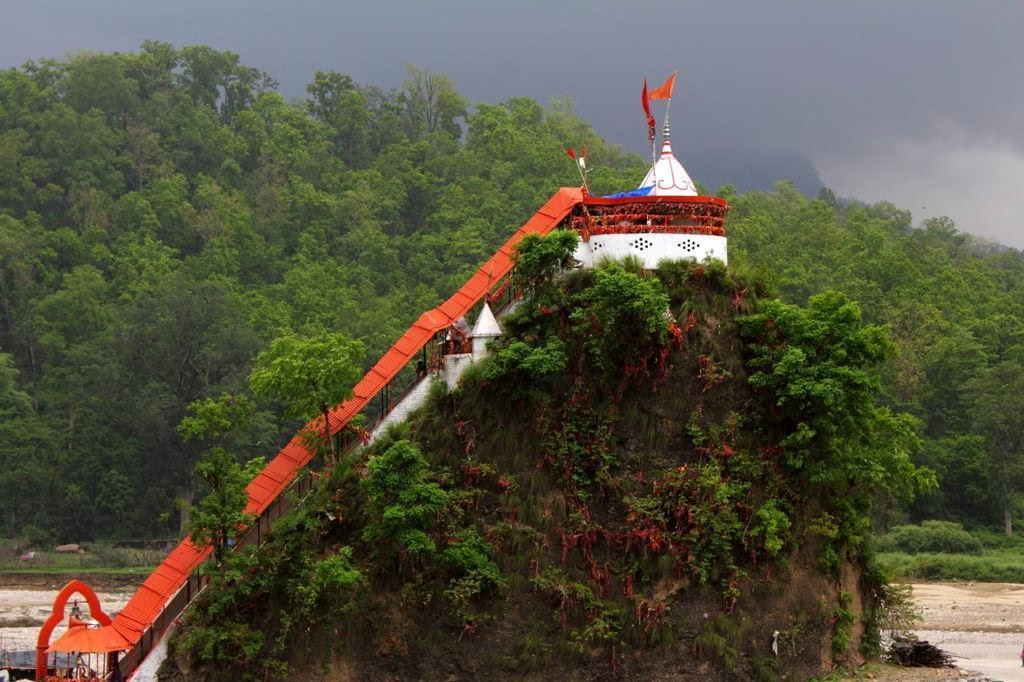
As the Lead Heritage Architect for BharatTemples.com, I present a comprehensive guide to the Garjiya Devi Temple. Perched dramatically on a massive rock formation in the Kosi River, this shrine is not merely a structure but a living testament to the region’s devotion and geological wonder. Located in the heart of Uttarakhand, this guide is engineered to serve as your ultimate resource for history, logistics, and spiritual immersion.
1. Introduction & Spiritual Essence
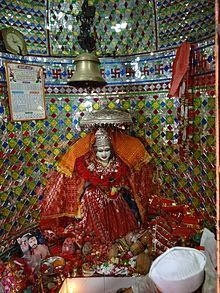
Garjiya Devi Temple, nestled near Ramnagar, Uttarakhand, is a prominent Shakti Shrine revered by pilgrims across India. The temple is dedicated to Garjiya Devi, a form of Goddess Parvati. According to local folklore, the idol here is a Swayambhu (self-manifested) rock, naturally resembling the Goddess, giving it immense spiritual potency.
The Divine Form: The deity is worshipped in a serene, ancient stone form. Adjacent to the main shrine stands a magnificent 9th-century black granite statue of Lakshmi-Narayan (Lord Vishnu and Goddess Lakshmi), adding to the temple’s Vaishnavite and Shaivite syncretism.
Phalaśruti: Why Visit?
Devotees believe that a visit to Garjiya Devi offers profound spiritual benefits:
- Cleansing Ancestral Karma: Rituals performed here, particularly in the flowing Kosi waters, are believed to wash away negative karmic debts and ancestral curses.
- Protection from Evil: As the protector of the dense Kumaon forests (hence the name Garjiya, meaning ‘the roaring one’ or ‘tigress’), the Goddess safeguards devotees from fear and danger.
- Fulfillment of Wishes: It is a potent Manokamna Siddhi site where sincere prayers yield results.
2. Historical Origins & Scriptural Legend
Architectural Origins & Timeline
While the precise founding date is obscured by oral tradition, temple records and ASI (Archaeological Survey of India) data point to significant construction phases. The original shrine likely dates back to the 9th Century CE, evidenced by the exquisite black granite Lakshmi-Narayan sculpture.
Renovations: The current roofed structure encasing the sacred rock was reinforced and expanded over the 15th to 18th centuries by local Katyuri and Chand kings to protect the shrine from the seasonal monsoon floods of the Kosi.
The Sthala Purana (Local Legend)
Tradition holds that the area was once a dense, tiger-infested jungle. Goddess Parvati, in her fierce form as Garjiya, dwelt here to subdue the chaotic energies of the forest. One day, a devotee passing through the jungle spotted a stone radiating heat and light. Upon watering it, the stone expanded to reveal the Divine Mother’s face.
Legend further states that a demon, Dhoomravan, attempted to move this holy rock to Lanka, but could not lift it an inch. He eventually attained salvation here, establishing the rock’s unmovable spiritual gravity.
3. Architectural Marvels
Design & Style
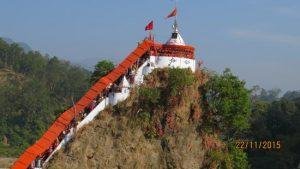
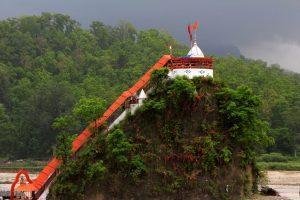
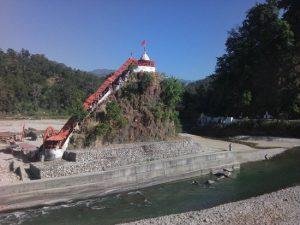
The temple is a stunning example of Kumaoni Himalayan Architecture, blending elements of Nagara style with regional necessity. Unlike typical temples built on plains, this shrine is constructed atop a natural bedrock in a riverine setting.
- The Base: The shrine is anchored on a solitary rock formation in the Kosi River, making it a natural Yoni Peetham.
- The Shikhara: The spire is modest, crafted from local stone and lime mortar, designed to withstand high-velocity winds and river moisture.
- Mandapas: The temple features a Sabha Mandapa (assembly hall) and an Artha Mandapa (vestibule). Devotees can sit in the open-air mandapa overlooking the river for meditation.
- Sculptures: Aside from the Lakshmi-Narayan statue, the inner walls feature intricate carvings of deities like Ganesha and Nandi, though weathering from the river mist has softened many details over centuries.
Heritage Status
While not a UNESCO World Heritage site, it falls under the maintenance and heritage guidelines of the Uttarakhand Tourism Development Board and is a protected archaeological site due to the 9th-century sculpture.
4. Darshan & Ritual Logistics (2026 Season)
To facilitate a seamless pilgrimage, here are the daily schedules and key festivals for 2026. Note that timings may shift slightly during monsoon or extreme winter conditions.
Daily Darshan Timings
| Session | Timings | Activity |
|---|---|---|
| Morning | 6:00 AM – 12:00 PM | Opening Aarti, General Darshan, Abhishekam |
| Afternoon | 12:00 PM – 3:00 PM | Break (Temple cleaning & preparation) |
| Evening | 3:00 PM – 8:00 PM | Sandhya Aarti, General Darshan |
Key Sevas & Online Booking
Devotees can book specific rituals in advance. While the temple trust manages onsite bookings, digital reservations are recommended for 2026 festivals.
- Abhishekam (Ritual Bathing): Performed with milk, honey, and sacred water. Cost: ₹500 (approx).
- Astothram Archana: 108 names of the Goddess recited. Cost: ₹200.
- Special Aarti: Morning/Evening. Cost: ₹1,100 (includes prasad).
Booking Platform: Visit Uttarakhand Tourism or the temple’s dedicated trust website (linked via the official contact details below) to book Sevas for 2026.
2026 Major Festival Dates
- Navratri (Shardiya): October 2 – October 11, 2026 (Massive footfall expected).
- Kartik Poornima: November 5, 2026. This is the temple’s signature festival; a grand fair is held, and devotees take a holy dip in the Kosi.
- Maha Shivaratri: February 26, 2026.
5. Practical Visitor Guidance
Code of Conduct & Essentials
- Dress Code: Modest traditional attire is mandatory. Men should wear dhoti/kurta or trousers; women should wear sarees/salwar kameez. Avoid shorts and sleeveless tops.
- Photography: Strictly prohibited inside the sanctum sanctorum (Garbhagriha). Photography is allowed in the outer mandapas, but please be respectful of worshippers.
- Mobile Lockers: Shoe racks and mobile lockers are available at the entrance for a nominal fee (₹10-₹20). It is advisable to leave electronic devices here before the climb.
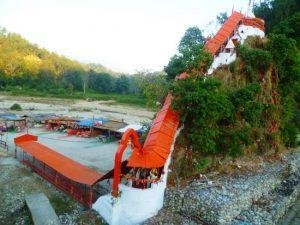
- Accessibility: The temple requires climbing approximately 50-60 steep stone steps from the riverbank. It is not wheelchair accessible. Elderly visitors can use a palanquin (Doli) service available at the base for a fee.
Crowd Management & Seasonal Advice
- Best Hours: For a peaceful darshan, visit between 9:00 AM and 11:00 AM on weekdays. Avoid weekends and holidays if possible.
- Monsoon (July-Sept): The Kosi River swells rapidly. The temple administration may restrict access during heavy rains. Check local alerts before traveling.
- Summer (May-June): Temperatures can rise; carry water and a head covering. The rock formation absorbs heat, making the evening cool but the afternoon warm.
6. Pilgrimage Connectivity
How to Reach Garjiya
- By Air: The nearest airport is Pantnagar Airport (PGH), approximately 75 km away (2-hour drive). Taxis are readily available.
- By Rail: The nearest major railway station is Kathgodam (KGM), about 65 km from Ramnagar. From Kathgodam, hire a taxi to Garjiya (1.5 hours).
- By Road: Garjiya is on National Highway 12 (NH 12), connecting Kathgodam to Pithoragarh. It is 15 km from Ramnagar town. Regular buses and shared taxis ply from Ramnagar bus stand.
Pilgrimage Circuit (Nearby Sacred Sites)
Enhance your spiritual journey by visiting these nearby landmarks:
- Raghunath Temple (Ramnagar): Dedicated to Lord Rama, situated in the heart of Ramnagar.
- Jim Corbett Park (Dhikala Zone): While a wildlife sanctuary, the Dhikala temple inside the park offers a unique blend of devotion and nature.
- Kainchi Dham (Nainital): Approximately 45 km away, this ashram founded by Neem Karoli Baba is a site of immense spiritual energy.
7. Frequently Asked Questions (FAQs)
Is there a VIP darshan entry at Garjiya Devi Temple?
Yes, the temple trust offers a VVIP Darshan pass for senior citizens, specially-abled pilgrims, and donors. This allows bypassing the general queue during peak hours. These can be obtained from the administrative office at the temple base.
Can we cross the Kosi River to visit the temple?
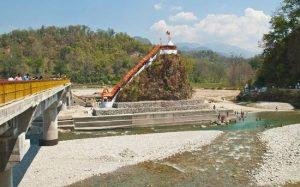
Currently, a concrete bridge connects the main road to the rock island. However, during peak monsoon, the bridge may submerge. In such cases, the temple remains closed. In dry seasons, the river can be crossed via shallow rocky fords, but caution is advised.
Are there accommodation facilities near the temple?
Yes. There are numerous budget hotels and government guest houses (GMVN) in Ramnagar (15 km) and private resorts in Garjiya village itself. It is recommended to book accommodation in advance during festivals.
What is the significance of the 9th-century statue?
The black granite statue of Lakshmi-Narayan is an archaeological marvel. It predates the current temple structure and signifies the ancient civilization that worshipped both Vishnu and Shakti in this region. It is considered highly auspicious to offer prayers before this idol.
Is non-vegetarian food allowed near the temple?
No. Garjiya Devi Temple is a strict vegetarian zone. Alcohol and non-vegetarian food are strictly prohibited within a 2 km radius of the shrine. Several vegetarian restaurants serve pure Satvik food near the parking area.
Photo Gallery
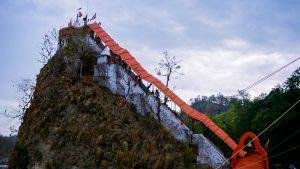
Explore the visual splendor of the Garjiya Devi Temple complex.
Contact Details & Official Information
For the latest updates, seva bookings, or emergencies during your visit, please contact the temple administration or local tourism office.
- Official Address: National Highway 12, Ramnagar Range, Garjiya, Uttarakhand 244715
- Contact Number: 09917213412 (Temple Trust)
- District: Ramnagar, Nainital
Recent Posts

Shri Kaamkoteeshwar Mandir, Varanasi – History & Significance
In the heart of Kashi, the eternal city of Lord Shiva, where the Ganges flows with celestial grace, stands the Shri Kaamkoteeshwar Mandir. This sacred Sannidhi is not merely a temple but a profound spiritual bridge between the Northern…

ओ सांवरे तूने ही मुझको संभाला – Lyrics & Meaning
ओ सांवरे तूने ही मुझको संभाला – A Prayer to Shyam Origin & Spiritual Essence Why This Bhajan Resonates Devotees chant this when overwhelmed by life’s storms—the refrain ‘तूने ही मुझको संभाला’ is the soul’s sigh of relief: “You…

कथा ये है महाराज मेरे की – Lyrics & Meaning
कथा ये है महाराज मेरे की छत्रपति संभाजी महाराज – A Prayer to Chhatrapati Sambhaji Maharaj Origin & Spiritual Essence Why This Bhajan Resonates Devotees chant this when their spirit feels tested—its powerful refrain “महाराज मेरे” is a soul’s…

Rigveda Samhita Yathartha Anuvada (ऋग्वेद संहिता यथार्थ अनुवाद) – Complete Set with Anvayartha & Hindi/English Translation
The Rigveda is the oldest surviving scripture of humanity and the foundational text of Sanātana Dharma. For serious students, scholars, UPSC aspirants studying ancient Indian history, Sanskrit learners, and spiritual seekers, a precise and grammatically structured translation is indispensable.…

आना भी अकेला है जाना भी अकेला है – Lyrics & Meaning | BharatTemples
आना भी अकेला है जाना भी अकेला है – A Prayer to the Divine Witness Origin & Spiritual Essence Why This Bhajan Resonates Devotees turn to this bhajan in moments of deep reflection—when life’s attachments begin to ache. The…

माता शेरावाली के द्वार जो भी जाता है – Lyrics & Meaning
माता शेरावाली के द्वार जो भी जाता है – A Prayer to Maa Sherawali Origin & Spiritual Essence Why This Bhajan Resonates Devotees turn to this bhajan in times of fear or uncertainty—its promise that no one leaves Maa’s…

मार लेना सपणी उबार लेणा भवरा – Lyrics & Meaning
मार लेना सपणी उबार लेणा भवरा – A Prayer to the Divine Beloved Origin & Spiritual Essence Why This Bhajan Resonates Devotees chant this in moments of deep vulnerability—its cry of “मार लेना सपणी, उबार लेणा भवरा” is the…

हमें श्याम सुंदर भरोसा तुम्हारा – Lyrics & Meaning
हमें श्याम सुंदर भरोसा तुम्हारा – A Prayer to Shyam Sundar Origin & Spiritual Essence Why This Bhajan Resonates Devotees chant this when feeling alone—its refrain ‘de do sahara’ is the soul’s cry for divine support. Lyrics in Hindi…

Mere Satguru Ne Di Thi Davai Lyrics in Hindi & Meaning
Mere Satguru Ne Di Thi Davai: Invoking the Guru’s Liberating Wisdom This soul-stirring bhajan venerates the Satguru (True Spiritual Master) as the divine physician who dispenses the only remedy for life’s deepest sufferings. Composed by Sant Karmaveer Tufani, it…

Janm Diyo Thari Maa Dukh Dekhiyo Lyrics in Hindi & Meaning
जन्म दियो थारी माँ दुख देखियो (Maa’s Grief Upon Birthing You) This soul-stirring Chetavani Bhajan (admonitory hymn) is addressed to the Divine Mother (Maa) – a call for repentance when children forget their filial duties in the dark age…