
Contents
- 1 Triyuginarayan Temple: The Eternal Witness of Shiva-Parvati’s Divine Union
- 1.1 Introduction & Spiritual Essence
- 1.2 Historical Origins & Scriptural Legend
- 1.3 Architectural Marvels
- 1.4 Darshan & Ritual Logistics (2026 Guide)
- 1.5 Practical Visitor Guidance
- 1.6 Pilgrimage Connectivity
- 1.7 Contact Details
Triyuginarayan Temple: The Eternal Witness of Shiva-Parvati’s Divine Union
Introduction & Spiritual Essence
Nestled amidst the serene Himalayan foothills of Rudraprayag, Uttarakhand, Triyuginarayan Temple stands as a timeless testament to divine love and cosmic harmony. Dedicated to Lord Vishnu (as Triyuginarayan), this ancient shrine holds a unique distinction in Hindu mythology—it is the celestial venue of the marriage between Lord Shiva and Goddess Parvati.
The primary deity, Lord Vishnu, is enshrined here alongside Goddess Lakshmi and Saraswati. However, the temple’s spiritual significance is deeply intertwined with the presence of Shiva and Parvati, whose union is still witnessed today through a perpetual flame burning in the courtyard.
Phalaśruti: Why Devotees Visit
Devotees flock to Triyuginarayan to seek blessings for marital harmony and longevity. The temple is renowned for its unique rituals that bless couples:
- Conjugal Bliss: The ashes from the eternal fire (Akhand Dhuni) are believed to promote harmony and longevity in married life.
- Ancestral Cleansing: Performing rituals in the Brahma Kund is said to cleanse ancestral karma and offer peace to departed souls.
- Fertility: The waters of the Saraswati Kund, flowing into Rudra, Vishnu, and Brahma Kund, are revered for curing infertility.
Historical Origins & Scriptural Legend
According to the Skanda Purana and local Sthala Purana, Triyuginarayan was the capital of Himavat (the personification of the Himalayas) during the Satya Yuga.
The Legend: After Goddess Sati immolated herself, she was reborn as Parvati. To win Shiva’s hand, Parvati performed intense penance at Gauri Kund, just 5 km away. Pleased by her devotion, Shiva proposed to her at Guptakashi. The grand celestial wedding was solemnized at Triyuginarayan.
Divine Witnesses: Lord Vishnu acted as the bride’s brother, while Lord Brahma served as the priest. All sages and celestial beings witnessed the union. Tradition holds that the fire used for the Havan (sacred fire offering) has been burning continuously since that day, earning the temple the name Akhand Dhuni Mandir.
Note on Construction: While the legends date back to the Yugas, the current stone structure is widely attributed to Adi Shankaracharya (8th century CE), who revitalized many pilgrimage sites in the Himalayas.
Architectural Marvels
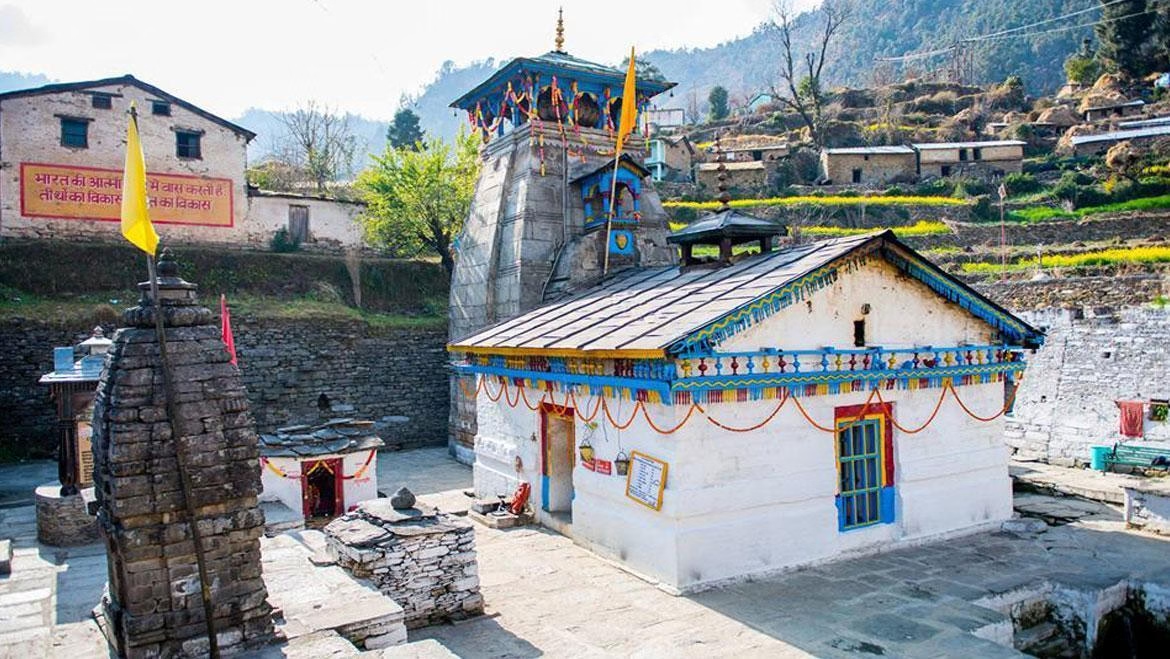
The temple showcases the classic Nagara style of temple architecture prevalent in North India. It bears a striking resemblance to the Kedarnath temple in its structural aesthetics and stonework.
- The Sanctum (Garbhagriha): Houses a 2-foot silver idol of Lord Vishnu (Vishnu Narayana) flanked by Goddess Lakshmi (wealth) and Saraswati (knowledge).
- The Eternal Flame (Akhand Dhuni): Located in a four-cornered fireplace (Havana Kund) in the courtyard. Devotees add Samidha (wood offerings) to the fire and take the ashes as blessings.
- The Brahma Shila: A sacred stone slab in front of the temple marking the exact spot where the divine wedding took place.
- Sacred Water Bodies: A stream called Saraswati Ganga originates in the temple courtyard. It feeds four holy ponds:
- Rudra Kund: For bathing (purification).
- Vishnu Kund: For cleansing.
- Brahma Kund: For sipping water (ritual ingestion).
- Saraswati Kund: For offering libations.
The temple complex is built of heavy stone blocks, with intricate carvings depicting mythological scenes. While the temple holds immense historical value, it is currently maintained by local trusts and is a significant site on the Uttarakhand Tourism circuit.
Visuals of the temple architecture, the eternal flame, and the sacred kunds would be inserted here.
Darshan & Ritual Logistics (2026 Guide)
Visiting Triyuginarayan requires adherence to the daily schedule and seasonal timings typical of Himalayan shrines. The temple generally opens early in the morning and closes by evening, with seasonal variations.
Daily Darshan Timings
| Session | Timings | Activity |
|---|---|---|
| Morning | 6:00 AM – 12:00 PM | Mangala Aarti & General Darshan |
| Afternoon | 12:00 PM – 4:00 PM | Sanctum Rest (Midday Recess) |
| Evening | 4:00 PM – 8:00 PM | Sandhya Aarti & General Darshan |
Key Sevas & Booking
While the temple administration is traditional, many services are now accessible via the Uttarakhand Tourism Development Board or local trust websites.
- Abhishekam: Ritual bathing of the deity. Performed during morning hours.
- Archana: Offering of flowers and prayers. Can be done individually or for families.
- Marriage Ceremony: Due to the temple’s legend, it is a popular venue for symbolic marriages. Booking in advance is essential.
- Online Booking: Visit the official Triyuginarayan Temple Trust portal or the Uttarakhand Char Dham Yatra app (expected to be fully integrated by 2026).
2026 Festival Calendar
Plan your visit around these major festivals for a heightened spiritual experience:
- Maha Shivaratri (Feb/March 2026): The most significant festival here, celebrating the divine marriage with grandeur.
- Diwali (Oct/Nov 2026): The temple is illuminated, and special Agna rituals are performed.
- Makar Sankranti (Jan 14, 2026): Special offerings to the Sun God and distribution of Til Laddoos.
- Annual Fair (Khadaya Mela): Held in July/August, coinciding with the Hindu month of Shravan.
Practical Visitor Guidance
Respect for the sanctity of the space is paramount. Here are the essential guidelines for a smooth visit:
- Dress Code: Traditional Indian attire is recommended. Men should wear dhotis or trousers (no shorts), and women should wear sarees, salwar kameez, or long skirts.
- Photography: Photography is generally restricted inside the inner sanctum (Garbhagriha). However, it is permitted in the courtyard and around the Havana Kund.
- Mobile & Lockers: Electronic devices are discouraged during darshan. There are no formal locker facilities, so travel light.
- Accessibility: The temple is accessible by motorable road up to the village. There is a short flight of steps to enter the sanctum, which may be challenging for those with severe mobility issues.
Crowd Management
- Best Hours: Visit between 8:00 AM and 10:00 AM to avoid the midday rush from Kedarnath pilgrims.
- Seasonal Advice:
- Summer (April–June): Pleasant weather. Tip: Carry a light jacket for the evenings and plenty of water.
- Monsoon (July–Sept): Heavy rains. Tip: Check road status with BSNL/BSNL helplines before driving.
- Winter (Oct–March): The temple remains open, but temperatures drop near freezing. Tip: Woolens are mandatory; snowfall may block roads occasionally.
Pilgrimage Connectivity
How to Reach Triyuginarayan
By Air: The nearest airport is Jolly Grant Airport, Dehradun (approx. 130 km away). Taxis are easily available from the airport to Rudraprayag and then to Triyuginarayan.
By Rail: The nearest major railway station is Rishikesh (approx. 120 km). From there, hire a taxi or take a bus to Rudraprayag.
By Road: Triyuginarayan is well-connected via National Highway 7 (NH 7). It is located 11 km from Sonprayag and 15 km from Rudraprayag. Buses and shared taxis are available from major hubs like Rishikesh and Haridwar.
Nearby Sacred Sites
A trip to Triyuginarayan is incomplete without visiting these nearby spiritual hubs:
- Gauri Kund (5 km): The starting point of the Kedarnath trek and the site of Parvati’s penance. It houses a temple dedicated to Goddess Parvati.
- Sonprayag (11 km): The confluence of the Mandakini and Basuki rivers. It is a holy bathing spot and a major transit point for Kedarnath.
- Kedarnath (18 km by trek + 5 km drive): One of the 12 Jyotirlingas of Shiva, located at an altitude of 3,583 meters.
- Rudraprayag (15 km): One of the Panch Prayags, where the Alaknanda and Mandakini rivers meet.
FAQs: Your Questions Answered
1. Is there a VIP darshan entry at Triyuginarayan Temple?
Generally, no. The temple follows a traditional queue system. However, during the Shivratri festival, special passes may be issued by the district administration for orderly management. Elderly pilgrims can seek assistance from temple priests for priority entry.
2. Can we perform a marriage ceremony here in 2026?
Yes, the temple is a popular destination for weddings. It is advisable to book the Pandit (priest) and temple slots 1–2 months in advance, especially for dates between May and June.
3. Is accommodation available near the temple?
Basic guesthouses and GMVN (Garhwal Mandal Vikas Nigam) lodges are available in Sonprayag and Rudraprayag. Triyuginarayan village has limited homestays, offering an authentic Himalayan experience.
4. What is the significance of the water from Saraswati Kund?
The water originates from Vishnu’s navel (mythologically) and flows into the Saraswati Kund. It is then channeled to the other three kunds. It is considered highly purifying and is often used in rituals.
5. Is the temple open during the monsoon?
Yes, generally from April to November. However, heavy rains can cause landslides on the Rudraprayag-Gaurikund road. Always check the latest travel advisories from the Uttarakhand Transport Department before planning a monsoon trip.
Contact Details
Triyuginarayan Temple Trust
Village: Triyuginarayan
District: Rudraprayag, Uttarakhand, 246439
Helpline (Uttarakhand Tourism): +91 135 255 9898 (Verify for 2026 updates)
Recent Posts

Shri Kaamkoteeshwar Mandir, Varanasi – History & Significance
In the heart of Kashi, the eternal city of Lord Shiva, where the Ganges flows with celestial grace, stands the Shri Kaamkoteeshwar Mandir. This sacred Sannidhi is not merely a temple but a profound spiritual bridge between the Northern…

ओ सांवरे तूने ही मुझको संभाला – Lyrics & Meaning
ओ सांवरे तूने ही मुझको संभाला – A Prayer to Shyam Origin & Spiritual Essence Why This Bhajan Resonates Devotees chant this when overwhelmed by life’s storms—the refrain ‘तूने ही मुझको संभाला’ is the soul’s sigh of relief: “You…

कथा ये है महाराज मेरे की – Lyrics & Meaning
कथा ये है महाराज मेरे की छत्रपति संभाजी महाराज – A Prayer to Chhatrapati Sambhaji Maharaj Origin & Spiritual Essence Why This Bhajan Resonates Devotees chant this when their spirit feels tested—its powerful refrain “महाराज मेरे” is a soul’s…

Rigveda Samhita Yathartha Anuvada (ऋग्वेद संहिता यथार्थ अनुवाद) – Complete Set with Anvayartha & Hindi/English Translation
The Rigveda is the oldest surviving scripture of humanity and the foundational text of Sanātana Dharma. For serious students, scholars, UPSC aspirants studying ancient Indian history, Sanskrit learners, and spiritual seekers, a precise and grammatically structured translation is indispensable.…

आना भी अकेला है जाना भी अकेला है – Lyrics & Meaning | BharatTemples
आना भी अकेला है जाना भी अकेला है – A Prayer to the Divine Witness Origin & Spiritual Essence Why This Bhajan Resonates Devotees turn to this bhajan in moments of deep reflection—when life’s attachments begin to ache. The…

माता शेरावाली के द्वार जो भी जाता है – Lyrics & Meaning
माता शेरावाली के द्वार जो भी जाता है – A Prayer to Maa Sherawali Origin & Spiritual Essence Why This Bhajan Resonates Devotees turn to this bhajan in times of fear or uncertainty—its promise that no one leaves Maa’s…

मार लेना सपणी उबार लेणा भवरा – Lyrics & Meaning
मार लेना सपणी उबार लेणा भवरा – A Prayer to the Divine Beloved Origin & Spiritual Essence Why This Bhajan Resonates Devotees chant this in moments of deep vulnerability—its cry of “मार लेना सपणी, उबार लेणा भवरा” is the…

हमें श्याम सुंदर भरोसा तुम्हारा – Lyrics & Meaning
हमें श्याम सुंदर भरोसा तुम्हारा – A Prayer to Shyam Sundar Origin & Spiritual Essence Why This Bhajan Resonates Devotees chant this when feeling alone—its refrain ‘de do sahara’ is the soul’s cry for divine support. Lyrics in Hindi…

Mere Satguru Ne Di Thi Davai Lyrics in Hindi & Meaning
Mere Satguru Ne Di Thi Davai: Invoking the Guru’s Liberating Wisdom This soul-stirring bhajan venerates the Satguru (True Spiritual Master) as the divine physician who dispenses the only remedy for life’s deepest sufferings. Composed by Sant Karmaveer Tufani, it…

Janm Diyo Thari Maa Dukh Dekhiyo Lyrics in Hindi & Meaning
जन्म दियो थारी माँ दुख देखियो (Maa’s Grief Upon Birthing You) This soul-stirring Chetavani Bhajan (admonitory hymn) is addressed to the Divine Mother (Maa) – a call for repentance when children forget their filial duties in the dark age…