
Contents
Introduction & Spiritual Essence
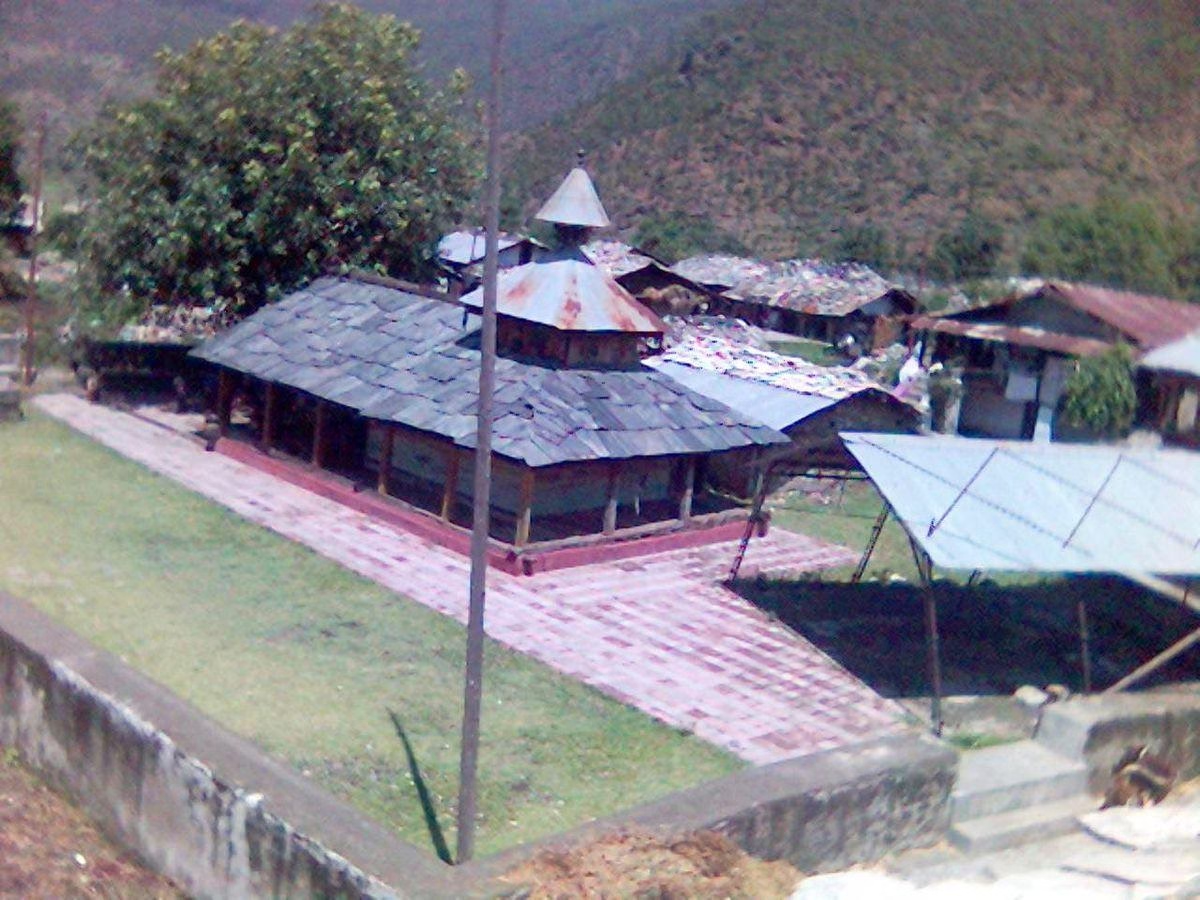
Perched at an elevation of 1,550 metres (5,090 ft) in the serene Rawain valley of Uttarkashi, Gundiyat Gaon is more than just a village—it is a living testament to ancient Himalayan devotion. The centerpiece of this settlement is the revered village temple, housing a swayambhu (self-manifested) idol of Kapil Muni Maharaj, alongside Khandasuri Dev and Kali Mayya.
The spiritual essence of Gundiyat Gaon is rooted in the tranquility of the Himalayas. According to Phalaśruti (scriptural promises of merit), devotees who perform sincere prayers here are believed to be cleansed of ancestral karma. The temple serves as a powerful spiritual anchor, where the presence of Kali Mayya grants protection, and Kapil Muni Maharaj offers the wisdom of the Sankhya philosophy.
Historical Origins & Scriptural Legend
While the exact date of construction is not recorded in stone, the temple’s style suggests a lineage dating back to the medieval period, likely established by the local Rajput rulers of the region who were patrons of Vedic traditions. The village is the largest in the Rawain valley, suggesting a historical hub of trade and spirituality.
Legend / Local Stories:
The village is about 120 kilometres (75 mi) from Dehradun, capital of Uttarakhand and is at an altitude of 1,550 metres (5,090 ft). Gundiyat Gaon is the largest of the valley villages.There is a local deity temple in the middle of village. The temple has the idol of Kapil Muni Maharaj, Khandasuri Dev and Kali Mayya. The architecture of temple is an example of fine art of ancient time.[1] The walls of the temple is made of large rectangular blocks of fine and rare stone. Each block has engravings on it, showing drawings of gods and various designs.
Architectural Marvels
The Gundiyat Gaon temple is a masterpiece of Himalayan Pahari architecture, blending elements of Nagara style with distinct local aesthetics. The structure is built entirely without mortar, using interlocking rectangular blocks of rare, fine stone sourced from the local terrain.
- The Sanctum Sanctorum: The inner walls feature intricate engravings depicting celestial beings, floral motifs, and geometric designs, showcasing the fine art of the ancient time.
- Notable Sculptures: The idol of Kapil Muni is carved with profound serenity, while the depiction of Kali Mayya reflects the fierce yet protective aspect of the Divine Mother.
- Proximity to Shiva: Just a short distance from the main village stands the Kamleshwar Temple, housing an ancient linga of Lord Shiva. This dual presence of Shiva (the destroyer) and the local deities creates a balanced spiritual energy field.
Darshan & Ritual Logistics
Devotees can engage in daily puja rituals. The local priests perform morning and evening aarti. While the temple follows traditional timings, the tranquil village atmosphere allows for a peaceful darshan experience.
Daily Timings
| Session | Timings | Activity |
|---|---|---|
| Morning | 06:00 AM – 12:00 PM | Mangala Aarti & Abhishekam |
| Evening | 05:00 PM – 08:00 PM | Sandhya Aarti & Bhajan Kirtan |
Seva & Online Booking
Currently, offerings (flowers, fruits, sweets) are managed locally through the village temple committee. For special Abhishekam or Archana, devotees are advised to contact the village head (Gram Pradhan) or the local priest upon arrival. Digital booking for this specific remote temple is under development, but general darshan remains open and free for all.
2026 Major Festival Calendar
- Shivratri (Feb 26, 2026): Special celebrations at the nearby Kamleshwar Temple.
- Navratri (Sept 21 – Sept 30, 2026): Dedicated to Kali Mayya; nightly kirtans and fasts.
- Makar Sankranti (Jan 14, 2026): Traditional offerings of sesame and jaggery.
Practical Visitor Guidance
Visiting Gundiyat Gaon requires preparation due to its Himalayan location. Respect for local customs is paramount.
- Dress Code: Modest clothing is required. Men should wear long trousers/shirts; women should wear sarees, salwar kameez, or long skirts.
- Photography: Strictly prohibited inside the sanctum sanctorum. Exterior photography may be permitted with permission from the temple committee.
- Accessibility: The path to the temple is a gentle gradient but uneven due to stone paving. It is not wheelchair accessible.
- Crowd Management: The village is peaceful year-round, but peaks during festivals. Best hours for solitude are sunrise to 9:00 AM.
- Seasonal Advice: May to June brings pleasant weather, but carry water and sun protection. Winter (Nov-Feb) requires heavy woolens; roads may be affected by snow.
Pilgrimage Connectivity
How to Reach
By Air: The nearest airport is Jolly Grant Airport, Dehradun (approx. 120 km away). Taxis are available from Dehradun to Rajpur (Rawain region).
By Rail: The nearest major railway station is Dehradun Railway Station (115 km).
By Road: Gundiyat Gaon is connected via National Highway 7 (NH7). From Dehradun, take the route toward Chakrata/Rajpur. The final leg involves navigating local hill roads to the Rawain valley.
Nearby Sacred Sites
- Kamleshwar Temple: Located immediately adjacent to Gundiyat Gaon, featuring an ancient Shiva Linga.
- Shri Kali Mayya Temple: Within the village complex, a center for local folk traditions.
- Netala (Jhala): A short drive away, known for ancient temples and scenic Himalayan views.
Frequently Asked Questions (FAQ)
1. Is there a VIP darshan entry at Gundiyat Gaon Temple?
No, this is a community village temple. There is no VIP system. All devotees are treated equally, and darshan is open to everyone during working hours.
2. What is the significance of Kapil Muni Maharaj here?
Kapil Muni is a revered sage in Hinduism, known as the founder of the Sankhya school of philosophy. Worshipping him at this site is believed to help devotees detach from material sufferings and gain spiritual insight.
3. Are accommodation facilities available in Gundiyat Gaon?
Basic homestays are available in the village. For more comfortable hotels, pilgrims usually stay in the nearby town of Uttarkashi (approx 45-50 km away) or in Chakrata.
4. Is the road safe for night travel?
Due to the hilly terrain and wildlife activity, it is highly recommended to travel between sunrise and sunset. Night driving in the Rawain valley should be avoided.
5. Is there an entry fee?
No, there is no entry fee for darshan. However, you may purchase flowers or prasad from local vendors to offer inside the temple.
Photo Gallery
Images of the ancient stone carvings and the serene backdrop of the Rawain valley will be available soon. Stay tuned for a visual tour.
Contact Details
As a village temple, there is no official commercial phone line. For inquiries regarding rituals or local guides, please contact:
- Office of the Gram Pradhan, Gundiyat Gaon, Uttarkashi, Uttarakhand
- District Magistrate Office, Uttarkashi: +91-1374-222122
- Uttarakhand Tourism Helpline: 1364
Recent Posts

ओ सांवरे तूने ही मुझको संभाला – Lyrics & Meaning
ओ सांवरे तूने ही मुझको संभाला – A Prayer to Shyam Origin & Spiritual Essence Why This Bhajan Resonates Devotees chant this when overwhelmed by life’s storms—the refrain ‘तूने ही मुझको संभाला’ is the soul’s sigh of relief: “You…

कथा ये है महाराज मेरे की – Lyrics & Meaning
कथा ये है महाराज मेरे की छत्रपति संभाजी महाराज – A Prayer to Chhatrapati Sambhaji Maharaj Origin & Spiritual Essence Why This Bhajan Resonates Devotees chant this when their spirit feels tested—its powerful refrain “महाराज मेरे” is a soul’s…

Rigveda Samhita Yathartha Anuvada (ऋग्वेद संहिता यथार्थ अनुवाद) – Complete Set with Anvayartha & Hindi/English Translation
The Rigveda is the oldest surviving scripture of humanity and the foundational text of Sanātana Dharma. For serious students, scholars, UPSC aspirants studying ancient Indian history, Sanskrit learners, and spiritual seekers, a precise and grammatically structured translation is indispensable.…

आना भी अकेला है जाना भी अकेला है – Lyrics & Meaning | BharatTemples
आना भी अकेला है जाना भी अकेला है – A Prayer to the Divine Witness Origin & Spiritual Essence Why This Bhajan Resonates Devotees turn to this bhajan in moments of deep reflection—when life’s attachments begin to ache. The…

माता शेरावाली के द्वार जो भी जाता है – Lyrics & Meaning
माता शेरावाली के द्वार जो भी जाता है – A Prayer to Maa Sherawali Origin & Spiritual Essence Why This Bhajan Resonates Devotees turn to this bhajan in times of fear or uncertainty—its promise that no one leaves Maa’s…

मार लेना सपणी उबार लेणा भवरा – Lyrics & Meaning
मार लेना सपणी उबार लेणा भवरा – A Prayer to the Divine Beloved Origin & Spiritual Essence Why This Bhajan Resonates Devotees chant this in moments of deep vulnerability—its cry of “मार लेना सपणी, उबार लेणा भवरा” is the…

हमें श्याम सुंदर भरोसा तुम्हारा – Lyrics & Meaning
हमें श्याम सुंदर भरोसा तुम्हारा – A Prayer to Shyam Sundar Origin & Spiritual Essence Why This Bhajan Resonates Devotees chant this when feeling alone—its refrain ‘de do sahara’ is the soul’s cry for divine support. Lyrics in Hindi…

Mere Satguru Ne Di Thi Davai Lyrics in Hindi & Meaning
Mere Satguru Ne Di Thi Davai: Invoking the Guru’s Liberating Wisdom This soul-stirring bhajan venerates the Satguru (True Spiritual Master) as the divine physician who dispenses the only remedy for life’s deepest sufferings. Composed by Sant Karmaveer Tufani, it…

Janm Diyo Thari Maa Dukh Dekhiyo Lyrics in Hindi & Meaning
जन्म दियो थारी माँ दुख देखियो (Maa’s Grief Upon Birthing You) This soul-stirring Chetavani Bhajan (admonitory hymn) is addressed to the Divine Mother (Maa) – a call for repentance when children forget their filial duties in the dark age…
Bhadi Sabha Mein Thane Manaun Lyrics in Hindi & Meaning
Bhadi Sabha Mein Thane Manaun: Invoking the Spear-Wielding Mother Mata Bhawani (श्री ज्वाला भवानी), the fiery manifestation of Shakti worshipped as the Protector of Dharma in Her Dhaulagarh sanctum. Origin & Spiritual Essence Composed in Rajasthani folk tradition by…