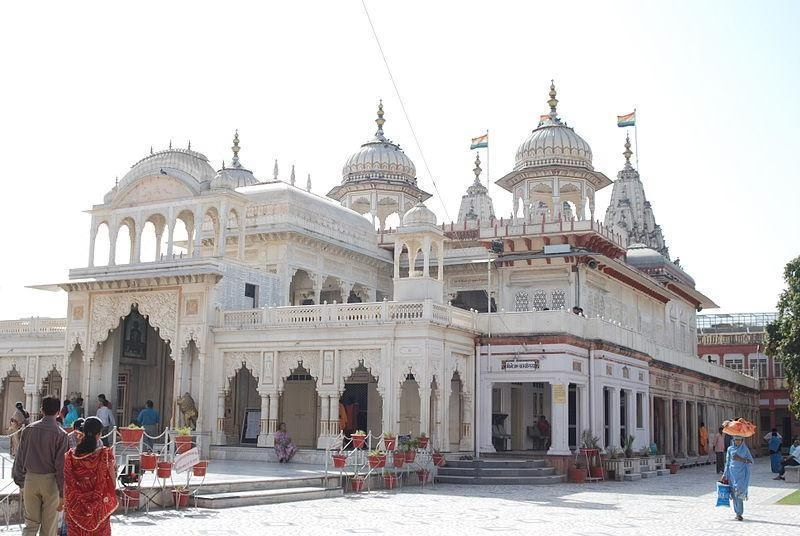
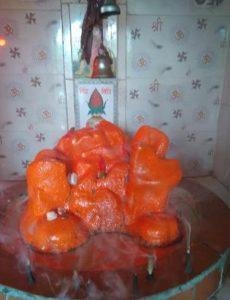
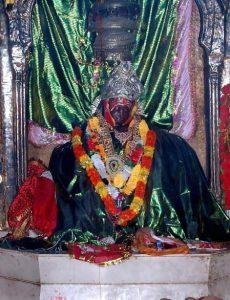
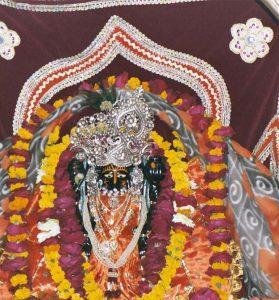
Nestled in the serene village of Belon, near Narora in Uttar Pradesh, stands the sacred Belon Temple. Dedicated to Sarva Mangala Devi (the Goddess of All Well-being), this ancient shrine serves as a beacon of hope and positivity for devotees across Northern India. Unlike conventional deities, the primary murti (idol) of Sarva Mangala Devi is revered as a Swayambhu (self-manifested) form, emerging from the divine earth.
Phalaśruti (Spiritual Benefits):
Devotees believe that a pilgrimage to this temple washes away ancestral karma and invites prosperity into the household. The temple is particularly known for healing ailments and resolving chronic obstacles in life. As the name suggests, “Sarva Mangala” ensures Mangal (auspiciousness) in all aspects of life—health, wealth, and relationships.
Historical Origins & Scriptural Legend
The history of Belon Temple is deeply intertwined with the geography of the region. The village derives its name from the ancient word “Bilwan,” referring to the dense groves of Bael trees (Aegle marmelos), a tree considered sacred in Vedic traditions.
Scriptural Legend:
According to the Sthala Purana (local oral tradition), the forest surrounding Narora was once the hermitage of great sages. It is believed that the Goddess manifested herself here to protect the local populace and the sages from demonic forces, blessing the land with fertility.
Archaeological Evidence:
While specific dynastic records are sparse, local historians suggest that the temple structure has been renovated over centuries by local landlords and patrons. The presence of the Narora Nuclear Power Plant nearby contrasts sharply with the temple’s timeless, organic atmosphere, highlighting the region’s blend of modernity and antiquity.
Architectural Marvels
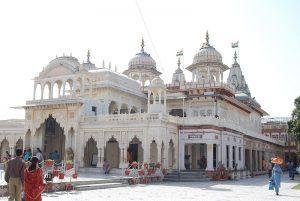
The temple architecture is a blend of North Indian (Nagara) style with a rustic rural charm typical of Eastern Uttar Pradesh.
Shikhara (Spire): The temple features a classic curvilinear shikhara that rises towards the sky, symbolizing the ascent of the soul. The kalasha (finial) atop the shikhara is topped with a golden flag, visible from the surrounding fields.
Mandapa: The pillared hall (mandapa) is open-air, allowing natural light to illuminate the intricate carvings on the pillars. These carvings depict stories from the Devi Mahatmya and local folklore.
Vastu Compliance: The sanctum sanctorum (Garbhagriha) is aligned with Vastu Shastra principles, facing East to catch the first rays of the sun, enhancing the energy of the rising sun for morning rituals.
Surroundings: The temple is situated near the banks of the Ganga, and the atmosphere is dominated by the greenery of Bael trees, creating a natural Vatika (garden) surrounding the shrine.
Darshan & Ritual Logistics
The administration has streamlined processes for the thousands of devotees who visit annually. Below are the standard timings for 2026. Note: Timings may extend during major festivals.
For the convenience of devotees, the Belon Temple Trust facilitates online bookings for special sevas. The primary deities are worshipped with great fervor during the daily Pushpanjali and Abhishekam rituals.
Abhishekam (Rudrabhishek): Performed daily from 7:00 AM to 9:00 AM. Requires 24-hour prior notice.
Archana (Sankalp): Can be performed for personal well-being. Booking slots open 48 hours in advance.
Online Portal: Visit bharattemples.com (partner portal) to book specific dates.
Practical Visitor Guidance
To ensure a spiritually fulfilling experience, please adhere to the following guidelines:
Dress Code: Traditional Indian attire is recommended. Men should wear dhoti/kurta or full-length pants and shirts. Women should wear sarees, salwar kameez, or full-length skirts. Avoid shorts and sleeveless tops.
Photography & Mobiles: Photography is prohibited inside the sanctum sanctorum. Mobile phones are allowed but must be switched to silent mode. Lockers are available at the temple entrance for bags and electronics.
Crowd Management:
Best Hours: Visit between 9:00 AM and 11:00 AM on weekdays to avoid morning crowds.
Seasonal Advice: Summers (May–June) can be harsh; carry water and an umbrella. Winters are ideal for darshan.
Accessibility: The temple has ramps for wheelchair access on the outer periphery, though the inner sanctum involves a few steps.
Pilgrimage Connectivity
How to Reach Belon Temple
The temple is strategically located near the historic town of Narora.
By Air: The nearest airport is Indira Gandhi International Airport, Delhi (approx. 140 km). From there, hire a taxi to Narora via the Yamuna Expressway (1.5 hours).
By Train: The nearest major railway junction is Aligarh Junction (approx. 60 km). Alternatively, the smaller Narora Railway Station is 4 km from the temple.
By Road: The temple is located on the Aligarh-Moradabad State Highway. It is roughly 5 km from Narora town. Regular bus services are available from Aligarh, Bulandshehar, and Khurja.
Extend your spiritual journey by visiting these nearby destinations:
Shri Dada Devi Temple, Narora: Located just 5 km away, this temple overlooks the Ganga river.
Rajban Temple, Bulandshehar: Known for its ancient Jain and Hindu idols (approx. 35 km).
Ganga Ghat, Narora: A holy riverbank perfect for ritual bathing and meditation.
Frequently Asked Questions (FAQs)
1. Is there a VIP Darshan entry available?
Yes, the temple trust provides a priority queue for senior citizens and specially-abled devotees. For general VIP entry, a prior donation receipt from the temple office is required, which facilitates a quicker darshan.
2. What is the significance of playing Holi with Tesu Phool?
As per local tradition mentioned in the temple records, Holi is played with Tesu flowers (Palash) rather than synthetic colors. This tradition symbolizes purity and is dedicated to the Goddess, celebrating the arrival of spring.
3. Are there accommodation facilities available nearby?
While the temple does not have a dedicated guesthouse, Narora town (5 km away) offers several dharamshalas and budget hotels. For premium options, Aligarh is the nearest hub (60 km).
4. Can I carry Prasad from home?
Yes, you can carry homemade prasad. However, it must be inspected at the security gate. Plastic packaging is discouraged; try to use banana leaves or paper packets.
5. Is the temple open during heavy monsoon?
Yes, the temple remains open unless the administration issues a specific alert due to flooding of the Ganga river.
In the heart of Kashi, the eternal city of Lord Shiva, where the Ganges flows with celestial grace, stands the Shri Kaamkoteeshwar Mandir. This sacred Sannidhi is not merely a temple but a profound spiritual bridge between the Northern…
ओ सांवरे तूने ही मुझको संभाला – A Prayer to Shyam Origin & Spiritual Essence Why This Bhajan Resonates Devotees chant this when overwhelmed by life’s storms—the refrain ‘तूने ही मुझको संभाला’ is the soul’s sigh of relief: “You…
कथा ये है महाराज मेरे की छत्रपति संभाजी महाराज – A Prayer to Chhatrapati Sambhaji Maharaj Origin & Spiritual Essence Why This Bhajan Resonates Devotees chant this when their spirit feels tested—its powerful refrain “महाराज मेरे” is a soul’s…
The Rigveda is the oldest surviving scripture of humanity and the foundational text of Sanātana Dharma. For serious students, scholars, UPSC aspirants studying ancient Indian history, Sanskrit learners, and spiritual seekers, a precise and grammatically structured translation is indispensable.…
आना भी अकेला है जाना भी अकेला है – A Prayer to the Divine Witness Origin & Spiritual Essence Why This Bhajan Resonates Devotees turn to this bhajan in moments of deep reflection—when life’s attachments begin to ache. The…
माता शेरावाली के द्वार जो भी जाता है – A Prayer to Maa Sherawali Origin & Spiritual Essence Why This Bhajan Resonates Devotees turn to this bhajan in times of fear or uncertainty—its promise that no one leaves Maa’s…
मार लेना सपणी उबार लेणा भवरा – A Prayer to the Divine Beloved Origin & Spiritual Essence Why This Bhajan Resonates Devotees chant this in moments of deep vulnerability—its cry of “मार लेना सपणी, उबार लेणा भवरा” is the…
हमें श्याम सुंदर भरोसा तुम्हारा – A Prayer to Shyam Sundar Origin & Spiritual Essence Why This Bhajan Resonates Devotees chant this when feeling alone—its refrain ‘de do sahara’ is the soul’s cry for divine support. Lyrics in Hindi…
Mere Satguru Ne Di Thi Davai: Invoking the Guru’s Liberating Wisdom This soul-stirring bhajan venerates the Satguru (True Spiritual Master) as the divine physician who dispenses the only remedy for life’s deepest sufferings. Composed by Sant Karmaveer Tufani, it…
जन्म दियो थारी माँ दुख देखियो (Maa’s Grief Upon Birthing You) This soul-stirring Chetavani Bhajan (admonitory hymn) is addressed to the Divine Mother (Maa) – a call for repentance when children forget their filial duties in the dark age…