
Contents
- 1 Definitive Pilgrimage Guide: Dakshineswar Kali Temple
Definitive Pilgrimage Guide: Dakshineswar Kali Temple
Welcome to the sacred banks of the Hooghly, where divine grace meets architectural grandeur. As the Lead Heritage Architect and SEO Strategist for Bharat Temples, I present this comprehensive guide to the historic Dakshineswar Kali Temple. Engineered for clarity and devotion, this guide navigates the spiritual, historical, and logistical aspects of your pilgrimage in 2026.
1. Introduction & Spiritual Essence
Nestled in the northern suburbs of Kolkata, West Bengal, the Dakshineswar Kali Temple stands as a beacon of Bhakti (devotion) and Jnana (knowledge). While the temple is dedicated to the fierce avatar of the Divine Mother, the presiding deity here is Bhavatarini Kali—a compassionate form meaning “She who liberates devotees from the ocean of existence (Samsara).”
The Form of Bhavatarini
Unlike the standing Kali of war, Bhavatarini is depicted in a serene, seated posture atop a lotus. She is accompanied by Lord Shiva, who lies supine beneath her, signifying the union of Purusha (consciousness) and Prakriti (nature).
Phalaśruti: Spiritual Benefits
Devotees flock to Dakshineswar seeking specific blessings:
- Ancestral Liberation: Performing Shradh and Tarpan here is believed to cleanse ancestral karma.
- Mental Peace: The proximity to the river and the rhythmic chanting of the Mother’s name alleviates anxiety and depression.
- Wish Fulfillment: The temple is renowned for granting the sincere desires of devotees, particularly through the “Tantric” rituals rooted in ancient scriptures.
2. Historical Origins & Scriptural Legend
The Vision of Rani Rashmoni
The genesis of this temple is as miraculous as the deity herself. In 1847, the philanthropist Rani Rashmoni prepared for a pilgrimage to Kashi (Varanasi). Tradition holds that the night before her journey, she had a visionary dream in which the Goddess Kali instructed her:
“There is no need to go to Banaras. Install my statue in a beautiful temple on the banks of the Ganges river and arrange for my worship there. Then I shall manifest myself in the image and accept worship at that place.”
Abandoning her trip to Kashi, Rani Rashmoni purchased a 20-acre plot from an Englishman, John Hastie. According to temple records, the construction began in 1847 and culminated in 1855.
The Legend of Sati’s Ornament
Local lore suggests the land, originally shaped like a tortoise (an auspicious shape for Shakti worship), required specific architectural interventions. It is said that the foundation rituals aligned with the Tantra scriptures, invoking the essence of Sati (Sati’s lower body fell in nearby Naya Hazaar).
Legacy of Ramakrishna
The temple gained global fame through Sri Ramakrishna Paramahamsa, who served as the head priest from 1856 to 1886. Under his stewardship, the temple became a spiritual hub where the highest philosophical truths were explored through simple devotion.
3. Architectural Marvels
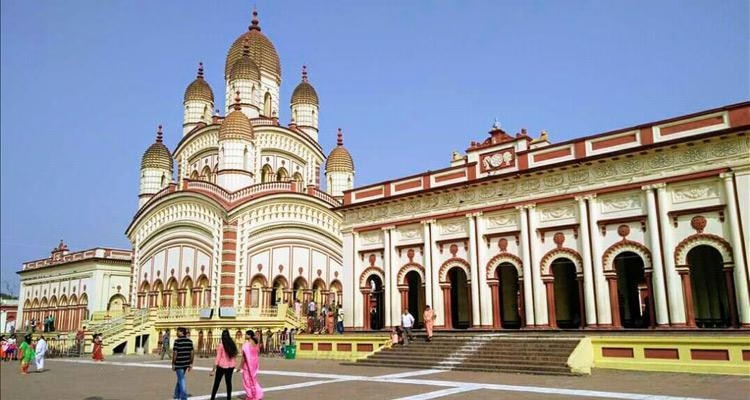
The Dakshineswar temple is a masterpiece of Bengal Architecture with influences from the Nagara style. It is a three-storeyed structure standing on a high platform with a flight of stairs.
The main temple features the distinctive Nava-ratna style, characterized by nine spires distributed across the upper two storeys. Rising over 100 feet (30 meters), the temple measures 46 feet square. The spires are capped with Chala (curved roofs) typical of traditional Bengali architecture.
The Sanctum and Surroundings
- Garbha Griha: The sanctum houses the silver-plated idol of Bhavatarini Kali standing on the chest of a supine Shiva. Both idols rest on a thousand-petaled silver lotus.
- The Twelve Shiva Temples: Lined along the riverfront, these twelve identical temples in the Aat-Chala style represent the twelve Jyotirlingas, harmonizing the fierce energy of Kali with the stabilizing force of Shiva.
- Radha-Krishna Temple: Located to the northeast, this temple houses a 21.5-inch silver idol of Krishna and a 16-inch idol of Radha, balancing the temple’s energy.
4. Darshan & Ritual Logistics
Darshan at Dakshineswar is a structured spiritual experience. Below are the operational timings and key Sevas for 2026.
Daily Darshan Timings
| Period | Timing | Activity |
|---|---|---|
| Morning | 07:00 AM – 11:30 AM | Mangal Aarti & General Darshan |
| Afternoon | 12:00 PM – 03:30 PM | Bhog Offering (Closed for Darshan) |
| Evening | 04:30 PM – 09:00 PM | Sandhya Aarti & Darshan |
Key Sevas & Online Booking
Devotees can book the following Sevas online via the official trust website or at the temple counter:
- Regular Archana: 365 days a year.
- Special Abhishekam: Performed on Tuesdays and Saturdays.
- Ramakrishna Seva: A special offering at the shrine of Ramakrishna.
2026 Major Festival Dates
- Kali Puja: October 19, 2026 (Closest to Diwali).
- Snana Yatra: May 28, 2026 (The anniversary of the temple installation).
- Radha-Krishna Janmashtami: August 14, 2026.
5. Practical Visitor Guidance
To ensure a smooth pilgrimage, please adhere to the following guidelines.
Dress Code & Etiquette
Modest, traditional attire is recommended. Men should wear dhotis or trousers with shirts; women should wear sarees or salwar kameez. Western attire like shorts and sleeveless tops is generally discouraged within the sanctum, though tolerated in the courtyard.
Crowd Management & Best Times
- Morning: Visit between 7:00 AM and 8:30 AM to avoid long queues.
- Evening: The 4:30 PM Aarti is the most crowded. Arrive by 4:00 PM to secure a spot.
- Seasonal Advice: Kolkata summers (May-June) are intensely humid. Carry a water bottle, an umbrella, and wear breathable cotton. Monsoons (July-September) bring heavy rains; waterproof footwear is essential.
Facilities
- Mobile Lockers: Free locker facilities are available near the entrance for electronic devices (phones/cameras) as photography inside the main temple is prohibited.
- Accessibility: Wheelchairs are available at the entrance for senior citizens and specially-abled devotees.
6. Pilgrimage Connectivity
How to Reach
Nearest Airport: Netaji Subhas Chandra Bose International Airport (CCU) is approximately 18 km away (45-60 mins by cab).
Nearest Railway Station: Dakshineswar Railway Station (local trains from Sealdah) is a 5-minute walk. For long-distance travelers, Howrah Junction (HWH) is 12 km away.
By Road: The temple is located right off the Vivekananda Road (NH 12), connected by the iconic Vidyasagar Setu and Howrah Bridge.
Nearby Sacred Sites
Complete your spiritual circuit by visiting:
- Belur Math (3 km across the river): The headquarters of the Ramakrishna Mission, founded by Swami Vivekananda.
- Adi Shakti Temple (Naya Hazaar): Located nearby, associated with the fall of Sati’s ornament.
- Nilachal Temple (Kolkata): A temple of Kali atop a hillock in central Kolkata.
7. Frequently Asked Questions (FAQ)
1. Is there a VIP darshan entry?
Yes, the temple management provides a separate entry lane for senior citizens, physically challenged devotees, and VIP ticket holders. A nominal fee is charged for VIP entry, which can be purchased at the counter.
2. Can I offer my own Puja items?
While you can offer flowers and garlands at the designated counter, bringing external incense, lamps, or prasad is not allowed. This ensures safety and cleanliness within the complex.
3. Is photography allowed inside the temple?
No, photography is strictly prohibited inside the main temple complex, the Radha-Krishna temple, and the Shiva shrines. You may take photos of the exterior architecture and the river ghat.
4. Is the temple open on all days?
Yes, Dakshineswar Kali Temple is open 365 days a year, from 7:00 AM to 10:00 PM, including public holidays.
5. What is the significance of the Nahabat?
The Nahabat (music tower) in the northwest corner is historically significant as the residence of Sri Ramakrishna and Holy Mother Sarada Devi. It is now a shrine dedicated to them.
Recent Posts

Shri Kaamkoteeshwar Mandir, Varanasi – History & Significance
In the heart of Kashi, the eternal city of Lord Shiva, where the Ganges flows with celestial grace, stands the Shri Kaamkoteeshwar Mandir. This sacred Sannidhi is not merely a temple but a profound spiritual bridge between the Northern…

ओ सांवरे तूने ही मुझको संभाला – Lyrics & Meaning
ओ सांवरे तूने ही मुझको संभाला – A Prayer to Shyam Origin & Spiritual Essence Why This Bhajan Resonates Devotees chant this when overwhelmed by life’s storms—the refrain ‘तूने ही मुझको संभाला’ is the soul’s sigh of relief: “You…

कथा ये है महाराज मेरे की – Lyrics & Meaning
कथा ये है महाराज मेरे की छत्रपति संभाजी महाराज – A Prayer to Chhatrapati Sambhaji Maharaj Origin & Spiritual Essence Why This Bhajan Resonates Devotees chant this when their spirit feels tested—its powerful refrain “महाराज मेरे” is a soul’s…

Rigveda Samhita Yathartha Anuvada (ऋग्वेद संहिता यथार्थ अनुवाद) – Complete Set with Anvayartha & Hindi/English Translation
The Rigveda is the oldest surviving scripture of humanity and the foundational text of Sanātana Dharma. For serious students, scholars, UPSC aspirants studying ancient Indian history, Sanskrit learners, and spiritual seekers, a precise and grammatically structured translation is indispensable.…

आना भी अकेला है जाना भी अकेला है – Lyrics & Meaning | BharatTemples
आना भी अकेला है जाना भी अकेला है – A Prayer to the Divine Witness Origin & Spiritual Essence Why This Bhajan Resonates Devotees turn to this bhajan in moments of deep reflection—when life’s attachments begin to ache. The…

माता शेरावाली के द्वार जो भी जाता है – Lyrics & Meaning
माता शेरावाली के द्वार जो भी जाता है – A Prayer to Maa Sherawali Origin & Spiritual Essence Why This Bhajan Resonates Devotees turn to this bhajan in times of fear or uncertainty—its promise that no one leaves Maa’s…

मार लेना सपणी उबार लेणा भवरा – Lyrics & Meaning
मार लेना सपणी उबार लेणा भवरा – A Prayer to the Divine Beloved Origin & Spiritual Essence Why This Bhajan Resonates Devotees chant this in moments of deep vulnerability—its cry of “मार लेना सपणी, उबार लेणा भवरा” is the…

हमें श्याम सुंदर भरोसा तुम्हारा – Lyrics & Meaning
हमें श्याम सुंदर भरोसा तुम्हारा – A Prayer to Shyam Sundar Origin & Spiritual Essence Why This Bhajan Resonates Devotees chant this when feeling alone—its refrain ‘de do sahara’ is the soul’s cry for divine support. Lyrics in Hindi…

Mere Satguru Ne Di Thi Davai Lyrics in Hindi & Meaning
Mere Satguru Ne Di Thi Davai: Invoking the Guru’s Liberating Wisdom This soul-stirring bhajan venerates the Satguru (True Spiritual Master) as the divine physician who dispenses the only remedy for life’s deepest sufferings. Composed by Sant Karmaveer Tufani, it…

Janm Diyo Thari Maa Dukh Dekhiyo Lyrics in Hindi & Meaning
जन्म दियो थारी माँ दुख देखियो (Maa’s Grief Upon Birthing You) This soul-stirring Chetavani Bhajan (admonitory hymn) is addressed to the Divine Mother (Maa) – a call for repentance when children forget their filial duties in the dark age…