
Contents
Villayuthamudaya Ayyanar Temple, Kochadai, Madurai
| Date built: | |
|---|---|
| Deity: | Sastha |
| Architectural style: | Dravidian architecture |
| Major festivals | Mahasivarathri |
| Locale: | Kochadai |
| District:: | Madurai |
| Address: | Villayuthamudaya Ayyanar / Sri Muthaiya Swamy TempleKochadai, Madurai District |
| Phone | +91 452 6524201 |
Introduction & Spiritual Essence
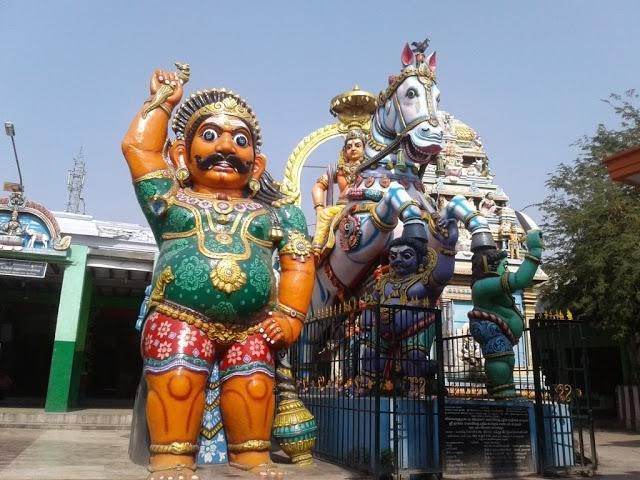
The Villayuthamudaya Ayyanar Temple, nestled in the suburb of Kochadai, Madurai, stands as a powerful guardian deity shrine. It is primarily dedicated to Lord Sastha, also revered locally as Lord Ayyanar and Sri Muthaiya Swamy. In the Dravidian pantheon, Sastha is regarded as a benevolent guardian deity who dispenses justice and protects the faithful from malevolent forces.
Phalaśruti (Spiritual Benefits):
- Naga Dosha Removal: Devotees believe that worshiping here absolves astrological afflictions related to serpents.
- Muthiah Swamy’s Grace: As the temple is historically linked to the origin of Muthiah Koil, prayers here are known to grant spiritual asylum and stability in life.
- Protection from Evil: Being a village deity shrine, it is highly potent for warding off negative energies and ensuring family safety.
Historical Origins & Scriptural Legend
The Pandya Connection
According to temple records and architectural analysis, the structure is believed to originate from the Pandya period. The stone inscriptions and the sanctity of the site suggest a history spanning several centuries, dedicated to the rural deities of the region.
Sacred Legends (Sthala Purana)
The temple holds deep mythological significance, woven into the local lore of Madurai:
- The Story of Kochadai: Tradition holds that Lord Shiva once intervened to save an old lady named Vandhi during severe floods in the River Vaigai. To settle his wage, Shiva consumed a pudding sold by Vandhi. Angered by a King Pandya’s punishment (a cane blow), the Lord disappeared. The place became known as Kovichu Adi (Tamil for “blow received”), which evolved into Kochadai over time.
- Origin of Muthiah Koil: Lord Muthiah Swamy arrived here seeking asylum from Lord Ayyanar, establishing the site as a place of refuge.
- Sage Patanjali: It is believed that the great sage Patanjali (author of the Yoga Sutras) performed intense penance under the ancient tamarind tree still standing within the temple complex.
Architectural Marvels
The Villayuthamudaya Ayyanar Temple exhibits classic Dravidian Architecture. Unlike massive temple complexes, this shrine focuses on the sanctity of the sanctum (Garbhagriha) and the open-air shrine characteristic of Ayyanar temples.
Key Architectural Features
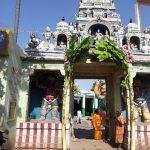
- Dravidian Style: The temple features the signature gopuram structure and prakaram (corridor) layout typical of South Indian temple architecture.
- The Tamarind Tree: A central feature of the temple complex is the ancient tamarind tree under which Sage Patanjali is said to have meditated. This serves as a natural, living mandapa.
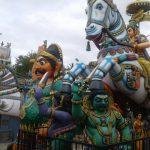
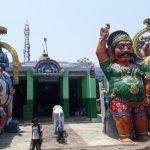
- Sculptures: The precincts feature sculptures of rural deities, Nagars (serpent spirits), and guardian figures, reflecting the syncretic nature of Dravidian village religion.
Darshan & Ritual Logistics
Devotees planning a visit in 2026 should note the temple’s operating hours and specific festival dates. The temple follows a standard daily schedule with a midday closure.
Daily Temple Timings
| Session | Timing |
|---|---|
| Morning Darshan | 11:00 AM – 1:00 PM |
| Afternoon Break | 1:00 PM – 4:00 PM (Closed) |
| Evening Darshan | 4:00 PM – 9:00 PM |
Key Sevas & 2026 Festivals
Offerings: Devotees pour milk on the Nagamma idol under the tamarind tree to remove Naga Dosha. For wedding blessings, Mangal Sutras are tied, and for child boons, cradles made of saris are offered to the tree.
- Mahasivarathri: Celebrated for three days in the Tamil month of Masi.
2026 Date: February 26, 2026 (Main Festival). - Purattasi Festival: A unique village ritual held in the month of Purattasi (September-October). The festival proceeds only if “approval” is received via sound from a lizard on a palm tree (a traditional village oracle practice).
2026 Date Range: September 17 – October 17, 2026 (Date confirmed by local oracle). - Soolattu Puja: Dedicated to Rakkayi Amman.
- Pavadai Puja: Dedicated to Muthiahswami.
Online Seva Booking
While specific online portals for this local temple may be limited, general offerings can be coordinated via the temple trust. For large-scale Abhishekam or Archana requests, it is recommended to contact the administration directly using the phone number provided below.
Practical Visitor Guidance
As a heritage site with active worship, respectful conduct is essential.
Rules & Etiquette
- Dress Code: Traditional attire is recommended. Men should wear dhotis or trousers with a shirt; women should wear sarees or salwar kameez.
- Photography: Generally permitted in the outer precincts but strictly prohibited inside the sanctum sanctorum. Seek permission for flash photography.
- Mobile Lockers: There is no high-tech locker system; however, personal belongings should be kept secure. Small bags are usually allowed.
- Accessibility: The temple is accessible via paved pathways. The inner sanctum requires climbing a few steps.
Crowd Management
- Best Hours: The morning session (11:00 AM – 12:00 PM) is generally less crowded compared to the evening hours.
- Seasonal Advice:
- Summer (May): Madurai is very hot. Carry a water bottle and an umbrella. Offerings of water to the deities are appreciated.
- Monsoon (Oct-Nov): The rural pathways can be muddy; wear slip-resistant footwear.
Pilgrimage Connectivity
How to Reach Villayuthamudaya Ayyanar Temple
The temple is located in Kochadai, a busy suburb just west of central Madurai.
- By Air: Madurai International Airport (IXM) is approximately 15 km away (30-40 mins by taxi).
- By Train: Madurai Junction (MDU) is roughly 4 km away. Taxis and auto-rickshaws are readily available.
- By Road: The temple is well-connected via the Madurai-Theni Highway. It is about 800 meters from Mudakkusalai Bus Stop. Private vehicles can park near the temple entrance.
Nearby Sacred Sites
Enhance your pilgrimage by visiting these nearby spiritual landmarks:
- Koodal Azhagar Temple: One of the 108 Divya Desams, located in central Madurai (approx. 5 km).
- Meenakshi Amman Temple: The world-renowned complex housing Goddess Meenakshi and Sundareshwarar (approx. 5 km).
- Thiruparankundram Murugan Temple: A cave temple and one of the six abodes of Lord Murugan (approx. 12 km).
Frequently Asked Questions (FAQs)
1. What is the significance of the name “Villayuthamudaya”?
“Villayuthamudaya” is a Tamil epithet. While etymologically linked to the local legend of “Kovichu Adi” (the blow received), it generally signifies the Lord who holds the bow (Vill) and staff (Ayudha), symbolizing his role as a protector who wields weapons against evil.
2. Is there a VIP Darshan entry available?
As a village deity temple, there are no formal VIP tickets like in large commercial shrines. However, priority is given to those conducting specific Sevas (rituals) like Abhishekam. Devotees can coordinate with the temple priest (Pujari) for special entry during rituals.
3. Can I perform an Abhishekam for Naga Dosha?
Yes. The specific ritual for Naga Dosha involves pouring milk on the Nagamma idol situated under the tamarind tree in the temple courtyard. This is a daily practice and does not usually require prior booking for small-scale offerings.
4. What are the contact details for the temple?
For inquiries regarding timings or specific ceremonies, contact:
Phone: +91 452 6524201
Address: Villayuthamudaya Ayyanar / Sri Muthaiya Swamy Temple, Kochadai, Madurai District.
5. Is the temple open on all days?
Yes, the temple generally remains open daily. However, it is advisable to confirm timings on major public holidays or during special festival days (like Mahasivarathri) when the schedule may be extended.
Photo Gallery
Contact Details
Villayuthamudaya Ayyanar / Sri Muthaiya Swamy Temple
Kochadai, Madurai District
Phone: +91 452 6524201
Recent Posts

Shri Kaamkoteeshwar Mandir, Varanasi – History & Significance
In the heart of Kashi, the eternal city of Lord Shiva, where the Ganges flows with celestial grace, stands the Shri Kaamkoteeshwar Mandir. This sacred Sannidhi is not merely a temple but a profound spiritual bridge between the Northern…

ओ सांवरे तूने ही मुझको संभाला – Lyrics & Meaning
ओ सांवरे तूने ही मुझको संभाला – A Prayer to Shyam Origin & Spiritual Essence Why This Bhajan Resonates Devotees chant this when overwhelmed by life’s storms—the refrain ‘तूने ही मुझको संभाला’ is the soul’s sigh of relief: “You…

कथा ये है महाराज मेरे की – Lyrics & Meaning
कथा ये है महाराज मेरे की छत्रपति संभाजी महाराज – A Prayer to Chhatrapati Sambhaji Maharaj Origin & Spiritual Essence Why This Bhajan Resonates Devotees chant this when their spirit feels tested—its powerful refrain “महाराज मेरे” is a soul’s…

Rigveda Samhita Yathartha Anuvada (ऋग्वेद संहिता यथार्थ अनुवाद) – Complete Set with Anvayartha & Hindi/English Translation
The Rigveda is the oldest surviving scripture of humanity and the foundational text of Sanātana Dharma. For serious students, scholars, UPSC aspirants studying ancient Indian history, Sanskrit learners, and spiritual seekers, a precise and grammatically structured translation is indispensable.…

आना भी अकेला है जाना भी अकेला है – Lyrics & Meaning | BharatTemples
आना भी अकेला है जाना भी अकेला है – A Prayer to the Divine Witness Origin & Spiritual Essence Why This Bhajan Resonates Devotees turn to this bhajan in moments of deep reflection—when life’s attachments begin to ache. The…

माता शेरावाली के द्वार जो भी जाता है – Lyrics & Meaning
माता शेरावाली के द्वार जो भी जाता है – A Prayer to Maa Sherawali Origin & Spiritual Essence Why This Bhajan Resonates Devotees turn to this bhajan in times of fear or uncertainty—its promise that no one leaves Maa’s…

मार लेना सपणी उबार लेणा भवरा – Lyrics & Meaning
मार लेना सपणी उबार लेणा भवरा – A Prayer to the Divine Beloved Origin & Spiritual Essence Why This Bhajan Resonates Devotees chant this in moments of deep vulnerability—its cry of “मार लेना सपणी, उबार लेणा भवरा” is the…

हमें श्याम सुंदर भरोसा तुम्हारा – Lyrics & Meaning
हमें श्याम सुंदर भरोसा तुम्हारा – A Prayer to Shyam Sundar Origin & Spiritual Essence Why This Bhajan Resonates Devotees chant this when feeling alone—its refrain ‘de do sahara’ is the soul’s cry for divine support. Lyrics in Hindi…

Mere Satguru Ne Di Thi Davai Lyrics in Hindi & Meaning
Mere Satguru Ne Di Thi Davai: Invoking the Guru’s Liberating Wisdom This soul-stirring bhajan venerates the Satguru (True Spiritual Master) as the divine physician who dispenses the only remedy for life’s deepest sufferings. Composed by Sant Karmaveer Tufani, it…

Janm Diyo Thari Maa Dukh Dekhiyo Lyrics in Hindi & Meaning
जन्म दियो थारी माँ दुख देखियो (Maa’s Grief Upon Birthing You) This soul-stirring Chetavani Bhajan (admonitory hymn) is addressed to the Divine Mother (Maa) – a call for repentance when children forget their filial duties in the dark age…