
Contents
Introduction & Spiritual Essence of Srinivasa Perumal Temple
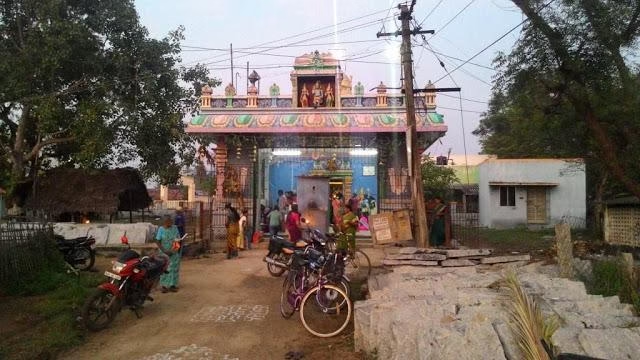
The Srinivasa Perumal Temple in Veppampattu, located in the Thiruvallur district of Tamil Nadu, stands as a serene sanctuary dedicated to Lord Vishnu, revered here in his form as Srinivasa Perumal (an epithet for Balaji or Venkateswara). This ancient temple is a significant spiritual landmark for devotees seeking the blessings of Vishnu, the Preserver within the Hindu trinity. The temple’s primary deity is a Swayambhu Murti (self-manifested), adding to its mystical allure and divine potency.
Phalaśruti: The Fruits of Devotion
Devotees flock to the Srinivasa Perumal Temple with deep faith, believing that a pilgrimage here yields profound spiritual benefits. According to local beliefs, worshipping Lord Srinivasa at this sacred site helps in mitigating past karma and alleviating the ill effects of planetary alignments, particularly those of Shani (Saturn). It is also widely believed that offering prayers here facilitates the removal of obstacles in education and career, bestowing success and prosperity upon the faithful. The temple is considered a potent site for ancestors’ salvation, making it an essential stop for performing rites like Tharpanam.
Historical Origins & Scriptural Legend
While the exact date of construction is not explicitly documented in available historical records, the architecture and stone inscriptions suggest origins dating back several centuries, likely during the Vijayanagara or Nayak period. These dynasties were known for their patronage of Vaishnavite temples throughout Tamil Nadu. The temple has undergone renovations over the years, preserving the sanctity of its ancient structures while ensuring the rituals are performed according to Vedic standards.
The Sthala Purana
According to temple records and oral tradition (Sthala Purana), Veppampattu derives its name from the abundant Veppam (Neem trees) that once surrounded the region. The legend holds that Lord Vishnu chose this tranquil grove to reside, granting boons to sages and devotees who performed intense penance here. The Swayambhu murti is said to have been discovered by a local farmer while plowing his field, a divine intervention that led to the construction of the current sanctum.
Architectural Marvels
The Srinivasa Perumal Temple is a classic example of Dravidian architecture, characterized by its towering gateways (Gopurams) and spacious courtyards. The temple faces east, aligning with the rising sun, symbolizing the dispelling of darkness and ignorance.
Structural Details
- Garbhagriha (Sanctum): The inner sanctum houses the main deity, Srinivasa Perumal, flanked by his consort, Goddess Alarmelmangai Thayar.
- Mandapas: The temple features several pillared halls (Mandapas) adorned with intricate carvings depicting scenes from the Ramayana and Mahabharata.
- Sculptures: Detailed carvings of Ashta Lakshmi, Narasimha, and other avatars of Vishnu are visible along the walls.
Note: While the temple is historically significant, it is not currently listed under ASI (Archaeological Survey of India) or UNESCO World Heritage sites. However, it remains a vital cultural repository of local Tamil heritage.
Darshan & Ritual Logistics
To ensure a seamless spiritual experience, visitors are advised to adhere to the daily schedule. The temple follows standard agamic rituals for Vishnu temples.
Daily Timings (2026 Schedule)
| Session | Timings |
|---|---|
| Morning Darshan | 07:00 AM – 12:00 PM |
| Afternoon Break | 12:00 PM – 04:00 PM |
| Evening Darshan | 04:00 PM – 08:00 PM |
| Pooja/Abhishekam | 08:00 AM & 06:00 PM |
Key Sevas and Online Booking
Popular Sevas include the Suprabhatam (morning awakening ritual), Archana, and Thirumanjanam (Abhishekam). While the temple is a local shrine, booking for major rituals can often be coordinated through temple administration or local contacts. For major festivals, it is advisable to visit the temple office in advance.
2026 Festival Calendar
- January (Pongal): Special Abhishekam and Pongal offering.
- March (Panguni Uthiram): Brahmotsavam (Tentative).
- October/November (Deepavali): Special lighting and evening processions.
- December (Margazhi): Thiruvallur Gopuram opening festivities.
Practical Visitor Guidance
To make your visit comfortable and respectful:
- Dress Code: Traditional attire is mandatory. Men should wear dhoti or formal pants with a shirt; women should wear saree, half-saree, or churidar. Avoid shorts and sleeveless tops.
- Photography: Strictly prohibited inside the sanctum sanctorum. Photography in the outer halls may be allowed, but seek permission from the temple authorities.
- Mobile Lockers: Small bags and mobile phones are allowed, but large luggage should be left in vehicles. Ensure phones are on silent mode inside the temple.
- Accessibility: The temple is generally accessible, but there may be steps to the main sanctum. Wheelchair access is limited due to the ancient nature of the structure.
Crowd Management
Best Hours: The ideal time for a peaceful darshan is between 09:00 AM and 11:00 AM on weekdays.
Seasonal Advice: Summer months (April–June) in Tamil Nadu are intensely hot; carry water and an umbrella. Monsoon (November) can be humid, so lightweight rain gear is recommended.
Pilgrimage Connectivity
The temple is strategically located near Veppampattu, making it accessible for pilgrims from Chennai and surrounding districts.
How to Reach
- By Air: Chennai International Airport (MAA) is approximately 36 km away.
- By Rail: Veppampattu Railway Station is the closest stop (approx. 2 km). Alternatively, Thiruninravur (5 km) offers frequent suburban services.
- By Road: The temple is easily accessible via NH 16 (Chennai-Kolkata Highway). It is well connected by local buses from Thiruvallur and Avadi.
Nearby Sacred Sites
Expand your pilgrimage itinerary with these nearby temples:
- Thiruninravur Yathindra Praneswarar Temple: A Shiva temple located just 5 km away.
- Thiruvallur Veeraraghava Swamy Temple: The presiding deity of the district, 14 km from Veppampattu.
- Kancheepuram Varadharaja Perumal Temple: A grand ancient temple located about 50 km away.
Frequently Asked Questions (FAQs)
1. What is the significance of the name “Veppampattu”?
The name “Veppampattu” is derived from the Tamil word Veppam (Neem tree). Historically, the region was a dense grove of Neem trees, known for their medicinal properties and religious significance in purifying the environment.
2. Is there a VIP darshan entry available?
As a local shrine, the temple does not typically have a formal VIP entry system found in larger temples like Tirupati. However, donating to the temple’s development fund or contributing to the daily Pooja might grant you special access during busy hours. Please consult the temple administrator on-site.
3. Are there accommodation facilities nearby?
Basic accommodation is available in Veppampattu and the nearby town of Thiruninravur. For more comfortable lodging and boarding, it is recommended to stay in Avadi or Thiruvallur, which have numerous hotels and guest houses.
4. Is the temple open on all days?
Yes, the temple remains open on all days of the week. However, timings may vary slightly during festival seasons and government holidays.
5. What is the primary language used for rituals?
The rituals are primarily conducted in Tamil and Sanskrit. The priests are fluent in Tamil and can explain the significance of the rituals in Tamil and English.
Recent Posts

Shri Kaamkoteeshwar Mandir, Varanasi – History & Significance
In the heart of Kashi, the eternal city of Lord Shiva, where the Ganges flows with celestial grace, stands the Shri Kaamkoteeshwar Mandir. This sacred Sannidhi is not merely a temple but a profound spiritual bridge between the Northern…

ओ सांवरे तूने ही मुझको संभाला – Lyrics & Meaning
ओ सांवरे तूने ही मुझको संभाला – A Prayer to Shyam Origin & Spiritual Essence Why This Bhajan Resonates Devotees chant this when overwhelmed by life’s storms—the refrain ‘तूने ही मुझको संभाला’ is the soul’s sigh of relief: “You…

कथा ये है महाराज मेरे की – Lyrics & Meaning
कथा ये है महाराज मेरे की छत्रपति संभाजी महाराज – A Prayer to Chhatrapati Sambhaji Maharaj Origin & Spiritual Essence Why This Bhajan Resonates Devotees chant this when their spirit feels tested—its powerful refrain “महाराज मेरे” is a soul’s…

Rigveda Samhita Yathartha Anuvada (ऋग्वेद संहिता यथार्थ अनुवाद) – Complete Set with Anvayartha & Hindi/English Translation
The Rigveda is the oldest surviving scripture of humanity and the foundational text of Sanātana Dharma. For serious students, scholars, UPSC aspirants studying ancient Indian history, Sanskrit learners, and spiritual seekers, a precise and grammatically structured translation is indispensable.…

आना भी अकेला है जाना भी अकेला है – Lyrics & Meaning | BharatTemples
आना भी अकेला है जाना भी अकेला है – A Prayer to the Divine Witness Origin & Spiritual Essence Why This Bhajan Resonates Devotees turn to this bhajan in moments of deep reflection—when life’s attachments begin to ache. The…

माता शेरावाली के द्वार जो भी जाता है – Lyrics & Meaning
माता शेरावाली के द्वार जो भी जाता है – A Prayer to Maa Sherawali Origin & Spiritual Essence Why This Bhajan Resonates Devotees turn to this bhajan in times of fear or uncertainty—its promise that no one leaves Maa’s…

मार लेना सपणी उबार लेणा भवरा – Lyrics & Meaning
मार लेना सपणी उबार लेणा भवरा – A Prayer to the Divine Beloved Origin & Spiritual Essence Why This Bhajan Resonates Devotees chant this in moments of deep vulnerability—its cry of “मार लेना सपणी, उबार लेणा भवरा” is the…

हमें श्याम सुंदर भरोसा तुम्हारा – Lyrics & Meaning
हमें श्याम सुंदर भरोसा तुम्हारा – A Prayer to Shyam Sundar Origin & Spiritual Essence Why This Bhajan Resonates Devotees chant this when feeling alone—its refrain ‘de do sahara’ is the soul’s cry for divine support. Lyrics in Hindi…

Mere Satguru Ne Di Thi Davai Lyrics in Hindi & Meaning
Mere Satguru Ne Di Thi Davai: Invoking the Guru’s Liberating Wisdom This soul-stirring bhajan venerates the Satguru (True Spiritual Master) as the divine physician who dispenses the only remedy for life’s deepest sufferings. Composed by Sant Karmaveer Tufani, it…

Janm Diyo Thari Maa Dukh Dekhiyo Lyrics in Hindi & Meaning
जन्म दियो थारी माँ दुख देखियो (Maa’s Grief Upon Birthing You) This soul-stirring Chetavani Bhajan (admonitory hymn) is addressed to the Divine Mother (Maa) – a call for repentance when children forget their filial duties in the dark age…