
Contents
Vaaleeswarar Temple, Natham, Thiruvallur: A Definitive Pilgrimage Guide
In the serene village of Natham, nestled within the fertile landscapes of the Thiruvallur district, lies a sanctuary of ancient energy—the Vaaleeswarar Temple. As we navigate the spiritual landscape of 2026, this temple stands not merely as a historical monument but as a living, breathing center of remedial worship. For the devotee, the temple represents a profound intersection of mythology and remedial astrology, making it a mandatory stop for those seeking relief from planetary afflictions.
Introduction & Spiritual Essence
The Vaaleeswarar Temple is dedicated to Lord Shiva in his form as Vaaleeswarar, with the consort Anandha Valli Amman (also known as Ananda Valli Thayar). Unlike many generic Shiva temples, the presiding deity here is revered as a Swayambhu Moorthy (self-manifested) or a highly potent Prathishta established by ancient sages.
Phalaśruti: Why Devotees Visit
The primary spiritual magnet of this shrine is its status as a Rahu-Ketu Parihara Sthalam. In Vedic astrology, the shadow planets Rahu and Ketu are responsible for significant karmic shifts, often manifesting as unexplained hurdles, delays in marriage, or professional stagnation. Devotees visit this temple specifically to perform remedial rituals that cleanse Rahu-Kethu Dosham.
According to temple lore and devotee experiences, regular worship here is believed to:
- Cleanse Ancestral Karma: Rectifying Pitru Dosham (ancestral flaws) through dedicated Tharpanam.
- Relieve Brahma Hasti Dosham: A specific affliction mentioned in the temple’s oral traditions, said to be absolved here.
- Grant Moksha: By worshipped Lord Kariya Siddhi Vinayagar, devotees attain the removal of obstacles before approaching the main deity.
Historical Origins & Scriptural Legend
While the exact date of construction remains shrouded in the mists of oral history, architectural analysis points to a structure dating back to the Chola and Later Vijayanagara periods. The inner sanctum exhibits the structural rigor of the Cholas, while the outer prakarams and pillared halls bear the distinct architectural fingerprints of the Vijayanagara era, patrons of temple architecture in Tamil Nadu.
The Legend of Vaali
The temple’s name and fame are inextricably linked to the Ramayana. Tradition holds that the Vanara King, Vaali, worshipped Lord Shiva at this very spot. The legend suggests that upon being cursed by Sage Matanga, Vaali sought redemption for the Brahma Hasti Dosham (a sin resulting from killing a Brahmin or a being equivalent to a Brahmin). By installing a Shiva Lingam and offering intense penance, Vaali was absolved of his sins, earning the deity the name Vaaleeswarar (The Lord of Vaali).
According to temple records, this site was also visited by Lord Brahma, who is believed to have worshipped a form of Lord Vinayaga (Ganesha) here to aid his celestial duties. Furthermore, Lord Maha Vishnu is said to have performed penance to attain the glory of Shiva, establishing the temple as a unique convergence of the Holy Trinity’s energies.
Architectural Marvels
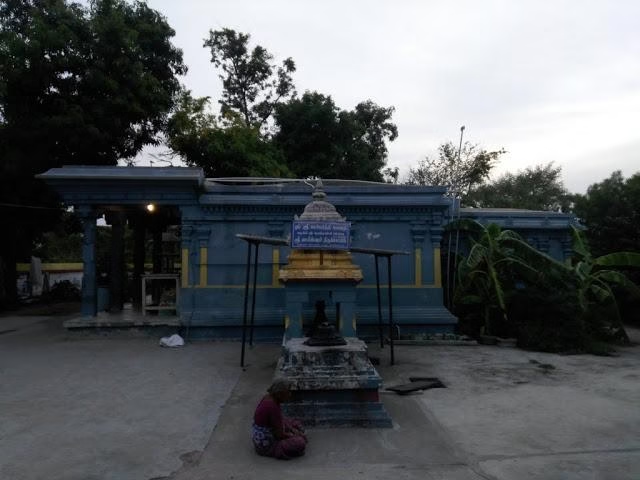
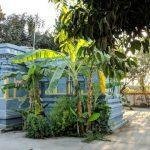
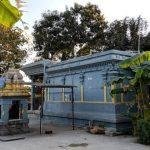
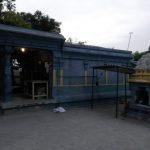
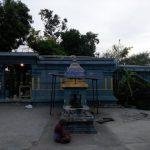
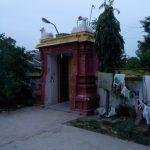
The Vaaleeswarar Temple is a quintessential example of Dravidian Temple Architecture. While the entire complex is enclosed within a laterite stone wall, the spiritual hierarchy is defined by the Prakarams (enclosures).
- The Sanctum (Garbhagriha): The inner sanctum houses the lingam of Vaaleeswarar, facing East. The idol is flanked by the presence of the Sun and Moon, a standard feature in Shiva temples, signifying cosmic authority.
- The Mandapas: The temple features a Maha Mandapa (great hall) and an Ardha Mandapa (half hall), featuring pillars carved with intricate floral motifs and deities. These halls are designed according to Vastu Shastra, aligning the flow of energy from the outer world into the sacred sanctum.
- Notable Sculptures: The pillars in the mukha mandapa depict various avatars of Shiva and scenes from local folklore. The outer walls (Vimana) display minimal decoration, focusing on the structural purity of the Dravidian style.
The temple does not currently hold an active ASI (Archaeological Survey of India) or UNESCO designation, but it is a protected monument under the local HR&CE (Hindu Religious and Charitable Endowments) Department of Tamil Nadu.
Darshan & Ritual Logistics
Visiting the Vaaleeswarar Temple requires an understanding of the daily liturgical cycle. The temple follows traditional Tamil timekeeping cycles (Chandrakantha, Jeeva, etc.) but adheres to standard opening hours.
Daily Temple Timings (2026 Schedule)
| Session | Timing | Key Activity |
|---|---|---|
| Morning Darshan | 07:00 AM – 12:00 PM | Opening, Suprabhatam, Abhishekam |
| Afternoon Recess | 12:00 PM – 04:00 PM | Sanctum Cleaning / Deity Rest |
| Evening Darshan | 04:00 PM – 08:00 PM | Deepa Aradhana, Palliyarai Pooja |
Key Sevas and Online Booking
To accommodate the growing influx of devotees, the temple administration encourages advance booking for major rituals. Assumed current date: 2026.
- Abhishekam: Performed with milk, honey, coconut water, and sandalwood paste. Best performed on Mondays and Pradosham days.
- Archana: Personalized recitations of Shiva’s 108 names. Required for Rahu-Ketu dosha remediation.
- Rahu-Ketu Pariharan Homam: A specialized fire ritual (Yajna) conducted on your behalf. This is the temple’s most sought-after service.
- Online Seva Booking: Devotees can book these sevas via the official Tamil Nadu Temples Online Booking Portal (hosted by the TN HR&CE department) or the official bharattemples.com integration portal.
Important 2026 Festival Dates
- January 2026: Arudra Darshanam (Anniversary of Lord Nataraja’s cosmic dance).
- February/March 2026: Thai Poosam (A major festival for Lord Murugan, celebrated with great fervor in Shiva temples).
- April 2026: Chithra Pournami (Full Moon) – Special Abhishekam for the presiding deity.
- August 2026: Vinayagar Chaturthi (Celebrating the birthday of the tuskless Kariya Siddhi Ganapathy).
- October/November 2026: Karthigai Deepam (Lighting of the lamp).
Practical Visitor Guidance
To ensure a seamless darshan experience, visitors are advised to adhere to the following guidelines:
- Dress Code: Traditional attire is mandatory. Men should wear Dhoti or formal pants with a shirt, and women should wear Saree, Salwar Kameez, or long skirts. Casual wear like shorts and t-shirts is strictly prohibited.
- Photography Rules: Photography is strictly prohibited inside the Garbhagriha (inner sanctum). Photography in the outer corridors may be permitted without flash, but always seek permission from the temple executive officer.
- Mobile & Lockers: Electronic devices should be silenced. While large lockers are not available on-site, small bags are permitted. It is advisable to carry minimal items.
- Crowd Management:
- Best Time to Visit: Weekday mornings (Tuesday to Thursday) between 8:00 AM and 10:00 AM offer the least crowded darshan.
- Seasonal Advice: During the summer months of April and May, the Tamil Nadu heat can be intense. Carry a reusable water bottle (as plastic is discouraged) and an umbrella. The temple premises provide shaded areas in the Mandapa, but external shade is limited.
Pilgrimage Connectivity
How to Reach Vaaleeswarar Temple
The temple is strategically located within driving distance of Chennai and Thiruvallur, making it accessible for both local and outstation pilgrims.
- By Air: The nearest airport is Chennai International Airport (MAA), approximately 44 km away (approx. 1 hour 15 mins via NH48).
- By Rail: The nearest railway junction is Ponneri Railway Station (approx. 11 km). Alternatively, Thiruvallur Railway Station (approx. 44 km) serves as a major hub.
- By Road:
- From Chennai Central: Take the NH48 towards Poonamallee, then connect via State Highway 50 (Ponneri Road) to reach Natham (approx. 31 km).
- From Thiruvallur: Take the SH-50 towards Ponneri. The temple is located roughly 4 km from Thatchoor.
Nearby Sacred Sites (Pilgrimage Circuit)
Extend your spiritual journey by visiting these nearby temples:
- Shri Kalyana Venkateswara Temple (Thirumazhisai): Located about 20 km away, this temple is renowned for Lord Venkateswara and is a popular center for Balaji devotees in the North Chennai region.
- Koratteswarar Temple (Thiruvottiyur): Situated near the coast (approx. 25 km), this is another ancient Shiva temple associated with the legend of Kannagi and later expanded by the Cholas.
- Vadapalani Murugan Temple: For devotees heading back toward the city center, this Murugan temple in Vadapalani (approx. 28 km) is a powerful center for wish fulfillment.
Frequently Asked Questions (FAQ)
1. Is there a VIP darshan entry available?
Generally, the Vaaleeswarar Temple does not have a formal VIP entry system like the massive hill temples. However, if you have booked a specific Seva (like Abhishekam or Homam) in advance, you will be allowed entry during the designated ritual time, which naturally offers a faster and more intimate darshan experience.
2. What is the significance of the Tirtham (water tank) here?
The temple tank is known as Vaali Theertham. It is believed that King Vaali bathed in this water to cleanse his sins. Devotees often take a dip here before entering the temple to purify themselves physically and spiritually.
3. Can I perform Rahu-Ketu Pariharan Homam online?
While physical presence is traditionally recommended for fire rituals (Homam), the temple administration and affiliated online portals allow devotees to book priests to perform the ritual on their behalf. You can select specific dates (usually Tuesdays, Fridays, or Amavasya days) during the online booking process.
4. Are there accommodation facilities available nearby?
The temple itself does not offer lodging. However, basic guest houses and lodges are available in Ponneri (11 km) and Chennai (31 km). For a spiritual retreat, nearby Ashrams in Tiruvottiyur are also a viable option.
5. Why is the Ganesha here called Kariya Siddhi?
The Lord Ganesha in this temple is unique because he is depicted without tusks (tuskless). He is referred to as Kariya Siddhi Ganapathy, implying that he has mastered his elephantine nature (Kariya) and grants Siddhi (success) to those who worship him with pure intent before approaching Lord Vaaleeswarar.
Recent Posts

Shri Kaamkoteeshwar Mandir, Varanasi – History & Significance
In the heart of Kashi, the eternal city of Lord Shiva, where the Ganges flows with celestial grace, stands the Shri Kaamkoteeshwar Mandir. This sacred Sannidhi is not merely a temple but a profound spiritual bridge between the Northern…

ओ सांवरे तूने ही मुझको संभाला – Lyrics & Meaning
ओ सांवरे तूने ही मुझको संभाला – A Prayer to Shyam Origin & Spiritual Essence Why This Bhajan Resonates Devotees chant this when overwhelmed by life’s storms—the refrain ‘तूने ही मुझको संभाला’ is the soul’s sigh of relief: “You…

कथा ये है महाराज मेरे की – Lyrics & Meaning
कथा ये है महाराज मेरे की छत्रपति संभाजी महाराज – A Prayer to Chhatrapati Sambhaji Maharaj Origin & Spiritual Essence Why This Bhajan Resonates Devotees chant this when their spirit feels tested—its powerful refrain “महाराज मेरे” is a soul’s…

Rigveda Samhita Yathartha Anuvada (ऋग्वेद संहिता यथार्थ अनुवाद) – Complete Set with Anvayartha & Hindi/English Translation
The Rigveda is the oldest surviving scripture of humanity and the foundational text of Sanātana Dharma. For serious students, scholars, UPSC aspirants studying ancient Indian history, Sanskrit learners, and spiritual seekers, a precise and grammatically structured translation is indispensable.…

आना भी अकेला है जाना भी अकेला है – Lyrics & Meaning | BharatTemples
आना भी अकेला है जाना भी अकेला है – A Prayer to the Divine Witness Origin & Spiritual Essence Why This Bhajan Resonates Devotees turn to this bhajan in moments of deep reflection—when life’s attachments begin to ache. The…

माता शेरावाली के द्वार जो भी जाता है – Lyrics & Meaning
माता शेरावाली के द्वार जो भी जाता है – A Prayer to Maa Sherawali Origin & Spiritual Essence Why This Bhajan Resonates Devotees turn to this bhajan in times of fear or uncertainty—its promise that no one leaves Maa’s…

मार लेना सपणी उबार लेणा भवरा – Lyrics & Meaning
मार लेना सपणी उबार लेणा भवरा – A Prayer to the Divine Beloved Origin & Spiritual Essence Why This Bhajan Resonates Devotees chant this in moments of deep vulnerability—its cry of “मार लेना सपणी, उबार लेणा भवरा” is the…

हमें श्याम सुंदर भरोसा तुम्हारा – Lyrics & Meaning
हमें श्याम सुंदर भरोसा तुम्हारा – A Prayer to Shyam Sundar Origin & Spiritual Essence Why This Bhajan Resonates Devotees chant this when feeling alone—its refrain ‘de do sahara’ is the soul’s cry for divine support. Lyrics in Hindi…

Mere Satguru Ne Di Thi Davai Lyrics in Hindi & Meaning
Mere Satguru Ne Di Thi Davai: Invoking the Guru’s Liberating Wisdom This soul-stirring bhajan venerates the Satguru (True Spiritual Master) as the divine physician who dispenses the only remedy for life’s deepest sufferings. Composed by Sant Karmaveer Tufani, it…

Janm Diyo Thari Maa Dukh Dekhiyo Lyrics in Hindi & Meaning
जन्म दियो थारी माँ दुख देखियो (Maa’s Grief Upon Birthing You) This soul-stirring Chetavani Bhajan (admonitory hymn) is addressed to the Divine Mother (Maa) – a call for repentance when children forget their filial duties in the dark age…