
Contents
1. Introduction & Spiritual Essence
Nestled in the serene village of Kuthambakkam, approximately 30 km from Chennai, the Thirupuranthakeswarar Temple stands as a timeless beacon of Dravidian spiritual heritage. Dedicated to Lord Shiva, this ancient shrine is revered as a Parthiveshwarar temple, where the presiding deity is a natural Swayambhu Lingam (self-manifested). The temple is revered in the Thevaram hymns and is classified as a Padal Petra Sthalam.
Phalaśruti: The Spiritual Benefits
According to temple records and local folklore, worshipping at Thirupuranthakeswarar brings specific blessings:
- Ancestral Liberation: Performing rites here is believed to cleanse ancestral karma, offering peace to departed souls.
- Knowledge & Wisdom: Devotees seeking academic excellence or clarity in career often pray here to Lord Dakshinamurthy, who is enshrined in the sanctum.
- Relief from Litigation: Tradition holds that circumambulating the Prakaram helps resolve legal disputes and mental conflicts.
2. Historical Origins & Scriptural Legend
The 12th-Century Legacy
Built during the 12th century by local chieftains under the influence of the Later Chola and Pandya dynasties, the temple reflects the architectural zenith of medieval Tamil Nadu. While the exact inscription of the builder is debated, the structure is a protected monument under the Department of Hindu Religious and Charitable Endowments (HR&CE), Tamil Nadu.
The Sthala Purana: The Cow and the Serpent
The local legend breathes life into the stone structures. Tradition holds that a devout cow (Kamadhenu) used to wander the forests of Kuthambakkam. A deadly cobra (Naga) guarded a specific anthill where the cow would spontaneously offer her milk. When the cow’s owner discovered this phenomenon, he found a Shiva Lingam beneath the anthill, protected by the serpent’s coils. Thus, the deity was named Thirupuranthakeswarar (The Lord who dwells in the great anthill). This legend is physically immortalized in the temple’s entrance wall engraving, depicting the cow shedding milk on the Linga.
3. Architectural Marvels
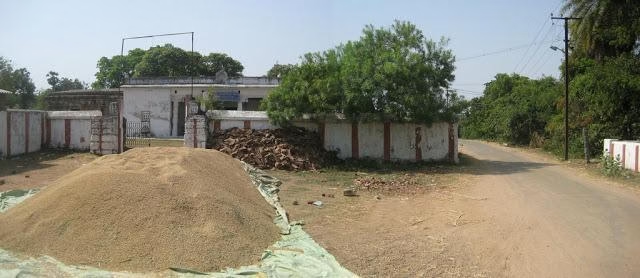
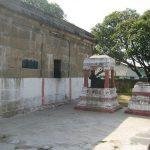
The temple exemplifies the Dravidian style of architecture. Unlike many larger temples, it retains a compact, intimate sanctity without a towering Rajagopuram.
Key Features
- The Sanctum (Garbhagriha): The inner shrine houses the Swayambhu Lingam. Above the sanctum entrance is a rare engraving of the Gokarna cow.
- Nandi: The monolithic Nandi statue is placed in the Mandapam facing the Lord. Uniquely, Nandi’s neck is tilted slightly, signifying his eternal gaze and listening posture toward Shiva.
- Mother Goddess: A separate shrine for Thirupurasundari (Parvati) features a 6-foot granite idol.
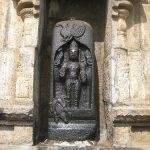
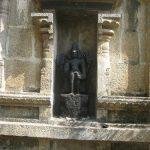
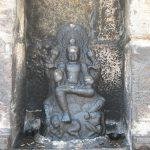
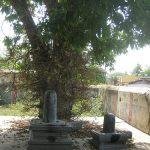
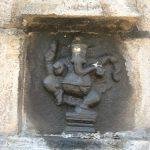
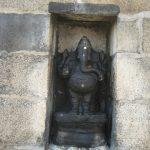
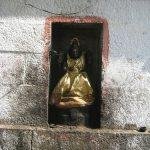
- Niche Sculptures: The sanctum walls feature Ashtamurthi forms including Ganesha, Dakshinamurthy, Vishnu, Brahma, and Durga.
- Navagraha Sannidhi: A dedicated corridor for the nine planets allows devotees to perform remedies for planetary afflictions.
Note: The temple premises are well-maintained, though the surrounding wilderness adds to its secluded, meditative atmosphere.
4. Darshan & Ritual Logistics
The temple follows standard Agamic rituals. The current administration has streamlined Seva bookings for the convenience of pilgrims.
Daily Darshan Timings (2026)
| Session | Timings | Status |
|---|---|---|
| Morning | 06:00 AM – 12:00 PM | Open |
| Afternoon | 12:00 PM – 04:30 PM | Closed |
| Evening | 04:30 PM – 08:00 PM | Open |
*Timings may vary on Festival days. Please verify via the official HR&CE portal before travel.
Key Sevas & Online Booking
Devotees can book the following services online through the Tamil Nadu HR&CE website:
- Abhishekam: Performed during opening hours. Requires prior booking.
- Archana: Daily chants (Ashtothram) for health and prosperity.
- Kalyana Utsavam: Annual marriage ceremony of the deity (special dates required).
2026 Major Festival Dates
- Pradosham: Bi-monthly (14th & 29th of every month).
- Mahashivratri: February 26, 2026 (Grand Abhishekam & Night Vigil).
- Aadi Perukku: July 30, 2026 (Special Tirukalyanam).
5. Practical Visitor Guidance
Code of Conduct
- Dress Code: Traditional attire is mandatory (Dhoti for men; Saree/Salwar Kameez for women).
- Photography: Strictly prohibited inside the Garbhagriha. Permitted in the outer corridors.
- Mobile Lockers: As the temple is in a rural setting, electronic lockers may not be available. It is advisable to carry minimal belongings.
- Accessibility: The temple has granite steps at the entrance. A temporary ramp is usually provided for senior citizens upon request from the temple office.
Crowd Management & Seasonal Tips
- Best Hours: Early mornings (6:00 AM – 8:00 AM) are ideal for a peaceful Darshan.
- Summer (April – June): Temperatures in Thiruvallur can exceed 38°C. Carry water and use an umbrella.
- Monsoon (Oct – Dec): Roads to Kuthambakkam can be slippery; drive cautiously.
6. Pilgrimage Connectivity
How to Reach
- By Air: Chennai International Airport (MAA) is the nearest airport, approx. 28 km away.
- By Train: Pattabiram Railway Station is the closest railhead (11 km). Alternatively, Avadi Railway Station is 14 km away.
- By Road: The temple is located 1.5 km from the Poonamallee Highway (NH4). Access via Vellavedu village.
- Bus Route: Buses to Kuthambakkam are available from Poonamallee Bus Depot and Avadi.
Nearby Sacred Sites (Pilgrimage Circuit)
- Mahabalipuram (60 km): UNESCO World Heritage site known for Shore Temple and rock-cut architecture.
- Thirumazhisai (7 km): Home to the ancient Jagannatha Perumal Temple and the modern Bhaktavatsaleswarar Temple.
- Kancheepuram (35 km): Known as the City of Temples, featuring Ekambareswarar and Varadaraja Perumal temples.
7. Frequently Asked Questions (FAQ)
Is there a VIP darshan entry?
As of 2026, the Thirupuranthakeswarar Temple does not have a distinct VIP entry gate. However, devotees who have booked for special Abhishekam or Archana are given priority access by the temple priests.
Are non-Hindus allowed inside?
Similar to most Shiva temples in Tamil Nadu managed by HR&CE, entry is traditionally restricted to Hindus only.
Where can I park my vehicle?
There is a small unpaved parking area near the temple entrance. For larger vehicles or during festivals, parking is restricted to the village street outside Kuthambakkam.
Is accommodation available nearby?
There are no lodges within Kuthambakkam. For comfortable stay options, devotees usually stay in Thirumazhisai or Poonamallee, where budget hotels and guest houses are available.
What is the significance of the trees in the temple?
The temple premises host trees representing the 27 Nakshatras (Tamil stars). Devotees water the tree corresponding to their birth star to mitigate astrological afflictions.

Contact Details & Location
Address: Thirupuranthakeswarar Temple, Kuthambakkam, Thiruvallur District, Tamil Nadu 602105
Phone: +91 44 2689 0304 (Official HR&CE Enquiry)
Original Source: https://tamilnadu-favtourism.blogspot.com/
Recent Posts

Shri Kaamkoteeshwar Mandir, Varanasi – History & Significance
In the heart of Kashi, the eternal city of Lord Shiva, where the Ganges flows with celestial grace, stands the Shri Kaamkoteeshwar Mandir. This sacred Sannidhi is not merely a temple but a profound spiritual bridge between the Northern…

ओ सांवरे तूने ही मुझको संभाला – Lyrics & Meaning
ओ सांवरे तूने ही मुझको संभाला – A Prayer to Shyam Origin & Spiritual Essence Why This Bhajan Resonates Devotees chant this when overwhelmed by life’s storms—the refrain ‘तूने ही मुझको संभाला’ is the soul’s sigh of relief: “You…

कथा ये है महाराज मेरे की – Lyrics & Meaning
कथा ये है महाराज मेरे की छत्रपति संभाजी महाराज – A Prayer to Chhatrapati Sambhaji Maharaj Origin & Spiritual Essence Why This Bhajan Resonates Devotees chant this when their spirit feels tested—its powerful refrain “महाराज मेरे” is a soul’s…

Rigveda Samhita Yathartha Anuvada (ऋग्वेद संहिता यथार्थ अनुवाद) – Complete Set with Anvayartha & Hindi/English Translation
The Rigveda is the oldest surviving scripture of humanity and the foundational text of Sanātana Dharma. For serious students, scholars, UPSC aspirants studying ancient Indian history, Sanskrit learners, and spiritual seekers, a precise and grammatically structured translation is indispensable.…

आना भी अकेला है जाना भी अकेला है – Lyrics & Meaning | BharatTemples
आना भी अकेला है जाना भी अकेला है – A Prayer to the Divine Witness Origin & Spiritual Essence Why This Bhajan Resonates Devotees turn to this bhajan in moments of deep reflection—when life’s attachments begin to ache. The…

माता शेरावाली के द्वार जो भी जाता है – Lyrics & Meaning
माता शेरावाली के द्वार जो भी जाता है – A Prayer to Maa Sherawali Origin & Spiritual Essence Why This Bhajan Resonates Devotees turn to this bhajan in times of fear or uncertainty—its promise that no one leaves Maa’s…

मार लेना सपणी उबार लेणा भवरा – Lyrics & Meaning
मार लेना सपणी उबार लेणा भवरा – A Prayer to the Divine Beloved Origin & Spiritual Essence Why This Bhajan Resonates Devotees chant this in moments of deep vulnerability—its cry of “मार लेना सपणी, उबार लेणा भवरा” is the…

हमें श्याम सुंदर भरोसा तुम्हारा – Lyrics & Meaning
हमें श्याम सुंदर भरोसा तुम्हारा – A Prayer to Shyam Sundar Origin & Spiritual Essence Why This Bhajan Resonates Devotees chant this when feeling alone—its refrain ‘de do sahara’ is the soul’s cry for divine support. Lyrics in Hindi…

Mere Satguru Ne Di Thi Davai Lyrics in Hindi & Meaning
Mere Satguru Ne Di Thi Davai: Invoking the Guru’s Liberating Wisdom This soul-stirring bhajan venerates the Satguru (True Spiritual Master) as the divine physician who dispenses the only remedy for life’s deepest sufferings. Composed by Sant Karmaveer Tufani, it…

Janm Diyo Thari Maa Dukh Dekhiyo Lyrics in Hindi & Meaning
जन्म दियो थारी माँ दुख देखियो (Maa’s Grief Upon Birthing You) This soul-stirring Chetavani Bhajan (admonitory hymn) is addressed to the Divine Mother (Maa) – a call for repentance when children forget their filial duties in the dark age…