
Contents
Welcome to the Definitive Pilgrimage Guide to the most spirited celebration of divine love in the Braj region. While Holi is celebrated across India with vibrant gulaal and water, the sacred lands of Barsana and Nandgaon offer a distinct spiritual vibration through the legendary Lathmar Holi.
The festival of Holi, celebrated across India, is a riot of colors and joyous abandon. However, in the sacred land of Brij Bhoomi, specifically in the twin villages of Barsana and Nandgaon, Holi takes on a uniquely spirited and deeply symbolic form known as Lathmar Holi.
More than just a play of colors, Lathmar Holi is a dramatic reenactment of the divine pastimes (Lilas) of Lord Shri Krishna and Srimati Radha Rani, encapsulating their loving banter and transcendental frolic. It is a spectacle of cultural heritage, devotional fervor, and a testament to the enduring love story that forms the heart of Vaishnava tradition.
Phalaśruti (Spiritual Benefit): Devotees believe that witnessing or participating in the Lathmar Holi traditions of Barsana cleanses the heart of ego and bestows the grace of Prem Bhakti (pure love). It is said to resolve ancestral karma and bless the devotee with the playful energy of the Divine Couple.
Historical Origins & Scriptural Legend
The roots of Lathmar Holi are deeply embedded in the Puranic narratives and the folklore of Braj. Tradition holds that this celebration has continued uninterrupted since the 16th century, maintaining the purity of the regional style (Braj Rasa).
The Divine Prankster (Sthala Purana)
According to local oral traditions, Lord Krishna, with his playful and mischievous nature, would often visit Barsana, the village of his beloved Radha Rani, to tease her and her sakhis (female companions). He would playfully try to drench them in colored water and bother them.
Radha’s Retaliation
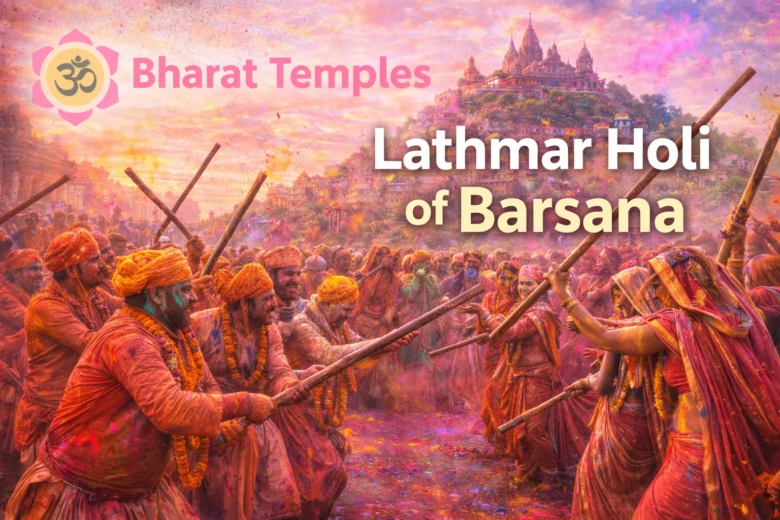
Tired of his incessant pranks, Radha and her friends would playfully drive Krishna and his companions away using long wooden sticks, or lathis. This playful “beating” became a cherished tradition, celebrated annually with immense enthusiasm. The act is not one of anger, but of affectionate reprimand, symbolizing the superior position of Radha and the Gopis in the realm of Prem Bhakti.
Architectural & Sacred Context
The backdrop of Lathmar Holi is the Radha Rani Temple (Shriji Temple) in Barsana, perched atop Bhanugarh hill. This architectural marvel is built in the distinct North Indian Nagara style, characterized by its tiered shikharas (spires).
The Sacred Geography
The temple complex utilizes Vastu Shastra principles to align the spiritual energy of the space. The uphill path to the temple requires devotion, mirroring the spiritual ascent. The walls of the temple and the surrounding areas often feature carvings depicting the very scenes of Holi that are celebrated below.
Note on Media: To view the architectural details and the vibrant colors of the festival, please refer to the visual gallery below.
Darshan & Ritual Logistics (2026 Schedule)
Planning your visit to Barsana and Nandgaon requires understanding the specific timings, which shift during the festival period.
| Event | Date (2026) | Venue | Timings |
|---|---|---|---|
| Laddu Holi | March 10 | Barsana (Shriji Temple) | 12:00 PM – 4:00 PM |
| Lathmar Holi (Barsana) | March 11 | Barsana (Rangili Gali) | 10:00 AM – 5:00 PM |
| Lathmar Holi (Nandgaon) | March 12 | Nandgaon (Nand Bhawan) | 10:00 AM – 5:00 PM |
| Daily Darshan (Non-Festival) | Year-round | Barsana | 5:30 AM – 9:00 PM |
Sevas and Online Booking
While Lathmar Holi is a spontaneous community event, the underlying worship of Radha Rani involves traditional Sevas. These include:
- Mangala Aarti: 5:30 AM (Barsana)
- Bhog Seva: 12:30 PM (Inquiry at the temple counter)
- Shringar Darshan: 4:00 PM
Note: For the specific Lathmar Holi festival, individual Seva booking is generally suspended to accommodate the massive influx of pilgrims. However, for regular visits to Barsana, Nandgaon, and other Braj temples, you can utilize the official Uttar Pradesh Tourism portal or the specific Shriji Temple administration website.
Practical Visitor Guidance
Dress Code & Etiquette
As this is a high-energy festival involving crowds and colored powder, wear old white clothing that you do not mind staining. Traditional attire (Kurta-Pajama for men, Salwar-Kameez or Saree for women) is highly recommended to respect the cultural sanctity.
Crowd Management & Safety
- Best Hours: Arrive by 8:00 AM to secure a viewing spot. The main event peaks between 11:00 AM and 2:00 PM.
- Mobile Lockers: Due to the moisture and powder, it is advisable to leave electronics in secure lockers provided by local tour operators or your hotel. The temple administration strictly prohibits mobile photography during the intimate moments of the Lila reenactment.
- Accessibility: The lanes of Barsana are narrow and old. The area around the temple is accessible, but the stairs to the main temple can be slippery during Holi. Assistance is available from temple volunteers.
Pilgrimage Connectivity
How to Reach Barsana
Barsana is located approximately 50 km from Mathura and 25 km from Vrindavan.
- By Air: The nearest airport is Kashi Vishwanath International Airport (Varanasi) or Indira Gandhi International Airport (Delhi), followed by a 5-6 hour drive via the Yamuna Expressway (N-19).
- By Rail: The closest railway station is Mathura Junction (MTJ) (approx. 1.5 hours by taxi). Alternatively, Gwalior (GWL) serves as a major hub.
- By Road: Direct access via State Highway 38 connecting Mathura to Barsana.
Nearby Sacred Sites (The Braj Circuit)
Expand your spiritual journey by visiting these locations within a 20km radius:
- Nandgaon (12 km): The home of Nand Baba and the site of the return Holi match.
- Govardhan (20 km): Visit the sacred hill lifted by Lord Krishna and the Annakut Giriraj ji.
- Giriraj Parikrama Marg: A sacred 21km circumambulation path around Govardhan Hill.
Frequently Asked Questions (FAQs)
During the Lathmar Holi festival, the concept of VIP darshan is restricted to security protocols for dignitaries. For general devotees, darshan is free but strictly managed by barricades. Early arrival is the only way to ensure a closer view of the Lila reenactment.
Yes, but with discretion. The event is open to all, but the “beating” with sticks is symbolic and generally limited to men entering the specific zones of Nandgaon or Barsana. Women tourists are often welcomed with gulaal, but it is respectful to ask before applying color to locals.
Accommodations in Barsana itself are limited. It is recommended to book hotels in Mathura, Vrindavan, or Govardhan well in advance (3-6 months) due to the massive influx of pilgrims during March.
Professional photography requires prior permission from the Shriji Temple management committee. For personal use, mobile phones are allowed but use them at your own risk due to the crowds and colored water. Note: The provided media blocks in this article utilize generic placeholders; please refer to the official bharattemples.com media library for high-res images.
Despite the energetic atmosphere, the event is deeply rooted in community devotion. However, the crowds are dense. Women are advised to stay in groups and dress modestly. Police and female volunteers are deployed in large numbers for crowd management.
To fully prepare for this unique experience, explore our collection of Holi Bhajans from Brij or read about the History of Holi in India. Your support through our Braj Heritage Preservation initiatives helps keep these ancient traditions alive.
Recent Posts

Shri Kaamkoteeshwar Mandir, Varanasi – History & Significance
In the heart of Kashi, the eternal city of Lord Shiva, where the Ganges flows with celestial grace, stands the Shri Kaamkoteeshwar Mandir. This sacred Sannidhi is not merely a temple but a profound spiritual bridge between the Northern…

ओ सांवरे तूने ही मुझको संभाला – Lyrics & Meaning
ओ सांवरे तूने ही मुझको संभाला – A Prayer to Shyam Origin & Spiritual Essence Why This Bhajan Resonates Devotees chant this when overwhelmed by life’s storms—the refrain ‘तूने ही मुझको संभाला’ is the soul’s sigh of relief: “You…

कथा ये है महाराज मेरे की – Lyrics & Meaning
कथा ये है महाराज मेरे की छत्रपति संभाजी महाराज – A Prayer to Chhatrapati Sambhaji Maharaj Origin & Spiritual Essence Why This Bhajan Resonates Devotees chant this when their spirit feels tested—its powerful refrain “महाराज मेरे” is a soul’s…

Rigveda Samhita Yathartha Anuvada (ऋग्वेद संहिता यथार्थ अनुवाद) – Complete Set with Anvayartha & Hindi/English Translation
The Rigveda is the oldest surviving scripture of humanity and the foundational text of Sanātana Dharma. For serious students, scholars, UPSC aspirants studying ancient Indian history, Sanskrit learners, and spiritual seekers, a precise and grammatically structured translation is indispensable.…

आना भी अकेला है जाना भी अकेला है – Lyrics & Meaning | BharatTemples
आना भी अकेला है जाना भी अकेला है – A Prayer to the Divine Witness Origin & Spiritual Essence Why This Bhajan Resonates Devotees turn to this bhajan in moments of deep reflection—when life’s attachments begin to ache. The…

माता शेरावाली के द्वार जो भी जाता है – Lyrics & Meaning
माता शेरावाली के द्वार जो भी जाता है – A Prayer to Maa Sherawali Origin & Spiritual Essence Why This Bhajan Resonates Devotees turn to this bhajan in times of fear or uncertainty—its promise that no one leaves Maa’s…

मार लेना सपणी उबार लेणा भवरा – Lyrics & Meaning
मार लेना सपणी उबार लेणा भवरा – A Prayer to the Divine Beloved Origin & Spiritual Essence Why This Bhajan Resonates Devotees chant this in moments of deep vulnerability—its cry of “मार लेना सपणी, उबार लेणा भवरा” is the…

हमें श्याम सुंदर भरोसा तुम्हारा – Lyrics & Meaning
हमें श्याम सुंदर भरोसा तुम्हारा – A Prayer to Shyam Sundar Origin & Spiritual Essence Why This Bhajan Resonates Devotees chant this when feeling alone—its refrain ‘de do sahara’ is the soul’s cry for divine support. Lyrics in Hindi…

Mere Satguru Ne Di Thi Davai Lyrics in Hindi & Meaning
Mere Satguru Ne Di Thi Davai: Invoking the Guru’s Liberating Wisdom This soul-stirring bhajan venerates the Satguru (True Spiritual Master) as the divine physician who dispenses the only remedy for life’s deepest sufferings. Composed by Sant Karmaveer Tufani, it…

Janm Diyo Thari Maa Dukh Dekhiyo Lyrics in Hindi & Meaning
जन्म दियो थारी माँ दुख देखियो (Maa’s Grief Upon Birthing You) This soul-stirring Chetavani Bhajan (admonitory hymn) is addressed to the Divine Mother (Maa) – a call for repentance when children forget their filial duties in the dark age…