
Contents
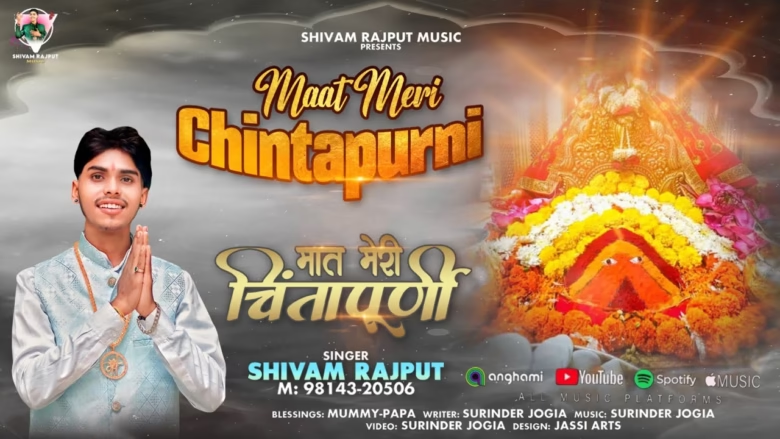
Maat Meri Chintapurni is a heartfelt devotional prayer dedicated to Maa Chintapurni, a form of the Divine Mother. She is revered as the remover of worries and the granter of wishes, especially venerated in the Himalayan region of Himachal Pradesh. This bhajan is a soulful invocation, seeking her boundless grace and protection.
Origin & Spiritual Essence
This bhajan is a modern composition, rendered with profound devotion by the artist Shivam Rajput. It emerges from the living tradition of Punjabi Bhakti, where folk melodies meet deep spiritual yearning. While not drawn from an ancient Puranic text, its essence is rooted in the timeless belief in the Divine Mother’s compassion. The phalaśruti (spiritual fruit) of singing this bhajan is profound: it alleviates the weight of anxieties, invites the Goddess to dwell within the home of the heart, and assures the devotee of her protective embrace, shielding them from all harm and sorrow.
Why Devotees Hold It Dear
Devotees cherish this bhajan for its direct, personal, and comforting appeal. It is sung not as a distant plea but as a loving conversation with a mother who is ever-present. The lyrics express a complete surrender—a child’s trust that the Mother will handle every worry, fight every battle, and ensure that no sorrow ever enters the home. It is a musical sanctuary for the anxious heart.
Lyrics in Hindi (Devanagari)
मैनु कदे ना ना करदी,
मात मेरी चिंतापूर्णी,
मेरे सारे काम कर दी,
मात मेरी चिन्तापूर्णी।।

ओखे वेले आके,
मेरे नाल खड़दी,
डूबन ना देवे,
मेरी बाह फड़दी,
मेरे वैरियां नाल लड़दी,
मात मेरी चिन्तापूर्णी।।

दुख तकलीफ़,
कोई रहन ना दवे,
चिंता मेरे घर विच,
आन ना देवे,
मैनू रहमता नाल परदी,
मात मेरी चिन्तापूर्णी।।

शिवम गरीब,
मालोंमाल किता एए,
जोगिया वी अपना,
निहाल किता एए,
साढ़े सर छां कर दी,
मात मेरी चिन्तापूर्णी।।

मैनु कदे ना ना करदी,
मात मेरी चिंतापूर्णी,
मेरे सारे काम कर दी,
मात मेरी चिन्तापूर्णी।।
English Transliteration
Mainu kade na na kardi,
Maat meri chintapurni,
Mere saare kaam kar di,
Maat meri chintapurni..

Okhe vele aake,
Mere naal khad-di,
Dooban na deve,
Meri baah phad-di,
Mere viyaariaan naal lad-di,
Maat meri chintapurni..

Dukh takleef,
Koi rehan na dave,
Chinta mere ghar vich,
Aan na deve,
Mainu rehmat daal pardhi,
Maat meri chintapurni..

Shivam gareeb,
Maalonmaal kita ae,
Jogiya vi apna,
Nihaal kita ae,
Saade sar chaan kar di,
Maat meri chintapurni..

Mainu kade na na kardi,
Maat meri chintapurni,
Mere saare kaam kar di,
Maat meri chintapurni..
Simple English Meaning
Stanza 1: The devotee begins with an expression of unwavering faith. “My Mother never says no to me. She, my Maa Chintapurni, has fulfilled all my tasks.” It is a declaration of a child’s privileged relationship with the all-powerful Mother.
Stanza 2: This is a plea for timely intervention. “She arrives at the critical moment and stands by my side.” The Mother is portrayed as an active protector who holds the devotee’s hand to prevent them from drowning in life’s struggles and who bravely fights their enemies on their behalf.
Stanza 3: A prayer for a peaceful existence. The devotee asks that no sorrow or pain be allowed to persist, and that worry (chinta) is never permitted to enter the home. The soul finds ultimate refuge and rests in the shade of her compassion.
Stanza 4: Here, the singer, Shivam, expresses gratitude. He acknowledges that the Divine Mother has made this poor devotee immensely wealthy (in spirit and fortune) and has enlightened him with the true meaning of devotion (Jogiya), filling him with joy. The final line, “Saade sar chaan kar di,” is a powerful Punjabi idiom meaning she has removed all burdens from our heads and given us shade/relief.
When & How to Chant
While there is no rigid prescription, this bhajan’s soothing energy makes it ideal for evening prayer, especially during twilight (Sandhya Kaal). To deepen your connection:
- Offerings: Light a ghee lamp (diya) or a simple candle. Offer white flowers like jasmine or a garland of marigolds. A small bowl of sweet offerings (prasad), like kheer or jaggery, is most pleasing to the Mother.
- Repetitions: Listening to or singing the bhajan 108 times on a Monday or a full moon night (Purnima) is considered highly auspicious for seeking her blessings and dissolving anxieties.
- Mindset: Approach the chant with a heart full of surrender. Visualize Maa Chintapurni standing beside you, her hand on your head, as you recite the lyrics.
Cultural Legacy
This bhajan, as performed by Shivam Rajput, represents the vibrant contemporary folk-devotional music of Punjab and Himachal Pradesh. It carries the melodic cadence of traditional Punjabi folk, often sung with a gentle, melodic guitar strum or a soft dholak beat, which makes it accessible for home worship. The worship of Maa Chintapurni is central to the culture of Himachal, and this bhajan is a digital offering that brings the deity’s presence into homes worldwide, continuing the oral tradition of praise and prayer in a modern format. It is especially sung during Navratri and during pilgrimages to the Chintapurni Temple.
Recent Posts

Shri Kaamkoteeshwar Mandir, Varanasi – History & Significance
In the heart of Kashi, the eternal city of Lord Shiva, where the Ganges flows with celestial grace, stands the Shri Kaamkoteeshwar Mandir. This sacred Sannidhi is not merely a temple but a profound spiritual bridge between the Northern…

ओ सांवरे तूने ही मुझको संभाला – Lyrics & Meaning
ओ सांवरे तूने ही मुझको संभाला – A Prayer to Shyam Origin & Spiritual Essence Why This Bhajan Resonates Devotees chant this when overwhelmed by life’s storms—the refrain ‘तूने ही मुझको संभाला’ is the soul’s sigh of relief: “You…

कथा ये है महाराज मेरे की – Lyrics & Meaning
कथा ये है महाराज मेरे की छत्रपति संभाजी महाराज – A Prayer to Chhatrapati Sambhaji Maharaj Origin & Spiritual Essence Why This Bhajan Resonates Devotees chant this when their spirit feels tested—its powerful refrain “महाराज मेरे” is a soul’s…

Rigveda Samhita Yathartha Anuvada (ऋग्वेद संहिता यथार्थ अनुवाद) – Complete Set with Anvayartha & Hindi/English Translation
The Rigveda is the oldest surviving scripture of humanity and the foundational text of Sanātana Dharma. For serious students, scholars, UPSC aspirants studying ancient Indian history, Sanskrit learners, and spiritual seekers, a precise and grammatically structured translation is indispensable.…

आना भी अकेला है जाना भी अकेला है – Lyrics & Meaning | BharatTemples
आना भी अकेला है जाना भी अकेला है – A Prayer to the Divine Witness Origin & Spiritual Essence Why This Bhajan Resonates Devotees turn to this bhajan in moments of deep reflection—when life’s attachments begin to ache. The…

माता शेरावाली के द्वार जो भी जाता है – Lyrics & Meaning
माता शेरावाली के द्वार जो भी जाता है – A Prayer to Maa Sherawali Origin & Spiritual Essence Why This Bhajan Resonates Devotees turn to this bhajan in times of fear or uncertainty—its promise that no one leaves Maa’s…

मार लेना सपणी उबार लेणा भवरा – Lyrics & Meaning
मार लेना सपणी उबार लेणा भवरा – A Prayer to the Divine Beloved Origin & Spiritual Essence Why This Bhajan Resonates Devotees chant this in moments of deep vulnerability—its cry of “मार लेना सपणी, उबार लेणा भवरा” is the…

हमें श्याम सुंदर भरोसा तुम्हारा – Lyrics & Meaning
हमें श्याम सुंदर भरोसा तुम्हारा – A Prayer to Shyam Sundar Origin & Spiritual Essence Why This Bhajan Resonates Devotees chant this when feeling alone—its refrain ‘de do sahara’ is the soul’s cry for divine support. Lyrics in Hindi…

Mere Satguru Ne Di Thi Davai Lyrics in Hindi & Meaning
Mere Satguru Ne Di Thi Davai: Invoking the Guru’s Liberating Wisdom This soul-stirring bhajan venerates the Satguru (True Spiritual Master) as the divine physician who dispenses the only remedy for life’s deepest sufferings. Composed by Sant Karmaveer Tufani, it…

Janm Diyo Thari Maa Dukh Dekhiyo Lyrics in Hindi & Meaning
जन्म दियो थारी माँ दुख देखियो (Maa’s Grief Upon Birthing You) This soul-stirring Chetavani Bhajan (admonitory hymn) is addressed to the Divine Mother (Maa) – a call for repentance when children forget their filial duties in the dark age…