
Contents
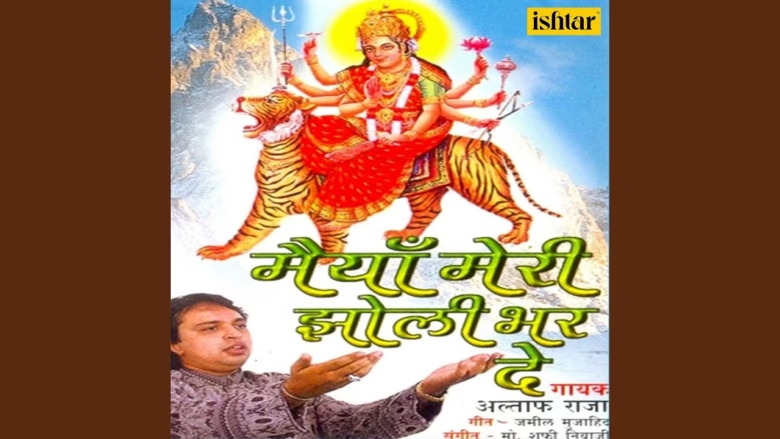
माता शेरावाली के द्वार जो भी जाता है – A Prayer to Maa Sherawali
Origin & Spiritual Essence
- Composer/Tradition: This bhajan flows from the timeless oral tradition of Maa Sherawali devotion.
- Phalaśruti: Sung to awaken courage, receive divine protection, and experience the Mother’s boundless grace.
Why This Bhajan Resonates
Devotees turn to this bhajan in times of fear or uncertainty—its promise that no one leaves Maa’s door empty-handed fills the heart with hope. The refrain “झोली भर के लाता है” is a testament to the Mother’s infinite compassion.
Lyrics in Hindi (Devanagari)
तर्ज – तुम तो ठहरे परदेसी।
माता शेरावाली के,
द्वार जो भी जाता है,
खाली हाथ जाता है,
झोली भर के लाता है।।
ममता झलकती है,
तेरे दिव्य मुखड़े से,
तू निहार ले जिसको,
वो ही मोक्ष पाता है,
मैया शेरावाली के,
द्वार जो भी जाता है।।
जो भी व्यक्ति आता है,
मैया तेरे द्वारे पर,
प्रार्थना के धागे में,
दिल पिरो के लाता है,
मैया शेरावाली के,
द्वार जो भी जाता है।।
सब के घर है उजियारा,
इसलिए की जग सारा,
तेरे द्वार की माटी,
आँखों से लगाता है,
मैया शेरावाली के,
द्वार जो भी जाता है।।
वृंदावन हो या काशी,
सब है तेरे अभिलाषी,
सारा जग तेरी धुन में,
बांसुरी बजाता है,
मैया शेरावाली के,
द्वार जो भी जाता है।।
तू विनाश करती है,
दानवों का असुरों का,,,क्योंकि,
श्रीधर के घर में एक दिन,
नवरात्रों में आई,
भैरव के सामने जब,
खाना सजा के लाई,
भैरव ने तेरे मुख पर,
जब अपनी दृष्टि डाली,
तु दिव्य कन्या है,
यह गुप्त बात पा ली,
जैसे ही उसने मैया,
तुझको पकड़ना चाहा,
उस निर्दई ने तेरी,
शक्ति से लड़ना चाहा,
बस एक पल में ओझल,
तू हो गई नजर से,
भैरव भी तेरे पीछे,
आया इधर उधर से,
तु दर्शनी दरवाजे से,
होकर गुजरी मैया,
और बाणगंगा तेरे,
बालों से निकली मैया,
लंगूर वीर ने भी,
पानी यही पिया था,
पीछा मगर वहां पर,
भैरव ने भी किया था,
चरणों की पादुका से,
तू गर्भ जून समाई,
उस गर्भ जून से बाहर,
नौ माह तक ना आई,
नौ माह बाद निकली,
तू पहुंची हाथी मत्था,
जिसकी चढ़ाई मुश्किल,
रस्ता है जिसका सीधा,
जैसे ही तू वहां से,
अपनी गुफा तक आई,
भैरव भी आन पहुंचा,
होने लगी लड़ाई,
भैरव से लड़ते-लड़ते,
हनुमान थक गए तो,
लंगूर वीर भैरव से,
हारने लगे तो,
धारण किया उसी पल,
चंडी का रूप तुमने,
भैरव की जान ले ली,
भैरव की आरजू ने,
धड़ कटके जब गिरा था,
दहलीज पर गुफा की,
लहरा रहा था मस्तक,
आवोश में हवा की,
होठों से उसके लेकिन,
आवाज सच की आई,
हे माँ तेरी दुहाई,
हे माँ तेरी दुहाई।।
तू विनाश करती है,
दानवों का असुरों का,
तेरा नाम सुनते ही,
दैत्य कांप जाता है,
माता शेरावाली के,
द्वार जो भी जाता है।।
माता शेरावाली के,
द्वार जो भी जाता है,
खाली हाथ जाता है,
झोली भर के लाता है।।
Singer – Altaf Raja
Upload By – Shivam Rajput
9893646291
Simple English Meaning (Bhava-Focused)
Each verse of this bhajan sings of Maa Sherawali’s boundless love and power. The opening lines remind us that no devotee returns empty-handed from Her door—Her grace fills every heart that seeks Her.
Her face radiates divine motherhood—“ममता झलकती है”—and to gaze upon Her is to receive liberation. She is the refuge of all, and even a single look from Her can transform a soul.
Devotees come to Her with hearts strung like prayer beads—offering their deepest feelings. She turns every home into a haven of light, for Her presence alone dispels darkness.
From Vrindavan to Kashi, the world longs for Her. All creation dances to Her rhythm, like a flute playing Her name. She is both gentle mother and fierce protector—destroyer of demons and asuras who threaten dharma.
The long narrative stanza recounts Her divine play—how She appeared as a divine maiden in Shridhar’s home during Navratri, evaded Bhairav’s pursuit with miraculous grace, flowed as Ban Ganga from Her hair, and finally took the form of Chandi to protect the righteous. Even in victory, Bhairav’s severed head cries out “हे माँ तेरी दुहाई”—a powerful reminder that the Mother’s justice is rooted in truth and cosmic order.
When & How to Chant
- Ideal time: During Navratri, mornings, or any moment of fear or need.
- Simple offerings: A red flower, ghee lamp, or tears of surrender.
- Repetition: Chant 9 times for strength; 108 times during Durga Puja for deep protection.
Cultural Legacy
This bhajan is lovingly sung in homes and satsangs across India.
Devotees Ask (FAQs)
Yes. Maa Sherawali welcomes all who come with faith—Her love knows no boundaries.
It means the Mother fills your lap with blessings—material, emotional, and spiritual—when you surrender.
Absolutely. It celebrates Her divine leela and power—perfect for the nine nights of the Goddess.
It honors the sacred legend of Maa Sherawali’s manifestation and Her victory over ego and ignorance.
Yes. Let Altaf Raja’s soulful voice carry your devotion into the divine presence.
🎬 Watch This Bhajan
Recent Posts

Shri Kaamkoteeshwar Mandir, Varanasi – History & Significance
In the heart of Kashi, the eternal city of Lord Shiva, where the Ganges flows with celestial grace, stands the Shri Kaamkoteeshwar Mandir. This sacred Sannidhi is not merely a temple but a profound spiritual bridge between the Northern…

ओ सांवरे तूने ही मुझको संभाला – Lyrics & Meaning
ओ सांवरे तूने ही मुझको संभाला – A Prayer to Shyam Origin & Spiritual Essence Why This Bhajan Resonates Devotees chant this when overwhelmed by life’s storms—the refrain ‘तूने ही मुझको संभाला’ is the soul’s sigh of relief: “You…

कथा ये है महाराज मेरे की – Lyrics & Meaning
कथा ये है महाराज मेरे की छत्रपति संभाजी महाराज – A Prayer to Chhatrapati Sambhaji Maharaj Origin & Spiritual Essence Why This Bhajan Resonates Devotees chant this when their spirit feels tested—its powerful refrain “महाराज मेरे” is a soul’s…

Rigveda Samhita Yathartha Anuvada (ऋग्वेद संहिता यथार्थ अनुवाद) – Complete Set with Anvayartha & Hindi/English Translation
The Rigveda is the oldest surviving scripture of humanity and the foundational text of Sanātana Dharma. For serious students, scholars, UPSC aspirants studying ancient Indian history, Sanskrit learners, and spiritual seekers, a precise and grammatically structured translation is indispensable.…

आना भी अकेला है जाना भी अकेला है – Lyrics & Meaning | BharatTemples
आना भी अकेला है जाना भी अकेला है – A Prayer to the Divine Witness Origin & Spiritual Essence Why This Bhajan Resonates Devotees turn to this bhajan in moments of deep reflection—when life’s attachments begin to ache. The…

मार लेना सपणी उबार लेणा भवरा – Lyrics & Meaning
मार लेना सपणी उबार लेणा भवरा – A Prayer to the Divine Beloved Origin & Spiritual Essence Why This Bhajan Resonates Devotees chant this in moments of deep vulnerability—its cry of “मार लेना सपणी, उबार लेणा भवरा” is the…

हमें श्याम सुंदर भरोसा तुम्हारा – Lyrics & Meaning
हमें श्याम सुंदर भरोसा तुम्हारा – A Prayer to Shyam Sundar Origin & Spiritual Essence Why This Bhajan Resonates Devotees chant this when feeling alone—its refrain ‘de do sahara’ is the soul’s cry for divine support. Lyrics in Hindi…

Mere Satguru Ne Di Thi Davai Lyrics in Hindi & Meaning
Mere Satguru Ne Di Thi Davai: Invoking the Guru’s Liberating Wisdom This soul-stirring bhajan venerates the Satguru (True Spiritual Master) as the divine physician who dispenses the only remedy for life’s deepest sufferings. Composed by Sant Karmaveer Tufani, it…

Janm Diyo Thari Maa Dukh Dekhiyo Lyrics in Hindi & Meaning
जन्म दियो थारी माँ दुख देखियो (Maa’s Grief Upon Birthing You) This soul-stirring Chetavani Bhajan (admonitory hymn) is addressed to the Divine Mother (Maa) – a call for repentance when children forget their filial duties in the dark age…
Bhadi Sabha Mein Thane Manaun Lyrics in Hindi & Meaning
Bhadi Sabha Mein Thane Manaun: Invoking the Spear-Wielding Mother Mata Bhawani (श्री ज्वाला भवानी), the fiery manifestation of Shakti worshipped as the Protector of Dharma in Her Dhaulagarh sanctum. Origin & Spiritual Essence Composed in Rajasthani folk tradition by…