
Contents
- 1 Introduction & Spiritual Essence
- 2 Historical Origins & Scriptural Legend
- 3 Architectural Marvels
- 4 Darshan & Ritual Logistics (2026 Guide)
- 5 Practical Visitor Guidance
- 6 Pilgrimage Connectivity
- 7 How to Reach:
- 8 Address
- 9 Contact Details
- 10 Frequently Asked Questions (FAQ)
- 11 Architecture
- 12 Legend / Local stories
- 13 Photo Gallery
Introduction & Spiritual Essence
Sri Gokilambal Thirukameswar Temple, popularly known as the Villianur Temple, stands as a profound spiritual beacon in the Union Territory of Puducherry. This ancient shrine is not merely a religious destination but a reservoir of Tamil heritage and Dravidian architectural brilliance.
The primary deity is Lord Shiva, worshipped in the form of a Swayambhu Linga known as Thirukameswar. The consort, Gokilambal (also revered as Ponnambal), is enshrined in a separate sanctum. The name “Gokilambal” is derived from the Tamil words “Gokila,” meaning a beautiful cow-shaped hill, and “Ambal,” meaning Goddess.
Phalaśruti: The Spiritual Benefits
Devotees believe that worshipping Thirukameswar here washes away Pitru Dosha (ancestral sins) and brings relief from chronic diseases. According to local lore, the temple is a potent Maha Meru shrine where the planetary deities (Navagrahas) are appeased. Regular worship is said to enhance prosperity, remove obstacles in marriage alliances, and grant mental peace.
Historical Origins & Scriptural Legend
The temple is a testament to the region’s glorious past, dating back to the 12th century CE. It was built during the reign of the Chola Dynasty, a period renowned for temple art and Shaivism.
The Chola King’s Healing
According to the Sthala Purana (local legend), a Chola King named Thirumurunga was afflicted with a severe form of leprosy. Seeking a cure, he traveled extensively across the region. Upon reaching Villianur, he meditated under a Magalai tree near a pond. Lord Shiva appeared in his dream and instructed him to dig the ground. The king uncovered the Swayambhu Linga and performed an Abhishekam. Miraculously, his leprosy vanished. As an act of gratitude, he constructed the temple for Thirukameswar and Gokilambal.
Renovations and Later Dynasties
While initiated by the Cholas, the temple complex was expanded and fortified by the Vijayanagara rulers and later by the Maratha rulers of the Thanjavur region. The architecture reflects these layers of history, though the core sanctum remains strictly Chola in style.
Architectural Marvels
The temple exhibits a sublime blend of Dravida architectural styles, adhering to the principles of Vastu Shastra.
The Temple Tank & Raja Gopuram
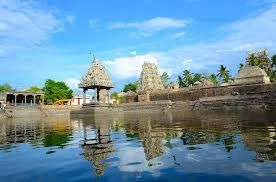
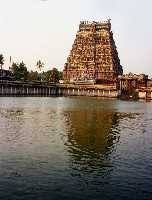
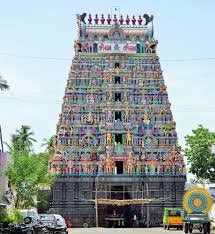
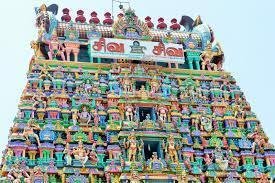
The temple is unique for its massive tank, the Villianur Temple Tank, which is one of the largest in the region. It spans approximately 100 acres and features a nine-tiered Gopuram (gateway tower) rising from the water—a rare architectural feature.
Sanctum and Sculptures
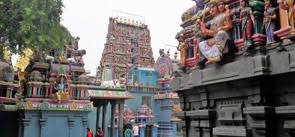
The inner sanctum houses the Thirukameswar Linga. The Artha Mandapa (assembly hall) contains 108 images of Lord Shiva in various forms (Nataraja, Bhikshatana, etc.) carved into the walls. The Mandapas (halls) feature intricately carved pillars depicting scenes from Hindu mythology, including the Astha Dikpalakas (guardians of the directions).
Preservation: The Archaeological Survey of India (ASI) has listed several sculptures here as protected monuments due to their historical significance.
Darshan & Ritual Logistics (2026 Guide)
Devotees can participate in various Sevas (services) offered to the deities. Below are the general timings and 2026 festival highlights.
Daily Timings
| Darshan / Ritual | Timing |
|---|---|
| Morning Opening | 6:00 AM |
| Ushathkalam (Morning Pooja) | 7:00 AM |
| Kalasanthi | 8:00 AM |
| Uchikalam (Midday Pooja) | 12:00 PM |
| Temple Closure | 12:30 PM – 4:00 PM |
| Evening Opening | 4:00 PM |
| Paratheekalam | 6:00 PM |
| Arthajamam (Night Pooja) | 8:00 PM |
| Closing | 8:30 PM |
Key Sevas & Online Booking
Popular Sevas include Abhishekam (ritual bathing of the Linga) and Archana (offering of names). Special Puja is conducted during the Brahma Muhurta.
To book these services, devotees can visit the official Tamil Nadu HR&CE (Hindu Religious and Charitable Endowments) website or the temple administration office. Walk-in bookings are subject to availability.
Major 2026 Festivals
- Arudra Darshanam: January 2026 (Date to be confirmed based on Tamil Calendar).
- Maha Shivaratri: February 26, 2026. A grand chariot procession (Ther) is held, drawing thousands of devotees.
- Aadi Perukku: August 2026. Special rituals near the temple tank.
- Karthigai Deepam: November/December 2026. Illumination of lamps across the temple complex.
Practical Visitor Guidance
To ensure a peaceful Darshan, please adhere to the following guidelines:
Dress Code & Conduct
Visitors must wear traditional attire: Dhoti/Saree for men and women respectively. Modern clothing like shorts or jeans is discouraged within the sanctum. Silence and respect are expected during rituals.
Photography & Lockers
Photography is strictly prohibited inside the inner sanctum and the sanctum sanctorum. However, it is permitted in the outer corridors and the temple tank area. Mobile lockers are available near the entrance for electronic devices.
Crowd Management
Best Time to Visit: Early morning (6:00 AM – 7:30 AM) or late evening (6:30 PM onwards) on weekdays. Weekends, especially Saturdays and Mondays, witness heavy crowds.
Seasonal Advice: During the summer months (April–June), carry water bottles and wear light cotton clothes as Puducherry can be humid. The monsoon (October–November) brings lush greenery but requires rain gear.
Pilgrimage Connectivity
Villianur is located approximately 10 kilometers from the Puducherry city center, making it easily accessible.
How to Reach
- By Air: The nearest airport is Pondicherry Airport in Lawspet (approx. 15 km away). Chennai International Airport is the nearest major hub (160 km).
- By Rail: The nearest railway station is Villianur Railway Station (located on NH 45A). However, major trains halt at Puducherry Railway Station (10 km away).
- By Road: The temple is directly connected via NH 45A (Puducherry-Villianur Road). Buses and auto-rickshaws are readily available from the Puducherry Bus Stand.
How to Reach:
Villianur railway station, Villianur Railway Station, NH 45A, Sulthanpet, Puducherry 605110Airport Address Pondicherry Airport, Lawspet, Puducherry, 605008.
Nearby Sacred Sites (Pilgrimage Circuit)
- Varadaraja Perumal Temple: Located in Villianur itself, this ancient temple dedicated to Lord Vishnu is just a short walk from Sri Gokilambal Thirukameswar Temple.
- Sri Gnanambika Temple (Mayiladuthurai): A slightly longer drive, but significant for those seeking blessings from Goddess Saraswati.
- Paradise Beach: While not a religious site, many pilgrims combine their visit with a trip to this serene beach located near the Chunnambar boat house.
Address
E-Car St, Villianur, Puducherry 605110
Contact Details
0413 266 6396.
Frequently Asked Questions (FAQ)
1. Is there a VIP Darshan entry available?
The temple administration prioritizes senior citizens and specially-abled devotees. While there isn’t a commercialized “VIP Ticket” system like in Tirupati, donations (Rs. 500 and above) for special archana can sometimes facilitate a quicker darshan during non-peak hours. It is best to enquire at the counter upon arrival.
2. What is the significance of the temple tank?
The Villianur temple tank is believed to be a sacred Theertham (holy water). It is said that taking a dip here during the Aadi Perukku festival washes away sins and cures skin diseases. The tank is architecturally unique due to the central shrine surrounded by water.
3. Are foreigners allowed inside the temple?
Yes, foreigners are welcome. However, they must respect the dress code and local customs. Non-Hindus are generally allowed into the outer courtyards but may be restricted from entering the inner sanctum of certain temples (though this varies by location). Shoes must be removed at the designated stands outside.
4. Where can I stay nearby?
Most pilgrims stay in Puducherry city, which offers a wide range of accommodations from budget hotels to heritage resorts. There are also a few guest houses (Choultries) near the temple complex managed by local trusts.
5. What is the best time to visit for photography?
The exterior of the temple and the temple tank are best photographed during the early morning golden hour (5:30 AM – 6:30 AM) or at sunset when the gopurams are illuminated. The lighting inside the temple is minimal, so photography inside requires high ISO capabilities.
Architecture
Legend / Local stories
Photo Gallery
Recent Posts

Shri Kaamkoteeshwar Mandir, Varanasi – History & Significance
In the heart of Kashi, the eternal city of Lord Shiva, where the Ganges flows with celestial grace, stands the Shri Kaamkoteeshwar Mandir. This sacred Sannidhi is not merely a temple but a profound spiritual bridge between the Northern…

ओ सांवरे तूने ही मुझको संभाला – Lyrics & Meaning
ओ सांवरे तूने ही मुझको संभाला – A Prayer to Shyam Origin & Spiritual Essence Why This Bhajan Resonates Devotees chant this when overwhelmed by life’s storms—the refrain ‘तूने ही मुझको संभाला’ is the soul’s sigh of relief: “You…

कथा ये है महाराज मेरे की – Lyrics & Meaning
कथा ये है महाराज मेरे की छत्रपति संभाजी महाराज – A Prayer to Chhatrapati Sambhaji Maharaj Origin & Spiritual Essence Why This Bhajan Resonates Devotees chant this when their spirit feels tested—its powerful refrain “महाराज मेरे” is a soul’s…

Rigveda Samhita Yathartha Anuvada (ऋग्वेद संहिता यथार्थ अनुवाद) – Complete Set with Anvayartha & Hindi/English Translation
The Rigveda is the oldest surviving scripture of humanity and the foundational text of Sanātana Dharma. For serious students, scholars, UPSC aspirants studying ancient Indian history, Sanskrit learners, and spiritual seekers, a precise and grammatically structured translation is indispensable.…

आना भी अकेला है जाना भी अकेला है – Lyrics & Meaning | BharatTemples
आना भी अकेला है जाना भी अकेला है – A Prayer to the Divine Witness Origin & Spiritual Essence Why This Bhajan Resonates Devotees turn to this bhajan in moments of deep reflection—when life’s attachments begin to ache. The…

माता शेरावाली के द्वार जो भी जाता है – Lyrics & Meaning
माता शेरावाली के द्वार जो भी जाता है – A Prayer to Maa Sherawali Origin & Spiritual Essence Why This Bhajan Resonates Devotees turn to this bhajan in times of fear or uncertainty—its promise that no one leaves Maa’s…

मार लेना सपणी उबार लेणा भवरा – Lyrics & Meaning
मार लेना सपणी उबार लेणा भवरा – A Prayer to the Divine Beloved Origin & Spiritual Essence Why This Bhajan Resonates Devotees chant this in moments of deep vulnerability—its cry of “मार लेना सपणी, उबार लेणा भवरा” is the…

हमें श्याम सुंदर भरोसा तुम्हारा – Lyrics & Meaning
हमें श्याम सुंदर भरोसा तुम्हारा – A Prayer to Shyam Sundar Origin & Spiritual Essence Why This Bhajan Resonates Devotees chant this when feeling alone—its refrain ‘de do sahara’ is the soul’s cry for divine support. Lyrics in Hindi…

Mere Satguru Ne Di Thi Davai Lyrics in Hindi & Meaning
Mere Satguru Ne Di Thi Davai: Invoking the Guru’s Liberating Wisdom This soul-stirring bhajan venerates the Satguru (True Spiritual Master) as the divine physician who dispenses the only remedy for life’s deepest sufferings. Composed by Sant Karmaveer Tufani, it…

Janm Diyo Thari Maa Dukh Dekhiyo Lyrics in Hindi & Meaning
जन्म दियो थारी माँ दुख देखियो (Maa’s Grief Upon Birthing You) This soul-stirring Chetavani Bhajan (admonitory hymn) is addressed to the Divine Mother (Maa) – a call for repentance when children forget their filial duties in the dark age…