
Contents
Introduction & Spiritual Essence
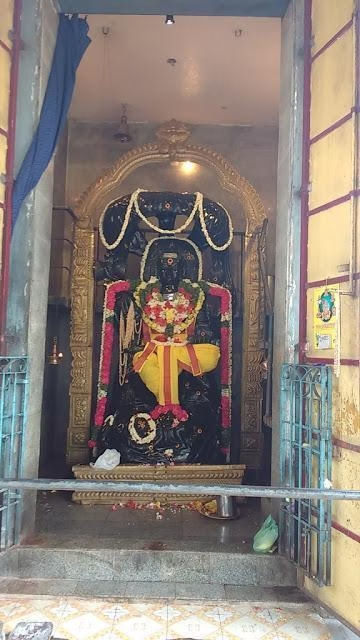
Deep in the spiritual landscape of Thiruvallur district lies a sanctuary dedicated to the Adi Guru—the first teacher. The Yoga Gnana Dhakshinamoorthy Temple, Kakkalur, stands as a beacon of knowledge, silence, and profound spiritual transmission. Unlike the fierce manifestations of the divine, this temple venerates Lord Shiva in his form as Dhakshinamoorthy, seated in the serene Virasana pose under a banyan tree.
In the ancient scriptures, Dhakshinamoorthy is described as the Adinatha (First Teacher) who imparted wisdom through silence (Mauna Vyakhyana). He holds the Veena (lute) of cosmic rhythm and the Pashu (cord) to bind ignorance, offering liberating knowledge to the seeker. The term “Gnana” refers to transcendent wisdom, while “Yoga” symbolizes the disciplined path to unity. Devotees visit this sacred site not merely for material boons, but for the Phalaśruti of spiritual clarity, intellectual prowess, and the dissolution of karmic blocks that impede higher consciousness.
Historical Origins & Scriptural Legend
While the exact inscription detailing the founding dynasty remains a subject of archaeological study, the temple’s architectural vernacular places its origins in the Chola or Later Pandya period, likely between the 10th and 14th centuries. The temple structure, however, has undergone significant renovation in the mid-20th century, a common practice to preserve the sanctity of ancient sites.
Scriptural Roots and Sthala Purana:
According to the Periya Puranam and various Agamic texts, Dhakshinamoorthy is the Guru of the Trimurti—Brahma and Vishnu. The local lore of Kakkalur suggests that this site was once a dense grove where sages (Rishis) gathered to debate complex Vedic truths. Tradition holds that their intellectual arrogance was humbled by the divine presence of Lord Shiva, who appeared as the silent youth under the banyan tree. The temple is believed to possess the energy to silence the restless mind, allowing the inner Shabda Brahman (cosmic sound) to manifest.
Architectural Marvels
The temple follows the classical Dravidian architectural style, characterized by its pyramidal towers and enclosed courtyards. The sanctum (Garbhagriha) is designed to be introspective, directing the devotee’s gaze toward the central deity.
- The Mandapa: The temple features a pillared Mandapa (hall) with intricate carvings depicting various yogic postures and musical instruments, reflecting the deity’s role as the master of the arts.
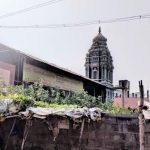
- The Shikhara: The Vimana (tower above the sanctum) is modest but structurally sound, typical of the Dravida style, adorned with Kutas (miniature spires).
- Deity Representation: The presiding deity, Yoga Gnana Dhakshinamoorthy, is depicted sitting under a Kadamba (symbolic banyan tree) in the Matsya and Gnana mudras. The idol is typically carved from stone or covered in Panchaloha (five-metal alloy).
While this specific temple may not be a UNESCO World Heritage site, it is a protected heritage monument under local trusts, preserving the Tamil tradition of temple art.
Darshan & Ritual Logistics
The daily rituals at Kakkalur follow the standard Tamil Nadu Agamic tradition, starting with Ushathkalam (early morning) and concluding with Arthajama Pooja (night).
Daily Timings
| Session | Timings |
|---|---|
| Morning Darshan | 06:00 AM – 12:00 PM |
| Afternoon Break | 12:00 PM – 04:30 PM |
| Evening Darshan | 04:30 PM – 08:00 PM |
| Pooja Details | Specific timings subject to festival calendar |
Key Sevas & Online Booking
Devotees can perform various Sevas to honor Lord Dhakshinamoorthy. As of 2026, most Tamil Nadu temples have integrated digital platforms for hassle-free bookings.
- Abhishekam: Ritual bathing of the idol with milk, honey, and sandalwood. (Timing: 7:00 AM)
- Archana: Recitation of 108 names. (Timing: Throughout the day)
- Guru Gayatri Archana: A special Vedic recitation dedicated to the Guru principle.
- Deepa Aradhana: Lamp offering at twilight.
Online Booking: To book these services, devotees should visit the official Tamil Nadu HR & CE Department website (as per 2026 updates) or contact the local temple trust office for non-digital options.
2026 Major Festivals at Yoga Gnana Dhakshinamoorthy Temple
- Guru Purnima: July 13, 2026 – The most significant festival here, celebrating the spiritual teacher. Expect special Abhishekam and discourse.
- Navaratri: September 22 – October 1, 2026 – Dedicated to the Goddess, with evening cultural programs.
- Arudra Darshan: December 2026 (Date TBA based on Tamil Calendar) – Celebrating Lord Nataraja, closely linked to Shiva’s cosmic dance.
- Mahashivratri: February 26, 2026 – Night-long vigil and special Pooja.
Practical Visitor Guidance
To ensure a smooth spiritual experience at the Yoga Gnana Dhakshinamoorthy Temple in Kakkalur, please adhere to the following guidelines:
- Dress Code: Traditional attire is mandatory. Men should wear Dhoti or trousers with a shirt; women should wear Saree, Salwar Kameez, or full-length skirts. Avoid shorts and t-shirts.
- Photography: Photography of the inner sanctum (Garbhagriha) is strictly prohibited. General photography of the temple premises is allowed only with permission from the trust.
- Mobile & Electronics: Silence is encouraged. Mobile phones should be kept on silent mode. Lockers are generally not available in smaller temples, so carry minimal luggage.
- Accessibility: The temple has stone steps at the entrance. While the main sanctum is compact, the surrounding area is walkable. Elderly devotees can request assistance from temple staff.
Crowd Management
Best Hours: The ideal time for a peaceful Darshan is between 6:00 AM and 8:00 AM or 5:00 PM to 6:30 PM.
Seasonal Advice: Tamil Nadu summers (April–June) are scorching. Carry a water bottle and an umbrella. The monsoon (November–December) can make the region lush but humid.
Pilgrimage Connectivity
Kakkalur is a suburb of Thiruvallur, making it accessible from major hubs like Chennai.
How to Reach
- By Air: Chennai International Airport (MAA) is the nearest airport, approximately 46 km away.
- By Rail: The nearest railway station is Putlur Railway Station (2 km). Thiruvallur Railway Station (3 km) is also a viable option with better connectivity.
- By Road: Kakkalur is well-connected via NH 16 (connecting Chennai to Kolkata). From Thiruvallur town, take the local road towards Kakkalur Industrial Estate. Regular buses ply from Thiruvallur Bus Stand.
Nearby Sacred Sites
Extend your pilgrimage to these nearby spiritual centers:
- Vel Palani Murugan Temple: Located roughly 1.5 km away, dedicated to Lord Murugan.
- Thiruvallur Veeraraghava Swamy Temple: A major Vaishnavite temple 4 km away, dedicated to Lord Vishnu as the healer.
- Kadambathur Thalapurishwarar Temple: About 10 km away, an ancient Shiva temple known for its historical inscriptions.
Frequently Asked Questions (FAQ)
1. Is there a VIP Darshan entry at Yoga Gnana Dhakshinamoorthy Temple?
As a local temple, VIP darshan is not a standard category. However, senior citizens and differently-abled devotees are given priority access by the temple staff. For special entry during festivals, one must contact the temple trust administrator in advance.
2. Can I perform an Abhishekam with my own materials?
Generally, the temple provides standard materials (milk, vibhuti, sandalwood paste) for Abhishekam. Bringing external materials may not be permitted due to hygiene and ritual purity standards, unless specifically arranged with the head priest (Archaka).
3. What is the best mode of transport from Chennai?
Driving via NH 16 is the most convenient option, taking about 1.5 hours depending on traffic. Alternatively, take a train from Chennai Central/Chennai Beach to Thiruvallur station and hire an auto-rickshaw to Kakkalur (approx. 10-15 mins).
4. Are there accommodation facilities nearby?
There are no major lodges within Kakkalur. It is recommended to stay in Thiruvallur town (4 km away) or Chennai for better hotel options. The temple does not offer official rest houses.
5. When is the temple closed?
The temple usually remains open in the morning and evening. It may close during the afternoon for the priest’s rest. On major Tamil festivals (like Deepavali and Pongal), the schedule may vary; checking local notices is advised.

Recent Posts

Shri Kaamkoteeshwar Mandir, Varanasi – History & Significance
In the heart of Kashi, the eternal city of Lord Shiva, where the Ganges flows with celestial grace, stands the Shri Kaamkoteeshwar Mandir. This sacred Sannidhi is not merely a temple but a profound spiritual bridge between the Northern…

ओ सांवरे तूने ही मुझको संभाला – Lyrics & Meaning
ओ सांवरे तूने ही मुझको संभाला – A Prayer to Shyam Origin & Spiritual Essence Why This Bhajan Resonates Devotees chant this when overwhelmed by life’s storms—the refrain ‘तूने ही मुझको संभाला’ is the soul’s sigh of relief: “You…

कथा ये है महाराज मेरे की – Lyrics & Meaning
कथा ये है महाराज मेरे की छत्रपति संभाजी महाराज – A Prayer to Chhatrapati Sambhaji Maharaj Origin & Spiritual Essence Why This Bhajan Resonates Devotees chant this when their spirit feels tested—its powerful refrain “महाराज मेरे” is a soul’s…

Rigveda Samhita Yathartha Anuvada (ऋग्वेद संहिता यथार्थ अनुवाद) – Complete Set with Anvayartha & Hindi/English Translation
The Rigveda is the oldest surviving scripture of humanity and the foundational text of Sanātana Dharma. For serious students, scholars, UPSC aspirants studying ancient Indian history, Sanskrit learners, and spiritual seekers, a precise and grammatically structured translation is indispensable.…

आना भी अकेला है जाना भी अकेला है – Lyrics & Meaning | BharatTemples
आना भी अकेला है जाना भी अकेला है – A Prayer to the Divine Witness Origin & Spiritual Essence Why This Bhajan Resonates Devotees turn to this bhajan in moments of deep reflection—when life’s attachments begin to ache. The…

माता शेरावाली के द्वार जो भी जाता है – Lyrics & Meaning
माता शेरावाली के द्वार जो भी जाता है – A Prayer to Maa Sherawali Origin & Spiritual Essence Why This Bhajan Resonates Devotees turn to this bhajan in times of fear or uncertainty—its promise that no one leaves Maa’s…

मार लेना सपणी उबार लेणा भवरा – Lyrics & Meaning
मार लेना सपणी उबार लेणा भवरा – A Prayer to the Divine Beloved Origin & Spiritual Essence Why This Bhajan Resonates Devotees chant this in moments of deep vulnerability—its cry of “मार लेना सपणी, उबार लेणा भवरा” is the…

हमें श्याम सुंदर भरोसा तुम्हारा – Lyrics & Meaning
हमें श्याम सुंदर भरोसा तुम्हारा – A Prayer to Shyam Sundar Origin & Spiritual Essence Why This Bhajan Resonates Devotees chant this when feeling alone—its refrain ‘de do sahara’ is the soul’s cry for divine support. Lyrics in Hindi…

Mere Satguru Ne Di Thi Davai Lyrics in Hindi & Meaning
Mere Satguru Ne Di Thi Davai: Invoking the Guru’s Liberating Wisdom This soul-stirring bhajan venerates the Satguru (True Spiritual Master) as the divine physician who dispenses the only remedy for life’s deepest sufferings. Composed by Sant Karmaveer Tufani, it…

Janm Diyo Thari Maa Dukh Dekhiyo Lyrics in Hindi & Meaning
जन्म दियो थारी माँ दुख देखियो (Maa’s Grief Upon Birthing You) This soul-stirring Chetavani Bhajan (admonitory hymn) is addressed to the Divine Mother (Maa) – a call for repentance when children forget their filial duties in the dark age…