

Contents
Introduction & Spiritual Essence of Kalkaji Temple
Kalkaji Temple in New Delhi stands as an eternal flame of devotion amidst the urban sprawl of the capital. Dedicated primarily to Goddess Kali, the fierce yet benevolent manifestation of Shakti, this sacred site is revered as a Swayambhu (self-manifested) shrine. The presiding deity is seated in a three-cornered form (Trikona), representing the eternal trinity of creation, preservation, and destruction.
Also known as Maa Kalka Mandir, the temple is widely regarded as the modern replica of the holy cave shrine of Vaishno Devi. It is believed to be one of the four identical shrines manifesting the same divine energy in different corners of India.
Phalaśruti: The Benefits of Pilgrimage
According to temple lore and devotee traditions, visiting Kalkaji fulfills sincere desires. The Phalaśruti (scriptural promise of results) associated with this temple suggests that:
- Removal of Obstacles: Devotees seeking relief from planetary afflictions (specifically related to Saturn) find solience here.
- Ancestral Karma: Performing rituals here is believed to cleanse Pitru Dosha (ancestral debt), granting peace to departed souls.
- Manifestation: In 2026, the temple sees a surge of visitors focusing on career and relationship manifestations, trusting the Goddess Chamunda aspect to destroy negativity.
Historical Origins & Scriptural Legend
The history of the Kalkaji Temple is a blend of recorded architectural renovation and ancient oral tradition.
The Legend of Sati
Tradition holds that this site marks the spot where the ear (Karna) of Goddess Sati fell, making it a revered location in the Shakta Shakti Peetha lore. However, unlike ancient stone structures, the current architectural form dates back to the late 18th century.
Architectural Revival
According to temple records, the current structure was built around 1764 AD by Raja Samant Singh and his spiritual guide, Swami Samarth Ramdas. While the site is ancient, the marble structures and ornate carvings seen today were largely established during this period, later renovated in 1949. A prominent inscription in the temple courtyard reads “Swayambhu Shri Kalka Mata”, confirming its status as a self-manifested deity.
Architectural Marvels
The temple architecture represents a distinct blend of the Nagara and contemporary North Indian styles, adapted for the urban environment of Delhi.
Structure and Design
The sanctum sanctorum (Garbhagriha) features the unique Trikona (triangular) shape, mirroring the idol’s form. The Shikhara (spire) is not towering but is intricately carved, standing as a testament to marble workmanship. The outer walls are adorned with silver filigree work and mirrors, reflecting the vibrant rituals performed inside.
Unlike sprawling complexes, the Kalkaji Mandir is a compact yet dense space where every inch of wall is carved with Vedic motifs and Ashtadikpalakas (guardians of directions).
Architect’s Note: The temple utilizes a unique ventilation system through its carved marble screens, maintaining a cool interior even during Delhi’s peak summer, a subtle nod to Vastu Shastra principles regarding air flow (Vayu).
Darshan & Ritual Logistics (2026 Update)
Planning your visit requires understanding the daily rhythms of worship. Below are the standard timings, though they may vary slightly during festivals.
Daily Timings
| Session | Time Interval | Activity |
|---|---|---|
| Morning | 05:00 AM – 12:30 PM | Opening, Abhishekam, Aarti |
| Mid-Day Break | 12:30 PM – 03:00 PM | Temple Cleaning & Deity Rest |
| Evening | 04:00 PM – 10:00 PM | Evening Aarti, Darshan closes |
| Note: The temple is open 7 days a week. The busiest times are weekends and Tuesday/Saturday (dedicated to Kali). | ||
Key Sevas and Booking
Devotees can book specific Sevas (offerings) to be performed by the head priest.
- Abhishekam: Ritual bathing of the idol with milk, honey, and ghee. Best performed in the morning.
- Chandi Path/Akhand Deep: Continuous chanting of the Chandi Suktam or maintaining an eternal flame.
- Prasad Offering: Special sweets (e.g., Peda) can be offered and distributed to the poor.
Online Seva Booking: As of 2026, the Kalkaji Mandir Management Committee (KMMC) utilizes a centralized portal for bookings. It is advisable to book Abhishekam slots at least 48 hours in advance to secure a preferred time.
Major 2026 Festival Dates
- Navratri (Spring): March 30 – April 7 (High Footfall – Expect Queues)
- Kalka Ji Mela: October 3 – October 9 (Anniversary Festival)
- Navratri (Autumn): October 2 – October 11 (Peak Season)
- Kali Puja/Diwali: October 20, 2026
Practical Visitor Guidance
To ensure a smooth darshan, adherence to guidelines is essential.
- Dress Code: Traditional Indian attire is recommended. Men should wear dhotis or trousers; women should wear sarees or salwar kameez. Avoid sleeveless tops and shorts.
- Photography: Strictly prohibited inside the Garbhagriha. Photography is allowed in the outer courtyards but avoid capturing other devotees without permission.
- Mobile Lockers: Security is tight. Large bags and electronic devices (aside from mobile phones) are discouraged. Small metal lockers are available at the entrance for a nominal fee.
- Accessibility: The temple has a ground floor and a basement. Ramps are available for wheelchair access, but the inner sanctum remains narrow.
Crowd Management & Seasonal Advice
Best Hours: For a peaceful darshan, visit between 10:00 AM and 11:30 AM on weekdays. Avoid Tuesday and Saturday evenings.
Summer (May-June): Delhi temperatures soar above 40°C. The temple provides Chhabeel (cold water service) at the entrance. Carry a reusable water bottle.
Winter (December-January): Mornings are foggy. Visit after 9:00 AM for clear visibility and warmer temperatures.
Pilgrimage Connectivity
Kalkaji Temple is strategically located in South Delhi, making it highly accessible via public transport.
How to Reach
- By Metro (Most Recommended):
- Violet Line: Kalkaji Mandir Metro Station (Exit Gate 2) or Nehru Place Metro Station (Exit Gate 3). Both are a 5-minute walk from the temple.
- Magenta Line: Kalkaji Mandir interchange connects directly to the Violet Line.
- By Air: Indira Gandhi International Airport (T3) is approximately 25 km away. A taxi or cab via the Delhi-Mathura Road (NH-19) takes about 60-90 minutes depending on traffic.
- By Rail: The nearest major station is Old Delhi Railway Station (Delhi Junction), 18 km away. NDLS (New Delhi Railway Station) is 14 km away. Auto-rickshaws and cabs are readily available.
Nearby Sacred Sites
Extend your pilgrimage to these nearby spiritual hubs:
- Lotus Temple (Bahá’í House of Worship): Located just 2 km away, famous for its flower-like architecture and silence.
- ISKCON Temple (East of Kailash): About 3 km away, a grand Krishna temple with stunning Vedic art.
- Prachin Bhairav Mandir: An ancient shrine dedicated to Lord Bhairav (a fierce form of Shiva), located very close to Kalkaji, often visited before the main darshan.
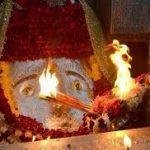
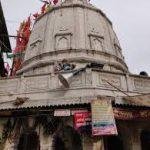
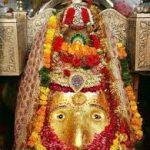
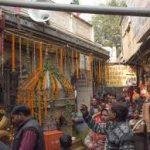
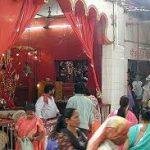
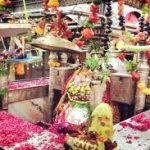
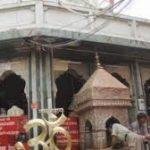
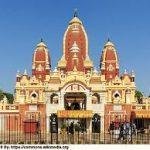
The provided gallery shortcode and map integration from the original source are preserved below to give you a visual context of the temple’s environment.

Frequently Asked Questions (FAQ)
1. Is there a VIP or Special Entry darshan available?
Yes, Kalkaji Temple offers a special entry pass for devotees who wish to avoid the general queue, especially during Navratri. These passes are available at the administration counter near the main gate. However, during peak Aarti times, all devotees generally stand in a unified line for proximity to the deity.
2. Can I carry Prasad from home?
Yes, you can carry homemade sweets or fruits for offering. However, security may inspect the items. Commercially packaged items with tampered seals are sometimes restricted. Note that the temple has specific timings for accepting food offerings.
3. What is the significance of the three-sided idol?
The idol of Maa Kalkaji is chiseled with three faces on a single body, representing the Tridevi—Maa Saraswati (Knowledge), Maa Lakshmi (Wealth), and Maa Kali/Durga (Power). The third eye on each face signifies the all-seeing nature of the Goddess.
4. Is the temple open 24 hours?
No, the temple follows specific timings (5:00 AM to 10:00 PM). However, on special occasions like Diwali or the last day of Navratri, the temple remains open throughout the night.
5. Are there food facilities nearby?
While the temple serves Prasad, there are no full-fledged vegetarian restaurants inside. Several eateries and satvik restaurants are located in Nehru Place and Govind Puri, just a short walk from the temple.
Contact & Location Details
Address: Near Kalkaji Metro Station, Ma Anandmayee Marg, NSIC Estate, Block 9, Kalkaji, New Delhi, Delhi 110019
Contact Number: 092050 84060
Nearest Landmark: Opposite Nehru Place / Near NSIC Office
Recent Posts

Shri Kaamkoteeshwar Mandir, Varanasi – History & Significance
In the heart of Kashi, the eternal city of Lord Shiva, where the Ganges flows with celestial grace, stands the Shri Kaamkoteeshwar Mandir. This sacred Sannidhi is not merely a temple but a profound spiritual bridge between the Northern…

ओ सांवरे तूने ही मुझको संभाला – Lyrics & Meaning
ओ सांवरे तूने ही मुझको संभाला – A Prayer to Shyam Origin & Spiritual Essence Why This Bhajan Resonates Devotees chant this when overwhelmed by life’s storms—the refrain ‘तूने ही मुझको संभाला’ is the soul’s sigh of relief: “You…

कथा ये है महाराज मेरे की – Lyrics & Meaning
कथा ये है महाराज मेरे की छत्रपति संभाजी महाराज – A Prayer to Chhatrapati Sambhaji Maharaj Origin & Spiritual Essence Why This Bhajan Resonates Devotees chant this when their spirit feels tested—its powerful refrain “महाराज मेरे” is a soul’s…

Rigveda Samhita Yathartha Anuvada (ऋग्वेद संहिता यथार्थ अनुवाद) – Complete Set with Anvayartha & Hindi/English Translation
The Rigveda is the oldest surviving scripture of humanity and the foundational text of Sanātana Dharma. For serious students, scholars, UPSC aspirants studying ancient Indian history, Sanskrit learners, and spiritual seekers, a precise and grammatically structured translation is indispensable.…

आना भी अकेला है जाना भी अकेला है – Lyrics & Meaning | BharatTemples
आना भी अकेला है जाना भी अकेला है – A Prayer to the Divine Witness Origin & Spiritual Essence Why This Bhajan Resonates Devotees turn to this bhajan in moments of deep reflection—when life’s attachments begin to ache. The…

माता शेरावाली के द्वार जो भी जाता है – Lyrics & Meaning
माता शेरावाली के द्वार जो भी जाता है – A Prayer to Maa Sherawali Origin & Spiritual Essence Why This Bhajan Resonates Devotees turn to this bhajan in times of fear or uncertainty—its promise that no one leaves Maa’s…

मार लेना सपणी उबार लेणा भवरा – Lyrics & Meaning
मार लेना सपणी उबार लेणा भवरा – A Prayer to the Divine Beloved Origin & Spiritual Essence Why This Bhajan Resonates Devotees chant this in moments of deep vulnerability—its cry of “मार लेना सपणी, उबार लेणा भवरा” is the…

हमें श्याम सुंदर भरोसा तुम्हारा – Lyrics & Meaning
हमें श्याम सुंदर भरोसा तुम्हारा – A Prayer to Shyam Sundar Origin & Spiritual Essence Why This Bhajan Resonates Devotees chant this when feeling alone—its refrain ‘de do sahara’ is the soul’s cry for divine support. Lyrics in Hindi…

Mere Satguru Ne Di Thi Davai Lyrics in Hindi & Meaning
Mere Satguru Ne Di Thi Davai: Invoking the Guru’s Liberating Wisdom This soul-stirring bhajan venerates the Satguru (True Spiritual Master) as the divine physician who dispenses the only remedy for life’s deepest sufferings. Composed by Sant Karmaveer Tufani, it…

Janm Diyo Thari Maa Dukh Dekhiyo Lyrics in Hindi & Meaning
जन्म दियो थारी माँ दुख देखियो (Maa’s Grief Upon Birthing You) This soul-stirring Chetavani Bhajan (admonitory hymn) is addressed to the Divine Mother (Maa) – a call for repentance when children forget their filial duties in the dark age…