
Contents
Introduction & Spiritual Essence
The Varamoortheeswarar Temple in Ariyathurai is a sacred Pancha Brahma Sthalam, representing the Sathyojaatham face of Lord Shiva. Located on the banks of the Brahma Aranya River (Kosasthalaiyar), this ancient shrine is a beacon of hope for devotees seeking relief from ancestral sins and prolonged life.
Why Visit? Phalaśruti & Significance
Devotees flock to this temple for specific spiritual benefits:
- Removal of Doshas: It is a renowned Dosha Parihara Sthalam for clearing Pithru Dhosham (ancestral karma), Naga Dhosham, and past birth karmas.
- Victory over Fear: Worshipping the Kaala Bairavar here grants freedom from the fear of death and extends lifespan.
- Marriage & Success: It is believed that Lord Shiva appeared here in a marriage pose (Thirukalyanam) to King Chithrasenan, making this a powerful site for those awaiting marriage.
Historical Origins & Scriptural Legend
The temple is deeply rooted in Vedic lore and local folklore, having been established by sages millennia ago.
The Pancha Brahma Connection
According to legend, the Brahma Aranya River was created by Lord Brahma using an Arani (fire stick) during a Yagna. Sages who meditated here contained their meditative powers into Shivalingams representing Lord Shiva’s five faces. This temple represents the Sathyojaatham face.
The Legend of Lord Krishna
A fascinating Sthala Purana narrates that Lord Krishna, after bringing the Parijatha flower tree from Devaloka, was cursed to stand as a tree on earth for 1000 years for failing to seek permission from the tree itself. He stood here as an Ashwatha Vriksham (Holy Fig tree). The sage Romesa later performed penance under this very tree, invoking Lord Shiva to remain there eternally.
Architectural Marvels
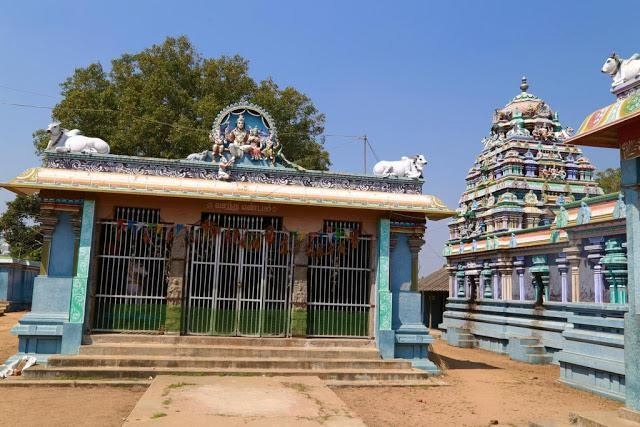
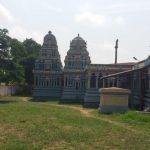
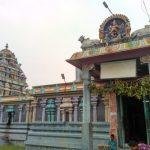
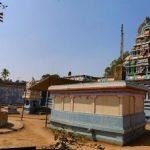
The temple showcases the classic Dravidian architectural style, recently renovated with a new Kumbabhishekam (consecration) adding fresh grandeur to its ancient stones.
- Orientation: The temple is south-facing, with the Presiding Deity, Varamoortheeswarar, enshrined as a swayambhu lingam.
- The Shrine of Goddess: The Mother Goddess Maragathavalli has a unique shrine where she is depicted with her left leg forward, symbolizing her readiness to vanquish the enemies of her devotees.
- Unique Elements: The base of the Shivalingam (Avudayar) is square-shaped, a distinct feature of temples created by sages (Rishis) rather than kings.
Darshan & Ritual Logistics
Based on the current operational schedule, here are the daily timings and key sevas.
Daily Timings
| Session | Timing |
|---|---|
| Morning | 07:00 AM – 12:00 PM |
| Evening | 04:00 PM – 08:00 PM |
Key Sevas & Festivals (2026)
Pradosham: Considered highly sacred here. Legend states a monkey attained salvation after witnessing Pradosham, making it a Moksha Pradham.
Online Seva Booking: While direct bookings for this specific historic temple are often managed locally, devotees can typically coordinate advanced rituals via the temple trust. Currently, please contact the temple administration via the provided number for specific seva bookings.
2026 Festival Dates:
- Mahashivratri: February 26, 2026
- Arudra Darshan: January 6, 2026
- Navaratri: September 22 – October 1, 2026
Practical Visitor Guidance
To ensure a serene darshan experience, please adhere to the following guidelines:
- Dress Code: Traditional Indian attire is recommended (Dhoti/Saree). Modest clothing is required.
- Photography: Inside the sanctum sanctorum, photography is strictly prohibited. You may take photos in the corridors and the courtyard.
- Footwear & Lockers: There is a dedicated shoe-keeping facility near the entrance. Mobile lockers are not available; it is advised to travel light.
- Crowd Management: The best time to visit is early morning (7:00 AM – 8:00 AM) or late evening (after 6:00 PM) to avoid crowds. Summers (May) can be humid; carry a water bottle and use the shaded areas in the Mandapa.
Pilgrimage Connectivity
How to Reach
The temple is located in Ariyathurai village, near Kavarapettai.
- Road: From Chennai, take the Kolkata Highway (NH16). Take the left turn at Thatchur Cross Road (towards Ponneri), pass RMK Engineering College, and turn left after the Durga Devi Polytechnic. The temple is approximately 3 km from this junction.
- Train: The nearest railway station is Kavarapettai (approx. 5 km). From there, local transport is available.
- Air: The nearest airport is Chennai International Airport, located about 52 km away.
Nearby Sacred Sites (Pilgrimage Circuit)
- Surutapalli (Pallikondeswaram): Located nearby, this is another Pancha Brahma Sthalam representing the Tatpurusha face of Shiva.
- Periyapalayam Temple: A famous temple dedicated to Mariamman, located roughly 20 km away.
- Keezhmayiladungar (Vadapalani): A scenic hill temple dedicated to Lord Murugan, accessible via a short drive.
Frequently Asked Questions
Is there a VIP darshan entry?
While the temple does not have a formal online VIP ticket system, devotees can contact the head priest (Archagar) beforehand for special arrangements, especially for rituals like Abhishekam.
Can I perform an Abhishekam on behalf of my ancestors?
Yes. Performing Maha Abhishekam or Tharpanam at this temple is highly recommended for cleansing ancestral karma (Pithru Dhosham).
What is the significance of the ‘Ariya Thurai’ name?
The name “Ariya Thurai” translates to “Rare River Bank” in Tamil. It refers to the unique pit on the riverbank where water believed to be from the holy Ganges flows perennially.
Is the temple accessible for the elderly?
Yes. While the temple is an ancient structure, the pathways are generally flat. However, the inner sanctum has steps. For wheelchair access, assistance may be required in the inner prakaram.
Where can I contact the temple administration?
For inquiries, seva bookings, or directions, you can contact the temple directly at: +91 9894821712.
Photo Gallery

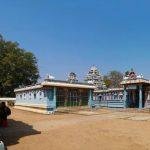
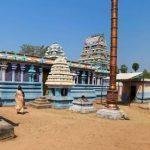
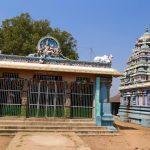
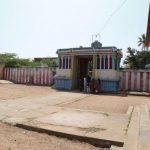
Source Acknowledgement: This definitive guide is curated based on historical records and the original repository found at tamilnadu-favtourism.blogspot.com.
Recent Posts

Shri Kaamkoteeshwar Mandir, Varanasi – History & Significance
In the heart of Kashi, the eternal city of Lord Shiva, where the Ganges flows with celestial grace, stands the Shri Kaamkoteeshwar Mandir. This sacred Sannidhi is not merely a temple but a profound spiritual bridge between the Northern…

ओ सांवरे तूने ही मुझको संभाला – Lyrics & Meaning
ओ सांवरे तूने ही मुझको संभाला – A Prayer to Shyam Origin & Spiritual Essence Why This Bhajan Resonates Devotees chant this when overwhelmed by life’s storms—the refrain ‘तूने ही मुझको संभाला’ is the soul’s sigh of relief: “You…

कथा ये है महाराज मेरे की – Lyrics & Meaning
कथा ये है महाराज मेरे की छत्रपति संभाजी महाराज – A Prayer to Chhatrapati Sambhaji Maharaj Origin & Spiritual Essence Why This Bhajan Resonates Devotees chant this when their spirit feels tested—its powerful refrain “महाराज मेरे” is a soul’s…

Rigveda Samhita Yathartha Anuvada (ऋग्वेद संहिता यथार्थ अनुवाद) – Complete Set with Anvayartha & Hindi/English Translation
The Rigveda is the oldest surviving scripture of humanity and the foundational text of Sanātana Dharma. For serious students, scholars, UPSC aspirants studying ancient Indian history, Sanskrit learners, and spiritual seekers, a precise and grammatically structured translation is indispensable.…

आना भी अकेला है जाना भी अकेला है – Lyrics & Meaning | BharatTemples
आना भी अकेला है जाना भी अकेला है – A Prayer to the Divine Witness Origin & Spiritual Essence Why This Bhajan Resonates Devotees turn to this bhajan in moments of deep reflection—when life’s attachments begin to ache. The…

माता शेरावाली के द्वार जो भी जाता है – Lyrics & Meaning
माता शेरावाली के द्वार जो भी जाता है – A Prayer to Maa Sherawali Origin & Spiritual Essence Why This Bhajan Resonates Devotees turn to this bhajan in times of fear or uncertainty—its promise that no one leaves Maa’s…

मार लेना सपणी उबार लेणा भवरा – Lyrics & Meaning
मार लेना सपणी उबार लेणा भवरा – A Prayer to the Divine Beloved Origin & Spiritual Essence Why This Bhajan Resonates Devotees chant this in moments of deep vulnerability—its cry of “मार लेना सपणी, उबार लेणा भवरा” is the…

हमें श्याम सुंदर भरोसा तुम्हारा – Lyrics & Meaning
हमें श्याम सुंदर भरोसा तुम्हारा – A Prayer to Shyam Sundar Origin & Spiritual Essence Why This Bhajan Resonates Devotees chant this when feeling alone—its refrain ‘de do sahara’ is the soul’s cry for divine support. Lyrics in Hindi…

Mere Satguru Ne Di Thi Davai Lyrics in Hindi & Meaning
Mere Satguru Ne Di Thi Davai: Invoking the Guru’s Liberating Wisdom This soul-stirring bhajan venerates the Satguru (True Spiritual Master) as the divine physician who dispenses the only remedy for life’s deepest sufferings. Composed by Sant Karmaveer Tufani, it…

Janm Diyo Thari Maa Dukh Dekhiyo Lyrics in Hindi & Meaning
जन्म दियो थारी माँ दुख देखियो (Maa’s Grief Upon Birthing You) This soul-stirring Chetavani Bhajan (admonitory hymn) is addressed to the Divine Mother (Maa) – a call for repentance when children forget their filial duties in the dark age…