
Contents
Introduction & Spiritual Essence of Pidari Vaali Amman Temple
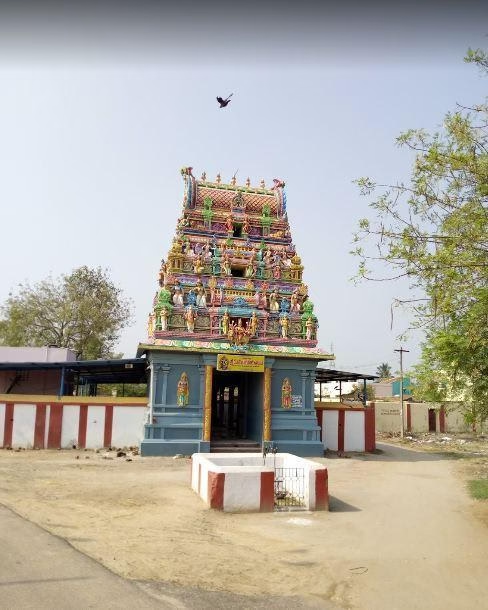
Nestled in the tranquil village of Eekkadu in Thiruvallur district, the Pidari Vaali Amman Temple stands as a beacon of feminine divine energy (Shakti). The presiding deity here is Pidari Vaali Amman, a manifestation of the Divine Mother worshipped primarily by the local community for protection and prosperity.
Deity Details: The primary deity is a Swayambhu (self-manifested) idol, a form highly revered in Tamil Shaivism. The name “Pidari” often refers to a spectral power or a fierce guardian deity, while “Vaali” suggests an all-pervading strength.
Phalaśruti: Why Devotees Visit
Devotees flock to this temple seeking specific blessings known as Phalaśruti (spiritual benefits). According to temple folklore, prayers here offer:
- Protection from Evil Influences: Pidari Amman is believed to shield devotees from negative energies and black magic.
- Removal of Doshas: Rituals here are known to cleanse ancestral karma and rectify astrological imbalances.
- Health and Wealth: Performing Archana (recitation of names) is associated with overcoming chronic health ailments and stabilizing financial growth.
Historical Origins & Scriptural Legend
While the precise dynastic records are sparse, the temple is deeply woven into the fabric of Tamil agrarian history. The structure reflects centuries of devotion by the local land-owning communities.
The Sthala Purana (Local Legend)
Tradition holds that the village of Eekkadu was once plagued by unexpected droughts and pestilence. The local villagers, unable to find a water source, prayed fervently to the Earth Goddess. It is believed that a shepherd boy discovered a glowing stone in the vicinity, which began to ooze milk. When the village elder inspected the site, he heard a divine voice proclaiming the presence of the Goddess.
The stone was consecrated as Pidari Vaali Amman. Over time, the temple was built around this Swayambhu idol, marking the site as a powerful Kshetra (field of energy). While the current structural records are being traced, the spiritual legacy is estimated to span several centuries.
Architectural Marvels
The temple is a classic example of Dravidian Temple Architecture, characterized by its pyramid-shaped towers and enclosed prakarams (corridors).
- Sanctum Sanctorum (Garbhagriha): The inner shrine houses the Swayambhu idol of Pidari Vaali Amman, facing East. The idol is smeared with turmeric and kumkum, typical of rural Tamil Nadu Amman shrines.
- Mandapas: The temple features a main hall used for Bhajans and annual festivals, adorned with pillared sculptures depicting mythological scenes.
- Prakarams: The outer precincts include shrines for Lord Ganesha and Murugan, essential for the removal of obstacles before Darshan.
Note on Status: While not a designated ASI monument, the temple is protected under the HR&CE (Hindu Religious and Charitable Endowments) Department of Tamil Nadu.
Darshan & Ritual Logistics
Visitors are encouraged to check the specific timings before arrival, as rural temples may observe varying intervals for pooja (worship).
Daily Darshan Timings (2026)
| Session | Timings |
|---|---|
| Morning Opening | 6:00 AM |
| Morning Pooja | 6:30 AM – 12:00 PM |
| Closing | 12:00 PM – 4:30 PM |
| Evening Opening | 4:30 PM |
| Evening Pooja | 5:00 PM – 8:00 PM |
Key Sevas & Online Booking
Popular rituals include:
- Abhishekam: Ritual bathing of the deity (performed on Fridays).
- Archana: Reciting the 108 names of the Goddess.
- Special Pooja: Conducted during Amavasya (New Moon) and Pournami (Full Moon).
Online Seva Booking: Devotees can book standard sevas via the official Tamil Nadu HR&CE Portal or the Arulmigu Pidari Vaali Amman Temple Eekkadu official page on the tnhrce.org website.
Festival Calendar 2026
- Thai Poosam: January 18, 2026 (Major event for Thai month).
- Chithirai Thiruvizha: April 14, 2026 (Tamil New Year celebrations).
- Aadi Perukku: July 28, 2026 (Rituals performed near water bodies).
- Navaratri: September 22 – October 1, 2026 (Nine nights of Goddess worship).
- Karthigai Deepam: November 5, 2026.
Practical Visitor Guidance
To ensure a serene experience, adhere to the following guidelines:
- Dress Code: Traditional attire is mandatory. Men should wear dhotis or trousers with shirts; women should wear sarees, salwar kameez, or long skirts. Avoid shorts and sleeveless tops.
- Photography: Generally restricted inside the Sanctum Sanctorum. Photography in the outer premises may be allowed upon request from the temple priest.
- Mobile Lockers: As the temple is a rural shrine, dedicated digital lockers may not be available. It is advisable to carry minimal valuables.
- Crowd Management: Weekends and Festival days see high footfall. Best hours to visit: Weekday mornings between 7:00 AM and 9:00 AM. During summers (May), carry water and a hand fan, as the region experiences high temperatures.
Pilgrimage Connectivity
The temple is situated in Eekkadu, a village near the bustling town of Thiruvallur.
How to Reach
- By Road: Eekkadu is located on the Thiruvallur to Thamaraipakkam route (State Highway). It is approximately 50 km from Chennai via NH 16 and SH 119. Regular buses ply from Thiruvallur Bus Stand (3 km away).
- By Train: The nearest Railway Station is Thiruvallur (approx. 6 km). Auto-rickshaws are available at the station.
- By Air: Chennai International Airport (MAA) is the nearest airport, located about 50 km away.
Nearby Sacred Sites
While in Thiruvallur, enhance your pilgrimage circuit by visiting:
- Veera Raghava Perumal Temple: The famous Thiruvallur temple dedicated to Lord Vishnu (healer of ailments).
- Thiruporur Murugan Temple: A significant Murugan shrine located about 25 km away.
- Kadambathur Sri Ramar Temple: Known for its legends surrounding the Ramayana.
Frequently Asked Questions (FAQ)
1. Is there a VIP Darshan entry at Pidari Vaali Amman Temple?
As a rural temple managed by HR&CE, specific VIP entry protocols are not formally established. However, devotees with prior appointment for specific Sevas (like Abhishekam) are granted priority access during the ritual time.
2. What is the significance of visiting during Aadi month?
The month of Aadi (July-August) is dedicated to the Goddess. Visiting Pidari Vaali Amman during this month, particularly on Tuesdays and Fridays, is considered highly auspicious for seeking family prosperity and removing obstacles.
3. Are non-Hindus allowed inside the temple?
Being a traditional Dravidian temple dedicated to a local village deity, the temple generally welcomes all spiritual seekers, though entry to the inner sanctum is restricted to those who follow the temple’s religious practices.
4. What should I offer the Goddess?
Common offerings (Naivedyam) include Pongal, Sundal, fruits, and jaggery. These can be purchased from vendors near the temple or brought from home.
5. Is there accommodation available nearby?
Basic lodging is available in Thiruvallur town (3 km away). For better amenities, pilgrims often stay in Chennai or Tirupati, both within driving distance.
Recent Posts

Shri Kaamkoteeshwar Mandir, Varanasi – History & Significance
In the heart of Kashi, the eternal city of Lord Shiva, where the Ganges flows with celestial grace, stands the Shri Kaamkoteeshwar Mandir. This sacred Sannidhi is not merely a temple but a profound spiritual bridge between the Northern…

ओ सांवरे तूने ही मुझको संभाला – Lyrics & Meaning
ओ सांवरे तूने ही मुझको संभाला – A Prayer to Shyam Origin & Spiritual Essence Why This Bhajan Resonates Devotees chant this when overwhelmed by life’s storms—the refrain ‘तूने ही मुझको संभाला’ is the soul’s sigh of relief: “You…

कथा ये है महाराज मेरे की – Lyrics & Meaning
कथा ये है महाराज मेरे की छत्रपति संभाजी महाराज – A Prayer to Chhatrapati Sambhaji Maharaj Origin & Spiritual Essence Why This Bhajan Resonates Devotees chant this when their spirit feels tested—its powerful refrain “महाराज मेरे” is a soul’s…

Rigveda Samhita Yathartha Anuvada (ऋग्वेद संहिता यथार्थ अनुवाद) – Complete Set with Anvayartha & Hindi/English Translation
The Rigveda is the oldest surviving scripture of humanity and the foundational text of Sanātana Dharma. For serious students, scholars, UPSC aspirants studying ancient Indian history, Sanskrit learners, and spiritual seekers, a precise and grammatically structured translation is indispensable.…

आना भी अकेला है जाना भी अकेला है – Lyrics & Meaning | BharatTemples
आना भी अकेला है जाना भी अकेला है – A Prayer to the Divine Witness Origin & Spiritual Essence Why This Bhajan Resonates Devotees turn to this bhajan in moments of deep reflection—when life’s attachments begin to ache. The…

माता शेरावाली के द्वार जो भी जाता है – Lyrics & Meaning
माता शेरावाली के द्वार जो भी जाता है – A Prayer to Maa Sherawali Origin & Spiritual Essence Why This Bhajan Resonates Devotees turn to this bhajan in times of fear or uncertainty—its promise that no one leaves Maa’s…

मार लेना सपणी उबार लेणा भवरा – Lyrics & Meaning
मार लेना सपणी उबार लेणा भवरा – A Prayer to the Divine Beloved Origin & Spiritual Essence Why This Bhajan Resonates Devotees chant this in moments of deep vulnerability—its cry of “मार लेना सपणी, उबार लेणा भवरा” is the…

हमें श्याम सुंदर भरोसा तुम्हारा – Lyrics & Meaning
हमें श्याम सुंदर भरोसा तुम्हारा – A Prayer to Shyam Sundar Origin & Spiritual Essence Why This Bhajan Resonates Devotees chant this when feeling alone—its refrain ‘de do sahara’ is the soul’s cry for divine support. Lyrics in Hindi…

Mere Satguru Ne Di Thi Davai Lyrics in Hindi & Meaning
Mere Satguru Ne Di Thi Davai: Invoking the Guru’s Liberating Wisdom This soul-stirring bhajan venerates the Satguru (True Spiritual Master) as the divine physician who dispenses the only remedy for life’s deepest sufferings. Composed by Sant Karmaveer Tufani, it…

Janm Diyo Thari Maa Dukh Dekhiyo Lyrics in Hindi & Meaning
जन्म दियो थारी माँ दुख देखियो (Maa’s Grief Upon Birthing You) This soul-stirring Chetavani Bhajan (admonitory hymn) is addressed to the Divine Mother (Maa) – a call for repentance when children forget their filial duties in the dark age…