
Contents
- 1 Kalyana Veerabhadrar Temple, Chennivakkam: A Definitive Pilgrimage Guide
Kalyana Veerabhadrar Temple, Chennivakkam: A Definitive Pilgrimage Guide
Welcome to the sacred groves of Kalyana Veerabhadrar Temple, a sanctum of unwavering spiritual energy nestled in the serene village of Chennivakkam, Thiruvallur District, Tamil Nadu. As the Lead Heritage Architect of BharatTemples.com, I invite you to explore this ancient abode dedicated to Lord Veerabhadrar—a fierce yet benevolent manifestation of Lord Shiva. This guide is meticulously crafted for the modern devotee, blending scriptural reverence with practical logistics for a seamless darshan experience in 2026.
1. Introduction & Spiritual Essence
The primary deity of this shrine is Kalyana Veerabhadrar, a powerful form of Lord Shiva. The temple is unique not only for its presiding deity but also for the presence of Maragatha Badhrambikai (Mother Parvathi), carved from an exquisite emerald stone (Maragatha). Phalaśruti—the spiritual benefit of visiting—holds that devotees seeking protection from malefic planetary influences (particularly from Saturn/Sani) and those facing obstacles in marriage (Vivaha) and childbirth find immense solace here.
According to oral tradition, the temple is a Swayambhu Sthalam, where the idol was not carved by human hands but discovered naturally. Devotees visit to cleanse ancestral karma and invoke the fearless blessing of Veerabhadrar, who grants Abhaya (protection) to all who surrender at his feet.
2. Historical Origins & Scriptural Legend
While the exact stone inscription dating the temple is a subject of ongoing archaeological review, the temple records and local legends trace its origins to the late medieval period, likely constructed by local chieftains under the Vijayanagara influence or later Nayak dynasties, typical of Tamil Nadu’s rural temples.
The Legend of Discovery
Tradition holds that a group of traders traveled south with an elderly woman devoted to Goddess Ambika. She carried a small idol of the Mother and performed daily worship at every halting point. Upon reaching Chennivakkam, they camped, and when it was time to leave, the idol became immovable. Desperate, the woman fell asleep and dreamed of the Goddess revealing that Lord Veerabhadrar lay buried nearby. Upon waking, the traders dug the earth and unearthed the magnificent idol of Kalyana Veerabhadrar. Thus, the Lord is revered as Than Thondri Veerabhadra (Veerabhadra who appeared by himself).
3. Architectural Marvels
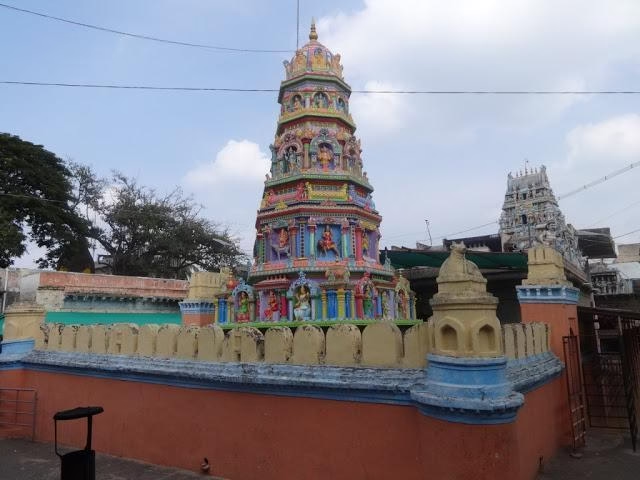
The temple showcases the classical Dravidian architectural style. It is a compact but potent structure featuring a modest Raja Gopuram (entrance tower) that directs the devotee’s gaze straight to the sanctum.
- The Sanctum (Garbhagriha): The Shikhara (roof structure) over the sanctum is tiered and capped with a Kalasam. The inner walls are adorned with intricate carvings.
- Mandapas: The Ardha Mandapa (half-hall) connects the sanctum to the main hall. It houses the Nandhi Vahana (Bull vehicle) facing the deity. Notably, Mooshika Vahana (Lord Ganesha’s vehicle) and the elephant vahana of Lord Muruga are also enshrined here.
- Sculptures & Shrines:
- Akora Veerabhadra: A fierce form of the deity located in the outer prakaram (corridor), worshipped after the main deity.
- Chandikeswara: Located to the left of the main sanctum.
- Moodhatti: A unique shrine dedicated to an elderly female devotee near Mother Badhrambikai.
- Other Shrines: Somasundarar, Bhairava, Mahalakshmi, Gangadevi, and Sani Bhagwan (Saturn).
4. Darshan & Ritual Logistics (2026 Schedule)
Timings are strictly observed. It is advisable to call ahead if visiting outside standard hours.
Daily Temple Opening Hours
| Session | Timing |
|---|---|
| Morning Darshan | 7:30 AM – 10:00 AM |
| Evening Darshan | 6:00 PM – 8:00 PM |
| Noon Closure | 10:00 AM – 6:00 PM (Contact Priest) |
Key Sevas (Rituals) & Booking
- Abhishekam: Performed to the main deity and the Vahanas (vehicles). On Pradosha days, this is particularly elaborate.
- Archana: Personal prayers using specific mantras for family welfare.
- Special Pujas: Tuesdays are auspicious for Veerabhadra worship.
Note: While physical booking is available at the temple counter, many rural temples are gradually adopting digital systems. For 2026, we recommend contacting the temple trust (see contact section) or checking the “Thiruvallur District Temple Trust” portal for online seva booking availability.
2026 Major Festival Dates
- Chitra Poornima: April/May (Lord Vinayaka grants special darshan near the Kushasthala River).
- Aipasi Annabishekam: October/November (Dedicated to Veerabhadra; equivalent to the Maha Shivaratri of the month).
- Tirukarthikai: November/December.
- Margazhi Tiruvadhirai: December/January.
5. Practical Visitor Guidance
To ensure a respectful and comfortable visit, please adhere to the following guidelines:
- Dress Code: Traditional attire is mandatory. Men should wear Dhoti or formal pants with a shirt; women should wear saree, half-saree, or churidar with dupatta. Avoid shorts and sleeveless tops.
- Photography: Inside the sanctum sanctorum, photography is strictly prohibited. Mobile phones should be kept silent or in lockers if available.
- Crowd Management:
- Best Hours: The 7:30 AM – 8:30 AM window offers the shortest queues.
- Seasonal Advice: The temple is located in a rural setting. In May (summer), carry ample water and a hat. During monsoon (November), mosquito repellent is recommended.
- Accessibility: The temple has a flat entrance, but the inner sanctum has steep steps (approx. 2 feet). Elderly visitors may need assistance.
6. Pilgrimage Connectivity
Chennivakkam is a peaceful village, well-connected to Chennai and Thiruvallur.
How to Reach
- By Air: Chennai International Airport (MAA) is approximately 44 km away.
- By Rail: Ponneri Railway Station is the nearest railhead (approx. 7 km). Thiruvallur Railway Station is also an option.
- By Road:
- Take NH 71 (Chennai – Tirupati Highway) towards Red Hills.
- Pass Red Hills and Karanodai.
- Take a right turn before Thatchur Cross Road.
- Drive 2.5 km into the village to reach Chennivakkam.
Nearby Sacred Sites (Pilgrimage Circuit)
- Kailasanathar Temple, Thiruvallur: A major Shiva temple located about 15 km away, housing Veera Raghava Perumal.
- Gerugambakkam Temple: Known for its historical significance, located roughly 20 km south.
- Kushasthala River Banks: While not a temple, the river flowing near Chennivakkam offers a serene spot for contemplation after darshan.
7. Frequently Asked Questions (FAQ)
Is there a VIP Darshan entry available?
Given the temple’s rural and intimate nature, there is no formal “VIP” ticket system like large mutts. However, contacting the temple priest in advance often facilitates an easier darshan, especially if you are organizing a specific ritual like a wedding.
What is the significance of Maragatha Badhrambikai?
Unlike the stone or metal idols in most temples, Mother Badhrambikai here is carved from an Emerald stone (Maragatha). This makes her extremely rare. Devotees offer betel garlands and Mangal Sutras to her for marital bliss.
Can we perform housewarming (Griha Pravesh) rituals here?
While the temple primarily focuses on Veerabhadrar and Devi worship, specific rituals for house blessings are usually discussed directly with the priest, who can tailor the Vedic rites.
Is there accommodation nearby?
Chennivakkam is a small village. For accommodation, devotees typically stay in Thiruvallur or at the hotels near Red Hills in Chennai. Day trips are recommended for this specific temple.
What is the condition of the roads?
The approach road from Thatchur Cross Road is a rural village road. While it is motorable for all cars and SUVs, caution is advised during heavy monsoons due to water logging in the fields.
Photo Gallery
Contact Details
For the most accurate updates on rituals and timings, please contact the temple administration:
- Location: Chennivakkam Village, Ponneri Taluk, Thiruvallur District, Tamil Nadu.
- Phone: *Please contact the local Thiruvallur Temple Administrative Office for the current priest’s number, as direct lines for rural temples are subject to change.*
Recent Posts

Shri Kaamkoteeshwar Mandir, Varanasi – History & Significance
In the heart of Kashi, the eternal city of Lord Shiva, where the Ganges flows with celestial grace, stands the Shri Kaamkoteeshwar Mandir. This sacred Sannidhi is not merely a temple but a profound spiritual bridge between the Northern…

ओ सांवरे तूने ही मुझको संभाला – Lyrics & Meaning
ओ सांवरे तूने ही मुझको संभाला – A Prayer to Shyam Origin & Spiritual Essence Why This Bhajan Resonates Devotees chant this when overwhelmed by life’s storms—the refrain ‘तूने ही मुझको संभाला’ is the soul’s sigh of relief: “You…

कथा ये है महाराज मेरे की – Lyrics & Meaning
कथा ये है महाराज मेरे की छत्रपति संभाजी महाराज – A Prayer to Chhatrapati Sambhaji Maharaj Origin & Spiritual Essence Why This Bhajan Resonates Devotees chant this when their spirit feels tested—its powerful refrain “महाराज मेरे” is a soul’s…

Rigveda Samhita Yathartha Anuvada (ऋग्वेद संहिता यथार्थ अनुवाद) – Complete Set with Anvayartha & Hindi/English Translation
The Rigveda is the oldest surviving scripture of humanity and the foundational text of Sanātana Dharma. For serious students, scholars, UPSC aspirants studying ancient Indian history, Sanskrit learners, and spiritual seekers, a precise and grammatically structured translation is indispensable.…

आना भी अकेला है जाना भी अकेला है – Lyrics & Meaning | BharatTemples
आना भी अकेला है जाना भी अकेला है – A Prayer to the Divine Witness Origin & Spiritual Essence Why This Bhajan Resonates Devotees turn to this bhajan in moments of deep reflection—when life’s attachments begin to ache. The…

माता शेरावाली के द्वार जो भी जाता है – Lyrics & Meaning
माता शेरावाली के द्वार जो भी जाता है – A Prayer to Maa Sherawali Origin & Spiritual Essence Why This Bhajan Resonates Devotees turn to this bhajan in times of fear or uncertainty—its promise that no one leaves Maa’s…

मार लेना सपणी उबार लेणा भवरा – Lyrics & Meaning
मार लेना सपणी उबार लेणा भवरा – A Prayer to the Divine Beloved Origin & Spiritual Essence Why This Bhajan Resonates Devotees chant this in moments of deep vulnerability—its cry of “मार लेना सपणी, उबार लेणा भवरा” is the…

हमें श्याम सुंदर भरोसा तुम्हारा – Lyrics & Meaning
हमें श्याम सुंदर भरोसा तुम्हारा – A Prayer to Shyam Sundar Origin & Spiritual Essence Why This Bhajan Resonates Devotees chant this when feeling alone—its refrain ‘de do sahara’ is the soul’s cry for divine support. Lyrics in Hindi…

Mere Satguru Ne Di Thi Davai Lyrics in Hindi & Meaning
Mere Satguru Ne Di Thi Davai: Invoking the Guru’s Liberating Wisdom This soul-stirring bhajan venerates the Satguru (True Spiritual Master) as the divine physician who dispenses the only remedy for life’s deepest sufferings. Composed by Sant Karmaveer Tufani, it…

Janm Diyo Thari Maa Dukh Dekhiyo Lyrics in Hindi & Meaning
जन्म दियो थारी माँ दुख देखियो (Maa’s Grief Upon Birthing You) This soul-stirring Chetavani Bhajan (admonitory hymn) is addressed to the Divine Mother (Maa) – a call for repentance when children forget their filial duties in the dark age…