
Contents
Introduction & Spiritual Essence
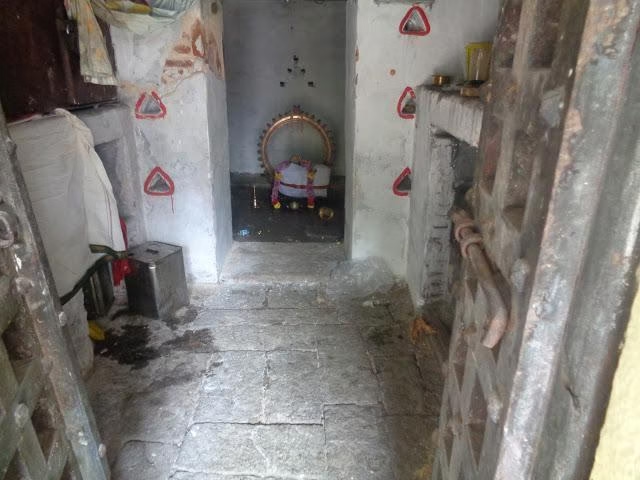
Nestled in the spiritual landscape of Thiruvallur district, the Arunachaleswarar Temple in Puduchatram stands as a beacon of devotion for Shaivites. Dedicated to Lord Shiva, worshipped here as Arunachaleswarar (the Lord of the Sacred Mountain of Light), the temple invokes the profound energy of Mount Arunachala. The presiding deity is a Swayambhu Lingam (self-manifested), signifying its eternal presence independent of human carving.
The consort deity is known as Abithagujambal (or Potramarai Nayagi), radiating grace and benevolence. Historically, the deity was referred to as Viswanathar, linking its cosmic significance to the universal lordship of Shiva.
Phalaśruti: The Fruit of Visitation
Devotees flock to Puduchatram seeking specific spiritual boons. According to temple traditions and local scriptural interpretation, the darshan of Arunachaleswarar is believed to:
- Cleanse Ancestral Karma: Performing rituals here is considered highly meritorious for pacifying ancestral spirits and removing pitru doshas.
- Grant Wisdom and Clarity: As Arunachaleswarar represents the fire element (Agni), he illuminates the mind, aiding in decision-making and spiritual enlightenment.
- Alleviate Saturn Afflictions: The temple is a powerful center for those seeking relief from Shani (Saturn) related astrological challenges.
Historical Origins & Scriptural Legend
The history of the Arunachaleswarar Temple is a tapestry woven through centuries of devotion and patronage. While exact inscriptional dates are often debated by historians, the architecture suggests a significant period of construction during the Chola and Pandya dynasties, with subsequent renovations by local chieftains under the Vijayanagara empire influence.
The Sthala Purana
According to local oral traditions (Sthala Purana), this site is deeply connected to the manifestation of Lord Shiva as the cosmic pillar of fire (Jyotirlinga). The name Arunachaleswarar itself pays homage to Arunachala, one of the five primordial elements (earth, water, fire, air, ether). Legend holds that saints and sages meditated in this region to witness the eternal flame.
Traditional accounts also suggest that the temple, particularly the sanctum and the ambulatory paths (Pradakshina), were established to mirror the spiritual geography of the main Arunachala temple in Tiruvannamalai, making Puduchatram a vital satellite of that powerful energy.
Architectural Marvels
The temple showcases the grandeur of Dravidian Architecture, characterized by its towering Gopurams (gateway towers) and intricate sculptures. The layout follows strict Vastu Shastra principles, aligning the sanctum sanctorum with cosmic directions to maximize positive energy flow.
Structural Highlights
- The Shikhara (Vimana): The roof over the sanctum is adorned with copper plating and intricate carvings, typical of Chola-era construction.
- Mandapas: The temple features spacious pillared halls (Maha Mandapa and Ardha Mandapa). These columns are etched with images of deities, musicians, and mythical creatures (Yalis), showcasing the sculptor’s mastery.
- Notable Sculptures: The outer walls house niches (Alcoves) depicting various forms of Shiva, including Nataraja (the cosmic dancer) and Dakshinamurthy (the teacher).
While specific ASI (Archaeological Survey of India) tagging varies for smaller ancient temples, the structural integrity and preservation efforts here highlight its historical importance. The sanctum is designed to allow natural light to illuminate the deity during equinoxes.
Darshan & Ritual Logistics
To plan your spiritual journey effectively, refer to the daily schedule and ritual offerings. Please note: Timings are subject to change during festivals and special events.
Daily Timings
| Session | Timing | Activity |
|---|---|---|
| Morning | 06:00 AM – 12:00 PM | Opening, Suprabhatam, Abhishekam |
| Afternoon | 12:00 PM – 04:00 PM | Temple remains closed (Raja Alankaram) |
| Evening | 04:00 PM – 08:00 PM | Dresser Darshan, Deepa Aradhana |
Key Sevas & Offerings
- Abhishekam: Ritual bathing of the deity with milk, honey, sandalwood paste, and holy water. Best performed on Mondays.
- Archana: Recitation of hymns dedicated to Arunachaleswarar and Abithagujambal. Can be done individually or for family groups.
- Deepa Aradhana: The offering of camphor and oil lamps, symbolizing the victory of light over darkness.
Online Seva Booking
In 2026, the temple administration facilitates online bookings for major rituals. Devotees can visit the official temple website or the Tamil Nadu Hindu Religious and Charitable Endowments (HR&CE) portal to reserve slots for Abhishekam and Archana at least 24 hours in advance. This ensures a seamless darshan experience without waiting in long queues.
2026 Major Festivals
Plan your visit around these auspicious dates (Tentative Calendar 2026):
- Maha Shivaratri: February 26, 2026 – Special night-long vigils and rituals.
- Pradosham: Bi-monthly (13th day of the lunar fortnight) – Highly auspicious for Lord Shiva worship.
- Arudra Darshan: January 2026 (Date varies by Tamil calendar) – Celebrating the cosmic dance of Shiva.
- Aadi Perukku: August 2026 – Rituals dedicated to the river and prosperity.
Practical Visitor Guidance
To ensure a respectful and comfortable visit, please adhere to the following guidelines:
Conduct & Dress Code
Modest attire is strictly required. Men should wear dhotis or formal trousers with shirts; women should wear sarees, salwar kameez, or modest western attire (covering shoulders and knees). Footwear must be removed before entering the temple premises.
Photography & Electronics
Photography is strictly prohibited inside the sanctum sanctorum. Mobile phones should be kept on silent mode. Many temples in the region now offer mobile locker facilities near the entrance for a nominal fee to ensure a distraction-free darshan.
Accessibility
The temple features stone steps leading to the main shrine. While the inner sanctum is accessible for all, elderly visitors may require assistance during peak hours. Wheelchair access is currently limited to the main courtyard.
Crowd Management & Seasonal Advice
- Best Hours: Weekday mornings (7:00 AM – 9:00 AM) offer the least crowded darshan.
- Summer (May – July): Thiruvallur temperatures can soar. Carry a reusable water bottle, though facilities are available nearby. Cotton clothing is advised.
- Monsoon (Oct – Dec): Light rain gear is recommended. The stone flooring can become slippery; please walk cautiously.
Pilgrimage Connectivity
Located in the bustling suburb of Puduchatram, the temple is well-connected to Chennai and surrounding regions.
How to Reach
- By Road: The temple is situated on the Thirumazhisai to Thiruvallur Road (State Highway 23). It is easily accessible via the Chennai Outer Ring Road (ORR) and NH 16.
- By Rail: The nearest major railway junction is Thiruvallur Railway Station (approx. 15 km). Local suburban trains are available from Chennai Central to Thiruninravur, from where local autos/buses connect to Puduchatram.
- By Air: Chennai International Airport (MAA) is approximately 32 km away (approx. 45-60 mins drive).
- Local Transport: Autos and share taxis are easily available from Puduchatram Bus Stop, located just 100 meters from the temple.
Nearby Sacred Sites (Pilgrimage Circuit)
- Thirumazhisai Azhwar Temple: A major Vaishnavite site dedicated to one of the Alvar saints, located 9 km away.
- Shri Kalyana Venkateswara Temple (Tiruporur): A historic temple on the East Coast Road (ECR), roughly 30 km away.
- Thiruvallur Veeraraghava Swamy Temple: The primary district temple dedicated to Lord Vishnu, located 15 km away.
Frequently Asked Questions (FAQ)
1. Is there a VIP darshan entry available at Arunachaleswarar Temple?
Yes, the temple administration offers a special entry darshan for elderly devotees and those with mobility issues. VIP tickets are generally not sold but can be arranged via prior permission from the Executive Officer for ceremonial occasions.
2. Can I perform last rites or Shradh ceremonies here?
While the temple is primarily dedicated to Lord Shiva, specific rituals for ancestors (Pinda Pradana) can be performed. It is recommended to contact the temple office 2 days in advance to arrange for a priest and necessary materials.
3. Is outside food allowed inside the temple?
Outside food is generally not permitted inside the sanctum. However, many pilgrims carry water and light snacks which can be consumed in the designated rest areas outside the temple complex. Free annadhanam (meal service) is often available during festivals.
4. What are the parking facilities?
There is limited street parking available near Puduchatram Bus Stop. For private vehicles, it is advisable to park in designated lots near the main road and walk the remaining 100 meters. Avoid parking on the main highway to prevent traffic violations.
5. Is the temple open on all days?
Yes, Arunachaleswarar Temple typically remains open year-round. However, the sanctum may be closed during specific ritual periods (typically 1-2 hours in the afternoon). Please check the board at the entrance or the online portal for real-time updates.
Recent Posts

Shri Kaamkoteeshwar Mandir, Varanasi – History & Significance
In the heart of Kashi, the eternal city of Lord Shiva, where the Ganges flows with celestial grace, stands the Shri Kaamkoteeshwar Mandir. This sacred Sannidhi is not merely a temple but a profound spiritual bridge between the Northern…

ओ सांवरे तूने ही मुझको संभाला – Lyrics & Meaning
ओ सांवरे तूने ही मुझको संभाला – A Prayer to Shyam Origin & Spiritual Essence Why This Bhajan Resonates Devotees chant this when overwhelmed by life’s storms—the refrain ‘तूने ही मुझको संभाला’ is the soul’s sigh of relief: “You…

कथा ये है महाराज मेरे की – Lyrics & Meaning
कथा ये है महाराज मेरे की छत्रपति संभाजी महाराज – A Prayer to Chhatrapati Sambhaji Maharaj Origin & Spiritual Essence Why This Bhajan Resonates Devotees chant this when their spirit feels tested—its powerful refrain “महाराज मेरे” is a soul’s…

Rigveda Samhita Yathartha Anuvada (ऋग्वेद संहिता यथार्थ अनुवाद) – Complete Set with Anvayartha & Hindi/English Translation
The Rigveda is the oldest surviving scripture of humanity and the foundational text of Sanātana Dharma. For serious students, scholars, UPSC aspirants studying ancient Indian history, Sanskrit learners, and spiritual seekers, a precise and grammatically structured translation is indispensable.…

आना भी अकेला है जाना भी अकेला है – Lyrics & Meaning | BharatTemples
आना भी अकेला है जाना भी अकेला है – A Prayer to the Divine Witness Origin & Spiritual Essence Why This Bhajan Resonates Devotees turn to this bhajan in moments of deep reflection—when life’s attachments begin to ache. The…

माता शेरावाली के द्वार जो भी जाता है – Lyrics & Meaning
माता शेरावाली के द्वार जो भी जाता है – A Prayer to Maa Sherawali Origin & Spiritual Essence Why This Bhajan Resonates Devotees turn to this bhajan in times of fear or uncertainty—its promise that no one leaves Maa’s…

मार लेना सपणी उबार लेणा भवरा – Lyrics & Meaning
मार लेना सपणी उबार लेणा भवरा – A Prayer to the Divine Beloved Origin & Spiritual Essence Why This Bhajan Resonates Devotees chant this in moments of deep vulnerability—its cry of “मार लेना सपणी, उबार लेणा भवरा” is the…

हमें श्याम सुंदर भरोसा तुम्हारा – Lyrics & Meaning
हमें श्याम सुंदर भरोसा तुम्हारा – A Prayer to Shyam Sundar Origin & Spiritual Essence Why This Bhajan Resonates Devotees chant this when feeling alone—its refrain ‘de do sahara’ is the soul’s cry for divine support. Lyrics in Hindi…

Mere Satguru Ne Di Thi Davai Lyrics in Hindi & Meaning
Mere Satguru Ne Di Thi Davai: Invoking the Guru’s Liberating Wisdom This soul-stirring bhajan venerates the Satguru (True Spiritual Master) as the divine physician who dispenses the only remedy for life’s deepest sufferings. Composed by Sant Karmaveer Tufani, it…

Janm Diyo Thari Maa Dukh Dekhiyo Lyrics in Hindi & Meaning
जन्म दियो थारी माँ दुख देखियो (Maa’s Grief Upon Birthing You) This soul-stirring Chetavani Bhajan (admonitory hymn) is addressed to the Divine Mother (Maa) – a call for repentance when children forget their filial duties in the dark age…