
Contents
1. Introduction & Spiritual Essence
The Prasanna Vinayakar Temple in Arani, situated within the Thiruvallur district of Tamil Nadu, stands as a beacon of unwavering faith and celestial grace. Dedicated to Lord Ganesha, the remover of obstacles, this temple is revered not just for its antiquity but for the palpable spiritual energy that permeates its sanctum.
Primary Deity and Form
The presiding deity here is Prasanna Vinayakar (also known as Prasanna Ganapathy or Vighneshwara). The idol is a Swayambhu (self-manifested) murti, carved from a single stone. Unlike many iconographic representations, this form of Ganesha is depicted in a seated posture with his consort, a feature that draws devotees seeking holistic blessings.
Phalaśruti: Why Devotees Visit
According to temple lore and the belief of the local populace, offering prayers here yields specific benefits:
- Removal of Obstacles: As the “Vighna Harta” (Destroyer of Barriers), devotees visit to clear hurdles in education, business, and personal endeavors.
- Cleansing Ancestral Karma: Rituals performed here are believed to pacify pitru doshas (ancestral flaws), bringing peace to departed souls.
- Prosperity and Wisdom: Being the deity of intellect, students and professionals pray here for clarity and success.
2. Historical Origins & Scriptural Legend
While the exact date of construction is not inscribed on the current structure, architectural analysis and local records suggest the temple dates back several centuries, likely during the period of the Vijayanagara or Nayak influence in the region.
The Legend of Prasanna Vinayakar
Tradition holds that the Sthala Purana (local oral legend) begins with a Guru (teacher) who was deeply devoted to Lord Ganesha. It is said that during a severe drought in the Arani region, the guru performed intense penance in a small grove.
Appeased by his devotion, Lord Ganesha manifested Himself from a Palmyra tree (Panai Maram in Tamil), which is why the local deity is also associated with the tree. The Lord appeared “Prasanna”—cheerful and gracious—hence the name. The stone idol was later consecrated within the current temple structure by devout villagers who found the murti.
3. Architectural Marvels
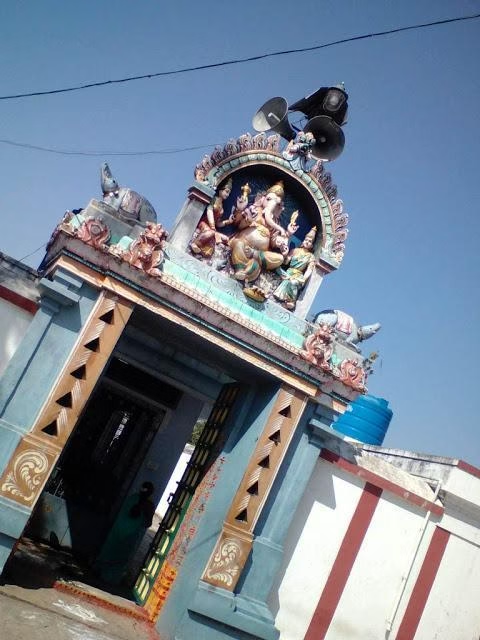
The temple showcases the quintessential Dravidian style of architecture, characterized by its towering gateways and intricate sculptural details.
Style and Vastu Elements
Adhering to the principles of Vastu Shastra, the temple faces east, allowing the rising sun to illuminate the sanctum sanctorum, symbolizing enlightenment. The layout follows a concentric design, moving from the outer prakaram (corridor) to the inner sanctum, representing the journey from the material to the divine.
Notable Features
The Shikhara (tower) above the sanctum, while compact, features traditional Amalaka (disk-like stones) and Kalasas (pot finials). The Mandapa (pillared hall) is supported by granite pillars, each carved with images of deities from the Hindu pantheon. The walls are adorned with stucco figures depicting scenes from the Puranas, though they have been restored over time to preserve their vibrancy.
Note: While this temple is a local architectural gem, it is not a designated ASI or UNESCO heritage site.
Photo Gallery


4. Darshan & Ritual Logistics
To ensure a seamless spiritual experience, devotees should adhere to the following schedule. Timings are subject to change during festival seasons.
| Session | Timings | Activity |
|---|---|---|
| Morning | 6:00 AM – 12:00 PM | Opening, Abhishekam, Alankaram |
| Evening | 4:00 PM – 8:30 PM | Deeparadhana, Nataraja Darshan |
Key Sevas (Rituals)
- Ushakalam Abhishekam: Performed at 6:00 AM. Priests bathe the Swayambhu idol with milk, honey, and sandalwood paste.
- Sahasranama Archana: A recitation of 1,000 names of Ganesha, typically performed by families seeking specific blessings.
- Vinayaka Chaturthi Special Pooja: A grand ritual performed on the 4th day of every lunar cycle.
Online Seva Booking (2026 Update)
As of 2026, the temple administration has digitized the offering process. Devotees can book the Upanayana (Special Abhishekam) via the Tamil Nadu HR&CE portal or the official temple website. Search for “Prasanna Vinayakar Temple Arani Online Seva” to access the booking module.
2026 Festival Calendar
- Vinayaka Chaturthi: August 23, 2026 (Sunday). Expect massive crowds; book accommodation in advance.
- Skanda Shashti: November 5, 2026 (Thursday).
- Ardra Darshan: December 23, 2026 (Tuesday).
5. Practical Visitor Guidance
Dress Code & Etiquette
Modesty is key. Men should wear Dhotis or formal trousers with shirts; women should opt for Sarees or Salwar Kameez. Avoid shorts and sleeveless tops. The temple administration reserves the right to refuse entry to those violating the dress code.
Photography & Mobiles
Photography inside the sanctum sanctorum is strictly prohibited. Mobile phones are allowed but must be kept silent. Locker facilities are available near the entrance counter for luggage.
Crowd Management & Accessibility
Best Hours to Visit: Tuesday mornings are generally less crowded than weekends. Avoid visiting during the peak of Vinayaka Chaturthi unless attending a specific ritual.
Seasonal Advice: Thiruvallur experiences high temperatures in May and June. Carry a reusable water bottle (available for refills inside) and a towel. The temple floors can get hot; slippers with socks are recommended for the elderly.
6. Pilgrimage Connectivity
How to Reach
- By Air: The nearest airport is Chennai International Airport (MAA), approximately 54 km away.
- By Rail: The closest railway junction is Kavaraippettai Railway Station (12 km). Alternatively, Chennai Central is the major hub 42 km away.
- By Road: The temple is located off the Chennai – Tada Highway (NH 16). From Red Hills, take the road toward Gummidipoondi. Local buses frequently ply from Ponneri and Periyapalayam.
How to Reach:
Prasanna Vinayakar Temple is a Hindu Temple dedicated to Lord Ganesha located at Arani Village in Thiruvallur District of Tamilnadu. The Temple is located at about 1 Km from Arani New Bus Stand, 850 meters from Old Arani Bus Stand, 1 Km from Sampangi Pitchaaleeswarar Temple, 8 Kms from Chinnambedu, 12 Kms from Kavaraippettai Railway Station, 6 Kms from Periyapalayam, 13 Kms from Gummudipoondi, 15 Kms from Gummudipoondi Railway Station, 15 Kms from Ponneri, 15 Kms from Thatchoor, 37 Kms from Thiruvallur, 42 Kms from Chennai and 54 Kms from Chennai Airport. To reach Arani, one must cross Red Hills from Chennai and take the road towards Gummidipoondi. Local Buses are available from Ponneri and Periyapalayam.
Nearby Sacred Sites (Pilgrimage Circuit)
- Pitchaaleeswarar Temple (Arani): Just 1 km away. A historic Shiva temple known for its unique sanctum.
- Periyapalayam Sri Baskara Kottai Mariamman Temple: 6 km away. One of the most famous Amman temples in Tamil Nadu.
- Sri Vaidyanathaswamy Temple (Thiruvalangadu): Located about 25 km away, this is one of the 8 shrines dedicated to Lord Shiva as Vaidyanathar.
7. Frequently Asked Questions
Is there a VIP darshan entry available?
Yes, the temple offers a “Special Darshan” pass for elderly citizens, differently-abled devotees, and donors. These can be obtained from the counter near the flagpole upon arrival or requested via the online portal 24 hours in advance.
What is the best time to visit for a peaceful experience?
The ideal time is between 8:00 AM and 10:00 AM on weekdays (Monday to Friday). Avoid Tuesdays if you prefer a less crowded atmosphere, as it is the day dedicated to Lord Ganesha.
Are there accommodation facilities near the temple?
While the temple does not have a dedicated guest house, Arani town has several lodges and hotels ranging from budget to mid-range. For premium accommodation, it is recommended to stay in Chennai or Tiruvallur.
Can we perform birthdays or baby naming ceremonies here?
Absolutely. The Prasanna Vinayakar Temple allows small-scale ceremonies like birthdays and “Annaprasana” (first rice-eating ceremony) in the outer mandapa. Permissions must be secured from the temple executive officer at least 3 days prior.
Is the temple accessible for wheelchairs?
The main sanctum is accessible, but the inner corridors have steps. The temple trust has installed ramps in the outer prakaram for easier movement.
Recent Posts

Shri Kaamkoteeshwar Mandir, Varanasi – History & Significance
In the heart of Kashi, the eternal city of Lord Shiva, where the Ganges flows with celestial grace, stands the Shri Kaamkoteeshwar Mandir. This sacred Sannidhi is not merely a temple but a profound spiritual bridge between the Northern…

ओ सांवरे तूने ही मुझको संभाला – Lyrics & Meaning
ओ सांवरे तूने ही मुझको संभाला – A Prayer to Shyam Origin & Spiritual Essence Why This Bhajan Resonates Devotees chant this when overwhelmed by life’s storms—the refrain ‘तूने ही मुझको संभाला’ is the soul’s sigh of relief: “You…

कथा ये है महाराज मेरे की – Lyrics & Meaning
कथा ये है महाराज मेरे की छत्रपति संभाजी महाराज – A Prayer to Chhatrapati Sambhaji Maharaj Origin & Spiritual Essence Why This Bhajan Resonates Devotees chant this when their spirit feels tested—its powerful refrain “महाराज मेरे” is a soul’s…

Rigveda Samhita Yathartha Anuvada (ऋग्वेद संहिता यथार्थ अनुवाद) – Complete Set with Anvayartha & Hindi/English Translation
The Rigveda is the oldest surviving scripture of humanity and the foundational text of Sanātana Dharma. For serious students, scholars, UPSC aspirants studying ancient Indian history, Sanskrit learners, and spiritual seekers, a precise and grammatically structured translation is indispensable.…

आना भी अकेला है जाना भी अकेला है – Lyrics & Meaning | BharatTemples
आना भी अकेला है जाना भी अकेला है – A Prayer to the Divine Witness Origin & Spiritual Essence Why This Bhajan Resonates Devotees turn to this bhajan in moments of deep reflection—when life’s attachments begin to ache. The…

माता शेरावाली के द्वार जो भी जाता है – Lyrics & Meaning
माता शेरावाली के द्वार जो भी जाता है – A Prayer to Maa Sherawali Origin & Spiritual Essence Why This Bhajan Resonates Devotees turn to this bhajan in times of fear or uncertainty—its promise that no one leaves Maa’s…

मार लेना सपणी उबार लेणा भवरा – Lyrics & Meaning
मार लेना सपणी उबार लेणा भवरा – A Prayer to the Divine Beloved Origin & Spiritual Essence Why This Bhajan Resonates Devotees chant this in moments of deep vulnerability—its cry of “मार लेना सपणी, उबार लेणा भवरा” is the…

हमें श्याम सुंदर भरोसा तुम्हारा – Lyrics & Meaning
हमें श्याम सुंदर भरोसा तुम्हारा – A Prayer to Shyam Sundar Origin & Spiritual Essence Why This Bhajan Resonates Devotees chant this when feeling alone—its refrain ‘de do sahara’ is the soul’s cry for divine support. Lyrics in Hindi…

Mere Satguru Ne Di Thi Davai Lyrics in Hindi & Meaning
Mere Satguru Ne Di Thi Davai: Invoking the Guru’s Liberating Wisdom This soul-stirring bhajan venerates the Satguru (True Spiritual Master) as the divine physician who dispenses the only remedy for life’s deepest sufferings. Composed by Sant Karmaveer Tufani, it…

Janm Diyo Thari Maa Dukh Dekhiyo Lyrics in Hindi & Meaning
जन्म दियो थारी माँ दुख देखियो (Maa’s Grief Upon Birthing You) This soul-stirring Chetavani Bhajan (admonitory hymn) is addressed to the Divine Mother (Maa) – a call for repentance when children forget their filial duties in the dark age…