
Contents
- 1 Sampangi Pitchaaleeswarar Temple, Arani: A Definitive Pilgrimage Guide
Sampangi Pitchaaleeswarar Temple, Arani: A Definitive Pilgrimage Guide
| Date built: | Over 2000 years ago (Ancient) |
|---|---|
| Deity: | Sampangi Pitchaaleeswarar (Lord Shiva) |
| Architectural style: | Dravidian architecture |
| Major festivals | Pradosham, Maha Shivaratri, Navaratri |
| Locale: | Arani |
| District: | Thiruvallur |
| Address: | Arani Village, Thiruvallur District, Tamil Nadu |
| State | Tamil Nadu |
The Sampangi Pitchaaleeswarar Temple in Arani, Thiruvallur, stands as a timeless testament to Dravidian spirituality and architectural grandeur. Situated on the serene banks of the Arani River (historically known as the Brahmaranya River), this temple is a sacred Pancha Brahma Sthalam, representing the Vaamadevam face of Lord Shiva. It draws devotees seeking relief from ancestral karma and spiritual enlightenment.
1. Introduction & Spiritual Essence
The primary deity of this shrine is Sampangi Pitchaaleeswarar, a form of Lord Shiva. The name translates to “The Lord of the Sampangi (Champa) flowers.” The consort deity is Sivakamavalli Amman (also referred to as Sivakama Valli).
Phalaśruti: The Boon of Visitation
Why do devotees undertake this pilgrimage? According to temple lore and devotional beliefs, visiting this temple offers specific spiritual benefits:
- Ancestral Karma Cleansing: Being a riverbank temple associated with the Brahma Aranya, performing rites here is believed to alleviate Pitru Dosha (ancestral afflictions).
- Removal of Mental Afflictions: As Lord Shiva is worshipped here as the remover of poison (via the Pitcha reference, linked to the myth of the poison consumed during the Samudra Manthan), devotees believe it heals mental stress and anxiety.
- Wish Fulfillment: Tradition holds that Rishis worshipped here with Sampangi flowers and attained their desires.
2. Historical Origins & Scriptural Legend
This temple is believed to be ancient, with estimates suggesting it is over 2000 years old. The town of Arani was historically known as Vamadhevapuram.
The Legend of the Bleeding Lingam
The origin of the name “Sampangi Pitchaaleeswarar” is rooted in a touching local legend:
Tradition holds that the village was once filled with wild Sampangi bushes. A villager who owned several cows noticed that one cow would stray into the bushes daily and offer her milk to the ground. Intrigued, the man and villagers cleared the brush, but while cutting the bushes, his axe accidentally struck a Shiva Lingam buried beneath, causing it to bleed.
Overcome with guilt for causing injury to the divine, the man cut off his own hand. His wife prayed fervently to Lord Shiva. Miraculously, the Lord restored the man’s hand. Since the Lingam emerged from the Sampangi bush and the Lord “gave back” the man’s hand (a form of Bhiksha or alms), he became known as Sampangi Pitchaaleeswarar.
The Pancha Brahma Connection
The Brahma Aranya River (now Arani River) originates from the act of Lord Brahma churning the Arani (fire) wood. To harness this spiritual energy, sages installed five Shiva Lingams along the riverbanks. These represent the five faces of Shiva:
- Ishana: Thirukaarikarai (Andhra Pradesh)
- Tatpurusha: Pallikondeswaram (Surutapalli)
- Vaamadevam: Sampangi Pitchaaleeswarar (Arani)
- Sathyojaatham: Varamoorthy Kshetram (Ariyathurai)
- Aghora: South Gokarnam (Chinthamaneeswaram)
This temple specifically represents the Vaamadevam face of the Lord.
3. Architectural Marvels
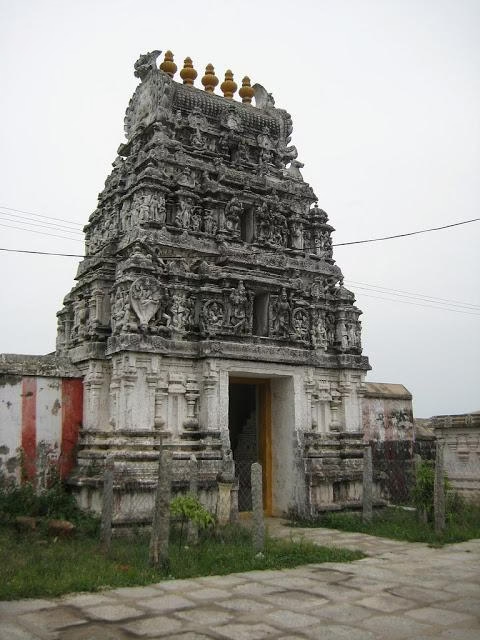
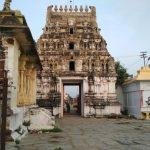
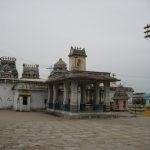
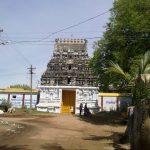
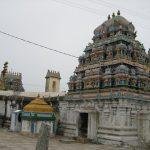
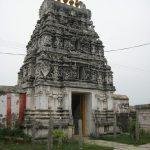
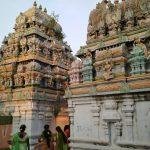
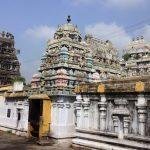
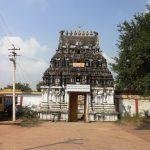
The temple showcases classic Dravidian architecture. It is east-facing with a imposing three-tiered Rajagopuram (main gateway).
Key Structural Elements
- Sanctum Sanctorum (Garbhagriha): Houses the self-manifested (Swayambhu) Lingam of Sampangi Pitchaaleeswarar facing east.
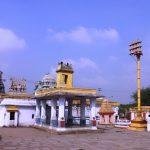
- Nandhi Mandapam: An ancient structure housing Sri Nandhigeswarar (Nandhi), the divine bull, facing the sanctum.
- Thirukalyana Mandapam: A spacious hall located to the right of the Rajagopuram used for conducting celestial weddings.
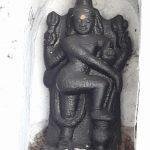
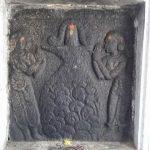
- Niche Idols: The sanctum walls feature niche sculptures of Ganapathy, Dakshina Moorthy, Mahavishnu, Brahma, and Durga.
Notable Shrines in the Complex
- Sivakamavalli Amman: Located adjacent to the main sanctum.
- Natarajar: Situated just outside the sanctum, facing south.
- Paadham of Ambal: A rare shrine housing the footprints of the Goddess located outside the sanctum.
- Sani Bhagwan: Located on the eastern side, facing west.
- Special Shrines: Separate shrines for Ayyappan (western side), Annamalaiyar, and Kalahastheeswarar.
- Rahu-Ketu: A combined shrine for these shadow planets.
This is also the birthplace of Shri Sankara Vijayendra Saraswathy (Bala Periyava), and the Kanchi Mutt has acquired the historic house adjacent to the temple, constructing an Adi Shankara temple there.
4. Darshan & Ritual Logistics
Devotees can participate in various sevas (ritual services). While specific online portals vary by administration, this section details the standard timings and rituals.
Daily Temple Timings
| Session | Timing |
|---|---|
| Morning Darshan | 06:00 AM – 11:00 AM |
| Afternoon Break | 11:00 AM – 04:30 PM |
| Evening Darshan | 04:30 PM – 08:30 PM |
| Thiruvamanam (Night) | 08:30 PM – 09:00 PM |
Key Sevas & Booking
Note: For specific “Online Seva Booking”, devotees should check the official Tamil Nadu HR&CE (Hindu Religious and Charitable Endowments) website or local temple administration offices.
- Abhishekam: Performed generally during morning hours. Milk, honey, and sandalwood paste are common offerings.
- Archana: Individual name recitation for devotees. Can be performed at the counter before Darshan.
- Rudra Abhishekam: A special Vedic ritual for highly auspicious results.
- Pradosham: Highly significant on the 13th waxing/waning moon. Special Abhishekam is performed.
2026 Festival Calendar (Tentative)
- Maha Shivaratri: February 26, 2026 (Major Celebration).
- Navaratri: September 22 – October 1, 2026 (9 Nights of Goddess Worship).
- Aadi Perukku: July 29, 2026 (Observed on the banks of the Arani River).
- Arudra Darshanam: January 5, 2026 (Celebrating Natarajar).
5. Practical Visitor Guidance
To ensure a peaceful Darshan and respectful visit, please adhere to the following guidelines.
Visitor Etiquette
- Dress Code: Traditional Indian attire is mandatory. Men should wear dhotis or trousers with shirts; women should wear sarees, salwar kameez, or long skirts. Avoid shorts and t-shirts.
- Photography: Photography is generally prohibited inside the sanctum sanctorum. Please seek permission for the outer complex.
- Mobile Phones: Silent mode is required. Many temples provide lockers near the entrance for electronic devices.
- Accessibility: The inner sanctum has stone steps. The outer prakaram (circumambulatory path) is spacious and accessible for senior citizens with assistance.
Crowd Management & Seasonal Advice
- Best Hours: The least crowded time is between 9:00 AM and 10:30 AM, or immediately after the evening reopening at 4:30 PM.
- Summer (May – June): Temperatures in Thiruvallur can soar. Carry a water bottle (plastic-free) and an umbrella. The temple provides free water facilities.
- Monsoon (October – November): The Arani river swells during this period. The temple atmosphere is lush, but carry rain gear.
6. Pilgrimage Connectivity
The temple is located in Arani village, approximately 41 km north of Chennai, making it accessible via road and rail.
How to Reach
- By Road: From Chennai, take NH 16 (formerly NH 5) towards Red Hills. Proceed towards Gummidipoondi via the Ponneri-Arani road. Local buses are frequent from Ponneri and Periyapalayam.
- By Train: The nearest major railway station is Kavaraippettai (approx. 11 km). Alternatively, Gummidipoondi Railway Station is about 16 km away. Auto-rickshaws are available from these stations.
- By Air: Chennai International Airport (MAA) is the nearest airport, roughly 54 km away.
Nearby Sacred Sites (Pilgrimage Circuit)
Extend your spiritual journey by visiting these nearby temples:
- Periyapalayam Temple (5 km): A renowned temple dedicated to Sri Rajarajeswari (Amman), famous for the monthly Pushpa Abhishekam.
- Pallikondeswaram Temple (Surutapalli) (12 km): The nearest temple in the Pancha Brahma series, where Lord Shiva is reclining (Sayana) posture.
- Thirumazhisai (18 km): One of the 108 Divya Desams dedicated to Lord Vishnu, famous for the Thirumazhisai Alwar shrine.
7. Frequently Asked Questions (FAQ)
What is the significance of the name “Pitchaaleeswarar”?
Pitchaalam translates to poison (referencing the Halahala poison Lord Shiva consumed during the churning of the ocean). As the protector who consumed poison, he is revered as Pitchaaleeswarar. The addition of “Sampangi” refers to the flower bushes from which the Lingam was discovered.
Is there a VIP Darshan entry?
While special entry tickets exist in most government-managed temples for a nominal fee, devotees are encouraged to participate in the general Seva offerings (Archana/Abhishekam) which often allow for a closer, albeit timed, Darshan. Check the counter at the entrance for current rates.
Are there accommodation facilities near the temple?
Basic lodges and guest houses are available in the nearby town of Ponneri (15 km) and Thiruvallur (35 km). For Chennai visitors, day trips are feasible. The temple administration does not run a dedicated guest house, but local devotees often assist pilgrims.
What is the best time to visit the temple for photography?
Early morning (7:00 AM) offers the best natural light for the exterior architecture and the river bank. The Gopuram looks particularly majestic during sunset hours (6:00 PM) when the lamps are lit.
Can we perform Shradh ceremonies here?
Yes, due to its location on the banks of the Arani River (a tributary of Kosasthalaiyar), the temple is considered auspicious for performing Shradh and Tharpanam rituals for ancestors, especially during the Mahalaya period.
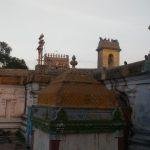
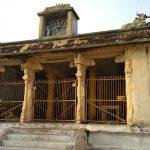
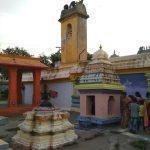
Photo Gallery
Contact & Official Details
Temple Location:
Arani Village, Thiruvallur District, Tamil Nadu 601201
Phone: (Please contact the local HR&CE office in Ponneri or Tiruvallur for the current landline number as specific lines are updated periodically).
Recent Posts

Shri Kaamkoteeshwar Mandir, Varanasi – History & Significance
In the heart of Kashi, the eternal city of Lord Shiva, where the Ganges flows with celestial grace, stands the Shri Kaamkoteeshwar Mandir. This sacred Sannidhi is not merely a temple but a profound spiritual bridge between the Northern…

ओ सांवरे तूने ही मुझको संभाला – Lyrics & Meaning
ओ सांवरे तूने ही मुझको संभाला – A Prayer to Shyam Origin & Spiritual Essence Why This Bhajan Resonates Devotees chant this when overwhelmed by life’s storms—the refrain ‘तूने ही मुझको संभाला’ is the soul’s sigh of relief: “You…

कथा ये है महाराज मेरे की – Lyrics & Meaning
कथा ये है महाराज मेरे की छत्रपति संभाजी महाराज – A Prayer to Chhatrapati Sambhaji Maharaj Origin & Spiritual Essence Why This Bhajan Resonates Devotees chant this when their spirit feels tested—its powerful refrain “महाराज मेरे” is a soul’s…

Rigveda Samhita Yathartha Anuvada (ऋग्वेद संहिता यथार्थ अनुवाद) – Complete Set with Anvayartha & Hindi/English Translation
The Rigveda is the oldest surviving scripture of humanity and the foundational text of Sanātana Dharma. For serious students, scholars, UPSC aspirants studying ancient Indian history, Sanskrit learners, and spiritual seekers, a precise and grammatically structured translation is indispensable.…

आना भी अकेला है जाना भी अकेला है – Lyrics & Meaning | BharatTemples
आना भी अकेला है जाना भी अकेला है – A Prayer to the Divine Witness Origin & Spiritual Essence Why This Bhajan Resonates Devotees turn to this bhajan in moments of deep reflection—when life’s attachments begin to ache. The…

माता शेरावाली के द्वार जो भी जाता है – Lyrics & Meaning
माता शेरावाली के द्वार जो भी जाता है – A Prayer to Maa Sherawali Origin & Spiritual Essence Why This Bhajan Resonates Devotees turn to this bhajan in times of fear or uncertainty—its promise that no one leaves Maa’s…

मार लेना सपणी उबार लेणा भवरा – Lyrics & Meaning
मार लेना सपणी उबार लेणा भवरा – A Prayer to the Divine Beloved Origin & Spiritual Essence Why This Bhajan Resonates Devotees chant this in moments of deep vulnerability—its cry of “मार लेना सपणी, उबार लेणा भवरा” is the…

हमें श्याम सुंदर भरोसा तुम्हारा – Lyrics & Meaning
हमें श्याम सुंदर भरोसा तुम्हारा – A Prayer to Shyam Sundar Origin & Spiritual Essence Why This Bhajan Resonates Devotees chant this when feeling alone—its refrain ‘de do sahara’ is the soul’s cry for divine support. Lyrics in Hindi…

Mere Satguru Ne Di Thi Davai Lyrics in Hindi & Meaning
Mere Satguru Ne Di Thi Davai: Invoking the Guru’s Liberating Wisdom This soul-stirring bhajan venerates the Satguru (True Spiritual Master) as the divine physician who dispenses the only remedy for life’s deepest sufferings. Composed by Sant Karmaveer Tufani, it…

Janm Diyo Thari Maa Dukh Dekhiyo Lyrics in Hindi & Meaning
जन्म दियो थारी माँ दुख देखियो (Maa’s Grief Upon Birthing You) This soul-stirring Chetavani Bhajan (admonitory hymn) is addressed to the Divine Mother (Maa) – a call for repentance when children forget their filial duties in the dark age…