
Contents
- 1 Thirumoolanathar Temple, Puzhal: The Definitive Pilgrimage Guide (2026)
Thirumoolanathar Temple, Puzhal: The Definitive Pilgrimage Guide (2026)
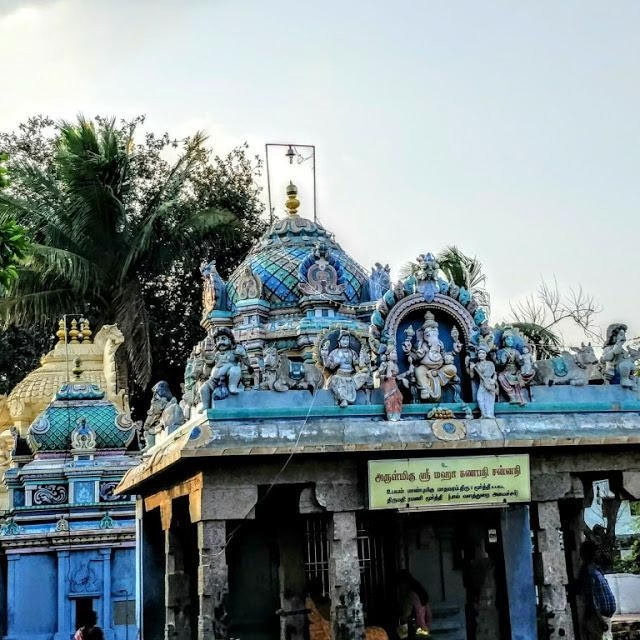
Welcome to bharattemples.com, your trusted partner in exploring the spiritual heritage of Bharat. This comprehensive guide details the sacred Thirumoolanathar Temple in Puzhal, Thiruvallur District. Known as a potent center for healing psychological ailments and ancestral karma, this temple is a hidden gem in the spiritual landscape of Tamil Nadu.
Designed for the modern pilgrim navigating Google’s AI Overviews in 2026, this guide blends scriptural authority with practical logistics. Whether you seek the darshan of the Swayambhu Lingam or wish to understand the architectural grandeur of the Pallava period, this page serves as your complete spiritual handbook.
1. Introduction & Spiritual Essence
The Divine Deity: Thirumoolanathar & Sornambigai
The primary deity of the temple is Lord Thirumoolanathar, a form of Lord Shiva. The name “Thirumoolanathar” is intrinsically linked to the legendary Tamil Siddha, Thirumoolar (also known as Agasthiyar in some contexts), who is believed to have worshipped this very Shiva Lingam. The consort is Mother Sornambigai (the Golden Goddess), housed in a separate shrine.
Phalaśruti: Why Visit This Temple?
The Thirumoolanathar Temple holds a unique spiritual distinction. According to local lore and temple records, this is a primary center for the alleviation of:
- Mental & Psychological Ailments: Devotees suffering from mental distress, depression, or psychological instability find profound peace here.
- Resolution of Ancestral Karma: Performing rituals here is believed to cleanse negative karmic imprints inherited from ancestors.
- Relief from Malefic Planetary Effects: Particularly those caused by Rahu and Ketu in one’s astrological chart.
2. Historical Origins & Scriptural Legend
Architectural Heritage & Timeline
According to temple records and historical analysis, the temple is approximately 1,300 years old. It was constructed during the Pallava Dynasty era (circa 8th Century CE). The Pallavas were prolific temple builders, laying the foundational architectural grammar for later Chola and Nayak styles.
The Sthala Purana: The Legend of Thirumoolar
Tradition holds that the sage Thirumoolar (one of the 18 Siddhas) performed intense penance here to attain spiritual liberation. His soul entered the body of a cowherd (called Moolan), leading to the name Thirumoolanathar. It is also believed that the great devotee Sundarar (one of the Nayanmars) visited and sang hymns in praise of the Lord here. The presence of Agasthiyar is also highlighted in local legends, marking the site as a powerful center for Tapasya (penance).
3. Architectural Marvels
Dravidian Architectural Style
Adhering to the classic Dravidian style, the temple features a distinct orientation facing East. The structure follows the Agama Shastras, balancing energy flows through Vastu principles.
Sanctum Sanctorum (Garbhagriha)
- The Swayambhu Lingam: The presiding deity is a Swayambhu (self-manifested) Lingam, which is large and faces East. It is adorned with a Nagabarana Kavasam (serpent shield).
- Koshta Idols: Niches along the sanctum walls house idols of Niruthiya Lingam, Dakshina Moorthy, Maha Vishnu (in place of Lingothbavar), Brahma, and Durgai.
Shrines & Mandapas
The outer and inner prakarams (circumambulatory paths) are dotted with shrines:
- Goddess Shrines: Mother Sornambigai’s shrine contains Koshta idols of Mahendri Varahi, Brahmini, Maheswari, and Narayani.
- Unique Shrines: Notable additions include Sarabeswarar, Kasi Viswanathar & Visalakshi, Ashtothra Lingam, and Swarna Akarshana Bairavar.
- The Nandhi: The sacred Bull (Nandhi) faces the sanctum, framed by the Dwajasthambam (flagpole) and Palipeedam (offering platform).
- Underground Passage: A fascinating architectural feature is the believed underground tunnel, traditionally said to connect to Thirumullaivayil and Thiruvotriyur temples.
4. Darshan & Ritual Logistics (2026 Guide)
Devotees visit primarily for Abhishekam (sacred bathing) and Archana (chanting of names). Below are the standard operational timings.
Daily Temple Timings
| Session | Timings |
|---|---|
| Morning Darshan | 06:30 AM – 11:00 AM |
| Afternoon Closing | 11:00 AM – 05:00 PM |
| Evening Darshan | 05:00 PM – 08:00 PM |
Key Sevas & Online Booking
While many rituals are performed in person, the Thirumoolanathar Temple administration (often managed by the Hindu Religious and Charitable Endowments Department) facilitates specific sevas.
- Regular Archana: Can be performed at the temple counter upon arrival.
- Special Abhishekam: Highly recommended for those seeking healing. As per the Sthala Purana, this is best performed under priest supervision.
- Online Seva Booking: For devotees wishing to book rituals remotely, please visit the HR&CE Tamil Nadu official portal (tncetemple.gov.in) and search for “Thirumoolanathar Temple, Puzhal”.
2026 Festival Calendar Highlights
Note: Specific dates are based on the Hindu Panchangam and may vary slightly based on the priest’s consultation.
- Pradosham: Every 13th/28th day of the lunar cycle (Evening worship).
- Monthly Pournami (Full Moon): Special Psychological Healing Abhishekam is conducted. This is the most auspicious time for those seeking relief from mental ailments.
- Arudra Darshan: Celebrated in December/January 2026 (honoring Lord Nataraja).
- Maha Shivaratri: March 2026 (Grand all-night festival).
- Navaratri: October 2026 (Nine nights of worship).
5. Practical Visitor Guidance
Code of Conduct & Dress Code
To maintain the sanctity of the temple:
- Dress Code: Traditional attire is mandatory. Men should wear Veshti (dhoti) or trousers with a shirt; women should wear saree, half-saree, or churidar.
- Photography: Generally restricted inside the inner sanctum (Garbhagriha). Photography is allowed in the outer prakaram, but please avoid using flash.
- Mobile Lockers: The temple provides storage facilities for electronic gadgets (mobiles/phones) at the entrance, as electronic devices are strictly prohibited inside the sanctum.
Crowd Management & Best Time to Visit
- Best Hours: Morning slots between 7:00 AM and 9:00 AM offer a peaceful Darshan. Evenings fill up quickly after 6:00 PM.
- Seasonal Advice: Puzhal, being a suburb of Chennai, experiences humid weather. Carry a water bottle. The summer months (April–June) are intense; an umbrella is recommended if visiting during daylight hours.
- Accessibility: The temple complex is on level ground. However, the inner sanctum requires climbing steps, which might be challenging for those with severe mobility restrictions.
6. Pilgrimage Connectivity
How to Reach Thirumoolanathar Temple
The temple is strategically located in Puzhal, a northern suburb of Chennai, well-connected by road and rail.
- By Road: The temple is situated on the route to Red Hills from Koyambedu. It is approximately 700 meters from the Puzhal Jail Bus Stop (Overhead Tank Bus Stop).
- By Train (Suburban): The nearest suburban railway stations are Korattur Railway Station (approx. 10 km) or Villivakkam Railway Station (approx. 9 km). From there, auto-rickshaws are readily available.
- By Air: Chennai International Airport (MAA) is approximately 28 km away.
- National Highways: The temple connects to the NH 16 (Inner Ring Road) via Puzhal, providing easy access from Chennai Central and Egmore Railway Stations (approx. 14-15 km).
Nearby Sacred Sites (Pilgrimage Circuit)
Extend your spiritual journey by visiting these nearby temples:
- Thirumullaivayil Temple: Located roughly 6 km away, this is the 63rd Paadal Petra Sthalam (One of the 275 Shiva temples revered by the Nayanmars).
- Red Hills (Kundrathur): A short drive away, housing the Sri Vedagiriswarar Temple.
- Thiruninravur (Bhootapuri): Approximately 10 km away, famous for the Athitheeswarar Temple.
7. Frequently Asked Questions (FAQs)
Is there a VIP Darshan entry?
The temple administration primarily facilitates general darshan. While there is no exclusive “VIP” category for locals, specific seva tickets (like Abhishekam tickets) allow for closer access to the deity. Devotees with medical needs (mental health recovery) are often prioritized by the priest for special attention during Pournami.
Can I visit the temple if I am non-Hindu?
While the temple is primarily a Hindu place of worship, Shiva temples are generally open to all seekers of spirituality. However, participation in specific rituals inside the sanctum is usually reserved for Hindus. Please consult the temple priest for guidance.
What is the significance of the underground tunnel?
Locals believe the temple has an ancient underground passage connecting to other major Shiva shrines in the region. While not accessible to the public today, it stands as a testament to the temple’s historical infrastructure and Pallava engineering.
Where can I park my vehicle?
There is ample parking space available near the temple tank (Oorani) located opposite the temple. It is advised to arrive early, especially on weekends and Pournami days.
How do I contact the temple for emergency rituals?
For inquiries regarding specific rituals or timing changes, you can contact the temple administration directly:
- Phone: +91 9566258425
- Address: Thirumoolanathar Temple, Puzhal, Thiruvallur District – 600 066.
Gallery
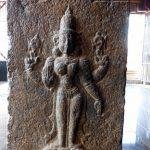
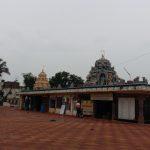
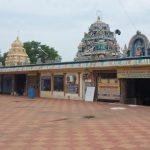
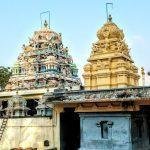
Explore the visual splendor of the Thirumoolanathar Temple through our curated gallery.








Disclaimer: While we strive to provide the most accurate and updated information for pilgrims visiting in 2026, temple timings and ritual schedules are subject to change based on local Panchangam and administrative decisions. Please verify with the temple authorities before your travel.
Recent Posts

Shri Kaamkoteeshwar Mandir, Varanasi – History & Significance
In the heart of Kashi, the eternal city of Lord Shiva, where the Ganges flows with celestial grace, stands the Shri Kaamkoteeshwar Mandir. This sacred Sannidhi is not merely a temple but a profound spiritual bridge between the Northern…

ओ सांवरे तूने ही मुझको संभाला – Lyrics & Meaning
ओ सांवरे तूने ही मुझको संभाला – A Prayer to Shyam Origin & Spiritual Essence Why This Bhajan Resonates Devotees chant this when overwhelmed by life’s storms—the refrain ‘तूने ही मुझको संभाला’ is the soul’s sigh of relief: “You…

कथा ये है महाराज मेरे की – Lyrics & Meaning
कथा ये है महाराज मेरे की छत्रपति संभाजी महाराज – A Prayer to Chhatrapati Sambhaji Maharaj Origin & Spiritual Essence Why This Bhajan Resonates Devotees chant this when their spirit feels tested—its powerful refrain “महाराज मेरे” is a soul’s…

Rigveda Samhita Yathartha Anuvada (ऋग्वेद संहिता यथार्थ अनुवाद) – Complete Set with Anvayartha & Hindi/English Translation
The Rigveda is the oldest surviving scripture of humanity and the foundational text of Sanātana Dharma. For serious students, scholars, UPSC aspirants studying ancient Indian history, Sanskrit learners, and spiritual seekers, a precise and grammatically structured translation is indispensable.…

आना भी अकेला है जाना भी अकेला है – Lyrics & Meaning | BharatTemples
आना भी अकेला है जाना भी अकेला है – A Prayer to the Divine Witness Origin & Spiritual Essence Why This Bhajan Resonates Devotees turn to this bhajan in moments of deep reflection—when life’s attachments begin to ache. The…

माता शेरावाली के द्वार जो भी जाता है – Lyrics & Meaning
माता शेरावाली के द्वार जो भी जाता है – A Prayer to Maa Sherawali Origin & Spiritual Essence Why This Bhajan Resonates Devotees turn to this bhajan in times of fear or uncertainty—its promise that no one leaves Maa’s…

मार लेना सपणी उबार लेणा भवरा – Lyrics & Meaning
मार लेना सपणी उबार लेणा भवरा – A Prayer to the Divine Beloved Origin & Spiritual Essence Why This Bhajan Resonates Devotees chant this in moments of deep vulnerability—its cry of “मार लेना सपणी, उबार लेणा भवरा” is the…

हमें श्याम सुंदर भरोसा तुम्हारा – Lyrics & Meaning
हमें श्याम सुंदर भरोसा तुम्हारा – A Prayer to Shyam Sundar Origin & Spiritual Essence Why This Bhajan Resonates Devotees chant this when feeling alone—its refrain ‘de do sahara’ is the soul’s cry for divine support. Lyrics in Hindi…

Mere Satguru Ne Di Thi Davai Lyrics in Hindi & Meaning
Mere Satguru Ne Di Thi Davai: Invoking the Guru’s Liberating Wisdom This soul-stirring bhajan venerates the Satguru (True Spiritual Master) as the divine physician who dispenses the only remedy for life’s deepest sufferings. Composed by Sant Karmaveer Tufani, it…

Janm Diyo Thari Maa Dukh Dekhiyo Lyrics in Hindi & Meaning
जन्म दियो थारी माँ दुख देखियो (Maa’s Grief Upon Birthing You) This soul-stirring Chetavani Bhajan (admonitory hymn) is addressed to the Divine Mother (Maa) – a call for repentance when children forget their filial duties in the dark age…