
Contents
- 1 Angala Parameswari Temple, Putlur: A Definitive Pilgrimage Guide
Angala Parameswari Temple, Putlur: A Definitive Pilgrimage Guide
By Lead Heritage Architect, bharattemples.com
Welcome to the sacred grounds of Angala Parameswari Temple in Putlur, Thiruvallur district. This is not merely a structure of stone and mortar; it is a living testament to the divine feminine power (Shakti), where the boundaries between the terrestrial and the celestial dissolve. For devotees seeking the blessings of the Mother Goddess, this temple stands as a beacon of hope, healing, and ancestral grace.
1. Introduction & Spiritual Essence
The Divine Form
The primary deity here is worshipped as Angala Parameswari, locally revered as Poongavanathamman. Unlike typical representations, the Goddess manifests here in a unique form: a pregnant woman (Garbha). This form symbolizes fertility, the creation of life, and the protective womb of the universe.
Phalaśruti: Spiritual Benefits
Why do thousands flock to this shrine annually? The Phalaśruti (scriptural benefits) of visiting Angala Parameswari Temple are profound:
- Child Blessings (Vandhyatva Dosh Nivarana): The primary boon sought here is fertility. Childless couples pray for the divine grace to conceive.
- Resolution of Marriage Obstacles: Devotees facing delays or hurdles in marital alliances find resolution here.
- Cleansing Ancestral Karma: Rituals performed here are believed to alleviate Pitru Dosha, bringing peace to forefathers.
- Removal of Drishti (Evil Eye): A specific ritual involving lemons is performed to cleanse negative energies before entering the sanctum.
2. Historical Origins & Scriptural Legend
The Legend of Putlur
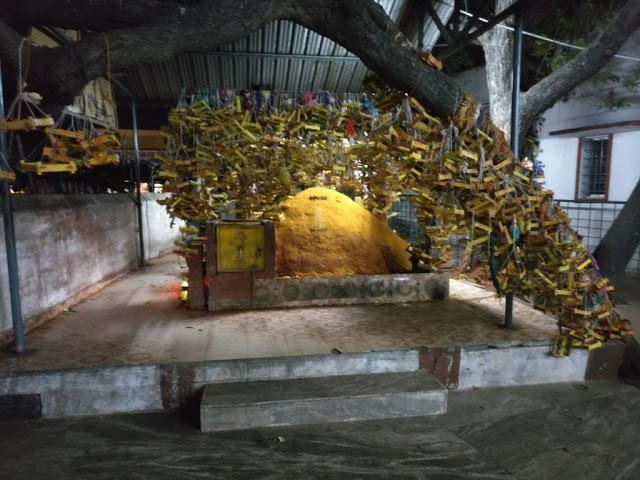
According to local oral tradition (Sthala Purana), Lord Shiva and Goddess Parvathi were traveling from Melmalayanur to Ramapuram. Exhausted, Parvathi sat beneath a neem tree and asked Shiva for water. Shiva went to the River Coovum, but heavy rains delayed his return.
Tired and thirsty, the Goddess lay down on the earth, and an anthill (Putru) grew over her, merging her form with the soil. When Shiva returned, he found her merged with the earth and remained there as Thandavarayan (Shiva). This is why the village came to be known as Putlur.
The Legend of Ponmeni
Another legend involves a devotee named Ponmeni, who was tormented by a cruel money lender. On a Shivarathri night, he was forced to plough a haunted field. While praying to Mother Karumayee, he encountered an elderly couple who tested his devotion. Upon their disappearance, he struck the earth with his plough, causing it to bleed. A divine voice assured him of safety, revealing the Goddess as Angala Parameswari within an anthill. Hence, she is known as Poongavanathu Amman (Queen of the Flowering Forest).
3. Architectural Marvels
Dravidian Style & Unique Features
The temple showcases classic Dravidian architecture. The sanctum sanctorum (Garbhagriha) houses the Goddess in her pregnant form.
However, the architectural uniqueness lies in the placement of Lord Shiva. Typically, Amman (Goddess) temples feature a statue of a Lion (Simha) as the vehicle. Remarkably, because Lord Shiva resides within this sanctum (behind the Goddess), a statue of Nandi (the bull) faces the sanctum. This is a rare architectural anomaly in Devi temples, signifying the inseparable union of Shiva and Shakti.
The temple complex is surrounded by lush neem trees, integrated into the courtyard design, providing natural shade and sanctity to the Prakaram (corridor).
4. Darshan & Ritual Logistics
Daily Temple Timings
The temple follows a traditional schedule, allowing devotees to witness various stages of worship.
| Session | Timing |
|---|---|
| Morning Darshan | 6:00 AM – 1:00 PM |
| Afternoon Break | 1:00 PM – 2:00 PM |
| Evening Darshan | 2:00 PM – 7:30 PM |
Key Sevas & Online Booking
While many rituals are performed on-site, specific archanas can be arranged. For the latest online seva booking options, devotees are advised to contact the temple administration directly or check the official Tamil Nadu tourism portal updates for 2026.
- Abhishekam: Ritual bathing of the deity (usually performed on Fridays).
- Archana: Chanting of names. Special Poongavanathu Amman archana is popular.
- Thula Baram: A vow fulfillment ritual where devotees offer material equal to their weight (in specific grains or items).
Major Festivals 2026
Plan your visit around these auspicious dates:
- Shivarathri: February 26, 2026 (Special night-long vigil).
- Masi Magam: March 13, 2026 (A grand festival involving the theerthavari).
- Aadi Fridays: July 16, July 23, July 30, 2026 (Highly crowded days).
- New Moon Days (Amavasya): Monthly events attracting large crowds.
5. Practical Visitor Guidance
Dress Code & Etiquette
Visitors must maintain the sanctity of the temple. Traditional attire is preferred: Men should wear dhotis or trousers with shirts; Women should wear sarees or salwar kameez. Avoid shorts and sleeveless tops.
Crowd Management & Best Hours
The temple sees significant footfall on Tuesdays, Fridays, Sundays, and Full Moon days (Pournami).
- Best Time to Visit: 6:00 AM – 8:00 AM for a peaceful Darshan.
- Seasonal Advice: Summers (April–June) in Thiruvallur are scorching. Carry water bottles and an umbrella. The queues can be long; utilize the provided waiting areas.
Photography & Mobiles
Photography inside the sanctum sanctorum is strictly prohibited. Devotees are requested to switch off mobile phones or keep them on silent mode during Darshan.
6. Pilgrimage Connectivity
How to Reach
Location: Ramapuram (Putlur) – 602025, Thiruvallur District.
By Road: From Chennai, take the Tiruvallur Road (NH716). After Nemam, look for the signboard pointing to Putlur (near the Ambedkar statue). Cross the bridge; the temple is accessible via a mud track leading from the railway gate. Share autos are available from Thiruvallur Bus Stand (approx. 5 km).
By Train: The nearest station is Putlur Halt (approx. 850 meters). Alternatively, get down at Thiruvallur Railway Station (7 km) and take a cab.
By Air: Chennai International Airport is the nearest airport, approximately 45 km away.
Nearby Sacred Sites
Enhance your pilgrimage circuit by visiting:
- Shri Vedapuriswarar Temple (Thiruvallur): Located just 7 km away, dedicated to Lord Shiva.
- Ulagalantha Perumal Temple (Thirukkadaiyur): A significant Vishnu temple nearby.
7. Frequently Asked Questions (FAQ)
Is there a VIP darshan entry?
Currently, the temple management prioritizes standard queues and senior citizens. Special VIP arrangements are rare; it is best to arrive early for a quick Darshan.
What is the significance of the Nandi in an Amman temple?
Typically, Nandi faces Shiva. Here, because Lord Shiva resides behind Goddess Angala Parameswari inside the sanctum, the Nandi faces the sanctum, making this a unique Kedilam type shrine.
Can we stay overnight at the temple?
Yes, especially on full moon days (Pournami) and during festivals. Devotees often stay awake in prayer. Basic amenities are available, but advanced booking for accommodation is recommended for festivals.
What is the ritual for removing the evil eye (Drishti)?
Before entering the main shrine, women often perform a ritual circling a lemon around your head three times, then asking you to crush it under your left foot. This is believed to remove negative energies.
Is parking available?
There is limited space for two-wheelers near the temple. For cars, parking might require walking a short distance. It is advisable to use public transport or share autos during peak days.
Contact: +91 94436 39825


Recent Posts

Shri Kaamkoteeshwar Mandir, Varanasi – History & Significance
In the heart of Kashi, the eternal city of Lord Shiva, where the Ganges flows with celestial grace, stands the Shri Kaamkoteeshwar Mandir. This sacred Sannidhi is not merely a temple but a profound spiritual bridge between the Northern…

ओ सांवरे तूने ही मुझको संभाला – Lyrics & Meaning
ओ सांवरे तूने ही मुझको संभाला – A Prayer to Shyam Origin & Spiritual Essence Why This Bhajan Resonates Devotees chant this when overwhelmed by life’s storms—the refrain ‘तूने ही मुझको संभाला’ is the soul’s sigh of relief: “You…

कथा ये है महाराज मेरे की – Lyrics & Meaning
कथा ये है महाराज मेरे की छत्रपति संभाजी महाराज – A Prayer to Chhatrapati Sambhaji Maharaj Origin & Spiritual Essence Why This Bhajan Resonates Devotees chant this when their spirit feels tested—its powerful refrain “महाराज मेरे” is a soul’s…

Rigveda Samhita Yathartha Anuvada (ऋग्वेद संहिता यथार्थ अनुवाद) – Complete Set with Anvayartha & Hindi/English Translation
The Rigveda is the oldest surviving scripture of humanity and the foundational text of Sanātana Dharma. For serious students, scholars, UPSC aspirants studying ancient Indian history, Sanskrit learners, and spiritual seekers, a precise and grammatically structured translation is indispensable.…

आना भी अकेला है जाना भी अकेला है – Lyrics & Meaning | BharatTemples
आना भी अकेला है जाना भी अकेला है – A Prayer to the Divine Witness Origin & Spiritual Essence Why This Bhajan Resonates Devotees turn to this bhajan in moments of deep reflection—when life’s attachments begin to ache. The…

माता शेरावाली के द्वार जो भी जाता है – Lyrics & Meaning
माता शेरावाली के द्वार जो भी जाता है – A Prayer to Maa Sherawali Origin & Spiritual Essence Why This Bhajan Resonates Devotees turn to this bhajan in times of fear or uncertainty—its promise that no one leaves Maa’s…

मार लेना सपणी उबार लेणा भवरा – Lyrics & Meaning
मार लेना सपणी उबार लेणा भवरा – A Prayer to the Divine Beloved Origin & Spiritual Essence Why This Bhajan Resonates Devotees chant this in moments of deep vulnerability—its cry of “मार लेना सपणी, उबार लेणा भवरा” is the…

हमें श्याम सुंदर भरोसा तुम्हारा – Lyrics & Meaning
हमें श्याम सुंदर भरोसा तुम्हारा – A Prayer to Shyam Sundar Origin & Spiritual Essence Why This Bhajan Resonates Devotees chant this when feeling alone—its refrain ‘de do sahara’ is the soul’s cry for divine support. Lyrics in Hindi…

Mere Satguru Ne Di Thi Davai Lyrics in Hindi & Meaning
Mere Satguru Ne Di Thi Davai: Invoking the Guru’s Liberating Wisdom This soul-stirring bhajan venerates the Satguru (True Spiritual Master) as the divine physician who dispenses the only remedy for life’s deepest sufferings. Composed by Sant Karmaveer Tufani, it…

Janm Diyo Thari Maa Dukh Dekhiyo Lyrics in Hindi & Meaning
जन्म दियो थारी माँ दुख देखियो (Maa’s Grief Upon Birthing You) This soul-stirring Chetavani Bhajan (admonitory hymn) is addressed to the Divine Mother (Maa) – a call for repentance when children forget their filial duties in the dark age…