
Contents
Introduction & Spiritual Essence
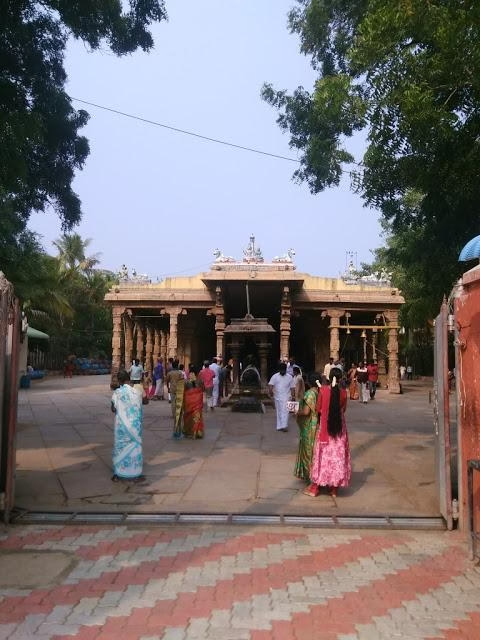
Muktheeswarar Temple, located in the vibrant city of Madurai, Tamil Nadu, stands as a testament to ancient Dravidian heritage and profound spiritual energy. This sacred shrine is dedicated to Lord Shiva, revered here as Muktheeswarar (the Lord of Liberation) and Iravadheshvarar. The consort, the Goddess Maragathavalli (emerald-hued), embodies grace and prosperity.
The temple holds a pivotal place in Hindu cosmology as one of the Pancha Bootha Sthalams of Madurai. Specifically, it represents the Vayu Sthalam (Element of Air). It is a site of immense spiritual potency where devotees seek Moksha (liberation from the cycle of birth and death) and relief from adverse planetary influences.
Phalaśruti: The Fruits of Devotion
According to temple tradition and devotional texts, a pilgrimage to Muktheesworar offers specific boons:
- Planetary Relief: It is believed that direct prayers here alleviate the malefic effects of the Navagrahas (nine planets), particularly Saturn (Shani).
- Ancestral Karma: Performing specific abhishekams cleanses ancestral lineage karma, ensuring peace for forefathers.
- Worldly Success: Devotees seeking higher education, wise progeny, and auspicious marital alliances visit to receive the blessings of Goddess Maragathavalli.
Historical Origins & Scriptural Legend
The Legend of Iravadha Nallur
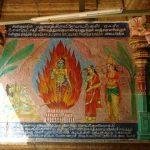
Tradition holds that this area was once known as Iravadha Nallur. Legend narrates the story of Iravadham, the divine white elephant serving Indra (King of Devas). While bearing flowers meant for Shiva’s worship, Iravadham accidentally neglected a sacred flower. The great sage Durvasa cursed the elephant, causing it to wander amidst wild herds until the curse was lifted.
Upon regaining freedom, the grateful elephant worshipped Lord Shiva at this very spot and created a tank to cleanse itself. Before returning to the celestial abode with Indra, Iravadham consecrated a Shiva Lingam here. Hence, the temple is also known as Iravadheshvarar Temple.
Construction History
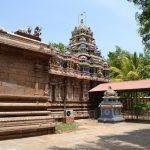
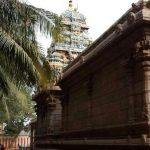
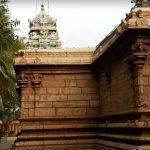
While the roots are ancient, the temple layout was significantly influenced by the Nayak dynasty, specifically during the reign of King Thirumalai Naicker (17th Century). Historical records indicate that while constructing the renowned Meenakshi Temple, sand was excavated from this site, creating a vast water tank (Theppakulam). The temple on the western bank of this tank stands as a preserved heritage structure. There is no specific rajagopuram (main tower) due to the constraints of the tank, offering a unique architectural silhouette.
Architectural Marvels
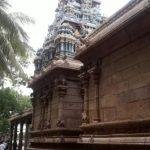
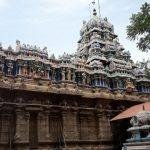
The architecture of Muktheeswarar Temple is a classic example of the Dravidian style, adhering to the strict principles of Vastu Shastra.
- The Vastu Connection: As the Vayu (Air) Sthalam, the temple is designed to facilitate the flow of energy. The absence of a towering Rajagopuram makes the temple appear grounded yet expansive, merging seamlessly with the surrounding landscape of the Teppakulam.
- The Sanctum (Garbhagriha): The Shikhara (tower) above the sanctum is distinct in its Dravidian stylization. The presiding deity, Muktheeswarar, is a Swayambhu (self-manifested) Lingam.
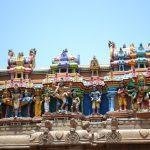
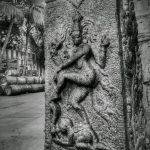
- Sculptural Details: The Mandapa (hall) leading to the sanctum features intricately carved pillars. These sculptures depict the Thiruvilayadals (divine sports/miracles) of Lord Shiva and scenes of sages in penance.
- Unique Deity: A rare idol of Ekabadramurthy is housed here, representing the unity of Brahma, Vishnu, and Shiva, supported by just two feet.
- The Solar Phenomenon: A remarkable architectural feat is observed during equinox periods. From March 10–23 and September 18–30, sun rays fall directly on the feet of Muktheesworar for approximately 20 minutes daily, symbolizing Surya (the Sun God) worshipping the Lord.
Darshan & Ritual Logistics
The temple administration maintains a regular schedule for devotees. Below are the current daily timings.
| Session | Timing | Activity |
|---|---|---|
| Morning | 6:00 AM – 11:00 AM | Abhishekam, Deepa Aradhana |
| Afternoon | 11:00 AM – 4:00 PM | Temple Closed |
| Evening | 4:00 PM – 8:30 PM | Nadaraja Darshan, Pooja |
Key Sevas (Rituals) & Online Booking
Devotees can perform various sevas to invoke blessings. For 2026, the following rituals are highly recommended:
- Panchamritham Abhishekam: Performing this ritual is believed to grant the benefits of temple consecration (Kumbhabhishekam).
- Tender Coconut Abhishekam: Specifically for those aspiring for Ashvamedha Yaga benefits or high status.
- Rice Abhishekam: For those desiring a pilgrimage to Kailash.
Online Booking: While direct online bookings for this specific historic temple are managed locally, devotees are advised to call the temple office (Contact: +91 452 234 9868) or visit the HR&CE (Hindu Religious and Charitable Endowments) Department website for Madurai district temples to reserve slots for special abhishekams in advance.
2026 Festival Calendar
Plan your visit around these major 2026 festivals:
- Thai Poosam (January): A grand theppam (float) festival is held in the Teppakulam tank. Notably, deities Sri Meenakshi and Sri Sundareswarar visit this temple and circumambulate the tank.
- Adi Pooram (July – August): Dedicated to Goddess Maragathavalli.
- Navarathri (September – October): A 9-day celebration of the Goddess.
- Thiruvadirai (Margazhi – December): Celebrated with special sandal paste bathing rituals.
Practical Visitor Guidance
Code of Conduct & Dress Code
To maintain the sanctity of the Vayu Sthalam:
- Attire: Traditional Indian clothing (Dhoti, Saree, or Kurta) is mandatory. Western attire is strictly prohibited.
- Photography: Photography is prohibited inside the inner sanctum (Garbhagriha). You may photograph the outer mandapas and tank.
- Mobile Phones: Electronic devices should be silenced. While lockers may not be available at this smaller historic site, it is advisable to carry minimal belongings.
Crowd Management & Best Time to Visit
- Best Time: The Morning Darshan (6:00 AM – 8:00 AM) is the most peaceful and spiritually charged time.
- Seasonal Advice: Madurai can be extremely hot in May and June. If visiting then, carry water and an umbrella. The tank area provides some shade, but direct sun exposure is significant.
- Accessibility: The temple is on level ground, making it accessible for elderly devotees, though the inner sanctum requires climbing a small step.
Pilgrimage Connectivity
How to Reach Muktheeswarar Temple
The temple is located in Vandiyur, south of the Vaigai River.
- By Air: Madurai International Airport (IXM) is approximately 13 km away (25 mins by taxi).
- By Rail: Madurai Junction (MDU) is roughly 6 km away. Auto-rickshaws are readily available.
- By Road: The temple is well-connected via State Highway 39. Town buses are available from Periyar Bus Stand (5 km) and Mattuthavani Bus Terminus (5 km). The nearest bus stop is Teppakulam Bus Stop (600 meters).
Nearby Sacred Sites (The Madurai Circuit)
Extend your pilgrimage to these nearby holy sites:
- Vandiyur Mariyamman Temple: Located just 400 meters away, famous for its annual Theppothsavam.
- Meenakshi Amman Temple: The heart of Madurai (3.5 km away). A visit here is incomplete without seeing the Pancha Bootha Sthalams surrounding the main shrine.
- Thiruparankundram Murugan Temple: Located 12 km away, this is the first among the six abodes (Arupadaiveedu) of Lord Murugan.
Photo Gallery
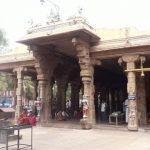
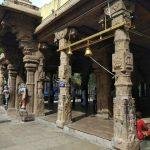
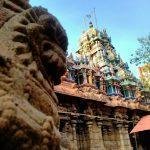
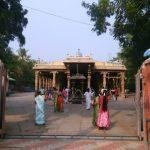
Frequently Asked Questions
1. Is there a VIP Darshan entry?
Muktheeswarar Temple functions as a heritage site managed by the local community and HR&CE. Unlike large commercialized temples, there is generally no separate VIP entry. However, prior booking for specific Abhishekam rituals allows for priority access during those specific time slots.
Due to the unique solar phenomenon mentioned in the history, where the Sun God’s rays directly fall on the presiding deity every March and September, it is believed that Lord Surya is perpetually worshipping Muktheeswarar here. Thus, a separate Navagraha shrine is not deemed necessary.
3. What is the significance of the Vilwa tree here?
The Sthala Vriksham (holy tree) is the Vilwa (Bael). This temple is unique because it hosts four varieties of Vilwa: Nelli, Kiluvai, Mavilangai, and Vilwa. Lighting a lamp here on a bright moon day for 48 days is believed to fulfill specific wishes.
4. Can we perform rituals for ancestors?
Yes. As the temple is on the banks of the Vaigai (Theertham) and represents the Air element, performing tarpanam or offering clothes (Vastras) to the deity is considered highly auspicious for ancestral peace.
5. What are the contact details for emergencies?
Temple Office: +91 452 234 9868 / 234 4360
Address: Muktheeswarar Temple, Theppakulam, Madurai – 625009.
Recent Posts

Shri Kaamkoteeshwar Mandir, Varanasi – History & Significance
In the heart of Kashi, the eternal city of Lord Shiva, where the Ganges flows with celestial grace, stands the Shri Kaamkoteeshwar Mandir. This sacred Sannidhi is not merely a temple but a profound spiritual bridge between the Northern…

ओ सांवरे तूने ही मुझको संभाला – Lyrics & Meaning
ओ सांवरे तूने ही मुझको संभाला – A Prayer to Shyam Origin & Spiritual Essence Why This Bhajan Resonates Devotees chant this when overwhelmed by life’s storms—the refrain ‘तूने ही मुझको संभाला’ is the soul’s sigh of relief: “You…

कथा ये है महाराज मेरे की – Lyrics & Meaning
कथा ये है महाराज मेरे की छत्रपति संभाजी महाराज – A Prayer to Chhatrapati Sambhaji Maharaj Origin & Spiritual Essence Why This Bhajan Resonates Devotees chant this when their spirit feels tested—its powerful refrain “महाराज मेरे” is a soul’s…

Rigveda Samhita Yathartha Anuvada (ऋग्वेद संहिता यथार्थ अनुवाद) – Complete Set with Anvayartha & Hindi/English Translation
The Rigveda is the oldest surviving scripture of humanity and the foundational text of Sanātana Dharma. For serious students, scholars, UPSC aspirants studying ancient Indian history, Sanskrit learners, and spiritual seekers, a precise and grammatically structured translation is indispensable.…

आना भी अकेला है जाना भी अकेला है – Lyrics & Meaning | BharatTemples
आना भी अकेला है जाना भी अकेला है – A Prayer to the Divine Witness Origin & Spiritual Essence Why This Bhajan Resonates Devotees turn to this bhajan in moments of deep reflection—when life’s attachments begin to ache. The…

माता शेरावाली के द्वार जो भी जाता है – Lyrics & Meaning
माता शेरावाली के द्वार जो भी जाता है – A Prayer to Maa Sherawali Origin & Spiritual Essence Why This Bhajan Resonates Devotees turn to this bhajan in times of fear or uncertainty—its promise that no one leaves Maa’s…

मार लेना सपणी उबार लेणा भवरा – Lyrics & Meaning
मार लेना सपणी उबार लेणा भवरा – A Prayer to the Divine Beloved Origin & Spiritual Essence Why This Bhajan Resonates Devotees chant this in moments of deep vulnerability—its cry of “मार लेना सपणी, उबार लेणा भवरा” is the…

हमें श्याम सुंदर भरोसा तुम्हारा – Lyrics & Meaning
हमें श्याम सुंदर भरोसा तुम्हारा – A Prayer to Shyam Sundar Origin & Spiritual Essence Why This Bhajan Resonates Devotees chant this when feeling alone—its refrain ‘de do sahara’ is the soul’s cry for divine support. Lyrics in Hindi…

Mere Satguru Ne Di Thi Davai Lyrics in Hindi & Meaning
Mere Satguru Ne Di Thi Davai: Invoking the Guru’s Liberating Wisdom This soul-stirring bhajan venerates the Satguru (True Spiritual Master) as the divine physician who dispenses the only remedy for life’s deepest sufferings. Composed by Sant Karmaveer Tufani, it…

Janm Diyo Thari Maa Dukh Dekhiyo Lyrics in Hindi & Meaning
जन्म दियो थारी माँ दुख देखियो (Maa’s Grief Upon Birthing You) This soul-stirring Chetavani Bhajan (admonitory hymn) is addressed to the Divine Mother (Maa) – a call for repentance when children forget their filial duties in the dark age…