
Contents
- 1 Introduction & Spiritual Essence
- 2 Historical Origins & Scriptural Legend
- 3 Architectural Marvels
- 4 Darshan & Ritual Logistics (2026 Update)
- 5 Practical Visitor Guidance
- 6 Pilgrimage Connectivity
- 7 Frequently Asked Questions (FAQ)
- 7.1 1. Is there a VIP Darshan entry at Achiramavalli Amman Temple?
- 7.2 2. What is the significance of the Kollidam River for this temple?
- 7.3 3. Are there accommodation facilities available at the temple?
- 7.4 4. What is the best time to visit with children?
- 7.5 5. Can we perform rituals for ancestors (Pithru Tarpanam)?
Introduction & Spiritual Essence
Nestled on the serene northern banks (Vadakarai) of the sacred Kollidam River in the tranquil village of Anbil, the Achiramavalli Amman Temple stands as a beacon of divine grace and protective maternal energy. This ancient temple is dedicated to Goddess Achiramavalli, a powerful manifestation of Shakti, revered as the fierce mother who removes obstacles and bestows longevity upon her devotees.
Phalaśruti (Spiritual Benefits): Devotees flock to this temple primarily for Dosha Nivarana (removal of afflictions). It is believed that a sincere darshan of Achiramavalli Amman helps cleanse ancestral karma, particularly those stemming from Rahu-Ketu dosham or planetary afflictions. Women seeking marital harmony and the long life of their husbands often perform special abhishekams here. Unlike the bustling commercial centers of major cities, Anbil offers a deeply meditative atmosphere where the divine feminine energy is palpable and immediate.
Historical Origins & Scriptural Legend
The exact date of construction is lost to the mists of time, but temple records and local lore indicate origins tracing back to the Pallava and Early Chola periods (circa 8th–10th century CE). The architecture bears the hallmarks of early Dravidian craftsmanship, suggesting royal patronage from local chieftains who ruled the Trichy-Tiruvaiyaru belt.
Sthala Purana (Local Legend): Tradition holds that the Goddess appeared here to protect the villagers from a devastating epidemic. The name “Achiramavalli” is often linked to the Asura (demon) Gajamuga or associated with the removal of sorcery and black magic (Mantra shastra). Locals believe the Goddess resides here in a Swayambhu (self-manifested) form, enshrined within the sanctum to guard the region against the overflow of the Kollidam river, acting as the protector of the Azhwar saints who performed penance on the opposite bank.
Architectural Marvels
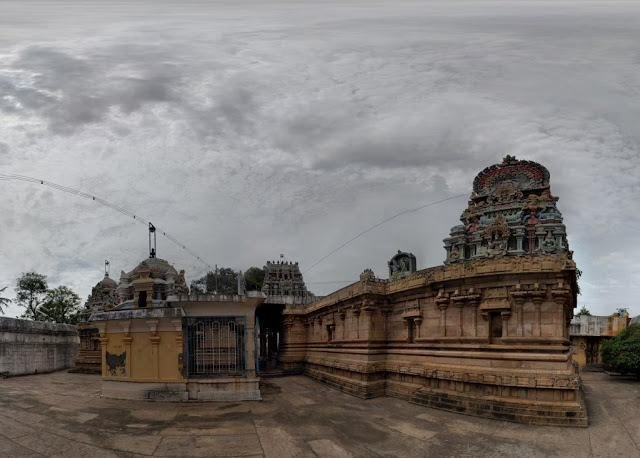
The temple exemplifies classic Dravidian Architecture. The structure is oriented according to Vastu Shastra, facing the East to align with the rising sun and the flow of the Kollidam.
- The Shikhara (Vimana): The Rajagopuram (entrance tower) is modest yet striking, welcoming devotees into a courtyard defined by stone pillars.
- Mandapas: A pillared Mandapa (hall) separates the inner sanctum from the outer precincts, featuring sculptures depicting mythological narratives of the Devi.
- Sanctum Sanctorum (Garbhagriha): The central shrine houses the idol of Achiramavalli Amman, richly adorned with jewels and sarees. Adjacent shrines honor Lord Shiva and Lord Vishnu, signifying the unity of Shaiva and Vaishnava traditions.
- Prakaram (Outer Courtyard): The temple is surrounded by a lush green landscape, offering a peaceful circumambulation path.
While not a UNESCO site, the temple is a protected heritage monument under the oversight of the Archaeological Survey of India (ASI) for its historical significance in the Kollidam basin.
Darshan & Ritual Logistics (2026 Update)
To facilitate a smooth pilgrimage experience, devotees can adhere to the following schedule. Please note that timings may vary slightly during festivals.
| Session | Timings | Duration |
|---|---|---|
| Morning Darshan | 06:00 AM – 12:00 PM | 6 Hours |
| Afternoon Break | 12:00 PM – 04:00 PM | 4 Hours |
| Evening Darshan | 04:00 PM – 08:00 PM | 4 Hours |
Key Sevas & Online Booking
Popular sevas performed at the temple include:
- Abhishekam: Performed with milk, honey, and sandalwood paste.
- Archana: Recitation of hymns dedicated to Amman.
- Thulabaram: Offering grains or fruits equal to one’s weight.
Online Booking: For the convenience of devotees, seva bookings can be processed via the official Tamil Nadu HR & CE (Hindu Religious and Charitable Endowments) portal. Please visit the Tamil Nadu Tourism website for the latest gate pass issuance.
2026 Festival Dates
Mark your calendars for the upcoming auspicious events:
- Chithirai Thiruvizha (Temple Car Festival): April 14 – April 22, 2026
- Navaratri (Festival of Nights): September 22 – October 1, 2026
- Karthigai Deepam: November 8, 2026
- Margazhi Festival: December 16, 2026 – January 13, 2027
Practical Visitor Guidance
Respect for the sanctity of the temple is paramount.
- Dress Code: Traditional attire is recommended. Men should wear Dhotis or full-length trousers and shirts. Women should wear sarees, salwar kameez, or skirts.
- Photography: Photography is strictly prohibited inside the Garbhagriha (inner sanctum). Discretion is advised in the outer courtyards.
- Mobile Lockers: There are no official mobile lockers available. It is advisable to travel light and leave valuables in your vehicle.
- Accessibility: The temple has narrow entrances. Wheelchair access is limited to the outer courtyard only.
Crowd Management & Seasonal Advice
- Best Hours: The optimal time for a peaceful Darshan is between 6:00 AM – 7:30 AM or 5:30 PM – 6:30 PM.
- Seasonal Tips: During the peak summer months (May), Anbil can be quite hot. Carry water bottles and a hand fan. The temple is situated near the river, making mornings and evenings cooler.
Pilgrimage Connectivity
Anbil is well-connected to major pilgrimage hubs in the Trichy district.
How to Reach
- By Air: Trichy International Airport (TRZ) is the nearest airport, approximately 33 km away.
- By Rail: The nearest railway station is Lalgudi (7 km). Trichy Junction (Tiruchirappalli) is the major hub, 29 km away.
- By Road: The temple is located on the Anbil Main Road. It is approximately 7 km from Lalgudi via the Trichy–Thanjavur NH 83. Buses are available from Trichy Chathiram Bus Stand (Route No. 93) and Lalgudi.
Nearby Sacred Sites
Extend your spiritual journey by visiting these nearby temples:
- Samayapuram Mariamman Temple: (15 km) One of the most powerful Amman temples in South India.
- Srirangam Ranganathaswamy Temple: (21 km) A Vaishnavite hub and architectural wonder.
- Koviladi (Pandya Naadu): (17 km) Home to the Adhi Kesava Perumal temple on the banks of the Kollidam.

Frequently Asked Questions (FAQ)
1. Is there a VIP Darshan entry at Achiramavalli Amman Temple?
Yes, for senior citizens and physically disabled devotees, special arrangements can be made by requesting the temple administrator at the entrance. Standard VIP passes are available through the HR & CE online portal for a nominal fee during festivals.
2. What is the significance of the Kollidam River for this temple?
The temple is situated on the Vadakarai (North bank) of the Kollidam. The river is considered highly auspicious here. Devotees traditionally perform rituals facing the river, and the cooling breeze from the water adds to the spiritual ambiance.
3. Are there accommodation facilities available at the temple?
There are no lodging facilities within the temple complex. However, pilgrims can find decent guest houses and lodges in Lalgudi (7 km) and Trichy (29 km).
4. What is the best time to visit with children?
Early morning (6:00 AM – 8:00 AM) is best. Avoid festival days if traveling with very young children due to heavy crowds. The courtyard is shaded in the morning, providing a comfortable environment.
5. Can we perform rituals for ancestors (Pithru Tarpanam)?
While the primary deity is Goddess Achiramavalli, rituals for ancestors are usually performed on the banks of the Kollidam river adjacent to the temple. Consult the temple priest for specific guidance.
Recent Posts

Shri Kaamkoteeshwar Mandir, Varanasi – History & Significance
In the heart of Kashi, the eternal city of Lord Shiva, where the Ganges flows with celestial grace, stands the Shri Kaamkoteeshwar Mandir. This sacred Sannidhi is not merely a temple but a profound spiritual bridge between the Northern…

ओ सांवरे तूने ही मुझको संभाला – Lyrics & Meaning
ओ सांवरे तूने ही मुझको संभाला – A Prayer to Shyam Origin & Spiritual Essence Why This Bhajan Resonates Devotees chant this when overwhelmed by life’s storms—the refrain ‘तूने ही मुझको संभाला’ is the soul’s sigh of relief: “You…

कथा ये है महाराज मेरे की – Lyrics & Meaning
कथा ये है महाराज मेरे की छत्रपति संभाजी महाराज – A Prayer to Chhatrapati Sambhaji Maharaj Origin & Spiritual Essence Why This Bhajan Resonates Devotees chant this when their spirit feels tested—its powerful refrain “महाराज मेरे” is a soul’s…

Rigveda Samhita Yathartha Anuvada (ऋग्वेद संहिता यथार्थ अनुवाद) – Complete Set with Anvayartha & Hindi/English Translation
The Rigveda is the oldest surviving scripture of humanity and the foundational text of Sanātana Dharma. For serious students, scholars, UPSC aspirants studying ancient Indian history, Sanskrit learners, and spiritual seekers, a precise and grammatically structured translation is indispensable.…

आना भी अकेला है जाना भी अकेला है – Lyrics & Meaning | BharatTemples
आना भी अकेला है जाना भी अकेला है – A Prayer to the Divine Witness Origin & Spiritual Essence Why This Bhajan Resonates Devotees turn to this bhajan in moments of deep reflection—when life’s attachments begin to ache. The…

माता शेरावाली के द्वार जो भी जाता है – Lyrics & Meaning
माता शेरावाली के द्वार जो भी जाता है – A Prayer to Maa Sherawali Origin & Spiritual Essence Why This Bhajan Resonates Devotees turn to this bhajan in times of fear or uncertainty—its promise that no one leaves Maa’s…

मार लेना सपणी उबार लेणा भवरा – Lyrics & Meaning
मार लेना सपणी उबार लेणा भवरा – A Prayer to the Divine Beloved Origin & Spiritual Essence Why This Bhajan Resonates Devotees chant this in moments of deep vulnerability—its cry of “मार लेना सपणी, उबार लेणा भवरा” is the…

हमें श्याम सुंदर भरोसा तुम्हारा – Lyrics & Meaning
हमें श्याम सुंदर भरोसा तुम्हारा – A Prayer to Shyam Sundar Origin & Spiritual Essence Why This Bhajan Resonates Devotees chant this when feeling alone—its refrain ‘de do sahara’ is the soul’s cry for divine support. Lyrics in Hindi…

Mere Satguru Ne Di Thi Davai Lyrics in Hindi & Meaning
Mere Satguru Ne Di Thi Davai: Invoking the Guru’s Liberating Wisdom This soul-stirring bhajan venerates the Satguru (True Spiritual Master) as the divine physician who dispenses the only remedy for life’s deepest sufferings. Composed by Sant Karmaveer Tufani, it…

Janm Diyo Thari Maa Dukh Dekhiyo Lyrics in Hindi & Meaning
जन्म दियो थारी माँ दुख देखियो (Maa’s Grief Upon Birthing You) This soul-stirring Chetavani Bhajan (admonitory hymn) is addressed to the Divine Mother (Maa) – a call for repentance when children forget their filial duties in the dark age…