
Contents
- 1 Introduction & Spiritual Essence of Deo Somnath
- 2 Historical Origins & Scriptural Legend
- 3 Architectural Marvels: Malwa Style & Vastu
- 4 Darshan & Ritual Logistics
- 5 Photo Gallery
- 6 Practical Visitor Guidance
- 7 Pilgrimage Connectivity
- 8 Frequently Asked Questions (FAQs)
- 8.1 1. Is there a VIP darshan entry at Deo Somnath Temple?
- 8.2 2. What is the significance of the temple’s subterranean sanctum?
- 8.3 3. Are there accommodation facilities near the temple?
- 8.4 4. What materials were used to construct the temple?
- 8.5 5. What is the best way to reach Deo Somnath from Udaipur?
Introduction & Spiritual Essence of Deo Somnath
Nestled amidst the rugged hills of the Vagad region in Rajasthan, the Deo Somnath Temple in Dungarpur stands as a timeless testament to devotion and architectural grandeur. Dedicated to Bhagwan Shiv, this ancient shrine is revered as a divya kshetra (sacred pilgrimage site). The presiding deity is a Swayambhu (self-manifested) Shivling, which radiates a profound spiritual energy that has drawn pilgrims for centuries.
Devotees visit this temple to offer prayers for inner peace, prosperity, and the Moksha (liberation) of ancestors. According to spiritual beliefs, performing rituals here helps cleanse ancestral karma and brings harmony to the family lineage. The sanctity of the place, combined with the natural beauty of Dungarpur, makes it a unique destination for both Bhakti (devotion) and Shanti (peace).
Historical Origins & Scriptural Legend
The temple traces its origins to the 12th Century AD, built by the valiant Local Rajput Rulers of the region. It reflects the rich cultural heritage of the Malwa region (though Dungarpur is in Southern Rajasthan, it shares architectural links with Malwa style).
Historical Inscriptions: The temple walls bear silent witness to history through ancient inscriptions. Two notable inscriptions found within the complex belong to the reigns of:
- Maharawal Gopinath (AD 1424–1447)
- Maharawal Sesmal (AD 1586–1606)
These records not only confirm the temple’s antiquity but also highlight the patronage it received from successive rulers. Tradition holds that the temple was built on a site where Bhagwan Shiv appeared in a dream to the then ruler, instructing him to excavate the ground where the self-manifested Lingam was discovered.
Architectural Marvels: Malwa Style & Vastu
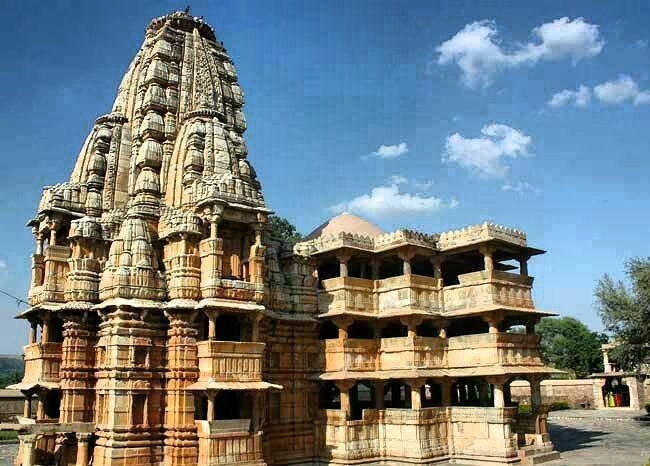
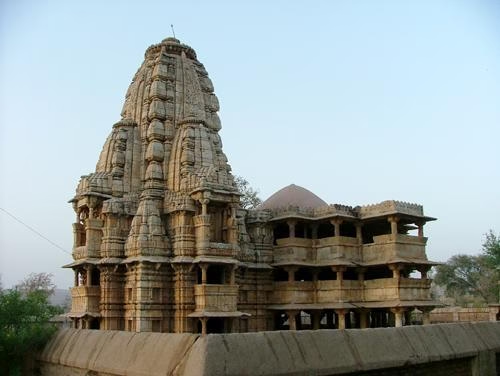
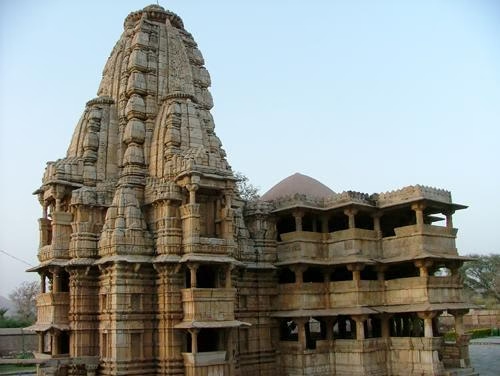
Deo Somnath is a masterpiece of the Malwa style of temple architecture. The structure is constructed using huge slabs of micaceous schist and gneiss, locally available stone that gives the temple its distinctive grey hue and rugged durability.
Key Architectural Features:
- Subterranean Sanctum (Garbhagriha): Uniquely, the main sanctum is sunk approximately 2.7 meters below ground level, creating a mystical, cave-like atmosphere for the Darshan of the deity.
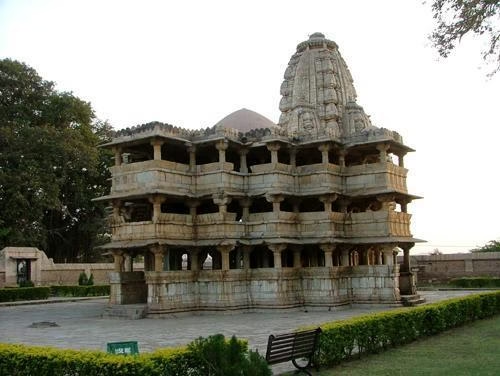
- Three-Storeyed Structure: The temple rises with a three-story elevation, dominated by a towering Shikhara (spire) featuring prominent Ratha (vertical facet) projections.
- Mandapa & Roof: The Sabhamandapa (assembly hall) is topped with a unique Samvarana roof and features three entrance porches, allowing devotees entry from multiple sides.
- Enclosure: The entire complex is enclosed by a high wall known as the Prakara, which protects the sanctity of the shrine.
- False Ceiling: Above the sanctum, a false ceiling supports the rising Shikhara, an engineering marvel of the 12th century.
While not officially designated as an ASI (Archaeological Survey of India) protected monument of national importance, the temple is maintained with high reverence and represents the zenith of regional craftsmanship.
Darshan & Ritual Logistics
Visitors can participate in various Sevas (offerings) to enhance their spiritual experience. The temple administration is gradually digitizing processes, though on-site bookings remain popular.
Daily Darshan Timings (2026 Schedule)
| Time Slot | Duration | Activity |
|---|---|---|
| Morning | 5:00 AM – 12:00 PM | Mangala Aarti, Abhishekam, General Darshan |
| Afternoon | 12:00 PM – 4:00 PM | Temple Rest / Cleaning (Closed for General Public) |
| Evening | 4:00 PM – 9:00 PM | Shayan Aarti, Darshan |
*Timings may vary slightly on festivals. Arrive 15 minutes prior to Aarti times for reserved seating.*
Online Seva Booking
While the temple is historically ancient, the facility for online seva booking is managed via the district administration or local digital portals. For specific rituals like Abhishekam (ritual bathing of the deity) or Archana (recitation of names), devotees are advised to visit the official Dungarpur district religious board website or inquire at the temple counter upon arrival.
Major 2026 Festivals
Deo Somnath Temple is vibrant during these specific dates in 2026:
- Maha Shivaratri: February 26, 2026 (Special night-long Jagran and Abhishekam).
- Sawan Somvar: Mondays between July 14 and August 11, 2026 (Extremely crowded; devotees wear green attire).
- Pradosh Vrat: 13th and 28th of every month (Evening Aarti is highly significant).
Photo Gallery
Practical Visitor Guidance
To ensure a smooth Yatra (pilgrimage), please adhere to the following guidelines:
Dress Code & Etiquette
Visitors must dress modestly. Traditional Indian attire (Saree, Kurta-Pajama, Dhoti) is preferred. Western clothing should be avoided, especially for entry into the inner sanctum. Remove footwear before entering the temple premises (designated parking is available).
Photography & Mobiles
Photography is generally permitted in the outer courtyards and mandapas but is strictly prohibited inside the Garbhagriha (sanctum). Silence should be maintained near the deity. Mobile lockers are available at the entrance for electronic devices if required by temple security.
Best Time to Visit & Crowd Management
- Season: October to March offers pleasant weather.
- Timing: Early morning (5:30 AM – 7:00 AM) is the best time for a peaceful Darshan. Evenings post-5:00 PM can be crowded on weekends.
- Summer (May-June): Temperatures soar above 40°C. Carry plenty of water and head coverings.
- Accessibility: The sanctum is below ground level and involves stairs, which might be challenging for elderly visitors. However, the outer mandapa provides a clear view of the deity for those unable to descend.
Pilgrimage Connectivity
How to Reach
Deo Somnath Temple is located approximately 30-40 km from the main Dungarpur town, near the village of Deo.
- By Air: The nearest airport is Maharana Pratap Airport, Udaipur (approx. 120 km). Taxis are available from Udaipur to Dungarpur/Deo.
- By Rail: The nearest railway station is Dungarpur Railway Station (connected via Bassi/Bhilwara lines). Another major hub is Udaipur City Railway Station.
- By Road: The temple is accessible via the State Highway 27 and connecting rural roads. It is a scenic drive through the Aravalli hills. Private taxis and local buses ply regularly from Dungarpur bus stand.
Nearby Sacred Sites (Pilgrimage Circuit)
- Eklingji Temple (Udaipur): A historic complex of 108 temples dedicated to Lord Shiva, located about 100 km north.
- Beneshwar Dham: Located in Dungarpur district at the confluence of the Som and Mahi rivers, this is a major pilgrimage site dedicated to Lord Vishnu and Lord Shiva.
- Galiakot: A significant Jain pilgrimage site located nearby, known for the shrine of Imam Rajendra Suri.
Frequently Asked Questions (FAQs)
1. Is there a VIP darshan entry at Deo Somnath Temple?
Currently, the Deo Somnath Temple does not have a formal online VIP pass system like major state-run temples. However, special darshan can often be arranged by speaking with the head priest (Pujari) for a nominal donation, particularly during non-peak hours.
2. What is the significance of the temple’s subterranean sanctum?
The sanctum being 2.7 meters below ground level is a signature of the Malwa architectural style. It is believed to create a cooler environment and symbolically represents the descent into the subconscious and the spiritual realm, bringing the devotee closer to the earth’s energy.
3. Are there accommodation facilities near the temple?
Accommodation is limited near the temple itself. However, basic dharamshalas and guest houses are available in the nearby village of Deo. For better amenities, it is recommended to book hotels in Dungarpur city (approx. 45 km drive).
4. What materials were used to construct the temple?
The temple is built entirely of locally quarried micaceous schist and gneiss. This stone is rich in mica, which gives the structure a subtle shimmer in sunlight and provides exceptional durability against weathering.
5. What is the best way to reach Deo Somnath from Udaipur?
The most convenient way is to hire a private taxi from Udaipur (approx. 2.5 to 3 hours drive). State transport buses also run from Udaipur to Dungarpur, but you would need to take a local auto-rickshaw or shared jeep from Dungarpur bus stand to reach Deo village.
Recent Posts

Shri Kaamkoteeshwar Mandir, Varanasi – History & Significance
In the heart of Kashi, the eternal city of Lord Shiva, where the Ganges flows with celestial grace, stands the Shri Kaamkoteeshwar Mandir. This sacred Sannidhi is not merely a temple but a profound spiritual bridge between the Northern…

ओ सांवरे तूने ही मुझको संभाला – Lyrics & Meaning
ओ सांवरे तूने ही मुझको संभाला – A Prayer to Shyam Origin & Spiritual Essence Why This Bhajan Resonates Devotees chant this when overwhelmed by life’s storms—the refrain ‘तूने ही मुझको संभाला’ is the soul’s sigh of relief: “You…

कथा ये है महाराज मेरे की – Lyrics & Meaning
कथा ये है महाराज मेरे की छत्रपति संभाजी महाराज – A Prayer to Chhatrapati Sambhaji Maharaj Origin & Spiritual Essence Why This Bhajan Resonates Devotees chant this when their spirit feels tested—its powerful refrain “महाराज मेरे” is a soul’s…

Rigveda Samhita Yathartha Anuvada (ऋग्वेद संहिता यथार्थ अनुवाद) – Complete Set with Anvayartha & Hindi/English Translation
The Rigveda is the oldest surviving scripture of humanity and the foundational text of Sanātana Dharma. For serious students, scholars, UPSC aspirants studying ancient Indian history, Sanskrit learners, and spiritual seekers, a precise and grammatically structured translation is indispensable.…

आना भी अकेला है जाना भी अकेला है – Lyrics & Meaning | BharatTemples
आना भी अकेला है जाना भी अकेला है – A Prayer to the Divine Witness Origin & Spiritual Essence Why This Bhajan Resonates Devotees turn to this bhajan in moments of deep reflection—when life’s attachments begin to ache. The…

माता शेरावाली के द्वार जो भी जाता है – Lyrics & Meaning
माता शेरावाली के द्वार जो भी जाता है – A Prayer to Maa Sherawali Origin & Spiritual Essence Why This Bhajan Resonates Devotees turn to this bhajan in times of fear or uncertainty—its promise that no one leaves Maa’s…

मार लेना सपणी उबार लेणा भवरा – Lyrics & Meaning
मार लेना सपणी उबार लेणा भवरा – A Prayer to the Divine Beloved Origin & Spiritual Essence Why This Bhajan Resonates Devotees chant this in moments of deep vulnerability—its cry of “मार लेना सपणी, उबार लेणा भवरा” is the…

हमें श्याम सुंदर भरोसा तुम्हारा – Lyrics & Meaning
हमें श्याम सुंदर भरोसा तुम्हारा – A Prayer to Shyam Sundar Origin & Spiritual Essence Why This Bhajan Resonates Devotees chant this when feeling alone—its refrain ‘de do sahara’ is the soul’s cry for divine support. Lyrics in Hindi…

Mere Satguru Ne Di Thi Davai Lyrics in Hindi & Meaning
Mere Satguru Ne Di Thi Davai: Invoking the Guru’s Liberating Wisdom This soul-stirring bhajan venerates the Satguru (True Spiritual Master) as the divine physician who dispenses the only remedy for life’s deepest sufferings. Composed by Sant Karmaveer Tufani, it…

Janm Diyo Thari Maa Dukh Dekhiyo Lyrics in Hindi & Meaning
जन्म दियो थारी माँ दुख देखियो (Maa’s Grief Upon Birthing You) This soul-stirring Chetavani Bhajan (admonitory hymn) is addressed to the Divine Mother (Maa) – a call for repentance when children forget their filial duties in the dark age…