
Contents
- 1 Introduction & Spiritual Essence
- 2 Historical Origins & Scriptural Legend
- 3 Architectural Marvels
- 4 Darshan & Ritual Logistics
- 5 Practical Visitor Guidance
- 6 Pilgrimage Connectivity
- 7 Frequently Asked Questions (FAQ)
- 7.1 1. Is there a VIP Darshan entry at Kalahastheeswarar Temple?
- 7.2 2. What is the significance of the temple tank?
- 7.3 3. Are there accommodation facilities available nearby?
- 7.4 4. Is the temple accessible for senior citizens and differently-abled visitors?
- 7.5 5. Can I perform ancestral rituals (Thithi) here?
- 8 Photo Gallery
- 9 How to Reach:
- 10 Contact Details
Introduction & Spiritual Essence
Kalahastheeswarar Temple, situated in the serene village of Perandur in the Thiruvallur district of Tamil Nadu, is a revered Shiva Kshetram (holy abode of Lord Shiva). This temple is not merely a structural shrine but a potent center of spiritual energy, deeply rooted in the hymns of the Nayanars and the rich tapestry of Saivism.
Deity and Form
The primary deity of the temple is Lord Kalahastheeswarar, a form of Shiva worshipped as the Swayambhu Lingam (self-manifested). He faces East, bestowing blessings upon devotees. The Goddess, known as Gnanaprasunambal (also referred to as Dharma Samvardhini), is a Swayambhu Murthi as well, residing in a separate shrine. She is revered as the embodiment of cosmic wisdom.
Phalaśruti: The Benefits of Visiting
Devotees flock to Kalahastheeswarar Temple for specific spiritual benefits. According to traditional lore and the temple’s Stala Purana, a visit here holds immense significance:
- Removal of Doshas: It is believed to nullify Naadi Dosham and other planetary afflictions that hinder one’s life path.
- Ancestral Liberation: Performing rituals here helps cleanse ancestral karma, aiding in the Mukti (liberation) of forefathers.
- Health and Healing: The temple is known as a place of cure for chronic ailments, attributed to the sacred energy of the Teertham (holy water tank).
Historical Origins & Scriptural Legend
The history of Kalahastheeswarar Temple is a blend of documented heritage and vibrant oral traditions. While the exact date of construction is often difficult to pinpoint for ancient Agama structures, the temple’s architecture reflects the influence of the Pallava and Chola dynasties, patrons of Dravidian art and Saivism.
Builders and Renovations
Based on architectural epigraphy and stylistic analysis, the structural layout suggests a foundation dating back to the early medieval period (approx. 9th–12th century CE). The temple has undergone significant renovations during the Vijayanagara era, evidenced by the intricate Mandapas (pillared halls) and frescoes that adorn the complex.
Scriptural Legend (Stala Purana)
Tradition holds that this Kshetram received its blessings directly from Lord Brahma. Legend states that Lord Brahma, on a pilgrimage to Mount Kailash, witnessed a divine light emanating from the earth at Perandur. He installed a Swayambhu Lingam here, dedicating it to Shiva. The site is also spiritually linked to the great saint Karuvur Thevar, who composed hymns in praise of the deity located here.
Architectural Marvels
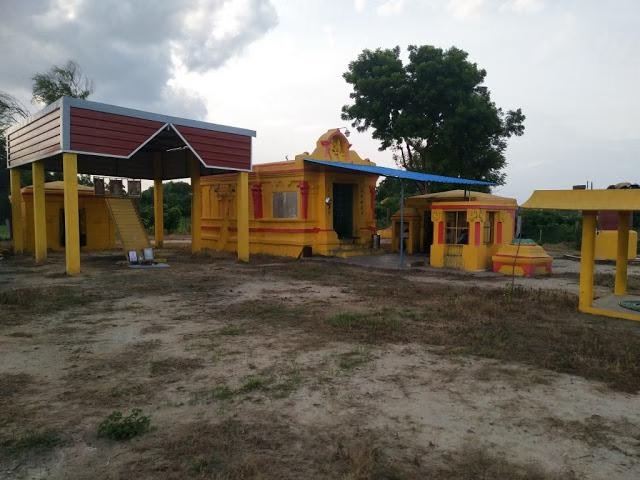
The temple stands as a testament to the Dravidian style of architecture, characterized by its soaring Rayagopurams (entrance towers) and granular stone carvings. The complex is enclosed by a massive Prakaram (cloistered courtyard) that allows devotees to perform Pradakshina (circumambulation).
Key Features
- Sanctum Sanctorum (Garbhagriha): The inner sanctum houses the East-facing Kalahastheeswarar Lingam. The roof structure follows the Vimana style, tapering upwards.
- Mandapas: The Ardha Mandapa and Maha Mandapa are supported by heavy stone pillars featuring reliefs of Dwarapalakas (guardians) and deities.
- Nandi Shrine: A monolithic Nandi (bull), the vahana of Shiva, faces the sanctum. It is carved from a single granite block, showcasing Dravidian craftsmanship.
- Teertham: The temple tank, known as Brahma Theertham, is located at the entrance. Its waters are considered sacred and are used for ritual purification before darshan.
Darshan & Ritual Logistics
To facilitate a smooth spiritual experience, the temple administration has structured daily rituals. The timings for Darshan and Seva are as follows.
Daily Timings
| Pooja / Ritual | Timings |
|---|---|
| Morning Darshan | 06:00 AM – 12:00 PM |
| Mid-day Closure | 12:00 PM – 04:30 PM |
| Evening Darshan | 04:30 PM – 08:30 PM |
| Special Abhishekam | 07:00 AM (Daily) |
Key Sevas and Online Booking
Devotees can perform various Sevas to gain the blessings of Lord Kalahastheeswarar. Popular rituals include:
- Abhishekam: Ritual bathing of the deity with milk, honey, and sandalwood paste.
- Archana: Recitation of names accompanied by flower offerings.
- Rudra Homam: A fire ritual performed for prosperity and health.
While physical booking is available at the temple counter, the temple is likely to adopt digital systems by 2026. Devotees should check the official Tamil Nadu Hindu Religious and Charitable Endowments (HR&CE) website or the temple’s dedicated portal for online seva booking availability.
2026 Festival Dates
Plan your visit around these major events:
- Mahashivratri: February 26, 2026 (Major festivities expected).
- Arudra Darshanam: December 2026 (Exact date based on Tamil Calendar).
- Navarathri: September – October 2026 (Special decorations for Goddess Gnanaprasunambal).
Practical Visitor Guidance
To ensure a respectful and hassle-free visit, please adhere to the following guidelines.
Code of Conduct
- Dress Code: Traditional attire is mandatory. Men must wear Dhoti or trousers with a shirt; women are required to wear Saree, Salwar Kameez, or full-length skirts. No shorts or sleeveless tops are allowed.
- Photography: Photography is strictly prohibited inside the Garbhagriha (inner sanctum). Video recording may require special permission from the Executive Officer.
- Electronic Devices: Mobile phones should be kept on silent. Some areas, particularly the inner sanctum, may require phones to be deposited in lockers provided at the entrance.
Crowd Management & Seasonal Advice
- Best Hours: The ideal time for Darshan is between 6:00 AM and 7:30 AM, or during the evening transition (4:30 PM).
- Summer (March – June): Perandur experiences high temperatures. Carrying a water bottle and wearing light cotton clothing is essential.
- Monsoon (October – December): The temple premises can get slippery due to rains near the Prakaram. Wear rubber-soled footwear with good grip.
Pilgrimage Connectivity
How to Reach Kalahastheeswarar Temple
The temple is located in Perandur Village, approximately 50 km from Chennai.
- By Road: The nearest major highway is NH 16 (Chennai-Kolkata Highway). From the highway, take the diversion towards Uthukottai/Perandur. The temple is 250 meters from the Perandur Bus Stand.
- By Rail: The nearest railway stations are Thiruvallur (35 km) and Ponneri (38 km).
- By Air: The nearest airport is Chennai International Airport (MAA), approximately 66 km away.
Nearby Sacred Sites (Pilgrimage Circuit)
Enhance your spiritual journey by visiting these nearby temples:
- Sri Vedagiriswarar Temple (Thirukkalukundram): Located about 30 km from Perandur, famous for the daily visit of two eagles.
- Periyapalayam Temple (Arulmigu Sri Balamurugan): A prominent Murugan temple located 14 km away, known for its tribal connection and high volume of devotees.
- Uthukottai Temple: A historic temple complex located just 7 km from Perandur.
Frequently Asked Questions (FAQ)
1. Is there a VIP Darshan entry at Kalahastheeswarar Temple?
Yes, the temple administration usually offers a Special Darshan ticket for a nominal fee to bypass the general queue. However, during peak festivals like Mahashivratri, this may be restricted based on crowd volume.
2. What is the significance of the temple tank?
The temple tank, Brahma Theertham, is located near the main entrance. It is considered purifying. Devotees often take a dip here before entering the temple to cleanse themselves of sins.
3. Are there accommodation facilities available nearby?
While there are no major hotels within Perandur village, basic guest houses are available in Uthukottai (7 km). For better amenities, it is recommended to stay in Thiruvallur (32 km) or Chennai (50 km).
4. Is the temple accessible for senior citizens and differently-abled visitors?
The outer courtyard is accessible, but the inner sanctum has steps. The temple authorities provide wheelchair assistance upon request at the entrance. It is advisable to visit during morning hours when the paths are less crowded.
5. Can I perform ancestral rituals (Thithi) here?
Absolutely. This temple is renowned for Thila Tarpanam and other ancestral rites. Priests are available on-site, but it is recommended to book a Purohit in advance, especially on new moon days (Amavasya) and Mahalaya.
Photo Gallery
How to Reach:
Kalahastheeswarar Temple is a Hindu Temple dedicated to Lord Shiva located at Perandur Village in Thiruvallur District of Tamilnadu. The Temple is located at about 250 meters from Perandur Bus Stop, 7 Kms from Uthukottai, 14 Kms from Periyapalayam, 32 Kms from Thiruvallur, 33 Kms from Ponneri and 53 Kms from Chennai. Nearest Railway Stations are located at Ponneri (38 Kms) and Thiruvallur (35 Kms). Nearest Airport is located at Chennai (66 Kms).
Contact Details
Official Address: Kalahastheeswarar Temple, Perandur, Thiruvallur District, Tamil Nadu.
Recent Posts

Shri Kaamkoteeshwar Mandir, Varanasi – History & Significance
In the heart of Kashi, the eternal city of Lord Shiva, where the Ganges flows with celestial grace, stands the Shri Kaamkoteeshwar Mandir. This sacred Sannidhi is not merely a temple but a profound spiritual bridge between the Northern…

ओ सांवरे तूने ही मुझको संभाला – Lyrics & Meaning
ओ सांवरे तूने ही मुझको संभाला – A Prayer to Shyam Origin & Spiritual Essence Why This Bhajan Resonates Devotees chant this when overwhelmed by life’s storms—the refrain ‘तूने ही मुझको संभाला’ is the soul’s sigh of relief: “You…

कथा ये है महाराज मेरे की – Lyrics & Meaning
कथा ये है महाराज मेरे की छत्रपति संभाजी महाराज – A Prayer to Chhatrapati Sambhaji Maharaj Origin & Spiritual Essence Why This Bhajan Resonates Devotees chant this when their spirit feels tested—its powerful refrain “महाराज मेरे” is a soul’s…

Rigveda Samhita Yathartha Anuvada (ऋग्वेद संहिता यथार्थ अनुवाद) – Complete Set with Anvayartha & Hindi/English Translation
The Rigveda is the oldest surviving scripture of humanity and the foundational text of Sanātana Dharma. For serious students, scholars, UPSC aspirants studying ancient Indian history, Sanskrit learners, and spiritual seekers, a precise and grammatically structured translation is indispensable.…

आना भी अकेला है जाना भी अकेला है – Lyrics & Meaning | BharatTemples
आना भी अकेला है जाना भी अकेला है – A Prayer to the Divine Witness Origin & Spiritual Essence Why This Bhajan Resonates Devotees turn to this bhajan in moments of deep reflection—when life’s attachments begin to ache. The…

माता शेरावाली के द्वार जो भी जाता है – Lyrics & Meaning
माता शेरावाली के द्वार जो भी जाता है – A Prayer to Maa Sherawali Origin & Spiritual Essence Why This Bhajan Resonates Devotees turn to this bhajan in times of fear or uncertainty—its promise that no one leaves Maa’s…

मार लेना सपणी उबार लेणा भवरा – Lyrics & Meaning
मार लेना सपणी उबार लेणा भवरा – A Prayer to the Divine Beloved Origin & Spiritual Essence Why This Bhajan Resonates Devotees chant this in moments of deep vulnerability—its cry of “मार लेना सपणी, उबार लेणा भवरा” is the…

हमें श्याम सुंदर भरोसा तुम्हारा – Lyrics & Meaning
हमें श्याम सुंदर भरोसा तुम्हारा – A Prayer to Shyam Sundar Origin & Spiritual Essence Why This Bhajan Resonates Devotees chant this when feeling alone—its refrain ‘de do sahara’ is the soul’s cry for divine support. Lyrics in Hindi…

Mere Satguru Ne Di Thi Davai Lyrics in Hindi & Meaning
Mere Satguru Ne Di Thi Davai: Invoking the Guru’s Liberating Wisdom This soul-stirring bhajan venerates the Satguru (True Spiritual Master) as the divine physician who dispenses the only remedy for life’s deepest sufferings. Composed by Sant Karmaveer Tufani, it…

Janm Diyo Thari Maa Dukh Dekhiyo Lyrics in Hindi & Meaning
जन्म दियो थारी माँ दुख देखियो (Maa’s Grief Upon Birthing You) This soul-stirring Chetavani Bhajan (admonitory hymn) is addressed to the Divine Mother (Maa) – a call for repentance when children forget their filial duties in the dark age…