
Contents
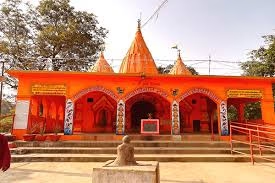
The Vibhuti Nath Temple, nestled in the serene landscapes of Shravasti, Uttar Pradesh, is a revered shrine dedicated to Lord Shiva. ‘Vibhuti Nath’ translates to ‘Lord of Glory,’ reflecting the divine presence felt within the temple’s walls. The deity is worshipped in the form of a Swayambhu Lingam – a self-manifested representation of Lord Shiva, considered highly auspicious.
Phalaśruti: Why Devotees Visit
Devotees flock to Vibhuti Nath Temple seeking blessings for various life challenges. It is believed that worshipping Lord Shiva here grants relief from afflictions, bestows prosperity, and, importantly, aids in the cleansing of ancestral karma (Pitru Dosha). The temple is particularly renowned for its significance during the month of Shravan (July-August), considered the most sacred month in the Hindu calendar dedicated to Lord Shiva.
Historical Origins & Scriptural Legend
The history of Vibhuti Nath Temple is deeply intertwined with the epic tale of the Mahabharata. Tradition holds that during their twelve years of exile, the Pandavas – Yudhishthira, Bhima, Arjuna, Nakula, and Sahadeva – spent considerable time in the forests surrounding Shravasti, a region then known as Sohalva. It is said that Bhima, the mighty warrior, initiated the formation of a village in this area, which eventually became Bhinga.
Approximately 36 kilometers north of Bhinga, in the Himalayan foothills, the Pandavas are believed to have laid the foundation for this Shiva temple. According to local lore, the site was chosen for its inherent spiritual energy and its connection to the divine. While precise dating is difficult, temple records suggest the initial structure dates back to the Mahabharata period, with significant renovations occurring over centuries, particularly during the Kushan and Gupta empires.
The Sthala Purana (local legend) recounts numerous miracles associated with the temple, attributing them to Lord Shiva’s grace and the devotion of the Pandavas.
Architectural Marvels
The Vibhuti Nath Temple showcases a blend of architectural styles, primarily influenced by the Nagara school of temple architecture, common in North India. The temple’s Shikhara (tower) rises majestically, adorned with intricate carvings depicting scenes from Hindu mythology. The Mandapas (halls) provide spaces for devotees to gather and participate in rituals. Notable sculptures within the temple complex depict various deities and celestial beings, reflecting the rich artistic heritage of the region.
The temple’s construction adheres to principles of Vastu Shastra, ensuring a harmonious flow of energy and a spiritually uplifting environment. The use of locally sourced stone adds to the temple’s rustic charm and its integration with the natural surroundings. Currently, the temple is under the care of the local trust and is not formally recognized by ASI or UNESCO, though efforts are underway to preserve its historical and cultural significance.
Darshan & Ritual Logistics
The Vibhuti Nath Temple welcomes devotees with open arms. Here are the current darshan timings (as of 2026):
| Day | Morning Timings | Evening Timings |
|---|---|---|
| Monday | 6:00 AM – 12:00 PM | 6:00 PM – 9:00 PM |
| Tuesday | 6:00 AM – 12:00 PM | 6:00 PM – 9:00 PM |
| Wednesday | 6:00 AM – 12:00 PM | 6:00 PM – 9:00 PM |
| Thursday | 6:00 AM – 12:00 PM | 6:00 PM – 9:00 PM |
| Friday | 6:00 AM – 12:00 PM | 6:00 PM – 9:00 PM |
| Saturday | 6:00 AM – 12:00 PM | 6:00 PM – 9:00 PM |
| Sunday | 6:00 AM – 12:00 PM | 6:00 PM – 9:00 PM |
Key Sevas:
- Abhishekam: The sacred bathing ritual of the Shiva Lingam, performed with milk, water, honey, and other auspicious substances.
- Archana: Offering of flowers and prayers to Lord Shiva, accompanied by chanting of mantras.
- Rudrabhishek: A grand and elaborate ritual involving the chanting of the Rudram, a hymn dedicated to Lord Shiva.
Online Seva Booking: Currently, online seva booking is available through the temple’s official website. For the Shravan month in 2026, special seva slots will be available from July 25th to August 26th. It is advisable to book well in advance, as slots fill up quickly.
Practical Visitor Guidance
Dress Code: Modest attire is recommended. Devotees are advised to cover their shoulders and knees. Traditional Indian clothing is highly respected.
Photography: Photography is generally permitted outside the inner sanctum. However, flash photography is prohibited.
Mobile Lockers: Mobile lockers are available near the entrance of the temple for the safe storage of personal belongings.
Accessibility: The temple is working towards improving accessibility for differently-abled individuals. Currently, some areas may present challenges.
Crowd Management: The temple experiences significant crowds, especially during Shravan and on Mondays. The best hours to visit for a relatively peaceful darshan are between 6:00 AM and 8:00 AM on weekdays. During the summer months (April-June), it is essential to carry water and wear light, breathable clothing. In May, temperatures can exceed 40°C (104°F).
Pilgrimage Connectivity
How to Reach:
- By Road: Shravasti is well connected to the rest of Uttar Pradesh by roadways. The nearest mega terminus is at Gonda, 50 kilometers from Shravasti. Gonda is well connected by bus to cities like Lucknow, Bareilly, Kanpur, Allahabad, Agra, and Mathura. Travel via NH-28 and State Highway 71.
- By Rail: The nearest railway station is Gonda Junction (GN), approximately 50 km away.
- By Air: The nearest airport is Chaudhary Charan Singh International Airport, Lucknow (LKO), about 170 km from Shravasti.
Nearby Sacred Sites:
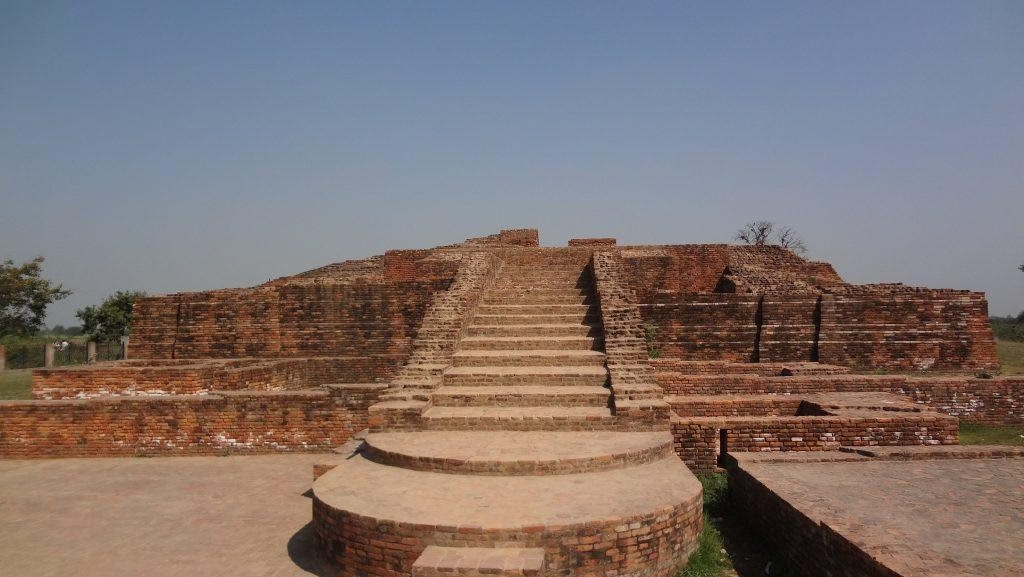
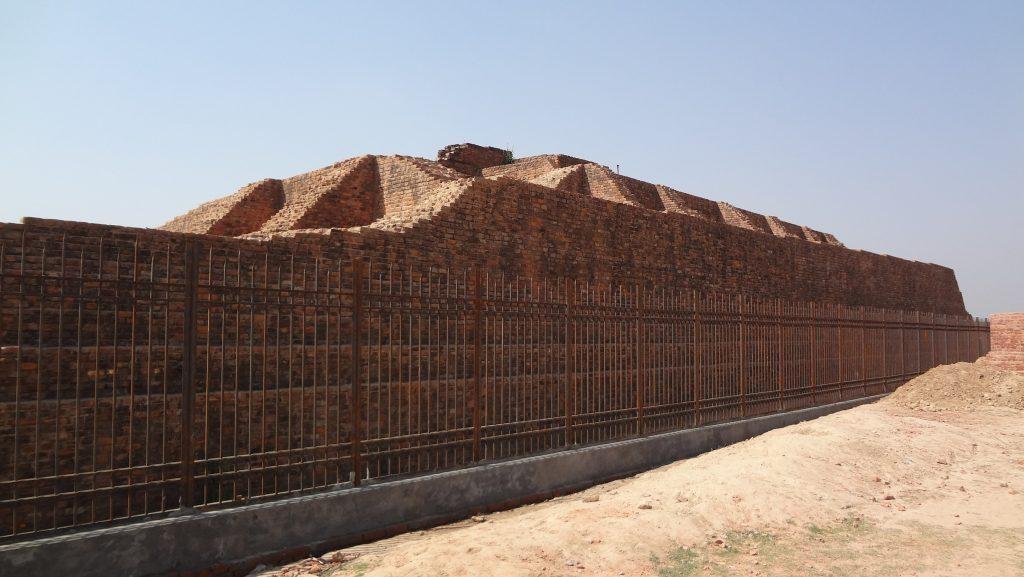
- Jetavana Monastery (Shravasti): A significant Buddhist pilgrimage site, believed to be where Lord Buddha spent many years.
- Ananda Bodhi Tree (Shravasti): Another important Buddhist site, marking the spot where Lord Buddha delivered many sermons.
- Bhinga Fort: A historical fort located near Bhinga, offering insights into the region’s past.
Frequently Asked Questions
Currently, there is no dedicated VIP darshan entry. However, the temple trust occasionally offers special passes during peak seasons. Check the official website for updates.
Offering milk (abhishekam) to the Shiva Lingam symbolizes purity, devotion, and the offering of one’s ego to the divine. It is believed to cool the intensity of Lord Shiva and awaken the spiritual energy within the devotee.
Yes, several guesthouses and budget hotels are available in Shravasti and Bhinga. For more comfortable accommodations, consider staying in Lucknow and making a day trip to the temple.
The best time to visit is during the winter months (October-March) when the weather is pleasant. However, the most spiritually significant time is during the month of Shravan (July-August), despite the larger crowds.
Address: Merkiya, Uttar Pradesh 271840
Contact Details:
Recent Posts

Shri Kaamkoteeshwar Mandir, Varanasi – History & Significance
In the heart of Kashi, the eternal city of Lord Shiva, where the Ganges flows with celestial grace, stands the Shri Kaamkoteeshwar Mandir. This sacred Sannidhi is not merely a temple but a profound spiritual bridge between the Northern…

ओ सांवरे तूने ही मुझको संभाला – Lyrics & Meaning
ओ सांवरे तूने ही मुझको संभाला – A Prayer to Shyam Origin & Spiritual Essence Why This Bhajan Resonates Devotees chant this when overwhelmed by life’s storms—the refrain ‘तूने ही मुझको संभाला’ is the soul’s sigh of relief: “You…

कथा ये है महाराज मेरे की – Lyrics & Meaning
कथा ये है महाराज मेरे की छत्रपति संभाजी महाराज – A Prayer to Chhatrapati Sambhaji Maharaj Origin & Spiritual Essence Why This Bhajan Resonates Devotees chant this when their spirit feels tested—its powerful refrain “महाराज मेरे” is a soul’s…

Rigveda Samhita Yathartha Anuvada (ऋग्वेद संहिता यथार्थ अनुवाद) – Complete Set with Anvayartha & Hindi/English Translation
The Rigveda is the oldest surviving scripture of humanity and the foundational text of Sanātana Dharma. For serious students, scholars, UPSC aspirants studying ancient Indian history, Sanskrit learners, and spiritual seekers, a precise and grammatically structured translation is indispensable.…

आना भी अकेला है जाना भी अकेला है – Lyrics & Meaning | BharatTemples
आना भी अकेला है जाना भी अकेला है – A Prayer to the Divine Witness Origin & Spiritual Essence Why This Bhajan Resonates Devotees turn to this bhajan in moments of deep reflection—when life’s attachments begin to ache. The…

माता शेरावाली के द्वार जो भी जाता है – Lyrics & Meaning
माता शेरावाली के द्वार जो भी जाता है – A Prayer to Maa Sherawali Origin & Spiritual Essence Why This Bhajan Resonates Devotees turn to this bhajan in times of fear or uncertainty—its promise that no one leaves Maa’s…

मार लेना सपणी उबार लेणा भवरा – Lyrics & Meaning
मार लेना सपणी उबार लेणा भवरा – A Prayer to the Divine Beloved Origin & Spiritual Essence Why This Bhajan Resonates Devotees chant this in moments of deep vulnerability—its cry of “मार लेना सपणी, उबार लेणा भवरा” is the…

हमें श्याम सुंदर भरोसा तुम्हारा – Lyrics & Meaning
हमें श्याम सुंदर भरोसा तुम्हारा – A Prayer to Shyam Sundar Origin & Spiritual Essence Why This Bhajan Resonates Devotees chant this when feeling alone—its refrain ‘de do sahara’ is the soul’s cry for divine support. Lyrics in Hindi…

Mere Satguru Ne Di Thi Davai Lyrics in Hindi & Meaning
Mere Satguru Ne Di Thi Davai: Invoking the Guru’s Liberating Wisdom This soul-stirring bhajan venerates the Satguru (True Spiritual Master) as the divine physician who dispenses the only remedy for life’s deepest sufferings. Composed by Sant Karmaveer Tufani, it…

Janm Diyo Thari Maa Dukh Dekhiyo Lyrics in Hindi & Meaning
जन्म दियो थारी माँ दुख देखियो (Maa’s Grief Upon Birthing You) This soul-stirring Chetavani Bhajan (admonitory hymn) is addressed to the Divine Mother (Maa) – a call for repentance when children forget their filial duties in the dark age…