
Contents
- 1 Kamakshi Amman Temple Mangadu: Definitive Pilgrimage Guide (2026)
Kamakshi Amman Temple Mangadu: Definitive Pilgrimage Guide (2026)
Kamakshi Amman Temple, Mangadu, Chennai
| Date built: | – |
|---|---|
| Deity: | Kamakshi Amman |
| Architectural style: | Dravidian architecture |
| Major festivals | – |
| Locale: | Mangadu |
| District:: | Chennai |
| Address: | Kamakshi Amman Temple,Mangadu,Chennai – 600 122 |
| Phone | +91 44 2627 2053 / 2649 5883 / 26790053 / 26791883 |
The Kamakshi Amman Temple in Mangadu stands as a beacon of divine grace in Chennai. Dedicated to Goddess Kamakshi (a form of Parvati), this temple is renowned not just for its Dravidian architecture but for the intense spiritual energy cultivated here. For those searching for Kamakshi Amman Temple history and darshan timings, this guide provides a comprehensive look at the rituals, legends, and logistics required for a fulfilling pilgrimage in 2026.
Introduction & Spiritual Essence
The primary deity here is Kamakshi Amman, worshipped as Tapas Kamakshi (the Goddess performing penance). Unlike the typical standing posture, the deity here is in a sitting position, radiating a calm but powerful energy. She is a Swayambhu (self-manifested) deity, embodying the essence of Shakti.
Phalaśruti: The Benefits of Visiting
Devotees visit Kamakshi Amman Temple to overcome obstacles in marriage, seek healing for ailments, and cleanse ancestral karma. The temple is particularly potent for:
- Remarriage & Delays: Women seeking marriage or facing delays often perform the six-week worship.
- Child Blessings: Couples desiring children perform specific rituals on Fridays.
- Career Growth: Men seeking job stability or promotion are advised to visit on Tuesdays.
Historical Origins & Scriptural Legend
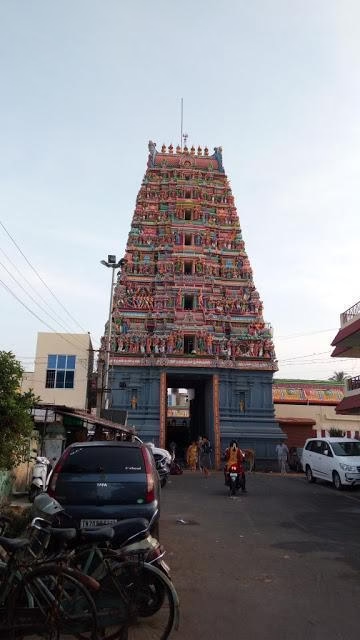
While the exact date of construction is not recorded in public temple records, the structure reflects the grandeur of later Chola and Vijayanagara architectural patronage. The towering Raja Gopuram is a later addition, typical of the Dravidian style.
The Legend of Tapas Kamakshi
According to the Sthala Purana, Goddess Parvati once playfully closed the eyes of Lord Shiva, plunging the universe into darkness. Penance was required for redemption. She descended to Mangadu (formerly a mango grove) and performed intense tapasya (penance) standing on the tip of her left leg amidst fire.
It is also believed that Shukra (Venus) performed penance here to regain his eyesight. Lord Shiva granted Shukra’s boon first, prioritizing the devotee, before uniting with Parvati later in Kanchipuram (where she became Kalyana Kamakshi).
Tradition holds that the heat from the Goddess’s penance was so intense that later Acharyas installed the Artha Meru Sri Chakra to cool the environment. The original intense form (in penance) is placed to the side, while the accessible Santha Roopam (gentle form) holding a sugarcane and parrot is the main deity worshipped today.
Architectural Marvels
The temple follows the Dravidian style of architecture. Key features include:
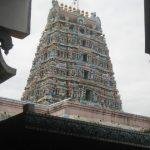
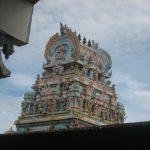
- Raja Gopuram: The main gateway tower, intricately carved and visible from afar.
- Santha Roopam: The main murti (idol) is unique. The Goddess holds a Mapillai (sugarcane) bow and a Kili (parrot) in her hands, symbolizing the sweet path of devotion and the call of the soul.
- Artha Meru Chakra: A powerful Sri Chakra installed by Adi Shankara (or his followers) to mitigate the intense heat of the penance site.
- Mandapas: The temple features spacious pillared halls (Mandapas) with detailed stone carvings, used for processions and rituals.
While not a UNESCO site, the temple is protected and maintained by the Hindu Religious and Charitable Endowments (HR&CE) Department of Tamil Nadu.
Darshan & Ritual Logistics
The temple operates on a rigorous schedule to accommodate the high volume of devotees, especially on Sundays and Fridays.
Daily Opening Hours
The temple is open from 6:00 AM to 1:30 PM and 3:00 PM to 9:00 PM.
Special Hours: On Sundays, Tuesdays, and Fridays, the temple remains open continuously from 5:00 AM to 10:00 PM.
Pooja & Abhishekam Timings
| Pooja Event | Sunday/Tuesday/Friday | Other Days |
|---|---|---|
| Ushakalam (Morning) | 5:00 AM | 6:00 AM |
| Kalasanthi | 9:00 AM | 9:00 AM |
| Uchikalam (Noon) | 1:00 PM | 1:00 PM |
| Sayarakshai (Evening) | 6:00 PM | 6:00 PM |
| Ardhajama (Closing) | 10:00 PM | 9:30 PM |
| Abhishekam Timings: Performed on Mondays, Wednesdays, Thursdays, and Saturdays between 11:00 AM and 1:00 PM. | ||
Online Seva Booking
For devotees searching for online seva booking, the temple facilitates specific offerings. While direct walk-ins are common for general darshan, special Sevas like Milk Abhishekam or Archana can be arranged. Devotees are advised to contact the temple administration at the provided phone numbers (+91 44 2627 2053) or visit the official HR&CE portal for the latest digital booking options in 2026.
2026 Festival Calendar Highlights
- Chithra Pournami (May): Special full moon homams.
- Adi Pooram (July-August): Celebrating the birth of Goddess.
- Navarathri (Sept-Oct): Nights filled with Nadaswaram and decorations.
- Niraimani Katchi (Purattasi Full Moon): The hallmark event where the mandapam is decorated with grains and sweets symbolizing prosperity.
- Thai Poosam (January): Major crowd-pulling festival.
Practical Visitor Guidance
- Dress Code: Traditional attire is mandatory. Men must wear dhoti/veshti or trousers with a shirt; women should wear saree, churidar, or modest traditional wear.
- Photography: Strictly prohibited inside the inner sanctum (Garbhagriha). Photography is generally allowed in the outer prakarams, but verify with temple security.
- Mobile/Baggage: No electronic devices or leather goods are allowed inside the sanctum. Use the free cloakrooms available at the entrance.
- Accessibility: The temple has steps at the entrance. Wheelchair access is limited in the inner sanctum but manageable in the outer corridors.
- Crowd Management: Best hours for peaceful darshan are 6:00 AM–7:00 AM and 8:00 PM–9:00 PM. Avoid Tuesdays and Fridays if you have limited time. Summers (May) are hot; carry water.
Pilgrimage Connectivity
How to Reach
Location: Mangadu, off the Chennai-Bangalore Highway (NH 48).
- Nearest Airport: Chennai International Airport (MAA) – Approx 17 Kms.
- Nearest Railway: Chennai Central (22 Kms) or Tambaram (18 Kms).
- By Road: From Mount Poonamallee Road, take a left at Kumananchavadi junction to reach Mangadu. Frequent buses operate from Poonamallee, Porur, and Tambaram.
Nearby Sacred Sites
To complete the Mangadu Trinity circuit, devotees are encouraged to visit:
- Velleeswarar Temple: Dedicated to Lord Shiva, located nearby.
- Vaikunda Perumal Temple: Dedicated to Lord Vishnu, completing the spiritual triangle.
Photo Gallery
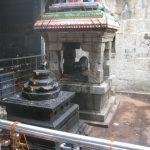
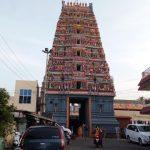
Visuals of the Dravidian architecture and the serene sanctum.


FAQ: Frequently Asked Questions
Is there a VIP darshan entry?
Yes, the temple allows special entry darshan for elderly devotees and differently-abled visitors. VIP tickets are generally not issued here, but specific entry lines exist for those performing special Sevas.
What is the significance of the six-week worship?
This is the most famous ritual at Mangadu. It involves visiting the temple for six consecutive weeks, starting with 1 lime fruit and increasing the offering weekly. It is believed to fulfill specific wishes related to marriage and prosperity.
Can I perform the milk abhishekam myself?
The Milk Abhishekam is usually performed by the temple priests for the Artha Meru Chakra. Devotees can offer milk, which is then used for the ritual, but the physical abhishekam is conducted by the priests.
What is the best time to visit with family?
Early mornings (6:00 AM – 7:30 AM) on weekdays offer the most serene experience. Avoid weekends and festival days if you prefer a quieter darshan.
Are there accommodation facilities nearby?
Mangadu has limited lodging. Most pilgrims stay in Chennai (T. Nagar or Porur) and travel early morning. There are basic lodges in Poonamallee, 4 km away.
Contact Details
Kamakshi Amman Temple
Mangadu, Chennai – 600 122
Phone: +91 44 2627 2053 / 2649 5883 / 26790053 / 26791883
Email: srikamakshimangadu@gmail.com / mangadukamakshi@sancharnet.in
Recent Posts

Shri Kaamkoteeshwar Mandir, Varanasi – History & Significance
In the heart of Kashi, the eternal city of Lord Shiva, where the Ganges flows with celestial grace, stands the Shri Kaamkoteeshwar Mandir. This sacred Sannidhi is not merely a temple but a profound spiritual bridge between the Northern…

ओ सांवरे तूने ही मुझको संभाला – Lyrics & Meaning
ओ सांवरे तूने ही मुझको संभाला – A Prayer to Shyam Origin & Spiritual Essence Why This Bhajan Resonates Devotees chant this when overwhelmed by life’s storms—the refrain ‘तूने ही मुझको संभाला’ is the soul’s sigh of relief: “You…

कथा ये है महाराज मेरे की – Lyrics & Meaning
कथा ये है महाराज मेरे की छत्रपति संभाजी महाराज – A Prayer to Chhatrapati Sambhaji Maharaj Origin & Spiritual Essence Why This Bhajan Resonates Devotees chant this when their spirit feels tested—its powerful refrain “महाराज मेरे” is a soul’s…

Rigveda Samhita Yathartha Anuvada (ऋग्वेद संहिता यथार्थ अनुवाद) – Complete Set with Anvayartha & Hindi/English Translation
The Rigveda is the oldest surviving scripture of humanity and the foundational text of Sanātana Dharma. For serious students, scholars, UPSC aspirants studying ancient Indian history, Sanskrit learners, and spiritual seekers, a precise and grammatically structured translation is indispensable.…

आना भी अकेला है जाना भी अकेला है – Lyrics & Meaning | BharatTemples
आना भी अकेला है जाना भी अकेला है – A Prayer to the Divine Witness Origin & Spiritual Essence Why This Bhajan Resonates Devotees turn to this bhajan in moments of deep reflection—when life’s attachments begin to ache. The…

माता शेरावाली के द्वार जो भी जाता है – Lyrics & Meaning
माता शेरावाली के द्वार जो भी जाता है – A Prayer to Maa Sherawali Origin & Spiritual Essence Why This Bhajan Resonates Devotees turn to this bhajan in times of fear or uncertainty—its promise that no one leaves Maa’s…

मार लेना सपणी उबार लेणा भवरा – Lyrics & Meaning
मार लेना सपणी उबार लेणा भवरा – A Prayer to the Divine Beloved Origin & Spiritual Essence Why This Bhajan Resonates Devotees chant this in moments of deep vulnerability—its cry of “मार लेना सपणी, उबार लेणा भवरा” is the…

हमें श्याम सुंदर भरोसा तुम्हारा – Lyrics & Meaning
हमें श्याम सुंदर भरोसा तुम्हारा – A Prayer to Shyam Sundar Origin & Spiritual Essence Why This Bhajan Resonates Devotees chant this when feeling alone—its refrain ‘de do sahara’ is the soul’s cry for divine support. Lyrics in Hindi…

Mere Satguru Ne Di Thi Davai Lyrics in Hindi & Meaning
Mere Satguru Ne Di Thi Davai: Invoking the Guru’s Liberating Wisdom This soul-stirring bhajan venerates the Satguru (True Spiritual Master) as the divine physician who dispenses the only remedy for life’s deepest sufferings. Composed by Sant Karmaveer Tufani, it…

Janm Diyo Thari Maa Dukh Dekhiyo Lyrics in Hindi & Meaning
जन्म दियो थारी माँ दुख देखियो (Maa’s Grief Upon Birthing You) This soul-stirring Chetavani Bhajan (admonitory hymn) is addressed to the Divine Mother (Maa) – a call for repentance when children forget their filial duties in the dark age…