
Contents
Introduction & Spiritual Essence
The Lakshmi Narayanar Temple in Elavambedu, Thiruvallur District, is a spiritual sanctuary dedicated to Lord Vishnu (Narayana) and his consort Goddess Lakshmi. The temple is renowned for its unique idol of the divine couple, Lakshmi Narayana, depicted in a rare and intimate posture of embracing each other in a state of supreme bliss. Unlike many standard depictions, the primary deity here, known as Sri Narayana Perumal, is flanked by Sridevi (Lakshmi) and Bhudevi, though the central focus is the unified form of the divine couple.
Phalaśruti (Spiritual Benefits): Devotees visit this temple to wash away ancestral karma and seek blessings for marital harmony and financial stability. The temple is specifically revered for granting Mukti (liberation) and is believed to radiate the energy of the Sri Rama and Sita union, offering solace to those facing delays in marriage or household discord.
Historical Origins & Scriptural Legend
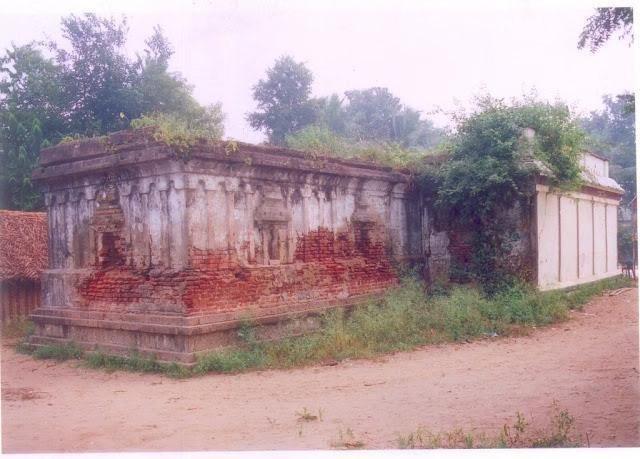
According to local records and the Sthala Purana, the Lakshmi Narayanar Temple is approximately 600 years old. It stands as a testament to the devotion of the local community in Elavambedu village. While specific dynastic inscriptions regarding the initial construction are still being documented by local historians, the temple has undergone significant renovation in recent years to preserve its sanctity and structural integrity.
Scriptural Significance: The temple aligns with the Pancharatra Agamas, which govern the worship of Vishnu. The local legend dictates that the temple was established where the divine grace of Narayana manifested to bless the region, ensuring prosperity for the agricultural lands of Elavambedu.
Architectural Marvels
The temple showcases classic Dravidian architecture, characterized by its pyramid-shaped gopurams (gateway towers) and intricate stone carvings. The structure is designed according to Vastu Shastra principles, ensuring that positive energy flows from the entrance to the inner sanctum.
- The Sanctum (Garbhagriha): The main deity, Sri Narayana Perumal, is housed in a sanctum that invites deep meditation. The idol captures the divine couple in a joyous, embracing posture, a feature that distinguishes this temple from others in the region.
- Sub-Shrines: The temple complex houses shrines for significant figures including Garudazhwar, Andal, Chakkarathzhwar, and Anjaneya (Hanuman). Each shrine is constructed with adequate Mandapas (halls) for circumambulation.
- Preservation: The temple has been recognized for its heritage value and has recently been renovated to restore the vibrancy of its Vimana (tower above the sanctum) and the color of the Mandapas.
Darshan & Ritual Logistics
Visitors are encouraged to check the timetable before planning their visit to ensure they can witness the specific pujas. The temple follows standard Agamic rituals with three daily worship sessions.
Daily Darshan Timings
Note: Timings are subject to change during festival seasons.
| Session | Timing | Ritual |
|---|---|---|
| Morning | 6:00 AM – 12:00 PM | Abhishekam, Archana |
| Afternoon | 12:00 PM – 4:00 PM | Temple Closed |
| Evening | 4:00 PM – 8:30 PM | Deeparadhana, Palliyarai Pooja |
Seva & Online Booking
Key Sevas include Abhishekam (ritual bathing of the deity) and Archana (chanting of divine names). While the temple primarily operates through on-site offerings, specific festivals allow for advanced booking. For 2026, devotees should look out for:
- Vaikuntha Ekadashi (Jan 2026): The most significant festival celebrating Lord Vishnu.
- Brahmotsavam (Tentative: Mar/Apr 2026): An annual festival featuring a procession of deities.
- Rama Navami (April 2026): Celebrating the birth of Lord Rama, a form of Narayana.
Practical Visitor Guidance
To ensure a peaceful darshan, adhere to the following guidelines:
- Dress Code: Traditional attire is mandatory. Men should wear dhotis or trousers with shirts; women should wear sarees, churidars, or full-length dresses.
- Photography: Photography is generally prohibited inside the inner sanctum (Garbhagriha). Please seek permission from temple authorities for external architecture photography.
- Crowd Management: The temple can get crowded on weekends and Tuesdays. Best hours to visit: 7:00 AM – 9:00 AM on weekdays. Avoid peak summer afternoons (May–June) if sensitive to heat; carry water.
- Accessibility: The temple is accessible for devotees, with ramps available for wheelchair access to the main Mandapa.
Pilgrimage Connectivity
The Lakshmi Narayanar Temple is strategically located near Chennai, making it accessible for day trips and pilgrimage circuits.
How to Reach
- Nearest City: Thiruvallur (approx. 35 km).
- Road: The temple is situated on the Minjur to Ponneri Route. It is approximately 100 meters from the Elavambedu Bus Stop. Travelers from Chennai can take the NH21 (Chennai-Kolkata Highway) towards Minjur.
- Distance from Hubs:
- 35 km from Chennai Central
- 50 km from Chennai International Airport
- 5 km from Ponneri Railway Station
Nearby Sacred Sites
- Kodandaramaswamy Temple, Thiruvallur: Located in the district headquarters, this temple houses Lord Rama, Lakshmana, and Sita.
- Thirumazhisai Aadheenam: A historic Shaivite monastic center located a short drive away.
- Minjur Divya Desam: One of the 108 Vishnu temples revered by the Alvars, located nearby.
Photo Gallery
Frequently Asked Questions (FAQ)
1. Is there a VIP Darshan entry at Lakshmi Narayanar Temple?
While the temple does not have a formal VIP ticket system like mega-temple complexes, it is advisable to contact the temple administration prior to arrival for special access, especially for elderly devotees or large groups.
2. What is the historical significance of the “Embracing” idol?
The unique posture of Lakshmi and Narayana embracing symbolizes the inseparable bond between the divine and the devotee, as well as the union of Purusha (consciousness) and Prakriti (nature), granting both material and spiritual prosperity.
3. Are there accommodation facilities near the temple?
Basic guest houses are available in Thiruvallur and Minjur. For luxury accommodations, visitors usually stay in Chennai and make a day trip to Elavambedu.
4. What are the essential items to carry for darshan?
It is recommended to carry your own Pooja items (flowers, fruits) if you wish to perform specific Archana. However, these are also available at shops near the temple entrance. Carry sufficient water, especially during summer.
5. Is the temple open on all days?
Yes, the temple is open daily, but it is best to avoid major public holidays if you prefer a quieter darshan, or alternatively visit early in the morning on those days.
Contact Details
For updated information on timings and rituals, devotees can refer to the local administration board at the temple entrance. The temple is maintained by the local community and Hindu Religious and Charitable Endowments (HR&CE) guidelines.
Recent Posts

Shri Kaamkoteeshwar Mandir, Varanasi – History & Significance
In the heart of Kashi, the eternal city of Lord Shiva, where the Ganges flows with celestial grace, stands the Shri Kaamkoteeshwar Mandir. This sacred Sannidhi is not merely a temple but a profound spiritual bridge between the Northern…

ओ सांवरे तूने ही मुझको संभाला – Lyrics & Meaning
ओ सांवरे तूने ही मुझको संभाला – A Prayer to Shyam Origin & Spiritual Essence Why This Bhajan Resonates Devotees chant this when overwhelmed by life’s storms—the refrain ‘तूने ही मुझको संभाला’ is the soul’s sigh of relief: “You…

कथा ये है महाराज मेरे की – Lyrics & Meaning
कथा ये है महाराज मेरे की छत्रपति संभाजी महाराज – A Prayer to Chhatrapati Sambhaji Maharaj Origin & Spiritual Essence Why This Bhajan Resonates Devotees chant this when their spirit feels tested—its powerful refrain “महाराज मेरे” is a soul’s…

Rigveda Samhita Yathartha Anuvada (ऋग्वेद संहिता यथार्थ अनुवाद) – Complete Set with Anvayartha & Hindi/English Translation
The Rigveda is the oldest surviving scripture of humanity and the foundational text of Sanātana Dharma. For serious students, scholars, UPSC aspirants studying ancient Indian history, Sanskrit learners, and spiritual seekers, a precise and grammatically structured translation is indispensable.…

आना भी अकेला है जाना भी अकेला है – Lyrics & Meaning | BharatTemples
आना भी अकेला है जाना भी अकेला है – A Prayer to the Divine Witness Origin & Spiritual Essence Why This Bhajan Resonates Devotees turn to this bhajan in moments of deep reflection—when life’s attachments begin to ache. The…

माता शेरावाली के द्वार जो भी जाता है – Lyrics & Meaning
माता शेरावाली के द्वार जो भी जाता है – A Prayer to Maa Sherawali Origin & Spiritual Essence Why This Bhajan Resonates Devotees turn to this bhajan in times of fear or uncertainty—its promise that no one leaves Maa’s…

मार लेना सपणी उबार लेणा भवरा – Lyrics & Meaning
मार लेना सपणी उबार लेणा भवरा – A Prayer to the Divine Beloved Origin & Spiritual Essence Why This Bhajan Resonates Devotees chant this in moments of deep vulnerability—its cry of “मार लेना सपणी, उबार लेणा भवरा” is the…

हमें श्याम सुंदर भरोसा तुम्हारा – Lyrics & Meaning
हमें श्याम सुंदर भरोसा तुम्हारा – A Prayer to Shyam Sundar Origin & Spiritual Essence Why This Bhajan Resonates Devotees chant this when feeling alone—its refrain ‘de do sahara’ is the soul’s cry for divine support. Lyrics in Hindi…

Mere Satguru Ne Di Thi Davai Lyrics in Hindi & Meaning
Mere Satguru Ne Di Thi Davai: Invoking the Guru’s Liberating Wisdom This soul-stirring bhajan venerates the Satguru (True Spiritual Master) as the divine physician who dispenses the only remedy for life’s deepest sufferings. Composed by Sant Karmaveer Tufani, it…

Janm Diyo Thari Maa Dukh Dekhiyo Lyrics in Hindi & Meaning
जन्म दियो थारी माँ दुख देखियो (Maa’s Grief Upon Birthing You) This soul-stirring Chetavani Bhajan (admonitory hymn) is addressed to the Divine Mother (Maa) – a call for repentance when children forget their filial duties in the dark age…