
Contents
Introduction & Spiritual Essence
Nestled amidst the serene Mahadevamalai Hills in Kankuppam, Vellore, the Mahadevar Temple stands as a testament to unwavering faith and ancient traditions. Dedicated to Lord Shiva (Mahadevar), this ancient shrine is a beacon for devotees seeking spiritual liberation and the blessings of the supreme ascetic.
Deity and Form:
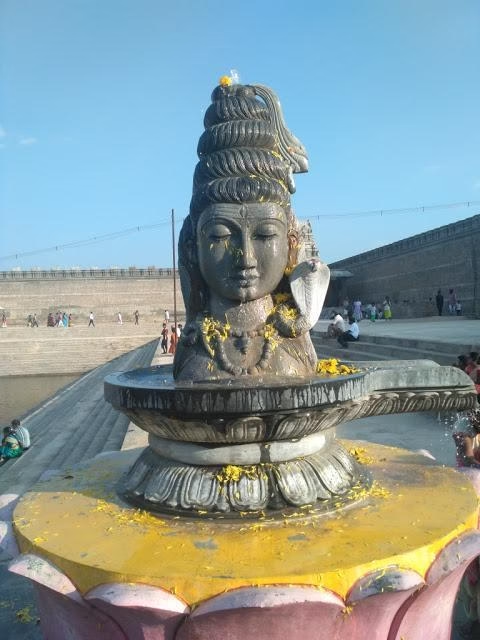
The primary deity, Lord Mahadevar, is worshipped here in the form of a Swayambhu Lingam (self-manifested). Unlike many temples, the Lingam bears a distinct natural formation resembling a five-headed serpent (Adisesha) on its crown, making it a unique focal point for devotees. The temple is also revered for the presence of Manonmani Amman (the consort of Shiva), who enshrines the southern sanctum.
Phalaśruti (Spiritual Benefits): According to local tradition and the Sthala Purana, a visit to this temple offers profound benefits. It is believed to:
- Cleanse Ancestral Karma: Performing rites here is said to liberate ancestors from Pitru Dosha (afflictions caused by lineage).
- Remove Doshas: Devotees visit to alleviate Rahu-Ketu Dosha and Saturn-related afflictions.
- Grant Siddhis: The temple is closely linked to the legendary Mahananda Siddha, making it a powerful site for spiritual seekers aspiring for inner awakening.
Historical Origins & Scriptural Legend
Origins:
While the exact construction date is often cited as approximate, temple records and local history place the structure at approximately 500 years old. It is believed to have been established by a wealthy merchant belonging to the Pandya Kingdom. The architecture follows the traditional Dravidian style, typical of the region’s medieval temples.
The Legend of the Merchant:
Tradition holds that a devout merchant from the Pandya era was traveling to Kalahasti to witness the Maha Shivaratri celebrations. Upon reaching the vicinity of Kankuppam, he realized he could not reach his destination in time. Distraught, he prayed to Lord Shiva for a vision. Lord Shiva appeared before him in the form of an old man and guided him to this hill. He revealed that He was already present there and instructed the merchant to build a temple. The village where the merchant met the Lord is known as Keezh Vazhi Thunai Kuppam.
The Legend of Mahananda Siddha:
A central figure in the temple’s living history is Mahananda Siddha. Born in Dharmapuri in 1930, he was a turmeric trader before dedicating his life to temple renovation. In 2002, he claimed Lord Shiva appeared to him, blessing him with a boon to live for a thousand years and instructing him to reside in a cave on the hill. According to devotees, the Siddha demonstrated the ability to live without food or water, meditating even while lying on fire. He worshipped the deity with fragrant flowers and leaves, maintaining the sanctity of the hill until his passing. His samadhi is located near the temple, adding to the site’s spiritual energy.
Architectural Marvels
The Mahadevar Temple showcases the elegance of Dravidian Architecture. Though relatively compact compared to the massive Brahadeeswara temples, it features key elements of temple geometry and Vastu Shastra.
- Vimana and Shikhara: The sanctum sanctorum (Garbhagriha) features a tiered Vimana (tower) typical of South Indian temple architecture.
- Mandapas: A pillared Ardha Mandapa (half-hall) precedes the main shrine, allowing for circumambulation (Pradakshina).
- Sculptures: The temple walls and pillars feature intricate carvings of various deities and mythological scenes. The natural rock formations of the hill form the backdrop of the temple, creating a seamless blend between human construction and nature.
While the temple does not hold a UNESCO or ASI tag, it is protected and maintained by the Hindu Religious and Charitable Endowments (HR&CE) Department of Tamil Nadu.
Darshan & Ritual Logistics
Devotees can participate in various sevas conducted daily. It is important to note that specific timings may vary slightly during festivals or special occasions.
Daily Darshan Timings (2026 Schedule)
| Session | Timings |
|---|---|
| Morning Darshan | 6:00 AM – 12:00 PM |
| Afternoon Break | 12:00 PM – 4:00 PM |
| Evening Darshan | 4:00 PM – 8:00 PM |
Key Sevas & Online Booking
Devotees can book standard sevas. For specialized rituals like Abhishekam, it is recommended to contact the temple office directly upon arrival or call ahead.
- Abhishekam: Performed daily during morning hours.
- Archana: Available for individual or family names.
- Annadhanam: Free meal service is often available, following the tradition of Mahananda Siddha.
Booking Process: While the temple is managed by HR&CE, specific online booking links are generated during festival seasons. For daily visits, seva bookings are typically handled at the temple counter.
Major Festivals in 2026
- Shivaratri (Feb 26, 2026): The most important festival, commemorating the legend of the merchant. Special night-long rituals and processions are held.
- Kartikai Deepam (Nov 4, 2026): Lighting of lamps across the hill and temple premises.
- Pradosham: Observed twice a month (13th lunar day), highly auspicious for Shiva devotees.
Practical Visitor Guidance
Dress Code: Traditional attire is strictly encouraged. Men should wear Dhotis or pants with shirts; women should wear Sarees or Salwar Kameez. Western attire (shorts/t-shirts) is generally discouraged in the inner sanctum.
Photography & Mobiles: Photography is prohibited inside the sanctum sanctorum. Mobile phones should be switched to silent mode. Lockers are not always available, so it is advisable to carry minimal valuables.
Crowd Management:
- Best Time to Visit: Weekday mornings (7 AM – 9 AM) offer the most peaceful darshan.
- Seasonal Advice: The temple is located on a hill. During summer (April–June), temperatures can be high; carry a water bottle and head cover. During the monsoon, the surrounding lush greenery is beautiful, but the steps can be slippery.
Pilgrimage Connectivity
How to Reach
- By Air: The nearest airport is Chennai International Airport (MAA), approximately 130 km away.
- By Train: The closest railway junction is Katpadi Junction (KPD) in Vellore (approx. 20 km). From there, take a local taxi or bus to Kankuppam.
- By Road: The temple is located on Mahadevamalai Main Road off the Vellore-Katpadi route. It is well-connected by State Highway 9 (NH 48 linkages). From Vellore, it is a 45-minute drive.
Nearby Sacred Sites (Pilgrimage Circuit)
- Kalahasteeswarar Temple: Located roughly 60 km away, this is a major Shaiva Kshetram and Pancha Bhoota Sthalam (Vayu Linga).
- Jalakandeswarar Temple (Vellore Fort): A stunning temple dedicated to Lord Shiva located within the fort moats of Vellore.
- Muthu Mandapam: A memorial shrine located in Vellore dedicated to Sri Gandhi Nagar.
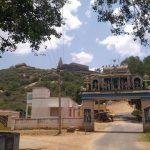
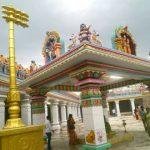
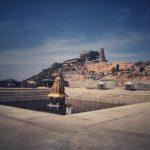
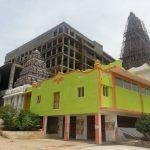
Photo Gallery



Frequently Asked Questions (FAQs)
Is there a VIP darshan entry available?
Generally, the Mahadevar Temple does not have a formal VIP ticket system like major corporate-managed temples. However, devotees accompanied by temple priests or those with special permissions for rituals may access the sanctum during non-peak hours.
Are there accommodation facilities nearby?
The temple itself does not have a dedicated guesthouse. However, several lodges and guest houses are available in Katpadi and Vellore, catering to all budgets. It is advisable to book in advance during Shivaratri.
Is the temple accessible for senior citizens?
The temple is situated on a hill, requiring the ascent of stone steps. While the steps are manageable for most, those with mobility issues may find it challenging. There is no ropeway or elevator facility currently.
What is the historical significance of the hill name?
The hill is named Mahadevamalai after the presiding deity. Local legends suggest that the hill itself is a manifestation of the deity, forming a natural fortress for the Swayambhu Lingam.
Contact Details
Official Address:
Mahadevar Temple, Mahadevamalai, Kankuppam,
Vellore District, Tamil Nadu – 632503.
Phone: +91 94433 12345 (Mandatory to verify current office contact as specific numbers are updated periodically by HR&CE).
Original Source
Recent Posts

Shri Kaamkoteeshwar Mandir, Varanasi – History & Significance
In the heart of Kashi, the eternal city of Lord Shiva, where the Ganges flows with celestial grace, stands the Shri Kaamkoteeshwar Mandir. This sacred Sannidhi is not merely a temple but a profound spiritual bridge between the Northern…

ओ सांवरे तूने ही मुझको संभाला – Lyrics & Meaning
ओ सांवरे तूने ही मुझको संभाला – A Prayer to Shyam Origin & Spiritual Essence Why This Bhajan Resonates Devotees chant this when overwhelmed by life’s storms—the refrain ‘तूने ही मुझको संभाला’ is the soul’s sigh of relief: “You…

कथा ये है महाराज मेरे की – Lyrics & Meaning
कथा ये है महाराज मेरे की छत्रपति संभाजी महाराज – A Prayer to Chhatrapati Sambhaji Maharaj Origin & Spiritual Essence Why This Bhajan Resonates Devotees chant this when their spirit feels tested—its powerful refrain “महाराज मेरे” is a soul’s…

Rigveda Samhita Yathartha Anuvada (ऋग्वेद संहिता यथार्थ अनुवाद) – Complete Set with Anvayartha & Hindi/English Translation
The Rigveda is the oldest surviving scripture of humanity and the foundational text of Sanātana Dharma. For serious students, scholars, UPSC aspirants studying ancient Indian history, Sanskrit learners, and spiritual seekers, a precise and grammatically structured translation is indispensable.…

आना भी अकेला है जाना भी अकेला है – Lyrics & Meaning | BharatTemples
आना भी अकेला है जाना भी अकेला है – A Prayer to the Divine Witness Origin & Spiritual Essence Why This Bhajan Resonates Devotees turn to this bhajan in moments of deep reflection—when life’s attachments begin to ache. The…

माता शेरावाली के द्वार जो भी जाता है – Lyrics & Meaning
माता शेरावाली के द्वार जो भी जाता है – A Prayer to Maa Sherawali Origin & Spiritual Essence Why This Bhajan Resonates Devotees turn to this bhajan in times of fear or uncertainty—its promise that no one leaves Maa’s…

मार लेना सपणी उबार लेणा भवरा – Lyrics & Meaning
मार लेना सपणी उबार लेणा भवरा – A Prayer to the Divine Beloved Origin & Spiritual Essence Why This Bhajan Resonates Devotees chant this in moments of deep vulnerability—its cry of “मार लेना सपणी, उबार लेणा भवरा” is the…

हमें श्याम सुंदर भरोसा तुम्हारा – Lyrics & Meaning
हमें श्याम सुंदर भरोसा तुम्हारा – A Prayer to Shyam Sundar Origin & Spiritual Essence Why This Bhajan Resonates Devotees chant this when feeling alone—its refrain ‘de do sahara’ is the soul’s cry for divine support. Lyrics in Hindi…

Mere Satguru Ne Di Thi Davai Lyrics in Hindi & Meaning
Mere Satguru Ne Di Thi Davai: Invoking the Guru’s Liberating Wisdom This soul-stirring bhajan venerates the Satguru (True Spiritual Master) as the divine physician who dispenses the only remedy for life’s deepest sufferings. Composed by Sant Karmaveer Tufani, it…

Janm Diyo Thari Maa Dukh Dekhiyo Lyrics in Hindi & Meaning
जन्म दियो थारी माँ दुख देखियो (Maa’s Grief Upon Birthing You) This soul-stirring Chetavani Bhajan (admonitory hymn) is addressed to the Divine Mother (Maa) – a call for repentance when children forget their filial duties in the dark age…