
Contents
1. Introduction & Spiritual Essence
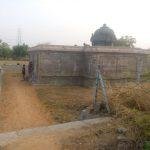
The Choleeswarar Temple in Melpadi, Vellore, stands as a solemn sanctuary dedicated to Lord Shiva. Here, the deity is revered as Choleeswarar (the Lord of the Cholas) or Arinjigai Ishwaram, embodying the fierce yet protective energy of the region. Unlike typical functional temples, this site holds the unique distinction of being a Palli Padai Temple—a tomb shrine built over the mortal remains of a king.
Phalaśruti (Spiritual Benefits): Devotees visit this temple primarily to offer prayers for Shanti (peace) of departed ancestors. It is believed that performing rituals here aids in cleansing ancestral karma and removing Pitru Dosha. The temple’s proximity to the Pennar river and its location in a pastoral setting creates a unique vibration for meditation and spiritual cleansing.
Deity Details
- Primary Deity: Choleeswarar (Shiva Lingam)
- Form: Swayambhu (self-manifested) in a small sanctum.
- Goddess: Periyanayagi (The Great Queen)
2. Historical Origins & Scriptural Legend
The temple’s history is intertwined with the glory of the Chola dynasty. According to temple records and ASI (Archaeological Survey of India) inscriptions, this structure was commissioned by the great Rajaraja Chola I in 1014 CE (29th year of his reign).
The Legend of Arinjaya Chola
Tradition holds that the temple was built as a memorial for Arinjaya Chola (reigned 956–967 CE), the grandfather of Rajaraja I. Arinjaya died in a war near Arur (Thakkolam). To honor his sacrifice, Rajaraja I constructed this Palli Padai (tomb temple) over the samadhi, consecrating the site as Arinjigai Ishwaram.
Scriptural Evidence & Inscriptions
Three significant stone inscriptions dated to the 29th year of Rajaraja Chola I and one from the 9th year of Rajendra Chola I are found within the temple complex. These inscriptions refer to the deity as Arinjigai Ishwara and detail the village boundaries (Rajasrayapuram) granted for the temple’s maintenance. The site was strategically located on the border of the Chola and Rashtrakuta kingdoms, serving as a garrison to protect Chola territories.
3. Architectural Marvels
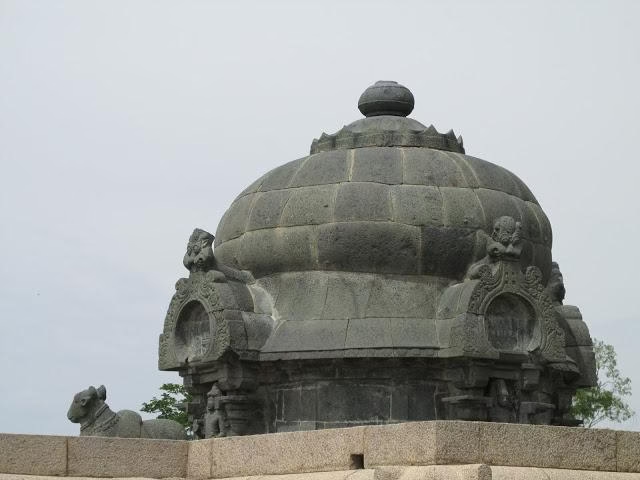
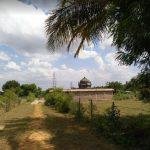
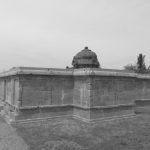
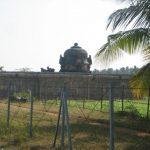
The Choleeswarar Temple is a masterpiece of Dravidian architecture from the Early Chola period. The ASI maintains the structure within a protective granite fence, preserving its austere beauty.
Structural Highlights
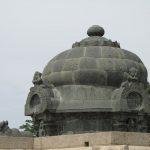
- Vimana: The temple features a small, square Vesara vimana built from green-tinged granite. The basement (adhishtana) follows the padabandha style with distinct mouldings.
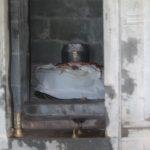
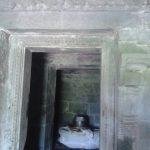
- Sanctum (Garbhagriha): Houses a 3-4 feet tall Shivalingam within a compact 10 sq. ft space.
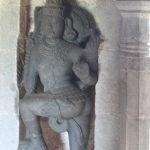
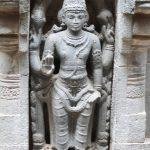
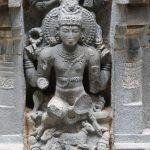
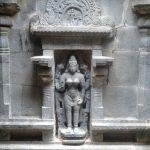
- Sculptures: The external walls feature brahmakanta pilasters. The niches contain deities like Dhakshinamoorthi, Vishnu, Brahma, and Durga, though these are believed to be later additions.
Notable Artworks
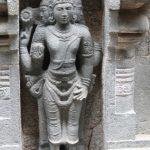
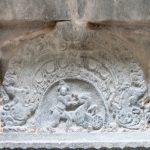
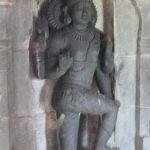
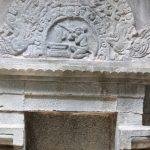
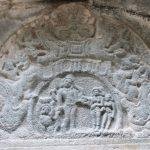
The entrance to the sanctum is guarded by two tall, robust Dwarapalakas (guardians), which are considered excellent examples of Early Chola sculpture. Above the niches, intricate Makara Toranas (dragon arches) depict:
- Saint Kannappa Nayanar
- Bhikshatana (Shiva as a wandering mendicant) with Rishi-patnis
- Krishna
- Rajaraja I worshipping the Shivalinga of Arinjaya
4. Darshan & Ritual Logistics
Since this is a protected archaeological site managed by the ASI, temple timings are strictly adhered to. Below are the standard timings, though devotees should verify locally during festival seasons.
Daily Timings (2026 Schedule)
| Session | Timing | Activity |
|---|---|---|
| Morning | 07:00 AM – 12:00 PM | Morning Puja & Abhishekam |
| Evening | 04:00 PM – 06:00 PM | Evening Puja & Deeparadhana |
| Midday | 12:00 PM – 04:00 PM | Temple Closed |
Seva & Online Booking
While the temple is under ASI control, special Archana and Abhishekam can be performed by contacting the Executive Officer (EO) at the nearby Arulmigu Somanadheeswarar Temple (Administering Office). As of 2026, many Tamil Nadu temples have migrated to the AruLiyal Thiruppugazh or Temple Online portals for bookings.
Key Sevas:
- Abhishekam: Performed with water, milk, and vibhuti.
- Archana: Recitation of sacred names.
- Deepa Aradhana: Lamp offering.
2026 Major Festival Dates
- Shivratri: February 26, 2026 (Special night-long vigil).
- Pradosham: Monthly events (13th and 28th of every month).
- Arudra Darshanam: January 5, 2026 (Celebrating Nataraja).
- Aadi Amavasai: July 23, 2026 (Highly significant for ancestral rites).
5. Practical Visitor Guidance
Dress Code: As with all Hindu temples in Tamil Nadu, modest attire is mandatory. Men should wear dhotis or formal trousers/shirts; women should wear sarees, salwar kameez, or skirts.
Photography & Mobiles:
- Photography: Strictly prohibited inside the sanctum and sanctum vicinity.
- Mobile Lockers: There are no automated lockers at this site. It is advised to travel light and leave valuables in your vehicle.
Crowd Management
- Best Time to Visit: Mornings (7:00 AM – 9:00 AM) are serene with minimal crowd. Evenings can be busy during sunset.
- Seasonal Advice: Melpadi can get humid in May and June. Carry water and an umbrella, as shaded waiting areas are limited outside the temple complex.
Photo Gallery
6. Pilgrimage Connectivity
How to Reach
The Choleeswarar Temple is located in Melpadi village, roughly 17 km from Ranipet on the Chittoor Road.
- Nearest Airport: Chennai International Airport (approx. 120 km).
- Nearest Railway Station: Katpadi Junction (approx. 22 km). Thiruvalam station is also nearby (12 km).
- By Road:
- From Chennai: Take NH-40/ NH-75 towards Vellore/Ranipet.
- From Bangalore: Take NH-75 (Bangalore – Chennai Highway).
- Route: Ranipet → Ponnai → Bridge across River Bahuda → Turn left to Melpadi. The temple is on the right after the bridge.
Nearby Sacred Sites (Pilgrimage Circuit)
- Somanadheeswarar Temple: Located directly opposite Choleeswarar Temple across the road. A larger, architecturally significant Chola temple.
- Vallimalai Murugan Temple: Located about 7 km from Melpadi. A famous hill temple associated with the Tamil Sangam era.
- Thiruvalam Vadaranyeswarar Temple: Located 12 km away, this is a Paadal Petra Sthalam (one of the 276 Shiva temples revered in the Tevaram).
7. Frequently Asked Questions (FAQ)
1. Is there a VIP Darshan entry?
Since this is an ASI-protected site with limited crowds compared to mega-temples, there is no separate VIP ticket. Darshan is generally free and accessible for all.
2. What is the difference between a Palli Padai temple and a regular temple?
A Palli Padai temple is a memorial structure built over the burial spot (Samadhi) of a king. It serves both as a place of worship and a historical monument honoring the deceased monarch, unlike regular temples which are built for deity worship without a tomb beneath.
3. Is parking available?
Yes, there is space for cars and buses on the road near the temple, as Melpadi is a rural village. However, facilities are basic.
4. Can we perform last rites or Shraddha here?
Yes, due to its association with ancestors and the Palli Padai tradition, it is an auspicious location for performing Shraddha and Tarpanam, especially on Amavasai (New Moon) days.
5. Is the temple open on all days?
Generally, yes. However, during extreme weather conditions or specific ASI maintenance schedules, access may be restricted. It is advisable to call the local ASI office in Vellore before traveling.
Recent Posts

Shri Kaamkoteeshwar Mandir, Varanasi – History & Significance
In the heart of Kashi, the eternal city of Lord Shiva, where the Ganges flows with celestial grace, stands the Shri Kaamkoteeshwar Mandir. This sacred Sannidhi is not merely a temple but a profound spiritual bridge between the Northern…

ओ सांवरे तूने ही मुझको संभाला – Lyrics & Meaning
ओ सांवरे तूने ही मुझको संभाला – A Prayer to Shyam Origin & Spiritual Essence Why This Bhajan Resonates Devotees chant this when overwhelmed by life’s storms—the refrain ‘तूने ही मुझको संभाला’ is the soul’s sigh of relief: “You…

कथा ये है महाराज मेरे की – Lyrics & Meaning
कथा ये है महाराज मेरे की छत्रपति संभाजी महाराज – A Prayer to Chhatrapati Sambhaji Maharaj Origin & Spiritual Essence Why This Bhajan Resonates Devotees chant this when their spirit feels tested—its powerful refrain “महाराज मेरे” is a soul’s…

Rigveda Samhita Yathartha Anuvada (ऋग्वेद संहिता यथार्थ अनुवाद) – Complete Set with Anvayartha & Hindi/English Translation
The Rigveda is the oldest surviving scripture of humanity and the foundational text of Sanātana Dharma. For serious students, scholars, UPSC aspirants studying ancient Indian history, Sanskrit learners, and spiritual seekers, a precise and grammatically structured translation is indispensable.…

आना भी अकेला है जाना भी अकेला है – Lyrics & Meaning | BharatTemples
आना भी अकेला है जाना भी अकेला है – A Prayer to the Divine Witness Origin & Spiritual Essence Why This Bhajan Resonates Devotees turn to this bhajan in moments of deep reflection—when life’s attachments begin to ache. The…

माता शेरावाली के द्वार जो भी जाता है – Lyrics & Meaning
माता शेरावाली के द्वार जो भी जाता है – A Prayer to Maa Sherawali Origin & Spiritual Essence Why This Bhajan Resonates Devotees turn to this bhajan in times of fear or uncertainty—its promise that no one leaves Maa’s…

मार लेना सपणी उबार लेणा भवरा – Lyrics & Meaning
मार लेना सपणी उबार लेणा भवरा – A Prayer to the Divine Beloved Origin & Spiritual Essence Why This Bhajan Resonates Devotees chant this in moments of deep vulnerability—its cry of “मार लेना सपणी, उबार लेणा भवरा” is the…

हमें श्याम सुंदर भरोसा तुम्हारा – Lyrics & Meaning
हमें श्याम सुंदर भरोसा तुम्हारा – A Prayer to Shyam Sundar Origin & Spiritual Essence Why This Bhajan Resonates Devotees chant this when feeling alone—its refrain ‘de do sahara’ is the soul’s cry for divine support. Lyrics in Hindi…

Mere Satguru Ne Di Thi Davai Lyrics in Hindi & Meaning
Mere Satguru Ne Di Thi Davai: Invoking the Guru’s Liberating Wisdom This soul-stirring bhajan venerates the Satguru (True Spiritual Master) as the divine physician who dispenses the only remedy for life’s deepest sufferings. Composed by Sant Karmaveer Tufani, it…

Janm Diyo Thari Maa Dukh Dekhiyo Lyrics in Hindi & Meaning
जन्म दियो थारी माँ दुख देखियो (Maa’s Grief Upon Birthing You) This soul-stirring Chetavani Bhajan (admonitory hymn) is addressed to the Divine Mother (Maa) – a call for repentance when children forget their filial duties in the dark age…