
Contents
- 1 Introduction & Spiritual Essence
- 2 Historical Origins & Scriptural Legend
- 3 Architectural Marvels
- 4 Darshan & Ritual Logistics (2026 Update)
- 5 Practical Visitor Guidance
- 6 Pilgrimage Connectivity
- 6.1 How to Reach Aadhi Jambunathar Temple
- 6.2 Nearby Sacred Sites (The Pilgrimage Circuit)
- 6.3 Frequently Asked Questions (FAQ)
- 6.4 Is there a VIP Darshan entry at Aadhi Jambunathar Temple?
- 6.5 What is the exact difference between Jambukeswarar (Thiruvanaikoil) and Aadhi Jambunathar?
- 6.6 Are there hotels or guest houses nearby?
- 6.7 Is non-vegetarian food allowed in the temple premises?
- 6.8 Can I visit with children and elderly parents?
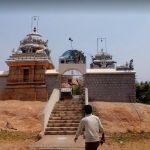
- 7 Photo Gallery
Introduction & Spiritual Essence
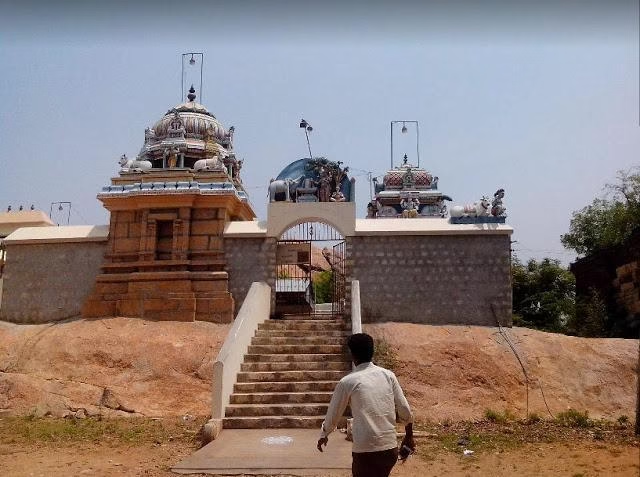
Nestled in the serene village of Thiruvellarai, just outside Trichy, stands the Aadhi Jambunathar Temple, a hidden gem of spiritual antiquity. Dedicated to Lord Shiva in the form of Aadhi Jambunathar (the primal Lord of the Jambu tree), this temple is more than a place of worship; it is a testament to the compassionate nature of the divine. The primary deity here is a Swayambhu (self-manifested) Lingam, enshrined within a natural cave formation.
Why Devotees Visit (Phalaśruti): According to local lore, worshipping Lord Jambunathar at this shrine bestows the devotee with the spiritual merit equivalent to visiting the eight self-manifested Ashta Lingams of Tamil Nadu. It is specifically renowned for healing ailments related to the legs and bones, as this is the very site where the sage Jambhu Rishi was cured of his crippling condition by Lord Shiva. Visiting this temple is believed to cleanse ancestral karma and remove obstacles in one’s path to salvation.
Historical Origins & Scriptural Legend
The Legend of Jambhu Rishi:
The most profound narrative associated with this temple is the “Jambhu Rishi Legend.” Tradition holds that a devout sage named Jambhu Rishi, an ardent devotee of Lord Shiva, suffered from severe physical ailments that left him unable to walk. His heart was set on obtaining a Darshan (divine sight) of Lord Jambukeswarar at the famous Thiruvanaikoil temple in Trichy.
Understanding the sage’s devotion and physical limitations, Lord Shiva appeared before him in a cave in Thiruvellarai, blessing him with a miraculous cure. This site became known as the place where Jambukeswarar (of Thiruvanaikoil) appeared for Jambhu Rishi, hence the name Aadhi Jambunathar. The temple records also refer to this shrine as the “Vada Jambunathar Temple” (Northern Jambunathar).
Architectural Era:
Radiocarbon dating and architectural analysis by the Archaeological Survey of India (ASI) suggest the core structure dates back to the Pallava period (6th–9th Century CE). The temple was later expanded and renovated by the Chola kings, evident from the stone inscriptions found on the inner walls of the cave. It stands as a testament to the Dravidian rock-cut architecture that preceded the elaborate gopurams of the Nayak period.
Architectural Marvels
The Aadhi Jambunathar Temple is a masterpiece of Dravidian Rock-Cut Architecture. Unlike grand structural temples, this shrine retains the raw, rugged beauty of ancient cave sanctuaries.
- The Cave Sanctum (Grahagriha): The main deity is housed inside a naturally formed cavern. The ceiling features ancient frescoes and carvings that have withstood centuries of humidity and time.
- Unique Iconography: A striking feature is the carving of Lord Shiva and Lord Vishnu side by side on the right wall of the cave—a rare sight symbolizing the unity of the two major sects of Hinduism. On the left, you will find intricate carvings of Jambhu Rishi and Bhairava (the fierce form of Shiva).
- Navagraha Shrine: Unusual for a cave temple of this scale, a dedicated Navagraha shrine is carved within the cave, allowing devotees to perform rituals for planetary afflictions.
- Exterior Shrines: Outside the main cave structure, smaller shrines house Goddess Akilandeswari (the consort of Shiva), Lord Vinayaka (Ganesha), and Lord Subramanya, arranged according to Vastu Shastra principles.
While this temple does not hold a UNESCO designation, it is protected and acknowledged for its historical significance by local heritage bodies.
Darshan & Ritual Logistics (2026 Update)
To ensure a smooth pilgrimage experience, we have compiled the latest ritual schedules and booking information. Please note that the temple follows traditional Tamil Agama rituals.
Daily Temple Timings
The temple opens early for the first Kalasandhi (Morning Pooja) and closes after the night Arthajama Pooja.
| Session | Timings | Description |
|---|---|---|
| Morning Darshan | 06:00 AM – 12:00 PM | Includes Morning Abhishekam & Alankaram |
| Afternoon Break | 12:00 PM – 04:30 PM | Temple is Closed |
| Evening Darshan | 04:30 PM – 08:30 PM | Includes Deepa Aradhana & Palliyarai Pooja |
Seva Booking & Rituals
While Aadhi Jambunathar is a smaller cave temple, many devotees combine their visit with the larger Thiruvanaikoil temple for major sevas. However, specific rituals can be performed here:
- Abhishekam: Performed with water, milk, honey, and sandalwood paste.
- Archana: Recitation of Shiva names (Namakam/Chamakam).
- Navagraha Homam: A highly sought-after ritual for planetary peace.
Online Booking: As of 2026, direct online booking for this specific cave temple is managed locally. However, you can book general Darshan and Abhishekam tickets via the Tamil Nadu Hindu Religious & Charitable Endowments (HR&CE) portal or contact the local temple executive officer via phone.
2026 Festival Calendar
- Maha Shivaratri: February 26, 2026 (Special night-long vigil and temple car procession).
- Arudra Darshanam: January 13, 2026 (Celebrating the cosmic dance of Nataraja).
- Navaratri: September 22 – October 1, 2026 (Special decorations for Goddess Akilandeswari).
- Aadi Perukku: July 23, 2026 (River ritual on the banks of the Kaveri, near the temple).
Practical Visitor Guidance
Dress Code: Traditional attire is strictly encouraged. Men should wear dhotis or formal trousers with shirts; women should wear sarees, half-sarees, or churidars. Avoid shorts and sleeveless tops out of respect for the sanctity of the shrine.
Photography & Mobile Phones: Photography is strictly prohibited inside the cave sanctum and the main shrine to preserve the ancient carvings and maintain spiritual decorum. Mobile phones should be kept on silent mode. While there is no high-tech locker system, basic storage for footwear and bags is available at the entrance counter.
Accessibility: The cave temple involves a few steps. It may not be fully wheelchair accessible, but assistance is available from the temple priests for elderly devotees.
Crowd Management:
- Best Hours: 7:00 AM to 10:00 AM on weekdays.
- Weekends: Saturday and Sunday mornings witness moderate crowds from Trichy city.
- Seasonal Advice: The temple is cool inside, but the approach path gets hot. Carry a water bottle, especially if visiting between May and June.
Pilgrimage Connectivity
Thiruvellarai is a well-connected pilgrimage hub, often visited in conjunction with the Pancha Vishnu Shrines (Divya Desams) in the vicinity.
How to Reach Aadhi Jambunathar Temple
- By Air: The nearest airport is Trichy International Airport (TRZ), located approximately 27 kilometers away. Taxis and app-based cabs are readily available.
- By Rail: The closest railway junction is Trichy Junction (TIR), about 23 km away. For a quieter approach, the Uthamar Kovil Railway Station (approx. 12 km) serves specific local trains.
- By Road: The temple is located on the Thiruvellarai – Trichy Main Road. It is approximately 800 meters from the Thiruvellarai Bus Stop. Regular buses ply from Trichy Central Bus Stand.
Nearby Sacred Sites (The Pilgrimage Circuit)
When visiting Aadhi Jambunathar, devotees are encouraged to visit these nearby spiritual destinations:
- Thiruvellarai Divya Desam (Pandava Thoothar Perumal Temple): Just 1 km away. One of the 108 Vishnu temples mentioned by the Alvars. It is unique for its separate sanctums for the Pandavas.
- Thiruppainjeeli: 5 km away. Famous for the Kasi Viswanathar temple where Lord Shiva appeared as a giant anthill.
- Thiruvanaikoil (Jambukeswarar Temple): 16 km away. Since Aadhi Jambunathar is the “birthplace” of the legend, visiting the main Jambukeswarar temple in Trichy (one of the Pancha Bhoota Stalas for Water) completes the spiritual cycle.
Frequently Asked Questions (FAQ)
Is there a VIP Darshan entry at Aadhi Jambunathar Temple?
Given the intimate size of the cave temple, there are no separate VIP tickets. However, devotees can opt for special Seva darshan (pooja-specific entry) by contacting the temple executive officer in advance to bypass the general queue during busy hours.
What is the exact difference between Jambukeswarar (Thiruvanaikoil) and Aadhi Jambunathar?
Thiruvanaikoil is the major temple complex associated with the element of Water, while Aadhi Jambunathar is the cave shrine where the legend of Jambhu Rishi is said to have originated. They are spiritually connected; a visit to both is considered highly auspicious.
Are there hotels or guest houses nearby?
Thiruvellarai is a small village. It is recommended to stay in Trichy (15-20 km away) which offers a wide range of hotels. For a spiritual experience, one can inquire about guest houses at the nearby Divya Desam or the ASIK, Anbil.
Is non-vegetarian food allowed in the temple premises?
No. The temple follows strict Sattvic principles. Devotees are requested to avoid carrying non-vegetarian food items. Free Annadhanam (prasad/meal) is often provided on festival days.
Can I visit with children and elderly parents?
Yes. The cave is accessible but involves a few steps. It is advisable to carry an extra pair of slippers as the marble flooring can be slippery. Monsoon (November-December) is a beautiful time to visit as the weather is cool.
Photo Gallery
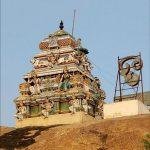
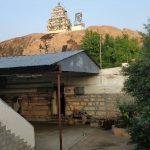

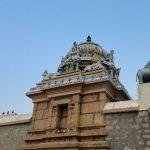
Recent Posts

Shri Kaamkoteeshwar Mandir, Varanasi – History & Significance
In the heart of Kashi, the eternal city of Lord Shiva, where the Ganges flows with celestial grace, stands the Shri Kaamkoteeshwar Mandir. This sacred Sannidhi is not merely a temple but a profound spiritual bridge between the Northern…

ओ सांवरे तूने ही मुझको संभाला – Lyrics & Meaning
ओ सांवरे तूने ही मुझको संभाला – A Prayer to Shyam Origin & Spiritual Essence Why This Bhajan Resonates Devotees chant this when overwhelmed by life’s storms—the refrain ‘तूने ही मुझको संभाला’ is the soul’s sigh of relief: “You…

कथा ये है महाराज मेरे की – Lyrics & Meaning
कथा ये है महाराज मेरे की छत्रपति संभाजी महाराज – A Prayer to Chhatrapati Sambhaji Maharaj Origin & Spiritual Essence Why This Bhajan Resonates Devotees chant this when their spirit feels tested—its powerful refrain “महाराज मेरे” is a soul’s…

Rigveda Samhita Yathartha Anuvada (ऋग्वेद संहिता यथार्थ अनुवाद) – Complete Set with Anvayartha & Hindi/English Translation
The Rigveda is the oldest surviving scripture of humanity and the foundational text of Sanātana Dharma. For serious students, scholars, UPSC aspirants studying ancient Indian history, Sanskrit learners, and spiritual seekers, a precise and grammatically structured translation is indispensable.…

आना भी अकेला है जाना भी अकेला है – Lyrics & Meaning | BharatTemples
आना भी अकेला है जाना भी अकेला है – A Prayer to the Divine Witness Origin & Spiritual Essence Why This Bhajan Resonates Devotees turn to this bhajan in moments of deep reflection—when life’s attachments begin to ache. The…

माता शेरावाली के द्वार जो भी जाता है – Lyrics & Meaning
माता शेरावाली के द्वार जो भी जाता है – A Prayer to Maa Sherawali Origin & Spiritual Essence Why This Bhajan Resonates Devotees turn to this bhajan in times of fear or uncertainty—its promise that no one leaves Maa’s…

मार लेना सपणी उबार लेणा भवरा – Lyrics & Meaning
मार लेना सपणी उबार लेणा भवरा – A Prayer to the Divine Beloved Origin & Spiritual Essence Why This Bhajan Resonates Devotees chant this in moments of deep vulnerability—its cry of “मार लेना सपणी, उबार लेणा भवरा” is the…

हमें श्याम सुंदर भरोसा तुम्हारा – Lyrics & Meaning
हमें श्याम सुंदर भरोसा तुम्हारा – A Prayer to Shyam Sundar Origin & Spiritual Essence Why This Bhajan Resonates Devotees chant this when feeling alone—its refrain ‘de do sahara’ is the soul’s cry for divine support. Lyrics in Hindi…

Mere Satguru Ne Di Thi Davai Lyrics in Hindi & Meaning
Mere Satguru Ne Di Thi Davai: Invoking the Guru’s Liberating Wisdom This soul-stirring bhajan venerates the Satguru (True Spiritual Master) as the divine physician who dispenses the only remedy for life’s deepest sufferings. Composed by Sant Karmaveer Tufani, it…

Janm Diyo Thari Maa Dukh Dekhiyo Lyrics in Hindi & Meaning
जन्म दियो थारी माँ दुख देखियो (Maa’s Grief Upon Birthing You) This soul-stirring Chetavani Bhajan (admonitory hymn) is addressed to the Divine Mother (Maa) – a call for repentance when children forget their filial duties in the dark age…